
F-1 Student Visa 2026: 3-Step Roadmap To Studying In The USA
Master the F-1 student visa process for 2026: from SEVP schools to interviews and beyond for seamless US study entry.
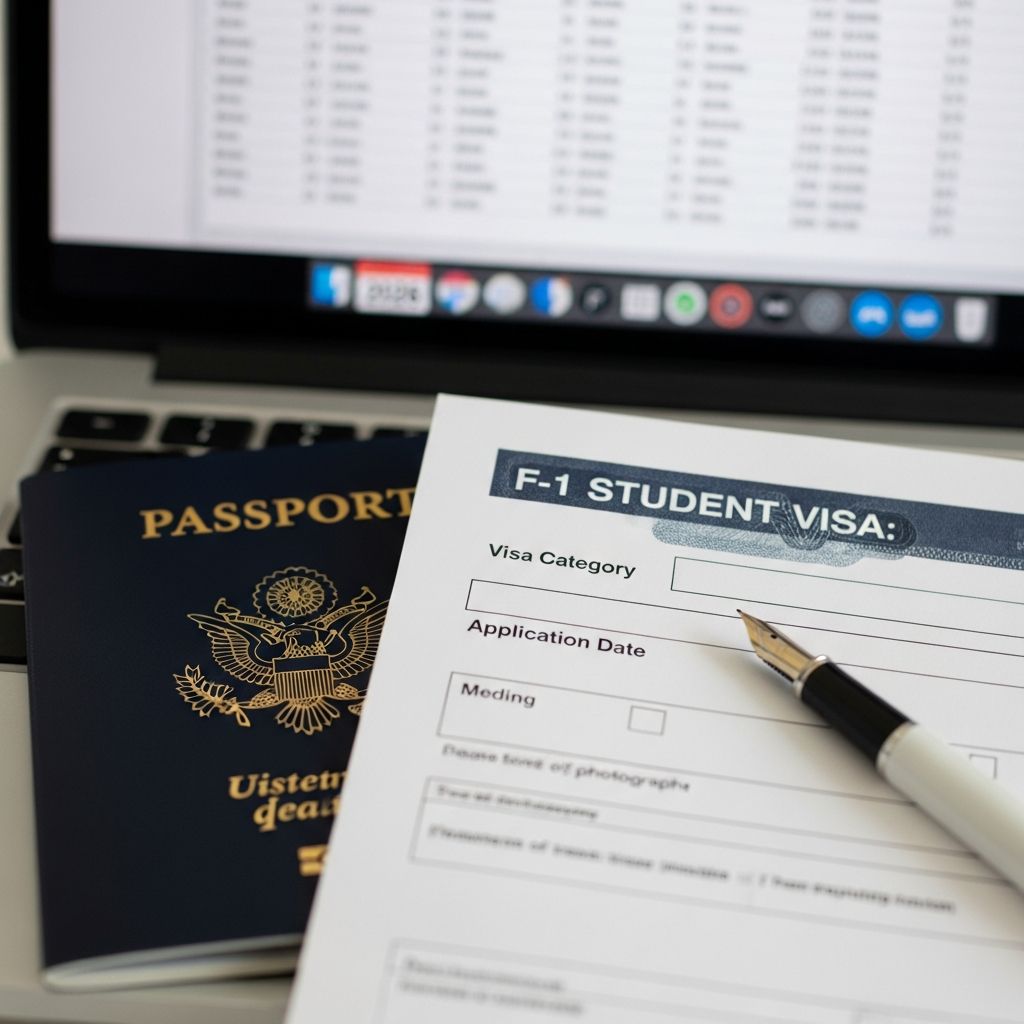
Securing an F-1 student visa opens doors to world-class education in the United States for international students pursuing academic programs. This non-immigrant visa allows full-time study at accredited universities, colleges, high schools, and language training programs. In 2026, the process emphasizes verification of genuine student status, financial stability, and ties to the home country to ensure compliance with US immigration laws.
Understanding the Core Purpose of the F-1 Visa
The F-1 visa is designed exclusively for individuals enrolled in academic or language programs at SEVP-certified institutions. Unlike other visas, it mandates full-time enrollment and limits off-campus work opportunities, prioritizing studies over employment. Holders can engage in optional practical training (OPT) after completion, but only under strict guidelines. This visa does not cover vocational training, which falls under the M-1 category.
Key distinctions include its temporary nature: applicants must prove they intend to depart the US upon program completion. US embassies scrutinize applications to prevent misuse, making preparation critical in 2026 amid evolving policies.
Step 1: Choose and Gain Admission to a Certified Institution
The journey begins with acceptance into a Student and Exchange Visitor Program (SEVP)-approved school. These institutions, listed on the official ICE.gov database, are vetted for compliance with federal standards. Popular choices range from Ivy League universities to community colleges offering associate degrees.
- Research schools via the SEVP school search tool to confirm certification status.
- Submit applications with transcripts, test scores (e.g., SAT, TOEFL), and essays.
- Upon acceptance, request the Form I-20, the cornerstone document for visa applications.
The I-20 details program length, costs, and funding sources, registering the student in SEVIS for tracking.
Step 2: Handle SEVIS Registration and Fee Payment
After receiving the I-20, pay the SEVIS I-901 fee of $350 for F-1 applicants. This one-time fee activates your record in the Student and Exchange Visitor Information System. Print the receipt, as it’s required for visa interviews and US entry.
| Fee Type | Amount (USD) | Purpose |
|---|---|---|
| SEVIS I-901 (F-1) | 350 | System registration |
| Visa Application (DS-160) | 185 | Consular processing |
Payment is online via fmjfee.com; dependents on F-2 visas pay $220 if applicable.
Step 3: Complete the DS-160 Online Application
Fill out the DS-160 form on the Consular Electronic Application Center (CEAC) website. This comprehensive questionnaire covers personal history, education, work experience, and travel plans. Upload a 2×2 inch photo meeting strict specifications: white background, neutral expression, no glasses.
- Enter I-20 details accurately, including SEVIS ID.
- Disclose any prior US visas or overstays.
- Save the confirmation page with barcode for your interview.
Errors here can lead to denials, so review thoroughly before submission.
Essential Documents for Your Visa Dossier
A robust application package demonstrates readiness and legitimacy. Core items include:
- Passport: Valid for at least six months beyond your program start date.
- I-20: Signed by you and the school official, in its original form.
- SEVIS Receipt: Proof of $350 payment.
- DS-160 Confirmation: With barcode.
- Photo: Recent, compliant image.
- Financial Proof: Bank statements, sponsor affidavits, or scholarships covering tuition, living expenses, and return travel—matching I-20 estimates.
Supplementary evidence bolsters your case: academic records, standardized test scores (TOEFL/IELTS), and letters proving home ties like property deeds or job offers.
Preparing for the Consular Visa Interview
Schedule your interview at the US embassy or consulate in your home country via their portal. Arrive early with all documents organized. Officers assess if you’re a credible student with no immigrant intent.
Common questions probe:
- Why this school and program?
- How will you fund your studies?
- What are your post-graduation plans?
Practice concise, honest answers. Dress professionally and remain calm. Interviews typically last 2-5 minutes but determine your fate.
Overcoming Common Denial Reasons
Visa refusals often stem from Section 214(b): failure to prove non-immigrant intent. Other pitfalls include insufficient funds or inconsistent documents. If denied, you can reapply after addressing issues, but fees are non-refundable.
- Strengthen ties: Show family, career, or assets anchoring you home.
- Update finances: Provide recent bank proofs.
- Re-interview promptly if new evidence emerges.
Entering the US and Maintaining Status
Upon approval, your passport receives a visa sticker valid for entry. Arrive up to 30 days before classes; present documents to CBP officers at the port. Receive an I-94 record online confirming F-1 status.
Maintenance rules are strict:
- Maintain full-time enrollment (12+ credits undergrad).
- Report address changes to your Designated School Official (DSO) within 10 days.
- Get travel signatures on I-20 annually.
- Avoid unauthorized work; use CPT/OPT for experience.
Violations risk status termination and deportation.
Travel and Re-Entry Guidelines for F-1 Holders
Frequent travel requires preparation. For re-entry:
| Document | Validity Requirement |
|---|---|
| Passport | 6+ months future validity |
| F-1 Visa | Must be valid |
| I-20 | Travel signature within 1 year |
| SEVIS Receipt | Copy if needed |
| Financial Proof | Current funding evidence |
Plan breaks wisely; expired items mean delays or denials.
Special Considerations for 2026 Applicants
While core requirements persist, 2026 sees potential shifts in processing times and OPT rules due to enrollment trends. Monitor travel.state.gov for updates, especially post-January policy reviews. Countries like India, China, and Mexico face high demand—book interviews early.
Dependents qualify for F-2 visas but cannot study academically or work.
Frequently Asked Questions (FAQs)
Q: How much does the F-1 visa process cost in total?
A: Expect $350 SEVIS + $185 application fee, plus potential courier or medical exam costs. Budget $600+ excluding travel.
Q: Can I work on an F-1 visa?
A: On-campus up to 20 hours/week during term; off-campus via CPT/OPT post-authorization. No general work permission.
Q: What if my visa expires while studying?
A: Apply for extension via USCIS if needed, but maintain I-20 validity. Re-enter with valid visa for travel.
Q: How long can I stay after graduation?
A: Up to 60 days grace period + OPT (12 months standard, 24 for STEM).
Q: Is English proficiency required?
A: Not for visa, but most programs demand TOEFL/IELTS/Duolingo scores.
Pro Tips for a Smooth F-1 Journey
Start 3-6 months early. Consult your school’s international office. Use official sites only: travel.state.gov, ice.gov/SEVIS. Authenticity wins—fabrications lead to permanent bans.
This guide equips you for success. With thorough preparation, your American academic adventure awaits.
References
- International Student Visa Requirements: Complete Guide 2025-2026 — Amerigo Education. 2025. https://www.amerigoeducation.com/news/international-student-visa-requirements
- The New F-1 Visa Landscape in 2026 — InternationalStudent.com. 2026. https://www.internationalstudent.com/immigration/f1-student-visa/f1-visa-landscape-2026/
- F-1 Student Visa for USA in 2026: Updates, Requirements & Prep Tips — Masterclass Space. 2026. https://www.masterclassspace.com/f-1-student-visa-for-usa-in-2026.php
- Student Visa — U.S. Department of State. 2026. https://travel.state.gov/content/travel/en/us-visas/study/student-visa.html
- Travel and Re-Entry for F-1 Visa Holders — UCSF International Students & Scholars Office. 2026. https://isso.ucsf.edu/student-travel
Similar Articles








Read full bio of medha deb


