
Expert Witness Qualification Standards in Court
Understanding the credentials and legal requirements that establish expert witness credibility.
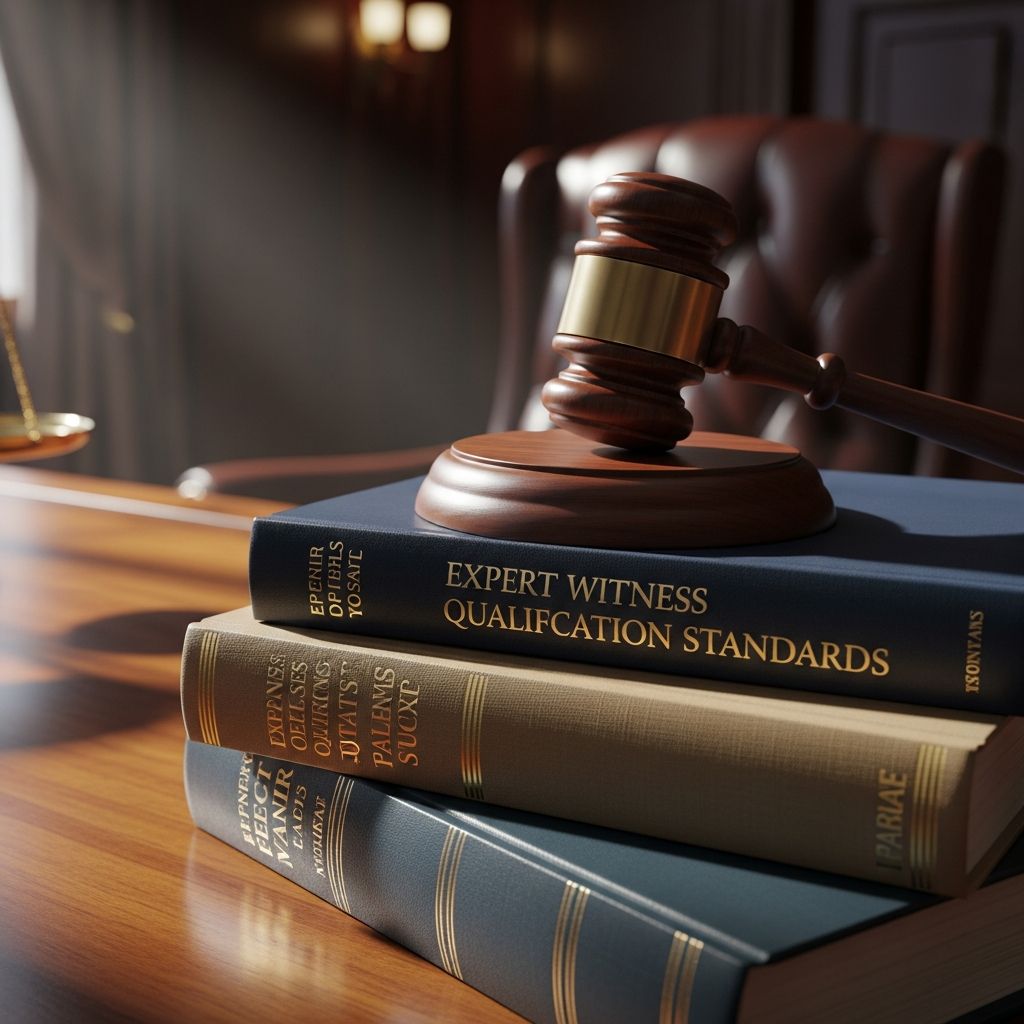
Understanding Expert Witness Qualification in Legal Proceedings
In the American legal system, expert witnesses serve a critical function by providing specialized knowledge that helps judges and juries comprehend complex evidence and make informed decisions on matters beyond common understanding. These individuals are called upon to offer professional opinions on technical, scientific, medical, or specialized matters that directly impact case outcomes. However, not every knowledgeable person can automatically testify as an expert in court. The legal system has established rigorous standards and procedures to ensure that only truly qualified professionals provide expert testimony, protecting the integrity of judicial proceedings and the validity of case decisions.
The Legal Foundation for Expert Witness Qualification
The primary legal framework governing expert witness qualification in federal courts is established by Federal Rule of Evidence 702, which provides the baseline standards for determining who can testify as an expert. This rule states that a witness qualified by knowledge, skill, experience, training, or education may provide expert testimony if the court determines that such testimony will help the trier of fact understand evidence or determine facts at issue. The language of this rule is intentionally broad, recognizing that expertise can come from various sources and fields, not merely traditional scientific or technical domains.
Beyond the federal standard, individual states may impose additional requirements that vary by jurisdiction. Some states require physicians testifying in medical malpractice cases to specialize in the same medical field as the defendant they are testifying against. Additionally, certain jurisdictions mandate that expert witnesses hold licenses in that state to avoid charges of practicing a profession without proper authorization. These variations reflect the principle that different legal systems and regions may have unique needs and protections.
Core Requirements for Establishing Expert Credentials
While the legal requirements for expert witness qualification are relatively minimal compared to other professional standards, several key components establish the foundation for credibility in courtroom testimony.
Educational Background and Academic Credentials
The first pillar of expert witness qualification typically involves obtaining advanced education in the relevant field. For medical professionals, this generally means holding a Doctor of Medicine (MD) degree or equivalent qualification. Financial experts often possess MBA degrees or Certified Public Accountant (CPA) credentials. Engineers typically pursue graduate degrees in their specialization. These advanced degrees serve multiple purposes: they demonstrate theoretical knowledge, provide foundational understanding of accepted practices within the field, and signal to the court that the individual has undergone rigorous training recognized by educational institutions.
However, educational attainment alone does not automatically qualify someone as an expert witness. The law recognizes that knowledge acquired through formal education must be supplemented by additional qualifications and real-world application to provide reliable testimony.
Professional Credentials and Licensing
Beyond formal education, professional credentials significantly reinforce expert witness qualifications. These credentials include licenses, certifications, and memberships in recognized professional organizations within the relevant field. An engineer seeking to qualify as an expert might present a Professional Engineer (PE) license. Healthcare professionals often hold board certifications in their medical specialties. Accountants may maintain CPA licenses and membership in accounting organizations. These credentials demonstrate ongoing commitment to professional standards, adherence to industry best practices, and recognition by governing bodies that oversee the profession.
Professional credentials also signal to the court that the witness is subject to ethical standards, continuing education requirements, and potential disciplinary action by professional boards if their conduct or work falls below acceptable standards. This creates accountability mechanisms that enhance the reliability of their testimony.
Practical Industry Experience
Perhaps the most crucial qualification for expert witnesses is substantial, relevant industry experience. Courts recognize that theoretical knowledge alone, without practical application, may not provide the depth of understanding necessary for reliable expert testimony. An expert witness must have worked in their field, confronted real-world problems, and applied their knowledge in actual professional situations. This hands-on experience allows them to provide practical insights grounded in firsthand knowledge rather than purely academic understanding.
The duration and relevance of industry experience varies depending on the field and the specific testimony required. A financial analyst testifying about accounting practices needs experience in corporate finance. A civil engineer offering testimony about structural failures needs experience designing or analyzing buildings. The court examines whether the expert’s experience directly relates to the matters on which they are being asked to testify.
The Daubert Standard and Gatekeeping Authority
In 1993, the U.S. Supreme Court established a pivotal standard for evaluating expert testimony admissibility in Daubert v. Merrell Dow Pharmaceuticals, Inc. This landmark decision established that judges serve as “gatekeepers” to screen out expert witnesses who are unqualified, whose expertise is irrelevant to the case facts, or whose methods are unreliable. Rather than a rigid checklist, the Daubert standard provides flexible factors that courts consider when evaluating whether expert testimony should be admitted.
The Daubert framework allows judges to examine whether the expert’s methodology is scientifically sound, whether the principles and methods used are generally accepted within the relevant scientific community, whether the methods have been tested and can produce reliable results, and whether the application of these methods to the specific case facts is appropriate. This gatekeeping function protects against “junk science” and ensures that expert testimony rests on reliable foundations rather than speculation or unproven theories.
The Qualification Process: Voir Dire and Court Examination
Before an expert witness can provide testimony that influences case outcomes, they must successfully complete a formal qualification process known as voir dire. During this process, attorneys from both sides of the case question the witness extensively about their qualifications, credentials, experience, and expertise in the relevant subject matter.
The opposing counsel has the opportunity to challenge the witness’s qualifications and raise objections to their expertise. Attorneys may question whether the witness has adequate training, sufficient experience, or relevant knowledge to address the specific issues in the case. They may probe into any gaps in the witness’s background or identify areas where their experience may be insufficient. After both attorneys have had the opportunity to examine and cross-examine the proposed expert, the judge makes a final determination about whether the witness qualifies to provide expert testimony.
This rigorous questioning process serves multiple functions. It allows the court to assess the witness’s credibility and depth of knowledge. It creates a record of the expert’s qualifications that can be reviewed if the case is appealed. It gives the jury insight into the expert’s background, allowing them to evaluate the weight they should give to the expert’s opinions. Most importantly, it ensures that only truly qualified experts provide testimony that might sway case outcomes.
Key Legal Standards Experts Must Meet
Under Federal Rules of Evidence, expert witnesses must satisfy several criteria for their testimony to be admissible:
- The expert’s scientific, technical, or specialized knowledge must help the trier of fact understand evidence or determine facts at issue
- The testimony must be based on sufficient facts or data
- The testimony must be the product of reliable principles and methods
- The expert must have reliably applied these principles and methods to the facts of the case
Additionally, Federal Rules of Evidence establish that no aspect of an expert witness’s life is free from legal scrutiny, and experts must defend themselves against all reasonable objections and inquiries into their character and testimony. Expert witnesses must also provide written reports prior to giving testimony in many jurisdictions, establishing the foundation for their opinions before appearing in court.
Field-Specific Qualification Considerations
Different professional fields may have unique qualification requirements or expectations. Medical experts testifying in healthcare-related cases often need board certification in the relevant medical specialty. Engineering experts typically require professional engineering licenses and demonstrated experience with the type of systems or structures about which they are testifying. Financial experts may need extensive experience analyzing the specific type of financial instruments or accounting matters relevant to the case. Forensic experts require specialized training in forensic methodologies and often need certification from forensic organizations.
The breadth of the Federal Rules of Evidence definition of “expert” means that the field of potential expert witnesses is quite wide. Most adults could theoretically be qualified as expert witnesses on something, depending on their knowledge, skill, experience, training, or education. However, the requirement that expert testimony help the trier of fact understand evidence or determine facts in issue narrows the pool considerably for any specific case.
Documentation and Preparation Requirements
Expert witnesses must thoroughly prepare for qualification proceedings by gathering documentation of their credentials. This typically includes diplomas, transcripts, licenses, certifications, professional memberships, résumés highlighting relevant experience, publications or presentations they have authored, prior expert testimony, professional awards or recognition, and continuing education documentation. The more comprehensive and organized this documentation, the more effectively an expert can establish their qualifications during voir dire.
Many jurisdictions require written expert reports before testimony is delivered. These reports must explain the expert’s methodology, the facts and data on which their opinions are based, the principles and methods used to reach their conclusions, and how these principles and methods were reliably applied to the case facts. A well-drafted expert report helps establish the foundation for admissibility and demonstrates that the expert’s opinions are grounded in accepted practices within their field.
Frequently Asked Questions About Expert Witness Qualifications
Q: What is the minimum education required to be an expert witness?
A: There is no universal minimum. Federal Rule of Evidence 702 states that qualification can come from knowledge, skill, experience, training, or education. Some fields require advanced degrees (medicine, law, engineering), while others may rely primarily on extensive hands-on experience. The key is demonstrating sufficient expertise to help the court understand specialized matters.
Q: Can someone without a formal degree qualify as an expert witness?
A: Yes. While formal education is often important, the Federal Rules of Evidence explicitly recognize that experience can be the primary basis for expert qualification. Someone with decades of practical experience in a field might qualify as an expert even without an advanced degree, provided their experience is relevant and substantial.
Q: Who decides whether someone qualifies as an expert witness?
A: The judge serves as the gatekeeper. After attorneys from both sides question the proposed expert about their qualifications during voir dire, the judge makes the final determination about whether the witness meets the legal standards for expert qualification. The judge considers the witness’s background, the relevance of their expertise to the case, and the reliability of their methods.
Q: What happens if an expert witness fails qualification?
A: If the judge determines that a proposed expert does not meet the standards for qualification, their testimony is excluded from the case. They may still attend the trial as a fact witness or consultant, but cannot provide opinion testimony about matters requiring specialized expertise.
Q: Does an expert witness need to be licensed in the state where they testify?
A: This varies by jurisdiction. Some states require expert witnesses to be licensed in that state to avoid practicing a profession without proper authorization. Others allow experts licensed in other states to testify. An expert should verify the specific requirements of the jurisdiction where they may be testifying.
Q: How does the Daubert standard affect expert qualification?
A: The Daubert standard gives judges authority to evaluate whether an expert’s methodology is scientifically sound and reliable. Even if someone meets basic qualification requirements, their testimony can be excluded if their methods are not based on reliable principles or generally accepted within their field. This gatekeeping function ensures that speculative or unreliable opinions are filtered out.
References
- Voir Dire to Qualify an Expert Witness — U.S. Legal Support. https://www.uslegalsupport.com/blog/voir-dire-expert-witness/
- Expert Witness Requirements — SEAK, Inc. https://seak.com/blog/expert-witness/expert-witness-requirements/
- How to Qualify an Expert Witness: A Sample Voir Dire — Expert Institute. https://www.expertinstitute.com/resources/insights/how-to-qualify-an-expert-witness-a-sample-voir-dire/
- Expert Witness — Wex, Legal Information Institute, Cornell Law School. https://www.law.cornell.edu/wex/expert_witness
- Expert Witness Qualification: Essential Requirements & Skills — Litili Group. https://litiligroup.com/expert-witness-qualifications/
- Rule 702. Testimony by Expert Witnesses — U.S. Federal Rules of Evidence, Cornell Law School. https://www.law.cornell.edu/rules/fre/rule_702
- Law 101: Legal Guide for the Forensic Expert – Rules for Experts (FREs 701-706) — National Institute of Justice, U.S. Department of Justice. https://nij.ojp.gov/nij-hosted-online-training-courses/law-101-legal-guide-forensic-expert/importance-case-preparation/rules-experts/rules-experts-fres-701-706
Similar Articles








Read full bio of Sneha Tete




