
The Case for Expanding Mail-In Voting Access
Discover how expanding mail-in voting boosts turnout and strengthens democracy.
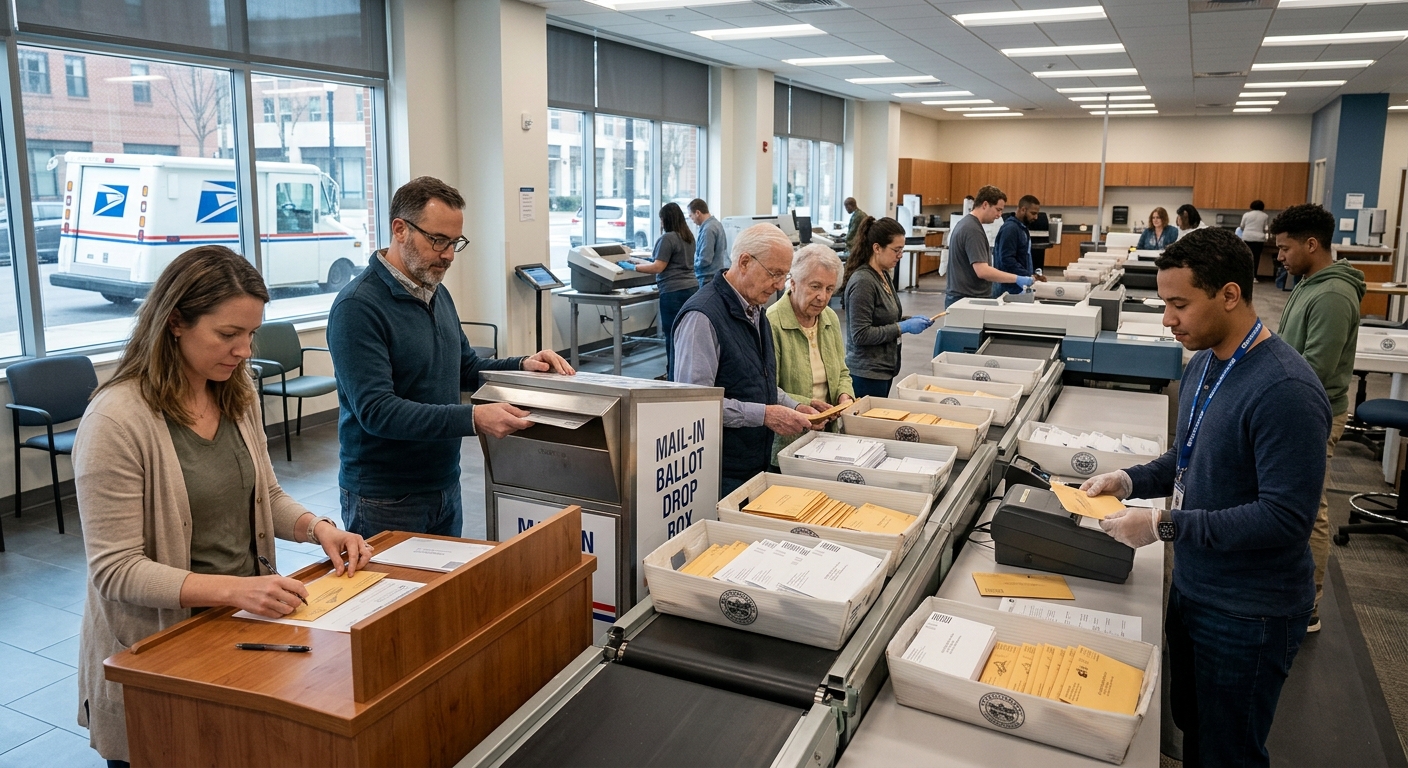
The foundation of any functioning democracy rests upon the ability of its citizens to participate freely, fairly, and without undue burden. For generations, the quintessential image of American civic duty has been waiting in line at a local community center or school gymnasium on a Tuesday in November. However, this traditional model often inadvertently excludes millions of eligible voters who face geographical, physical, or occupational barriers. The modern solution to this systemic disenfranchisement is the widespread expansion of mail-in voting. By allowing voters to cast their ballots from the comfort of their homes, election administrators can drastically reduce barriers to entry, increase overall voter turnout, and maintain the strictest standards of electoral security. This comprehensive analysis explores why shifting toward robust, accessible vote-by-mail systems is a necessary evolution for modern democratic engagement.
The Historical Evolution of the Absentee Ballot
Voting outside of a traditional, physical polling place is neither a novel nor an untested concept. The United States has a rich history of absentee voting, tracing its earliest prominent origins back to the American Civil War. During that period, several states enacted laws allowing Union soldiers to cast their votes remotely from the battlefield, ensuring that the men fighting for the nation were not subsequently disenfranchised by their service.
Over the following century, absentee voting was largely restricted to those who could provide a legally valid “excuse” for their absence on Election Day, such as severe illness or overseas military deployment. However, a significant paradigm shift occurred in the late twentieth century. In the 1980s, California began spearheading a movement toward “no-excuse” absentee voting, allowing any registered citizen to request a mail-in ballot regardless of their reason. This laid the groundwork for the modern vote-by-mail movement. By the turn of the millennium, states like Oregon pioneered the first fully universal vote-by-mail system, automatically dispatching ballots to all registered voters. Today, universal mail-in systems have been successfully utilized in multiple states, including Washington, Utah, and Colorado, proving that the logistical framework of remote voting can be implemented on a massive, highly efficient scale.
Breaking Down Barriers: Accessibility for All Electorates
Perhaps the most compelling argument for expanding mail-in voting is the profound impact it has on accessibility. Traditional polling places can present insurmountable hurdles for a vast swath of the population. Individuals with disabilities, for instance, frequently encounter architectural barriers, lack of accessible transportation, or inaccessible voting machines when attempting to vote in person. According to the United States Election Assistance Commission (EAC), expanding the availability of accessible mail-in options significantly reduces these barriers, offering a crucial lifeline that ensures voters with physical or cognitive impairments can cast their ballots privately and independently .
Furthermore, geographical isolation disenfranchises rural voters across the country. In sprawling counties or on remote Native American reservations, polling places can be situated dozens of miles away from a voter’s residence. The time and financial cost required to travel these distances implicitly suppresses the rural vote. Universal vote-by-mail eradicates this physical distance, effectively bringing the ballot box to the voter’s kitchen table.
Occupational inflexibility is another silent form of voter suppression. Because Election Day in the United States falls on a working Tuesday, citizens employed in rigid shift work, hourly wage jobs, or the gig economy frequently cannot afford to take unpaid time off to stand in multi-hour lines. Single parents and those lacking reliable childcare face similar time constraints. By providing a multi-week window for voters to research candidates, complete their ballots, and place them in the mail, mail-in voting accommodates the realities of modern working-class life, democratizing the electoral process in a fundamentally equitable manner.
Analyzing the Impact on Voter Turnout and Partisanship
A common topic of intense political debate is the precise effect of mail-in voting on overall voter turnout and partisan advantage. Historically, political strategists have theorized that lowering the barrier to voting would disproportionately favor one political party over the other. However, rigorous academic research thoroughly dispels this assumption.
Extensive studies examining the rollout of vote-by-mail systems across the United States have consistently shown that providing mail-in ballots stimulates civic participation broadly, without skewing the electorate to the left or the right. Research published through the Stanford Institute for Economic Policy Research (SIEPR) analyzed decades of county-level data and concluded that the introduction of mail-in voting increases overall turnout by roughly 2 to 4 percentage points . Crucially, the same study revealed that this modest but meaningful increase in voter turnout is completely neutral in its partisan effects; it does not confer a structural electoral advantage to either Democrats or Republicans .
Impact of Voting Methods on Voter Behavior
To better understand how voting methods influence the electorate, consider the standard outcomes associated with varying systems:
| Voting Method | Accessibility Impact | Turnout Effect | Partisan Advantage |
|---|---|---|---|
| Traditional In-Person (Tuesday Only) | Low (Geographic and temporal barriers) | Baseline | Varies locally |
| Excuse-Only Absentee | Moderate (Requires specific qualification) | Minimal increase | None |
| Universal Vote-By-Mail | High (Ballots delivered directly to homes) | +2 to +4 Percentage Points | Neutral |
This data illustrates that while mail-in voting makes it substantially easier for citizens to fulfill their civic duties, it merely amplifies the existing political will of the community rather than artificially altering the ideological landscape.
Addressing Security: How Safe is the Mail-In Ballot?
Despite its logistical and democratic benefits, mail-in voting has been subjected to intense scrutiny regarding its susceptibility to fraud. It is essential to address these concerns with empirical data rather than speculative rhetoric. The reality is that electoral fraud of any kind—and mail-in voter fraud specifically—is exceedingly rare in the United States.
A comprehensive analysis conducted by the Brookings Institution reviewed hundreds of general elections and found that the rate of mail-in voting fraud is virtually nonexistent. Specifically, their data points to a minuscule fraud rate of 0.000043%—which equates to roughly four isolated incidents of fraudulent voting per 10 million mail-in ballots cast . In states with established, universal vote-by-mail systems, the risk is mitigated even further due to highly mature processing protocols.
This remarkable security record is the result of layered, sophisticated safeguards. Election officials do not simply mail out ballots blindly; they rely on frequently updated, meticulously maintained voter registration rolls. When a ballot is returned, it must pass through rigorous verification hurdles. The most prominent of these is signature matching, wherein trained personnel compare the signature on the exterior ballot envelope to the official signature kept on file in the state’s voter registry. Modern election administration also utilizes unique barcodes for every single ballot envelope. This prevents a voter from copying a ballot or voting twice, as the system will only accept the first valid barcode scanned for a specific registered voter.
Furthermore, federal authorities actively support local election officials in hardening these systems. The Cybersecurity and Infrastructure Security Agency (CISA) provides detailed guidelines and risk mitigation frameworks concerning the chain of custody for mail-in ballots. By utilizing secure, monitored ballot drop boxes and establishing transparent transport protocols, CISA ensures that the physical journey of a ballot from the voter to the tabulation center is secure and verifiable .
Administrative Efficiency and Financial Advantages
Beyond the philosophical and democratic arguments, there is a highly practical rationale for embracing mail-in voting: administrative efficiency and cost reduction. Running a traditional election is an extraordinarily resource-intensive endeavor. Local governments must rent thousands of polling locations, transport heavy and expensive voting machines, and recruit, train, and pay tens of thousands of temporary poll workers for a single day of operations.
When states shift the bulk of their voting to the mail, these logistical burdens are dramatically alleviated. A centralized processing center can tabulate hundreds of thousands of votes with a smaller, highly trained staff utilizing high-speed commercial ballot scanners. This consolidation leads to profound financial savings for taxpayers. For example, following its transition to a universal vote-by-mail system, the state of Oregon reported a reduction in election administration costs of nearly 30 percent . These saved taxpayer dollars can be reallocated to crucial infrastructure, cybersecurity upgrades, or broader voter education campaigns.
Additionally, mail-in voting inherently creates a highly reliable paper trail. Unlike direct-recording electronic voting machines (which have historically faced criticism for lacking verifiable physical records), a mail-in ballot is a physical piece of paper marked by the voter’s own hand. In the event of a razor-thin margin or a contested election, election administrators can quickly and accurately conduct hand recounts, significantly boosting the transparency and integrity of the final results.
Overcoming Logistical Challenges
While the benefits are immense, administering a vote-by-mail system is not without its logistical hurdles. The most prominent challenge is the ballot rejection rate. Occasionally, a voter may forget to sign their envelope, or their signature may have changed significantly due to age or medical conditions, resulting in a signature mismatch. Additionally, ballots placed in the mail too late may arrive after statutory deadlines, rendering them invalid.
To combat these issues, forward-thinking states have implemented robust “curing” processes. If a ballot is flagged for a signature discrepancy, election officials proactively contact the voter via phone, email, or mail, providing them with an opportunity to cure the defect and verify their identity so their vote can be counted. To mitigate postal delays, jurisdictions have increasingly deployed official, secure ballot drop boxes throughout communities, allowing voters to bypass the postal system entirely and deposit their ballots directly into the custody of the election board.
Conclusion
The vitality of a democracy is measured by the participation of its people. By artificially restricting voting to a narrow, physical window, society silences the voices of its most vulnerable members. Expanding mail-in voting is a proven, secure, and fiscally responsible method for bringing the ballot box to the people. It transcends partisan divides, bolsters election integrity through auditable paper trails, and ensures that every eligible citizen—regardless of their geography, occupation, or physical ability—retains their fundamental right to shape the future of their government.
Frequently Asked Questions (FAQs)
What is the difference between absentee voting and universal vote-by-mail?
Absentee voting traditionally refers to a system where a voter must specifically request a mail-in ballot, sometimes requiring a legally recognized excuse (like illness or travel). Universal vote-by-mail is a system where the state automatically mails a ballot to every active, registered voter without them needing to submit a request.
How do election officials know a mail-in ballot isn’t fraudulent?
Election offices use multiple layers of security. Every return envelope has a unique barcode tied to a specific voter, ensuring no one can vote twice. Upon receipt, trained workers compare the signature on the envelope against the voter’s official registration signature on file before the ballot is ever opened or counted.
Does voting by mail benefit one political party over the other?
No. Multiple comprehensive academic studies have demonstrated that while expanding mail-in voting increases overall voter turnout, the increase is demographically broad. It does not provide a structural or partisan advantage to either the Democratic or Republican party.
What happens if I make a mistake on my mail-in ballot?
If you make a mistake while filling out the ballot (such as marking the wrong bubble), you can usually contact your local election office to have the ballot voided and request a replacement. If your signature on the return envelope is missing or mismatched, many states have a “curing” process that allows you to correct the issue after submitting it.
References
- Best Practices: Accessibility for Voting By Mail — U.S. Election Assistance Commission (EAC). 2025-12-23. https://www.eac.gov/election-officials/best-practices-accessibility-voting-mail
- New research on voting by mail shows neutral partisan effects — Stanford Institute for Economic Policy Research (SIEPR). 2020-04-16. https://siepr.stanford.edu/news/new-research-voting-mail-shows-neutral-partisan-effects
- Mail voting fraud: Data points to low risk and high benefits for voters — Brookings Institution. 2025-11-06. https://www.brookings.edu/articles/mail-voting-fraud-data-points-to-low-risk-and-high-benefits-for-voters/
- Rep. Hoyle Introduces Vote at Home Act to Improve Americans’ Access to the Ballot Box — U.S. Representative Val Hoyle. 2025-04-10. https://hoyle.house.gov/media/press-releases/rep-hoyle-introduces-vote-home-act-improve-americans-access-ballot-box
- Enhancing Election Security Through Public Communications — Cybersecurity and Infrastructure Security Agency (CISA). 2020-10-01. https://www.cisa.gov/sites/default/files/publications/enhancing-election-security-through-public-communications_508.pdf
Similar Articles








Read full bio of Sneha Tete


