
Executive Power on Trial: Legacy of a Landmark Ruling
How a landmark ruling curbed executive overreach and reshaped military law.
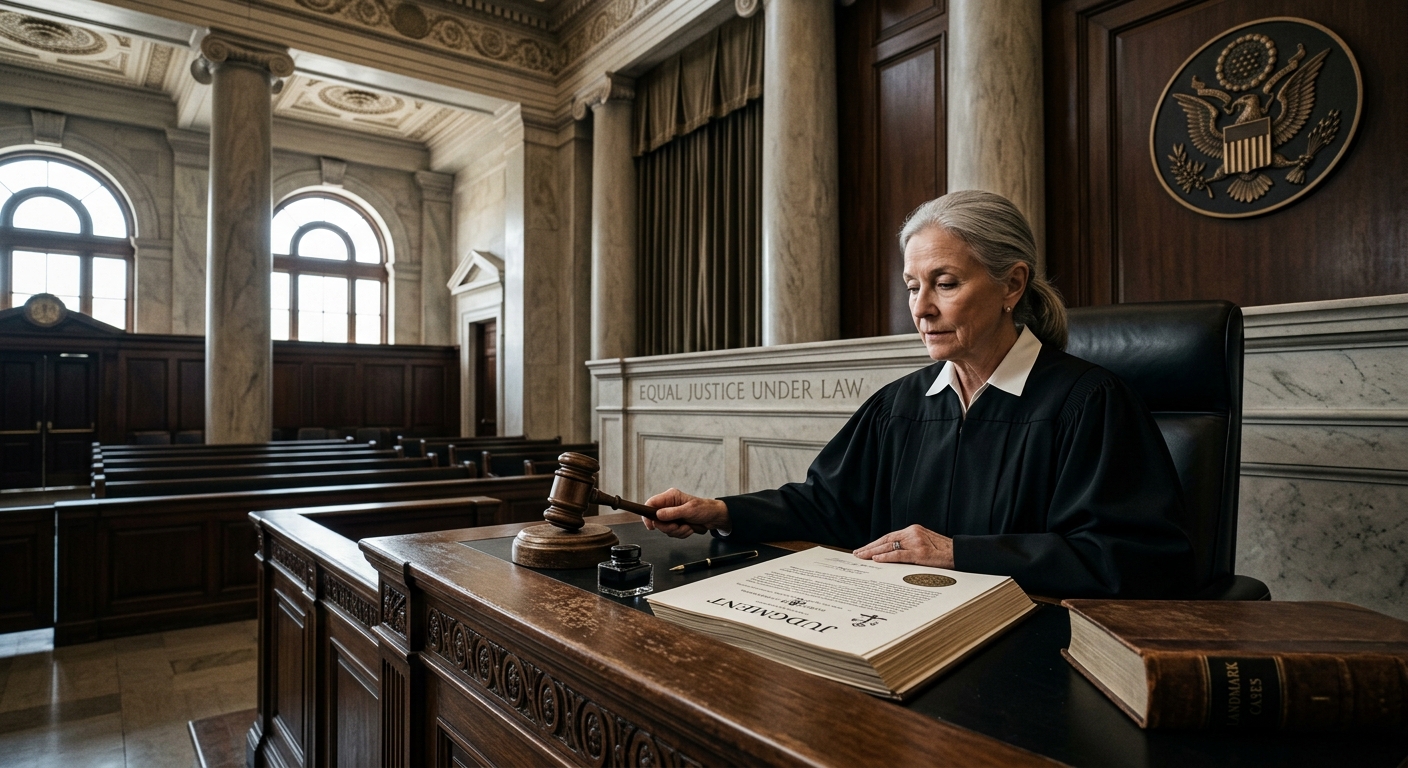
Introduction: The Intersection of War and the Constitution
The delicate balance of power between the branches of the United States government is never tested more severely than during times of armed conflict. In the immediate aftermath of the terrorist attacks on September 11, 2001, the United States entered an unprecedented era of heightened national security. Driven by the urgent need to protect the homeland, dismantle terrorist networks, and extract critical intelligence from captured enemy combatants, the executive branch asserted expansive wartime authorities. Among these bold assertions was the creation of special military tribunals designed specifically to try suspected terrorists outside the traditional justice system.
However, this unilateral exercise of presidential power eventually collided with the foundational principles of the U.S. Constitution and established norms of international humanitarian law. The resulting legal confrontation culminated in a defining Supreme Court ruling that fundamentally reaffirmed the separation of powers and the enduring strength of the rule of law. This article examines the profound legacy of that high-stakes legal battle, exploring how the judiciary restrained executive overreach, defended the integrity of the Uniform Code of Military Justice, and upheld the fundamental human rights enshrined in the Geneva Conventions.
The Genesis of Ad Hoc Military Commissions
Following the invasion of Afghanistan, the U.S. military detained hundreds of individuals suspected of fighting for or materially supporting transnational terrorist organizations. These detainees were systematically transported to the naval base at Guantanamo Bay, Cuba, an offshore facility selected partly to avoid the jurisdiction of domestic federal courts. In a highly controversial move, the executive branch issued an order establishing specialized military commissions to prosecute these individuals for alleged war crimes.
Unlike traditional military courts-martial, which operate under a well-established and congressionally approved legal framework, these ad hoc commissions were created entirely by executive decree. The administration vehemently argued that the unique, borderless nature of modern terrorism necessitated a radical departure from standard judicial proceedings. They claimed that bringing detainees before federal civilian courts or standard military courts would risk exposing highly classified intelligence, compromise ongoing military operations, and unnecessarily endanger national security personnel.
Consequently, the newly formed commissions featured rules that heavily favored the prosecution. Defendants could be entirely excluded from their own trials, preventing them from confronting their accusers or examining the evidence levied against them. Furthermore, the commissions broadly permitted the admission of hearsay and evidence obtained through highly coercive interrogation methods. By circumventing the traditional legislative process, the executive branch effectively manufactured a parallel justice system, sparking widespread alarm among legal scholars, human rights advocates, and even military defense lawyers who viewed the tribunals as a dire threat to the concept of due process.
The Clash of Legal Frameworks: Domestic Law vs. International Treaties
The legal controversy surrounding the establishment of these military commissions centered squarely on two primary bodies of law: domestic military statutes enacted by Congress and international treaties ratified by the United States.
The Uniform Code of Military Justice (UCMJ)
Enacted by the legislative branch, the Uniform Code of Military Justice (UCMJ) serves as the absolute bedrock of military law in the United States. It outlines the comprehensive procedures and substantive protections afforded to individuals tried by courts-martial. The UCMJ ensures that military justice, while naturally distinct from civilian criminal law to accommodate military necessity, still strictly adheres to fundamental principles of fairness and transparency. Critics of the ad hoc commissions argued that the executive branch had egregiously violated the UCMJ by establishing tribunals that drastically deviated from the rules governing standard courts-martial. According to the UCMJ’s statutory text, any military commission must apply rules of evidence and procedure that closely parallel those used in standard courts-martial, unless such application is demonstrably impracticable.
The Geneva Conventions and Common Article 3
The second critical framework involved international humanitarian law, specifically the universally recognized Geneva Conventions of 1949. The government initially contended that members of terrorist networks were “unlawful enemy combatants” who operated completely outside the recognized laws of war, and therefore fell outside the protections of the Geneva Conventions. However, this argument ignored the broad, universal safety net provided by Common Article 3 of the Conventions.
Common Article 3 explicitly applies to “armed conflicts not of an international character” and establishes a non-derogable baseline of humane treatment for anyone not actively taking part in hostilities, including captured combatants. Crucially, it prohibits the passing of criminal sentences and the carrying out of executions without previous judgment pronounced by a “regularly constituted court, affording all the judicial guarantees which are recognized as indispensable by civilized peoples.” The ad hoc military commissions, systematically stripped of standard judicial guarantees and created without formal legislative backing, conspicuously failed to meet this international threshold.
Separation of Powers: A Constitutional Stress Test
At the very heart of the legal dispute was the fundamental doctrine of the separation of powers. The framers of the Constitution deliberately divided the immense powers of war between the legislative and executive branches to prevent the concentration of absolute authority in a single individual or office. Article I of the U.S. Constitution grants Congress the exclusive power to declare war, raise and support armies, and importantly, to “make Rules for the Government and Regulation of the land and naval Forces.” Meanwhile, Article II designates the President as the Commander in Chief of the armed forces.
The administration asserted that the President’s Article II powers inherently included the unilateral authority to convene military commissions to try enemy combatants, citing historical precedents stretching back to the Revolutionary War and military tribunals used during World War II. However, constitutional opponents countered that the President simply cannot act unilaterally when Congress has already established a comprehensive statutory framework—namely, the UCMJ—that regulates the administration of military justice.
The Supreme Court ultimately addressed this profound constitutional dilemma. The judiciary emphasized that while the President wields significant and vital authority during wartime, that power is not an unchecked blank check. In a democratic republic, the executive branch must still operate within the definitive bounds of laws enacted by the legislature. By attempting to completely bypass Congress and create tribunals that contradicted the established UCMJ, the executive had dangerously overstepped its constitutional boundaries.
Key Distinctions in Justice Systems
To fully grasp the magnitude of the constitutional debate, one must carefully examine the severe procedural disparities across different judicial forums. The following table delineates the contrast between traditional justice mechanisms and the proposed ad hoc tribunals, illustrating exactly what was at stake for the rule of law.
| Judicial Feature | Civilian Federal Courts | UCMJ Courts-Martial | Ad Hoc Military Commissions |
|---|---|---|---|
| Source of Authority | U.S. Constitution (Article III) | Congressional Statute (Article I) | Executive Order (Article II claim) |
| Right to be Present | Absolute right to be present during trial and confront accusers. | Strong right to be present; strict, narrow rules for exclusion. | The accused could be excluded from proceedings entirely. |
| Rules of Evidence | Strict rules (Federal Rules of Evidence); hearsay generally banned. | Strict rules (Military Rules of Evidence); highly structured. | Relaxed rules; hearsay and coerced evidence heavily utilized. |
| Appellate Review | Independent federal appellate courts leading to the Supreme Court. | Court of Appeals for the Armed Forces, then Supreme Court. | Limited review; initially isolated within the executive branch. |
As the table illustrates, the ad hoc commissions lacked the basic, foundational procedural safeguards that define the American justice system. The deliberate removal of the defendant’s right to see evidence and confidently confront accusers represented a severe degradation of due process, reducing the tribunals to a legal anomaly designed explicitly to secure convictions rather than administer impartial justice.
The Court’s Verdict: Upholding the Rule of Law
When the Supreme Court finally delivered its verdict on the legality of the tribunals, it sent shockwaves through the political and legal landscape. In a definitive ruling, the Court held that the specific military commissions established by the executive branch were fundamentally illegal. The decision did not strip the government of its sovereign ability to detain or try suspected terrorists, but it emphatically and forcefully dictated how such trials must be lawfully conducted.
The majority opinion methodically dismantled the administration’s legal arguments on multiple fronts. First, the Court ruled that the President did not have independent authority to create military tribunals without explicit congressional authorization. Because Congress had already laid out the precise rules for military justice in the UCMJ, the President could not simply brush them aside in the name of national security.
Second, the Court delivered a monumental, history-making victory for international law by affirming that Common Article 3 of the Geneva Conventions applied directly to the conflict with transnational terrorist groups. This aspect of the ruling mandated that any tribunal used to try detainees must be a “regularly constituted court” that provides indispensable judicial guarantees. The ruling firmly rejected the dangerous notion that the United States could operate in a legal black hole, wholly unaccountable to domestic statutes or long-standing international treaties.
Global and Domestic Repercussions
The immediate consequence of the landmark ruling was a dramatic halt to the military commission proceedings at Guantanamo Bay. The executive branch was abruptly forced to return to Congress to seek explicit legislative approval for the tribunals. This political scramble led directly to the passage of the Military Commissions Act of 2006, which authorized the creation of new commissions but imposed markedly stricter procedural safeguards than the original executive order—though it still drew substantial criticism from civil liberties groups.
On a global scale, the Supreme Court’s decision rehabilitated America’s tarnished image as a nation committed to the rule of law. During the early years of the conflict, international allies, legal scholars, and human rights organizations had fiercely criticized the United States for its secretive detention policies and unilateral disregard for the Geneva Conventions. The Court’s insistence that even suspected terrorists are entitled to basic legal protections signaled to the watching world that American democratic institutions could successfully self-correct and restrain executive overreach.
Domestically, the ruling served as a vital, enduring reaffirmation of the separation of powers. It served notice to future administrations that the invocation of national security emergencies does not simply suspend the Constitution. The legislature must remain an active partner in defining the rules of wartime justice, and the judiciary remains the ultimate, independent arbiter of constitutional boundaries.
Frequently Asked Questions (FAQs)
What is a military commission?
A military commission is a specific type of military tribunal historically used to try individuals for violations of the laws of war. Unlike standard courts-martial, which are primarily utilized to maintain discipline among members of a nation’s own armed forces, military commissions are typically convened during periods of active warfare to prosecute enemy combatants. However, to remain lawful, they must still operate strictly within the legal boundaries established by the legislature and international law.
How does Common Article 3 of the Geneva Conventions apply to non-state actors?
Common Article 3 is frequently referred to as a “treaty in miniature” because it establishes fundamental, universal standards of humanity that apply to all armed conflicts not of an international character. This explicitly includes conflicts between a sovereign state and non-state armed groups (such as transnational terrorist networks). It absolutely prohibits torture, cruel treatment, and the passing of sentences without a fair trial by a regularly constituted court, regardless of the combatant’s official legal status.
Can the President of the United States create courts without Congressional approval?
Generally, no. The U.S. Constitution vests the exclusive power to create lower federal courts and to regulate the armed forces in Congress (Article I). While the President serves as the Commander in Chief (Article II), the Supreme Court has unequivocally ruled that the executive branch cannot unilaterally invent a brand-new justice system that bypasses existing statutory frameworks, such as the Uniform Code of Military Justice, without explicit, written authorization from the legislative branch.
Why is the Uniform Code of Military Justice (UCMJ) so important?
The UCMJ is the absolute foundation of military law in the United States. It ensures that military justice is administered uniformly, transparently, and fairly. It actively prevents arbitrary punishment by establishing clear, documented rules of evidence, procedure, and appellate review, thereby fiercely protecting the constitutional rights of individuals facing military trials.
Conclusion: Guarding Due Process in Times of Crisis
The fierce legal confrontation over the establishment of ad hoc military commissions remains one of the most critical constitutional stress tests in modern American history. It laid bare the innate, perpetual tension between the executive branch’s desire for swift, unencumbered action during wartime and the rigid, deliberate demands of a constitutional republic. The judiciary’s bold intervention was a profound reminder that true national security cannot be achieved by sacrificing the very democratic values the nation seeks to protect.
By strictly demanding adherence to the Uniform Code of Military Justice and the Geneva Conventions, the highest court in the land prevented the permanent establishment of an extrajudicial shadow system. The powerful legacy of this landmark dispute continues to echo loudly in ongoing national debates over presidential power, drone warfare, and the indefinite detention of combatants. Ultimately, it stands as an enduring testament to the resilience of the separation of powers, proving that even in the darkest, most terrifying days of global conflict, the rule of law must, and will, prevail.
References
- Hamdan v. Rumsfeld, 548 U.S. 557 (2006) — Supreme Court of the United States / Library of Congress. 2006-06-29. https://www.loc.gov/item/usrep548557/
- Geneva Convention (IV) on Civilians, 1949 – Common Article 3 — International Committee of the Red Cross (ICRC). 1949-08-12. https://ihl-databases.icrc.org/en/ihl-treaties/gci-1949/article-3
- 10 U.S. Code Subtitle A Chapter 47 Part II – Uniform Code of Military Justice — Legal Information Institute, Cornell Law School. 2024-12-23. https://www.law.cornell.edu/uscode/text/10/subtitle-A/part-II/chapter-47
- Judging Guantanamo: The Court, Congress, and the White House — Council on Foreign Relations. 2009-01-21. https://www.cfr.org/backgrounder/judging-guantanamo-court-congress-and-white-house
Similar Articles








Read full bio of Sneha Tete


