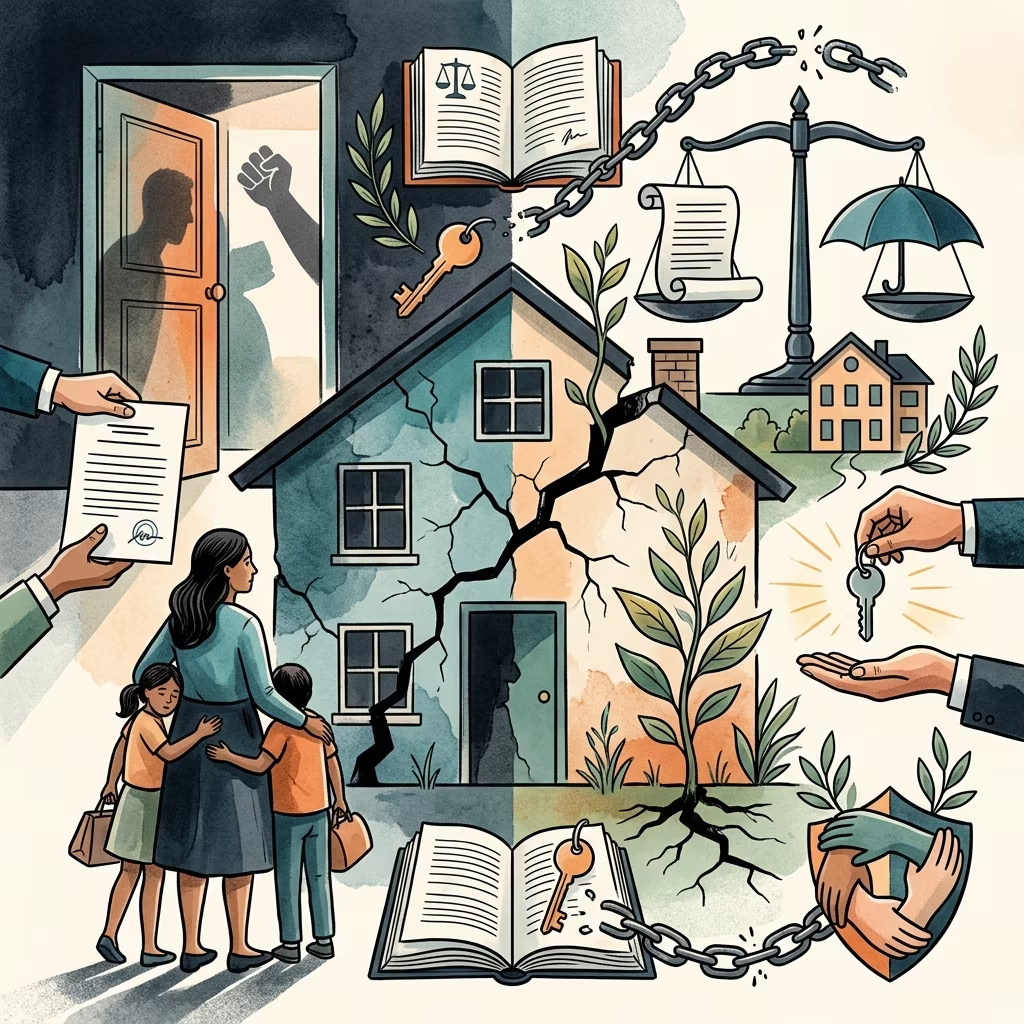
Domestic violence incidents can quickly turn a rental home into an unsafe environment. When abuse occurs in or around a rented property, both landlords and tenants face difficult questions: Can a victim be evicted? How can a survivor leave a dangerous situation without financial ruin? What obligations and options does a landlord have when violence affects the property? This guide explains how domestic violence intersects with eviction law, outlines common legal protections for survivors, and offers practical strategies for landlords and tenants to respond safely and lawfully.
1. Why Domestic Violence Matters in Eviction Decisions
Historically, eviction law focused on issues like nonpayment of rent, property damage, and lease violations. As the impact of domestic and sexual violence on housing stability became clearer, many jurisdictions introduced specific protections to prevent survivors from being punished for abuse committed against them. These safeguards aim to keep victims from losing their homes simply because they called police, sought medical help, or were targeted by an abuser.
For landlords, this means that handling domestic violence situations requires more than standard lease enforcement. Decisions about warnings, notices, and court filings must be weighed against legal protections designed to support victims and prevent discriminatory or retaliatory treatment.
- Domestic violence can trigger special rights for tenants, including early lease termination and lock changes.
- Eviction based solely on being a victim is often prohibited, especially in subsidized or assisted housing.
- Landlords still have tools to address criminal activity or serious property damage, but they must avoid penalizing the victim for abuse they did not cause.
2. Core Legal Protections for Survivors in Rental Housing
Although specific rules vary by state and locality, many legal frameworks share common goals: safeguard survivors’ housing stability, allow escape from dangerous homes, and prevent discrimination based on domestic or sexual violence. Some protections are found in state landlord–tenant statutes, while others come from federal laws such as the Violence Against Women Act (VAWA).
2.1 Federal Protections Under VAWA
VAWA provides housing protections for survivors of domestic violence, dating violence, sexual assault, and stalking who are applying for or living in many types of federally subsidized housing. These protections are widely recognized as a baseline standard in public housing and other HUD-assisted programs.
| Protection | Practical Effect for Tenants |
|---|---|
| Admission and assistance not denied because of abuse | Survivors cannot be refused subsidized housing or assistance due to their status as victims or related issues like past eviction records linked to abuse. |
| Shield from eviction based on violence against them | Being a victim, experiencing criminal activity related to abuse, or calling for help cannot be the sole basis for eviction or termination of assistance. |
| Emergency transfer rights | Tenants can request a transfer to another unit or development when remaining in the current home is unsafe. |
| Lease bifurcation options | Housing providers can remove the abuser from the lease while allowing the victim to remain, where permitted. |
| Confidentiality and anti-retaliation | Information about victim status must be kept confidential, and landlords may not threaten or retaliate against tenants for using VAWA protections. |
2.2 State-Level Protections and Special Statutes
Beyond federal law, many states have enacted statutes that specifically address domestic and sexual violence in rental housing. These laws often apply regardless of whether a tenant is in subsidized housing.
Common state protections include:
- Ban on victim-based eviction: Landlords may be prohibited from evicting or penalizing tenants simply because they experienced domestic violence or called law enforcement for help.
- Early lease termination rights: Survivors may be allowed to end a lease before the usual term if they need to relocate to protect their safety, often with specific notice and documentation requirements.
- Lock change rules: Some laws require landlords to change locks for tenants who present valid protection or peace orders against an abuser.
- Eviction defenses: Tenants may raise domestic violence as a defense when facing eviction for incidents related to abuse, particularly if they hold protective orders.
3. When a Survivor Wants or Needs to End the Lease
Leaving an abusive environment is often a priority for safety, but breaking a lease can carry financial and legal consequences if not done properly. Many jurisdictions recognize this conflict and provide structured ways for victims to terminate leases early without ongoing liability.
3.1 Typical Steps to Early Lease Termination
While procedures differ by location, survivors who seek to end a lease due to abuse commonly must follow several key steps.
- Provide written notice: Tenants usually must deliver a dated written statement to the landlord explaining that they are victims of domestic or sexual violence and that they need to move for safety reasons.
- Attach documentation: The notice often must be accompanied by proof of victimization, such as a protective order, police report, self-attested affidavit, or a statement from a qualified third party (e.g., victim advocate, attorney, medical professional).
- Observe time limits: Some laws require that the incident or threat be recent or that notice be given within a specific window—for example, within a certain number of days after an assault or before/after leaving the home.
- Vacate within the statutory period: Survivors may be given a set number of days after notice to leave the premises while limiting further rent obligations.
Landlords should carefully review any notice and documentation they receive and avoid rejecting valid requests merely because they do not fit general lease termination policies. Laws like the Safe Homes Act and similar statutes are designed specifically to override typical lease rules in the context of abuse.
3.2 Financial Consequences and Remaining Obligations
In many frameworks, survivors who use statutory early termination rights are released from liability for rent due after they leave, provided they follow the required steps. However, they may still be responsible for unpaid rent or damage incurred before the termination date. Both tenants and landlords should document the condition of the property and settle outstanding balances to minimize disputes.
4. Removing the Abuser, Not the Survivor: Lease Bifurcation
Sometimes, the safest solution is not to move the survivor but to remove the abuser from the lease and property. This approach, often called lease bifurcation, allows a landlord to terminate the tenancy of the abusive person while maintaining the victim’s housing.
4.1 How Lease Bifurcation Works
Under VAWA and some state laws, landlords may divide a lease when multiple parties are named tenants or when an abuser is the sole named tenant but others live there. The key idea is to separate responsibilities and occupancy rights so that the abuser can be evicted without displacing the victim.
- Notice to the abuser: Landlords usually must issue a termination notice to the abusive tenant, initiating the eviction process against that person only.
- Preservation of victim’s rights: Any bifurcation should respect the survivor’s rights under court orders and housing law; landlords cannot use the process to undermine lawful occupancy or safety protections.
- No automatic new rights: In some jurisdictions, bifurcation does not grant new tenancy rights to someone who lacked them before; it simply removes the abuser while leaving existing rights intact.
4.2 Practical Considerations for Landlords
Before bifurcating a lease, landlords should confirm whether their jurisdiction and the specific housing program allow this remedy. They should also review court orders, such as protective or peace orders, that may address who can reside in the unit, and coordinate with legal counsel or housing authorities when necessary.
5. Eviction Limits: Protecting Survivors from Being Penalized
Domestic violence can involve noise, police visits, disturbances, and even damage to the property. Without specific protections, these events might appear as lease violations, giving a landlord grounds to evict. However, many laws distinguish between misconduct by the abuser and the victim’s right to remain housed.
5.1 When a Survivor Cannot Be Evicted Because of Abuse
In many jurisdictions, landlords are barred from evicting or otherwise penalizing tenants because:
- They are victims of domestic violence, sexual assault, dating violence, or stalking.
- They called the police or sought emergency assistance in response to abuse.
- Their rental or credit history shows problems directly linked to violence against them.
These protections help ensure that survivors are not forced into homelessness as a direct consequence of the abuse they experienced or their efforts to obtain help.
5.2 Eviction Defense Strategies for Tenants
When a landlord files an eviction based on incidents related to domestic or sexual violence, tenants may be able to raise the abuse in court as a defense.
- Present protective or peace orders: Bringing a final protective or peace order to the eviction hearing can create a presumption that the tenant’s alleged breach does not justify eviction in some jurisdictions.
- Explain the circumstances: Survivors should clearly explain that they are victims of abuse and describe how the incident is connected to the eviction claim.
- Provide additional evidence: Where no formal order exists, tenants can offer items like police reports, medical records, photographs, or statements from advocates to show the eviction is tied to violence against them.
Court discretion remains important. Even without a formal protection order, judges in some areas have authority to decide that a breach related to domestic violence does not warrant eviction.
6. Lock Changes, Safety Planning, and Confidentiality
Beyond legal paperwork, physical safety measures are critical. Lock changes, safety planning, and confidentiality requirements all serve to reduce the risk that an abuser will return or discover a survivor’s new location.
6.1 Changing Locks to Exclude the Abuser
Several laws oblige landlords to change locks when a qualified tenant, armed with a valid court order, requests it. These provisions usually require:
- A written request from the tenant specifying the need for lock changes due to domestic or sexual violence.
- A copy of a protective or peace order that directs the abuser to stay away from or vacate the residence.
- Prompt action by the landlord to rekey or replace locks, limiting the abuser’s ability to enter the property.
Some statutes also permit victims to change locks themselves in urgent situations, subject to later compliance with landlord requirements.
6.2 Confidentiality of Survivor Information
Disclosure of a tenant’s victim status can put their safety at risk. Under VAWA and various state laws, housing providers are required to keep information about domestic or sexual violence confidential and to use it only for legitimate purposes, such as evaluating eligibility for protections.
Landlords should:
- Limit access to documentation about abuse to those who truly need it for legal or administrative reasons.
- Avoid discussing a tenant’s victim status with other residents or third parties without consent.
- Ensure records are stored securely and not used to deny housing opportunities.
7. Responsibilities and Best Practices for Landlords
Landlords confronted with domestic violence face competing concerns: ensuring safety on the property, meeting legal obligations, and treating all tenants fairly. Good practice involves understanding applicable laws, documenting events carefully, and communicating with tenants in a trauma-informed manner.
7.1 Legal Compliance and Risk Management
To reduce liability and support safety, landlords should:
- Learn the governing laws: Review federal protections like VAWA and state-specific statutes on domestic violence and housing before making eviction decisions.
- Avoid penalizing victims: Separate conduct of the abuser from the survivor’s rights; do not treat calls for help or victimization as lease violations.
- Document incidents: Keep objective records of disturbances, police responses, and property damage, focusing on facts rather than assumptions about fault.
- Consult counsel when necessary: Seek legal advice for complex situations, particularly where subsidized housing, multiple tenants, or conflicting court orders are involved.
7.2 Supporting Tenant Safety Without Overstepping
Landlords are not domestic violence experts, but they can support safer outcomes by respecting survivor autonomy and connecting tenants to reputable resources. The National Domestic Violence Hotline, for example, provides confidential support and information 24/7 for people experiencing abuse.
- Provide clear information about available lock changes or lease options when tenants disclose abuse.
- Respect tenants’ privacy; avoid pressuring survivors to share details beyond what is needed to implement legal protections.
- Encourage tenants to connect with advocates, hotlines, or legal aid organizations for specialized assistance.
8. Practical Guidance for Tenants Experiencing Abuse
For tenants, understanding housing rights can make the difference between staying trapped in danger and safely transitioning to a new home. While legal advice from a professional is important, some general steps can help survivors prepare.
- Document the abuse: Keep copies of police reports, medical records, photos, texts, emails, and any other evidence that may be required for courts or landlords.
- Seek court orders: Protective and peace orders can strengthen housing protections, support lock changes, and provide defenses in eviction proceedings.
- Review lease and local law: Identify any state statutes or housing program rules that offer special rights to victims of domestic or sexual violence.
- Communicate in writing: Provide written notice to the landlord when requesting early termination, lock changes, or other protections, and keep copies for your records.
- Use trusted support networks: Contact domestic violence hotlines, legal aid, or victim advocacy organizations to learn about housing options and safety planning.
9. Frequently Asked Questions (FAQs)
Can a landlord evict me because I called the police about domestic violence?
In many jurisdictions, landlords are prohibited from evicting or penalizing tenants for seeking law enforcement or emergency assistance in response to domestic or sexual violence. In HUD-assisted housing, VAWA also protects tenants from adverse action based on calls for help or violence committed against them.
Do I have to stay and pay rent if living with my abuser is dangerous?
Numerous state laws allow survivors to terminate leases early when they face credible threats or have experienced domestic or sexual violence, provided they give written notice and appropriate documentation. If you follow the legal procedures, you may be released from liability for future rent after you move, though you may still owe rent or costs accrued before termination.
If the abuser and I are both on the lease, can the landlord remove them but let me stay?
Yes, in certain situations. Under VAWA and some state statutes, landlords may bifurcate a lease to evict the abuser while allowing the survivor to remain a tenant. However, local law and the specific housing program rules determine how this process works and whether new tenancy rights arise.
What if my landlord tries to evict me for disturbance or damage that was caused by the abuser?
You may be able to raise domestic or sexual violence as a defense in an eviction case. Presenting protective or peace orders and evidence of the abuse can help show that the alleged lease violation is tied to violence against you, and in some states courts can rule that such breaches do not warrant eviction.
Where can I get confidential help and safety advice?
The National Domestic Violence Hotline offers confidential support via phone, chat, and text, helping survivors understand options, plan for safety, and locate local resources. Legal aid organizations, victim advocates, and housing counselors can also provide guidance on rights and procedures in your specific area.
References
- Landlord/Tenant Issues — Rocky Mountain Victim Law Center. 2023-08-01. https://www.rmvictimlaw.org/learn/legal-information/civil/landlordtenant-issues
- Housing Laws: If the abuser and I live together, can the landlord evict the abuser? — WomensLaw.org. 2021-06-15. https://www.womenslaw.org/laws/me/housing-laws/basic-information/if-abuser-and-i-live-together-can-landlord-evict-abuser
- The Safe Homes Act — Shriver Center on Poverty Law. 2019-12-01. https://www.povertylaw.org/wp-content/uploads/2019/12/English-SHA-Brochure_Updated_FINAL-2-1.pdf
- Housing Protections and Options for Domestic Violence Victims — Peoples-Law.org. 2020-09-10. https://www.peoples-law.org/housing-protections-and-options-domestic-violence-victims
- Housing Protections for Victims of Domestic Violence — New Hampshire Legal Assistance / Fair Housing Project. 2022-03-05. https://fairhousing-nh.org/fair-housing-nh-blog/housing-protections-for-victims-of-domestic-violence
- Violence Against Women Act (VAWA) — Housing Protections — U.S. Department of Housing and Urban Development. 2022-07-01. https://www.hud.gov/vawa
- Domestic Violence Support — National Domestic Violence Hotline. 2023-01-01. https://www.thehotline.org/