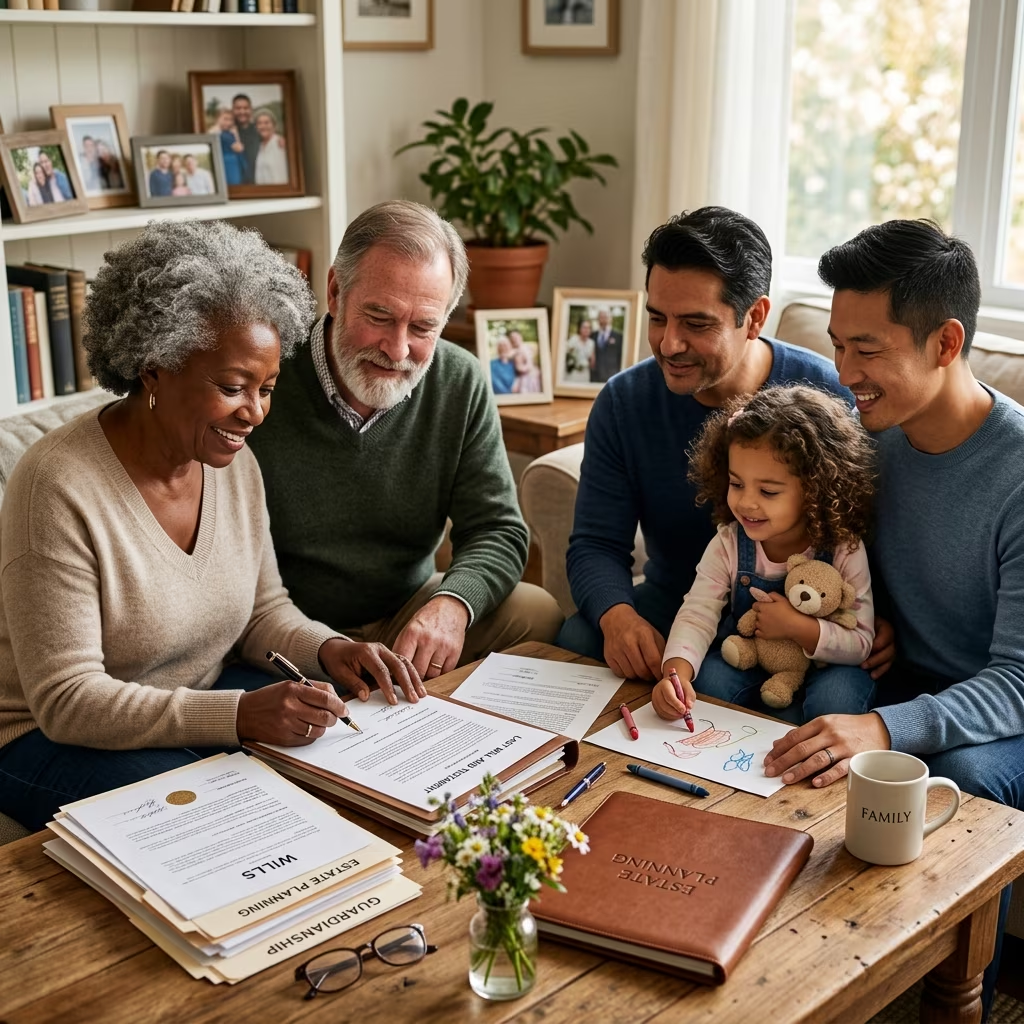
Families today come in many forms: unmarried partners, LGBTQ+ couples, blended households, co‑parents raising children together, and chosen families that do not fit traditional legal molds. Yet the law often assumes a narrow definition of family, especially when someone dies or becomes incapacitated. Without clear estate planning, these assumptions can leave partners, children, and loved ones unprotected. This article explains why wills and related documents are so important for non‑traditional families, and how to use them to secure your wishes.
Why Non‑Traditional Families Face Unique Legal Risks
Most state laws are built around a traditional nuclear family model: married spouses and their biological or adopted children. When someone dies without a will, their property is divided according to intestacy laws, which typically prioritize legal spouses, biological children, or parents. For non‑traditional families, this can clash dramatically with real‑life relationships.
- Unmarried partners often have no automatic right to inherit property or make medical decisions.
- LGBTQ+ couples may encounter gaps if a relationship is not legally recognized or if parentage and adoption are not documented.
- Blended families with stepchildren and children from previous relationships may see those children treated differently under default rules.
- Chosen families (friends or community members who function as family) usually have no legal status under intestacy laws.
These default rules do not account for emotional bonds, caregiving roles, or long‑term partnerships. As a result, people you consider family may be excluded from important decisions or inheritances unless you plan ahead with legally enforceable documents.
The Role of a Will in Protecting Your Household
A will is a written legal document that states how you want your property distributed at death and who should manage your estate. For non‑traditional families, a thoughtfully drafted will does far more than divide assets; it creates structure and authority in situations where the law might otherwise ignore important relationships.
| Function | Why It Matters |
|---|---|
| Asset distribution | Ensures property goes to partners, stepchildren, or chosen family, not just biological relatives. |
| Executor appointment | Names someone you trust to manage your estate instead of a court‑selected relative. |
| Guardianship nominations | Identifies who should care for minor children if a parent dies, crucial in blended and co‑parenting arrangements. |
| Direction for personal items | Reduces conflict over sentimental belongings that often cause disputes. |
| Support for pets & causes | Allows you to provide for companion animals or charitable causes that are central to your life. |
Without a will, courts follow intestacy rules and may distribute property in ways that leave a long‑term partner or stepchild with nothing while favoring distant biological relatives. For households that do not fit the default legal pattern, pre‑planning is the only reliable way to align the law with your real family structure.
Beyond Wills: Core Documents Every Non‑Traditional Family Should Consider
Estate planning for non‑traditional families is not just about writing a will. A strong plan coordinates multiple documents that work together during incapacity and after death. The following instruments are commonly recommended by experienced practitioners.
1. Health Care Directives and Proxies
Health care directives (also called living wills or advance directives) express your wishes for medical treatment and end‑of‑life care if you cannot communicate. A health care proxy or medical power of attorney names a specific person to make decisions on your behalf.
- Why they matter: Non‑traditional partners often lack automatic authority to make medical decisions, even when they are primary caregivers.
- What they can cover: choices about life support, resuscitation, pain management, organ donation, and preferred decision‑makers.
Designating a trusted partner, friend, or relative as your health care agent ensures that hospitals and doctors follow your chosen chain of decision‑making instead of defaulting to legally recognized relatives who may be less involved.
2. Financial Powers of Attorney
A financial power of attorney authorizes another person to manage your money, property, and legal affairs if you become incapacitated. This is essential in households where an unmarried partner or non‑legal parent handles day‑to‑day finances but has no formal authority.
- Paying bills and managing bank accounts.
- Handling real estate transactions, such as rent, mortgage, or sale of property.
- Managing business interests or investments.
Without this document, courts may appoint a guardian or conservator who does not reflect your wishes or understand your household’s needs.
3. Trusts Tailored to Complex Families
Trusts allow you to transfer assets to a trustee for the benefit of designated individuals, often with more flexibility than a will alone. They can be especially helpful when you want to balance support for a current partner with children from previous relationships.
- Revocable living trusts: Let you manage assets during life and control how they pass after death while often simplifying probate.
- Trusts for children: Protect inheritances for minors or dependents and ensure funds are managed responsibly.
- Specialized arrangements: Allow you to support a surviving partner for life while preserving remaining assets for children or other beneficiaries.
By separating legal control from beneficial enjoyment, trusts can prevent unintended disinheritance and reduce disputes in blended or multi‑household families.
Common Family Structures and How Wills Can Help
Although every family is unique, many non‑traditional households share similar legal vulnerabilities. Understanding these scenarios can help you identify where your own planning may be incomplete.
Unmarried Partners and Long‑Term Relationships
In most U.S. jurisdictions, unmarried partners do not inherit by default and have no statutory right to manage a partner’s finances or health care. A will and supporting documents can close these gaps.
- Use a will to leave specific assets—such as a home, savings, or personal items—to your partner.
- Consider joint property ownership or beneficiary designations to avoid relying solely on probate.
- Sign health care and financial powers of attorney naming each other as primary decision‑makers.
LGBTQ+ Families and Chosen Family Networks
LGBTQ+ families often rely on chosen family networks, including friends, former partners, and community members who play central roles in caregiving and support. Intestacy rules rarely reflect these relationships.
- Use wills to recognize and provide for chosen family members who would otherwise be excluded.
- Coordinate guardianship nominations and parentage documentation for children to avoid custody disputes.
- Appoint trusted community members as health care agents or financial surrogates if they know your wishes best.
Blended Families With Stepchildren
In blended families, children from prior relationships, stepchildren, and children from a current partnership may have different legal statuses. State laws often prioritize biological or legally adopted children, which means stepchildren may not inherit without explicit planning.
- Draft a will that clearly names each child, including stepchildren, and describes how you want assets divided.
- Consider trusts to provide ongoing support for a surviving partner while preserving inheritance for children from all branches of the family.
- Appoint guardians for minor children and clarify co‑parenting expectations to avoid future disputes.
Key Planning Steps for Non‑Traditional Families
Effective estate planning is a process, not a single document. The following steps can help non‑traditional households create a resilient plan that matches their reality.
1. Map Your Real Family, Not Just Your Legal One
Begin by listing the people who depend on you or whom you consider family, regardless of legal definitions. This may include partners, children, elders you support, close friends, and community members.
- Identify who relies on you financially or emotionally.
- Note who you want to make decisions for you if you cannot act on your own.
- Clarify who should receive major assets and sentimental items.
Comparing this list with who would inherit under your state’s intestacy rules can highlight gaps that your documents must fill.
2. Review Beneficiary Designations and Property Titles
Certain assets—such as life insurance, retirement accounts, and some bank accounts—pass according to beneficiary forms, not your will. These designations can override your testamentary instructions, so they must be kept current.
- Update designations after major life events like marriage, divorce, adoption, or separation.
- Check that named beneficiaries reflect your current relationships and intentions.
- Coordinate titles on real estate and other major property with your estate plan to avoid unintended joint ownership outcomes.
3. Talk Openly With Loved Ones
Non‑traditional family arrangements can be complex and emotionally charged. Clear communication helps reduce misunderstandings and future legal disputes.
- Explain your general intentions to key people so they are not surprised later.
- Discuss guardianship preferences and caregiving expectations with co‑parents and potential guardians.
- Encourage loved ones to create or update their own documents to keep the plan consistent.
4. Work With an Attorney Familiar With Diverse Families
State laws vary widely, and non‑traditional families often face nuanced legal questions. Many practitioners recommend working with an attorney who has experience in LGBTQ+ law and complex family structures.
- Ask about experience with blended families, unmarried partners, and chosen families.
- Ensure documents comply with your state’s formal requirements for validity.
- Review plans periodically, especially after major changes in relationships, residence, or finances.
Frequently Asked Questions
Do I need a will if I don’t own a house or large investments?
Yes. Even modest assets—such as savings, personal belongings, and digital accounts—can cause conflict if there is no clear plan. A will also lets you name guardians for children and appoint an executor, which may be more important than the dollar value of your estate.
Can my unmarried partner inherit from me without a will?
In most states, an unmarried partner does not automatically inherit under intestacy laws. They may receive nothing unless you use a will, trust, joint ownership, or beneficiary designations to direct property to them.
What happens if I become incapacitated without health care directives?
If you cannot communicate and have no health care proxy or directive, state law often gives decision‑making power to legal relatives, such as parents or adult children. This can exclude partners or chosen family members and may lead to disagreements about your care.
How often should non‑traditional families update estate plans?
Experts frequently advise reviewing major documents every few years and after significant life changes, such as entering or ending a relationship, the birth or adoption of a child, relocation to a new state, or major financial shifts.
Is a trust always necessary, or is a will enough?
Not every family needs a trust, but they can be valuable when you have complex goals, such as supporting a partner for life while preserving assets for children, or providing structured care for minors or dependents. An attorney can help determine whether a trust adds meaningful benefits beyond your will.
References
- The Importance of Wills for Non-Traditional and LGBTQ+ Families — FindLaw. 2023-06-01. https://www.findlaw.com/lgbtq-law/the-importance-of-wills-for-non-traditional-families.html
- How Can Estate Planning Protect Assets for Non-Traditional Families? — Heartland Estate Law. 2024-02-15. https://heartlandestatelaw.com/blog/how-can-estate-planning-protect-assets-for-non-traditional-families/
- Estate Planning for Non-traditional Families — Baxter Law, LLC. 2025-02-10. https://www.baxter-law.com/blog/2025/february/estate-planning-for-non-traditional-families-ens/
- Blended Family Wills: Protect Your Legacy and Loved Ones — Western & Southern Financial Group. 2023-09-20. https://www.westernsouthern.com/retirement/blended-family-wills
- Five Estate Planning Issues Non-Traditional Families Should Not Ignore — SSB Law. 2022-11-15. https://ssbllc.com/five-estate-planning-issues-non-traditional-families-should-not-ignore/
- 4 Estate Planning Tips for Blended/Non-Traditional Families — Arnold & Smith Law. 2023-04-05. https://www.arnoldsmithlaw.com/four-estate-planning-tips-for-blended-non-traditional-families.html
- 10 Reasons You Need a Will — LegalShield. 2021-08-01. https://www.legalshield.com/blog/importance-having-will