
Essential Utah Traffic Laws for Everyday Drivers
A practical, plain-language guide to Utah traffic rules, penalties, and safe driving requirements for residents and visitors.
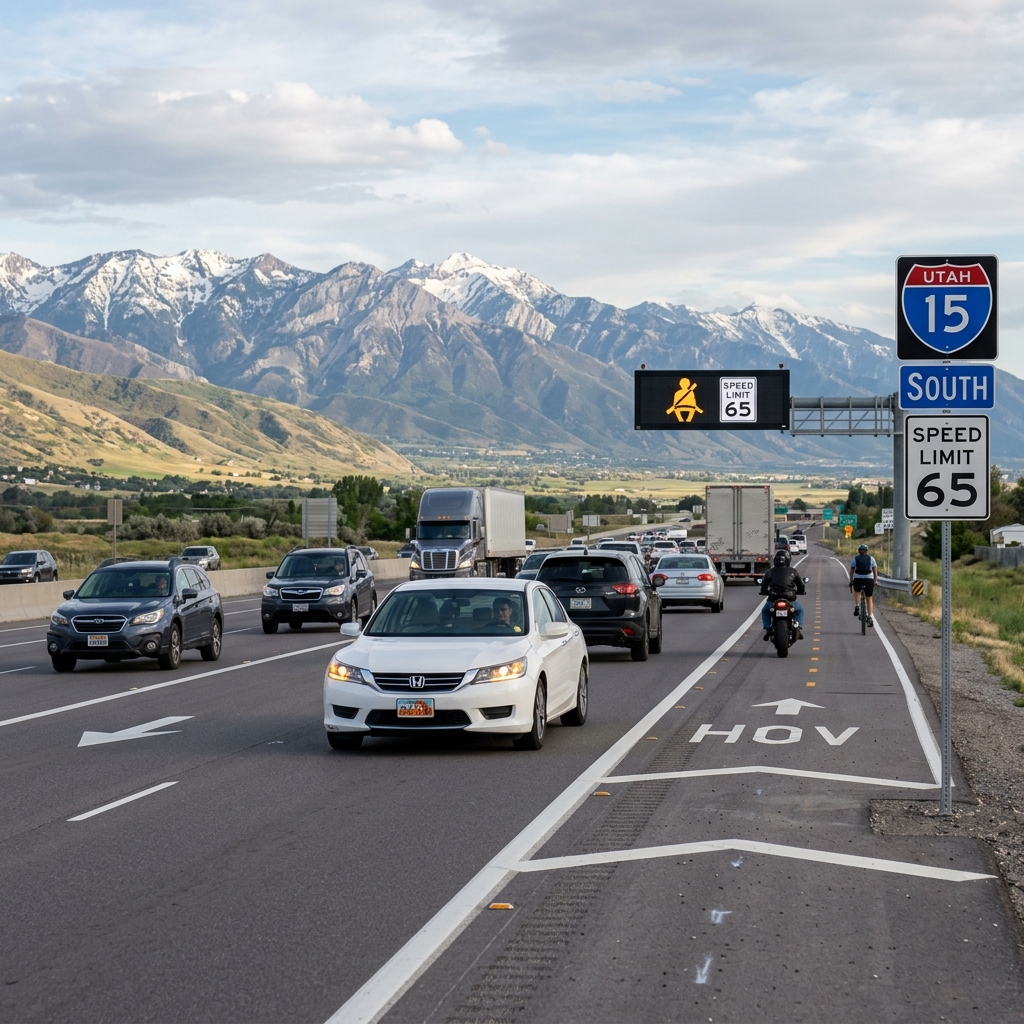
Utah’s roads range from busy urban freeways along the Wasatch Front to remote desert highways stretching for miles between towns. Whether you are a long-time resident or a visitor planning a road trip, understanding Utah traffic laws is critical to staying safe, avoiding tickets, and protecting your driving record.
This guide explains the fundamental rules that govern driving in Utah, focusing on speed limits, licensing, seat belt and child safety requirements, impaired and distracted driving, common violations, and what to do if you are cited by law enforcement.
1. Who May Drive in Utah
Utah law requires that anyone operating a motor vehicle on public roads holds a valid driver license and meets age and eligibility rules.
- Minimum driving age: In general, drivers must be at least 16 years old to drive in Utah with a valid license issued by Utah or another jurisdiction.
- Visitors: Nonresidents may drive in Utah if they hold a current, valid license from another U.S. state or a foreign country and meet the minimum age requirement.
- Licensing obligations: New Utah residents typically must convert their out-of-state license to a Utah license within a specified period under state motor vehicle and licensing rules.
Drivers should review the Utah Driver Handbook and applicable motor vehicle code provisions to understand licensing categories, learner permits, and restrictions for younger drivers.
2. Utah Speed Limits and Safe Driving Expectations
Speed limits in Utah vary by location, road type, and traffic conditions. Exceeding the posted limit can result in fines, points on your record, and increased crash risk.
2.1 Typical Posted Speed Limits
| Road Type | Typical Speed Limit Range | Notes |
|---|---|---|
| Urban highways and freeways | 65–70 mph | Common along the Wasatch Front and major routes near cities. |
| Interstate highways (rural segments) | 75–80 mph | Higher limits only where clearly posted by signs. |
| State highways | Up to 65 mph | Expect reduced limits through towns and developed areas. |
| Local streets & residential areas | Typically 25–35 mph | Exact limits are set by local governments and posted by signs. |
2.2 Key Speeding Rules
- Obey posted signs: Regulations for maximum and minimum speeds are established by law and indicated by traffic-control devices; drivers must follow these signs unless specifically directed otherwise by law enforcement.
- Transition zones: When speed limits change, additional signs and road markings often indicate the transition area. Drivers must adjust speed promptly and safely.
- Special areas: Work zones, school zones, and areas with high pedestrian activity frequently have lower limits and enhanced penalties for violations.
Driving significantly faster than the posted limit or too fast for conditions (such as winter storms or heavy traffic) may lead to citations for speeding or reckless driving under Utah law.
3. Traffic Signals, Stop Signs, and Right-of-Way
Utah’s rules for traffic signals and stop signs are largely consistent with national standards but are enforced under specific provisions of the Utah Code.
3.1 Colors and Meanings of Signals
- Green signal: Drivers facing a circular green may proceed straight or turn right or left if not prohibited, but must yield to vehicles and pedestrians already in the intersection or crosswalk.
- Yellow (amber) signal: A steady yellow warns that the green phase is ending. Drivers should prepare to stop unless they are already too close to the intersection to do so safely.
- Red signal: Drivers must stop at the stop line or before entering the crosswalk and remain stopped until a signal permits movement.
3.2 Right-Turn and Left-Turn Rules
- Right turn on red: Unless a sign prohibits it, a driver may turn right on a red light after coming to a complete stop and yielding to pedestrians and oncoming traffic.
- Left turns: State law provides detailed guidance on proper lane positioning and execution of left turns, requiring approach from the designated left-hand lane and compliance with signals and right-of-way rules.
3.3 Stop Signs and Uncontrolled Intersections
- Stop signs: Utah requires a full, complete stop at stop signs. Rolling through a stop sign is a common violation that can result in a citation.
- Signal outages: If a traffic signal is not illuminated, drivers are generally expected to treat the intersection as a four-way stop, yielding according to standard right-of-way rules.
4. Seat Belts, Child Safety Seats, and Motorcycle Helmets
Utah has strict safety equipment requirements designed to reduce injuries and fatalities in crashes. Noncompliance can lead to both safety risks and enforcement actions.
4.1 Seat Belt Requirements
- Children up to age 8: Children ages 8 and younger who are not taller than 57 inches must be placed in an approved child safety seat that is properly installed and used according to manufacturer instructions.
- Youths 8–18: Individuals ages 8 through 18 must be restrained either by an appropriate child safety device or a seat belt.
- Adults 19 and older: For anyone 19 or older, not wearing a seat belt is a primary offense, meaning law enforcement may stop a vehicle solely for seat belt violations as permitted by law.
4.2 Motorcycle Helmets
- Under 18: Motorcyclists and motorcycle passengers under 18 years old must wear an approved helmet while riding.
- Over 18: Helmet use is strongly encouraged for all riders, but Utah’s mandatory requirement specifically targets those younger than 18.
5. Impaired and Distracted Driving in Utah
Utah has some of the strongest impaired driving laws in the United States and is increasingly strict about distracted driving behaviors like texting behind the wheel.
5.1 DUI and Blood Alcohol Concentration (BAC)
- Standard legal limit: Utah’s per se limit for alcohol impairment is a BAC of 0.05%, which is lower than the 0.08% limit used in many states.
- Enhanced penalties: Certain DUI offenses may require installation of ignition interlock devices and carry mandatory license suspensions, fines, and possible jail time.
- Test refusal: Refusing BAC or chemical testing can itself lead to increased administrative penalties, including longer license suspensions.
5.2 Distracted Driving Rules
- Texting and phone use: Utah prohibits certain uses of handheld devices while driving, including texting and manipulating apps, and has increased penalties for distracted driving offenses in recent legislative updates.
- Work zones and school areas: Using a phone or engaging in other distractions in sensitive areas, such as construction zones, may lead to enhanced fines and penalties due to heightened safety concerns.
Drivers should always maintain full attention to the road and avoid manual, visual, and cognitive distractions to comply with law and reduce crash risk.
6. Special Conditions: Winter Driving and Mountain Roads
Utah’s climate and geography bring severe winter conditions, especially in canyon and mountain areas. The Utah Department of Transportation (UDOT) may impose special traction rules when conditions deteriorate.
6.1 Traction Law and Tire Requirements
- Traction devices: When the UDOT Traction Law is in effect on designated mountain roads, vehicles must use traction devices such as tire chains or cables, or have tires with snow-capable ratings including M+S or 3PMSF.
- Tread depth: On major canyon routes like Big Cottonwood Canyon (SR-190) and Little Cottonwood Canyon (SR-210), vehicles must have tire tread depth of at least 5/32 inch when traction requirements are active.
Failure to comply with these requirements may result in being turned around, cited, or causing a crash, especially on steep, icy routes leading to ski areas.
7. Common Utah Traffic Violations and Penalties
While the specific penalties for traffic violations depend on the offense, prior record, and court disposition, certain behaviors are frequently cited under Utah law.
7.1 Examples of Common Violations
- Speeding: Driving above the posted limit or too fast for conditions.
- Running red lights or stop signs: Failing to fully stop or entering intersections against the signal.
- Improper turns or lane changes: Not using proper lanes, failing to signal, or unsafe maneuvers.
- Seat belt violations: Not properly restraining adults, children, or youths as required.
- DUI and impaired driving: Operating under the influence of alcohol or drugs above legal limits.
- Distracted driving: Texting or using handheld devices contrary to law.
7.2 Penalty Considerations
- Fines and fees: Monetary penalties vary by offense and may be higher for school zones, work zones, or repeat violations.
- Points and license impact: The Utah Driver License Division assigns points for certain convictions, which can lead to license suspension if thresholds are exceeded.
- Insurance consequences: Traffic convictions often result in higher insurance premiums, especially for serious offenses.
Drivers should consult the Utah Motor Vehicle Code and current driver handbook or speak with a legal professional for exact penalty amounts and procedures.
8. Traffic Stops, Tickets, and Court Procedures
If you are stopped by law enforcement and issued a citation in Utah, you have specific obligations and options under state law and court rules.
8.1 Responding to a Ticket
- Timeframe to respond: According to Utah Highway Patrol guidance, a cited driver must appear before or post bail with the court listed on the citation generally not sooner than five days and not later than 14 days after receiving the ticket.
- If you lost the citation: Drivers may contact the Utah Highway Patrol office in the area where they were stopped. If the court has not yet received the ticket, agencies typically have a limited number of days to file, after which the court clerk may request a copy from the patrol.
- Options: Depending on the offense and court, you may plead guilty and pay, request a hearing, or seek legal counsel.
8.2 Stopping for Emergency Vehicles
- Obligation to stop: Utah law requires drivers to stop or yield appropriately for vehicles displaying emergency lights or sounding a siren, including police, fire, and ambulances.
- Suspected impersonators: If a driver is uncertain about an unmarked vehicle or suspects an impersonator, official guidance is to contact dispatch, request identification, and if necessary drive to a well-lit public area while calling 911.
8.3 Reporting Dangerous Drivers
- Emergency reporting: If a driver presents a significant risk to public safety, witnesses may call 911 and provide vehicle description, license plate, location, and direction of travel.
9. Practical Tips for Driving Safely in Utah
Beyond legal requirements, practical habits can make driving in Utah safer and more predictable.
- Monitor speed closely when transitioning from high-speed highways into towns and residential areas.
- Plan winter trips with traction requirements in mind and carry approved chains or appropriate tires when traveling canyon roads.
- Always use seat belts and properly secure children in approved safety seats.
- Avoid using handheld devices; enable hands-free options or pull over safely if necessary.
- Review Utah’s driver handbook regularly to stay current on changes to the law.
10. Frequently Asked Questions (FAQs)
10.1 Can I drive in Utah with an out-of-state license?
Yes. Visitors may drive in Utah if they hold a current, valid driver license from another state or country and are at least 16 years old. New residents, however, must comply with Utah’s licensing rules and typically obtain a Utah license after establishing residency.
10.2 Is it legal to turn right on red in Utah?
In most intersections, a right turn on red is permitted after a complete stop and yielding to pedestrians and oncoming traffic, unless a posted sign specifically prohibits the maneuver.
10.3 What are Utah’s seat belt rules for adults?
For individuals age 19 and older, failure to wear a seat belt is a primary offense, allowing law enforcement to stop a vehicle based solely on the seat belt violation as permitted by law.
10.4 What is the legal BAC limit for driving in Utah?
Utah’s per se blood alcohol concentration limit is 0.05%. Driving at or above this level can result in DUI charges, with additional penalties for repeat or aggravated offenses.
10.5 What should I do if I receive a traffic ticket?
You must contact or appear before the court listed on your citation within the timeframe indicated, generally between five and 14 days from the date of the ticket. You may choose to pay the fine, contest the charge, or consult an attorney, depending on the circumstances.
References
- Utah Speed Limits & Driving Laws — Utah Office of Tourism / VisitUtah.com. 2023-03-01. https://www.visitutah.com/plan-your-trip/getting-around-utah/utah-driving-laws
- Utah Code Title 41, Chapter 6a: Traffic Code — Utah Legislature. 2024-01-01. https://le.utah.gov/xcode/Title41/Chapter6a/41-6a.html
- Traffic Law FAQ — Utah Highway Patrol. 2022-06-15. https://uhp.utah.gov/traffic-law-faq/
- UTAH DRIVER HANDBOOK 2020 v.1 — Utah Department of Public Safety, Driver License Division. 2020-01-01. https://trustcoinc.com/wp-content/uploads/Utah-Driver-Handbook-2020.pdf
- Utah Traffic Laws — FindLaw. 2023-05-10. https://www.findlaw.com/state/utah-law/utah-traffic-laws.html
Similar Articles








Read full bio of Sneha Tete


