
Essential Tax Checklist for New Small Businesses
A practical, step‑by‑step tax readiness guide for entrepreneurs launching and organizing a new small business.
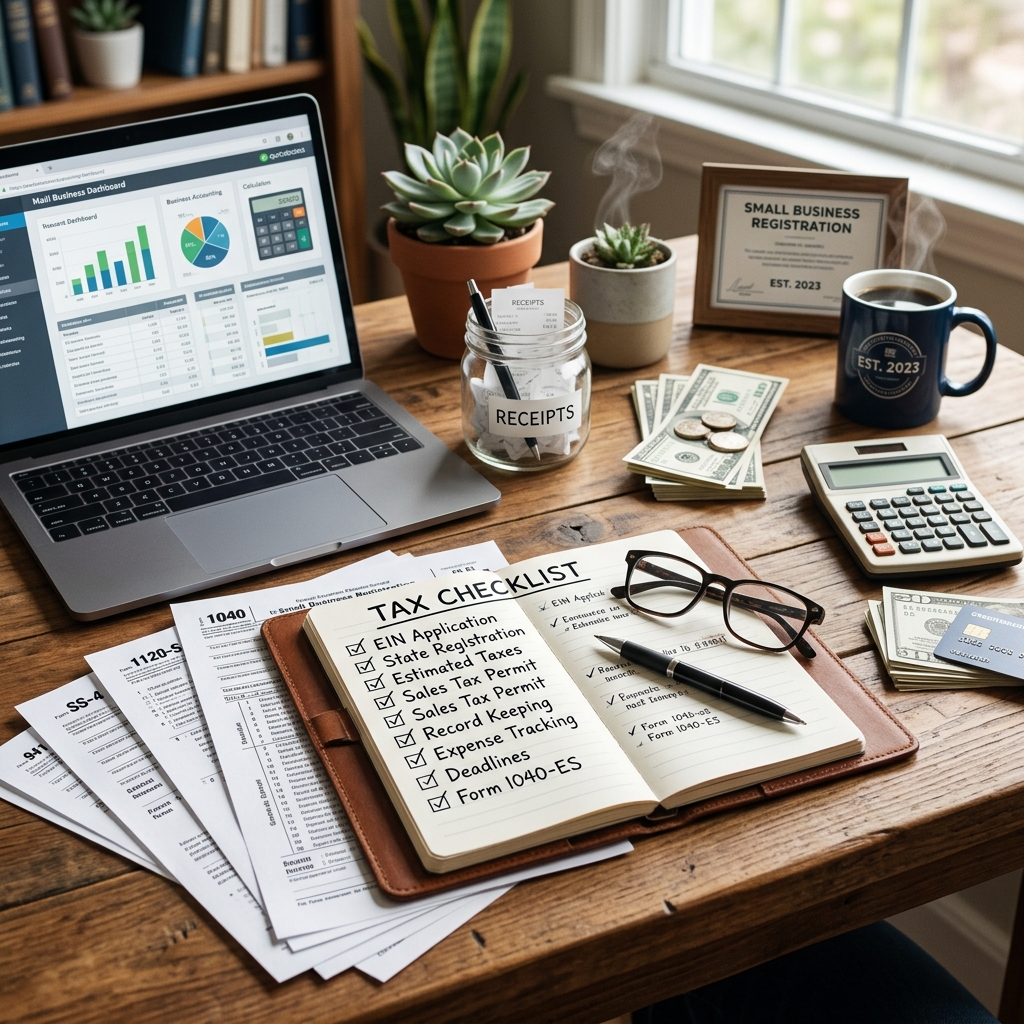
Launching a small business involves more than choosing a name and finding customers. From the first day you start operating, you take on specific tax obligations that affect how you register the business, track money, pay workers, and file returns with federal, state, and sometimes local authorities.
This guide walks you through a practical tax checklist designed for new small business owners. It explains the key decisions, registration steps, recordkeeping habits, and annual filings you need to understand early so you can avoid penalties, reduce stress at tax time, and focus on growing your company.
1. Clarify Your Legal Structure and Tax Identity
Your choice of business structure shapes how your income is taxed, which forms you file, and whether you need a separate tax ID number. The Internal Revenue Service (IRS) recognizes common structures such as sole proprietorships, partnerships, limited liability companies (LLCs), S corporations, and C corporations.
1.1 Choose a Business Structure
Before you begin operating, decide how you want your business to be legally organized. Each option carries different tax and liability consequences:
- Sole proprietorship – Easiest to start; business income is reported on your personal tax return.
- Partnership – Two or more owners share profits, losses, and reporting responsibilities.
- LLC – Offers liability protection while allowing flexible tax treatment (single-member, partnership-style, or corporate election).
- S corporation – Pass-through tax treatment with specific ownership and filing requirements.
- C corporation – Separate legal entity taxed at the corporate level.
Your structure determines which IRS forms you must file and how you report income and expenses on your return.
1.2 Obtain an Employer Identification Number (EIN)
An Employer Identification Number (EIN) is the federal tax ID for many businesses. Even sole proprietors often obtain an EIN to separate business activities from their personal Social Security number. The IRS allows you to apply for an EIN online at no cost.
- Use your EIN for federal tax filings and some state registrations.
- Provide it to banks when opening business accounts.
- Share it with payroll providers, vendors, and agencies that issue tax forms.
1.3 Choose Your Tax Year
Most small businesses use a calendar tax year (January 1 to December 31), but certain entities may adopt a fiscal year instead. The IRS requires you to select a tax year when you establish the business.
- Confirm whether you will report income on a calendar year basis.
- Align your accounting system to match your chosen tax year.
- Use the same tax year for all federal returns unless you formally change it.
2. Register With Federal, State, and Local Tax Agencies
Once you have your structure and tax identity, you need to understand which agencies will expect tax payments and filings. This typically includes the IRS, state departments of revenue, and sometimes city or county tax offices.
2.1 Federal Income and Employment Tax Obligations
All businesses must consider federal income taxes and, if they have employees, employment taxes such as Social Security, Medicare, and federal unemployment tax.
- Identify the IRS forms you will use (for example, Schedule C for sole proprietors or Form 1120 for corporations).
- Learn about estimated tax payments if you expect to owe more than a small amount of federal income tax.
- Understand your reporting responsibilities for employees, including payroll tax returns.
2.2 State Income, Sales, and Excise Taxes
Most states impose business taxes in addition to federal requirements. These may include state income tax, sales tax on products or services, use tax on out-of-state purchases, and sector-specific excise taxes.
- Register with your state tax or revenue department for tax accounts and permits.
- Determine whether you must collect sales tax from customers and how to remit it.
- Confirm any additional licensing or tax obligations in your industry.
2.3 Local Business and Tax Registrations
Depending on your location, cities or counties may require business licenses or levy local taxes on gross receipts or property. Check with your local government offices to understand any additional registrations and filing schedules.
3. Set Up Strong Recordkeeping From Day One
Accurate, organized records are essential for meeting tax obligations, supporting deductions, and simplifying annual filing. The IRS encourages small business owners to keep reliable books and records that show income, expenses, assets, and payroll.
3.1 Establish an Accounting System
Whether you use spreadsheets, bookkeeping software, or a professional accountant, decide how you will track financial activity:
- Maintain a general ledger that records every transaction by category.
- Produce regular income statements and balance sheets to monitor performance.
- Keep separate business bank and credit card accounts to avoid mixing personal and business funds.
3.2 Organize Income Documentation
When you file taxes, you must be able to show how much revenue your business earned during the year. Good documentation also helps reconcile your accounting records with bank deposits.
- Customer invoices and sales receipts.
- Bank deposit records and merchant processing reports.
- Any information returns you receive, such as Forms 1099-NEC or 1099-MISC, which report payments to your business.
3.3 Track All Deductible Expenses
Business expenses reduce your taxable income, but only if you can show that they were ordinary and necessary and supported by documentation. Maintaining thorough records helps you justify deductions in case of an IRS examination.
- Receipts for supplies, equipment, and professional services.
- Bank and credit card statements for business accounts.
- Contracts, bills, and payment confirmations for larger purchases.
3.4 Maintain Asset and Depreciation Records
When you buy long-term assets like equipment, vehicles, or machinery, you often deduct their cost over time through depreciation rather than in a single year. That requires careful tracking of acquisition cost, date, and disposition.
- Record the purchase price and date for each significant asset.
- Maintain a depreciation schedule that reflects annual deductions.
- Document sales of assets, including the sale price and date, to calculate gain or loss.
4. Understand Employment and Contractor Tax Duties
If you hire workers, you become responsible for collecting and paying employment taxes and issuing information returns to both employees and independent contractors. The IRS provides detailed guidance on small business employment tax requirements.
4.1 Onboarding Employees With Required Forms
Before employees start work, you must collect certain forms and verify eligibility:
- Form W-4 – Used by employees to indicate federal income tax withholding preferences.
- Form I-9 – Confirms an employee’s authorization to work in the United States.
These documents help you calculate the correct payroll tax withholdings and demonstrate compliance with federal employment rules.
4.2 Payroll Tax Reporting and Deposits
As an employer, you must withhold federal income tax, Social Security, and Medicare from employees’ wages and remit these amounts, along with employer contributions, to the IRS. This is typically done through periodic payroll tax deposits and quarterly or annual returns.
- Use appropriate federal payroll forms (for example, Form 941 for quarterly federal tax returns).
- Remit federal unemployment tax (FUTA) when applicable.
- File state payroll returns and pay state unemployment contributions as required.
4.3 Managing Independent Contractors
Many small businesses rely on independent contractors instead of employees. This relationship has different tax requirements. If you pay a contractor at least a specified amount, you may need to issue an information return such as Form 1099-NEC.
- Collect taxpayer identification information from contractors when they begin working.
- Track total payments over the year to determine whether a reporting threshold is met.
- File required information returns with the IRS and provide copies to contractors.
5. Plan for Estimated Taxes and Filing Deadlines
New small business owners are often surprised by how quickly tax deadlines arrive. Planning ahead for estimated payments and annual filings helps you avoid underpayment penalties and cash flow problems.
5.1 Estimated Tax Payments
Owners who do not have tax withheld through wages may need to pay estimated taxes four times per year. This includes sole proprietors and partners who report business income on their individual returns.
- Work with a tax professional or use IRS tools to estimate your annual tax liability.
- Schedule quarterly payments if your projected tax exceeds minimum thresholds.
- Review your income and expenses during the year to adjust estimates as needed.
5.2 Annual Federal Return Deadlines
Most federal income tax returns are due in the months following the end of your tax year. The specific due date depends on your entity type and tax year selection.
| Business Type | Common Federal Form | Typical Due Period (Calendar Year) |
|---|---|---|
| Sole proprietorship | Schedule C with individual Form 1040 | Mid-April of following year |
| Partnership | Form 1065 | Early spring following year |
| S corporation | Form 1120-S | Early spring following year |
| C corporation | Form 1120 | Varies by tax year and structure |
Specific dates can change over time, so confirm the current deadline for your business using IRS guidance or a qualified tax adviser.
5.3 State, Local, and Sales Tax Filings
In addition to federal returns, you may have quarterly or monthly filing obligations for sales tax, state income tax estimates, and local business taxes.
- Note filing frequencies for each tax account when you register.
- Set calendar reminders for due dates to avoid late penalties.
- Reconcile your accounting records before preparing each return to ensure accuracy.[10]
6. Prepare a Year-End Tax Checklist
As your first business year ends, a structured preparation checklist helps you gather documents, reconcile accounts, and identify deductions before filing. Many organizations provide guidance on what information to collect for business tax preparation.
6.1 Reconcile Financial Accounts and Review Reports
Before you or your tax professional begins the return, make sure your records match outside statements.
- Reconcile business bank and credit card accounts to ensure all transactions are recorded.[10]
- Verify that loan balances and interest expense match lender statements.[10]
- Confirm that your income statement and balance sheet accurately reflect the year’s activity.
6.2 Confirm Inventory and Cost of Goods Sold
If you sell products, your tax return may require details about inventory values and the cost of goods sold.
- Count physical inventory at year-end and record quantities.
- Calculate the value of inventory using your chosen method (for example, FIFO or average cost).
- Review purchase records to determine the total cost of goods sold.[10]
6.3 Gather Supporting Tax Documents
To complete your return, you will need both internal records and external statements.
- Prior-year tax returns for reference and carryforward items.
- Forms reporting income to the business (such as 1099 forms).
- Payroll records and employment tax filings if you had employees.
7. Common Questions From New Business Owners
New entrepreneurs often ask similar questions about tax responsibilities. The following answers provide general guidance, but you should consult a qualified professional for advice tailored to your situation.
FAQ 1: Do I need an EIN if I have no employees?
Many sole proprietors can technically use their Social Security number for federal tax reporting, but obtaining an EIN is often beneficial. It helps separate your business identity from your personal information, may be required by banks and vendors, and is needed if you later hire employees or change your entity type.
FAQ 2: What records should I keep for tax purposes?
You should retain documents that support income, expenses, assets, and payroll. That typically includes bank statements, invoices, receipts, contracts, payroll reports, and depreciation records. Keeping organized, complete records reduces preparation time and helps demonstrate your return’s accuracy.
FAQ 3: How do I know which federal tax forms apply to my business?
The forms you file depend on your business structure. For example, sole proprietors usually file Schedule C with their individual return, partnerships file Form 1065, and corporations file corporate tax returns. The IRS small business resources explain filing requirements for different entity types.
FAQ 4: When should I start making estimated tax payments?
If you expect to owe more than a small amount of tax and you do not have sufficient withholding through wages, you may need to make quarterly estimated payments. Many new business owners evaluate their expected income and deductions early in the year and consult a tax professional to determine whether estimates are required.
FAQ 5: What happens if I miss a tax deadline?
Missing federal, state, or local tax deadlines can result in penalties, interest, and potential collection actions. If you realize you have missed a filing, submit the return as soon as possible and consider working with a tax professional to address any penalties. Keeping a calendar of due dates and reconciling records regularly can help prevent missed obligations.
References
- Checklist for Starting a Business — Internal Revenue Service. 2024-03-01. https://www.irs.gov/businesses/small-businesses-self-employed/checklist-for-starting-a-business
- Small Businesses and Self-Employed — Internal Revenue Service. 2024-05-15. https://www.irs.gov/businesses/small-businesses-self-employed
- Here’s Your Business Tax Preparation Checklist — Oregon Small Business Development Center. 2024-01-10. https://oregonsbdc.org/heres-your-business-tax-preparation-checklist-for-year-end-update-2021/
- Business Tax Preparation Checklist 2026 — SDO CPA. 2025-12-01. https://www.sdocpa.com/business-tax-preparation-checklist/
- Small Business Tax Preparation Checklist — Northwest Bank. 2024-09-05. https://www.nw.bank/blog-detail/blog/2024/09/05/small-business-tax-preparation-checklist
- Tax Document Checklist: What You Need to Collect — BILL. 2024-02-20. https://www.bill.com/blog/tax-prep-checklist
- Small Business Tax Preparation Checklist — QuickBooks (Intuit). 2025-12-15. https://quickbooks.intuit.com/r/taxes/small-business-tax-prep-checklist/
Similar Articles








Read full bio of medha deb




