
Essential Study Tools for Law School Success
Unlock peak performance in law school with proven study aids that simplify complex concepts and boost exam readiness.
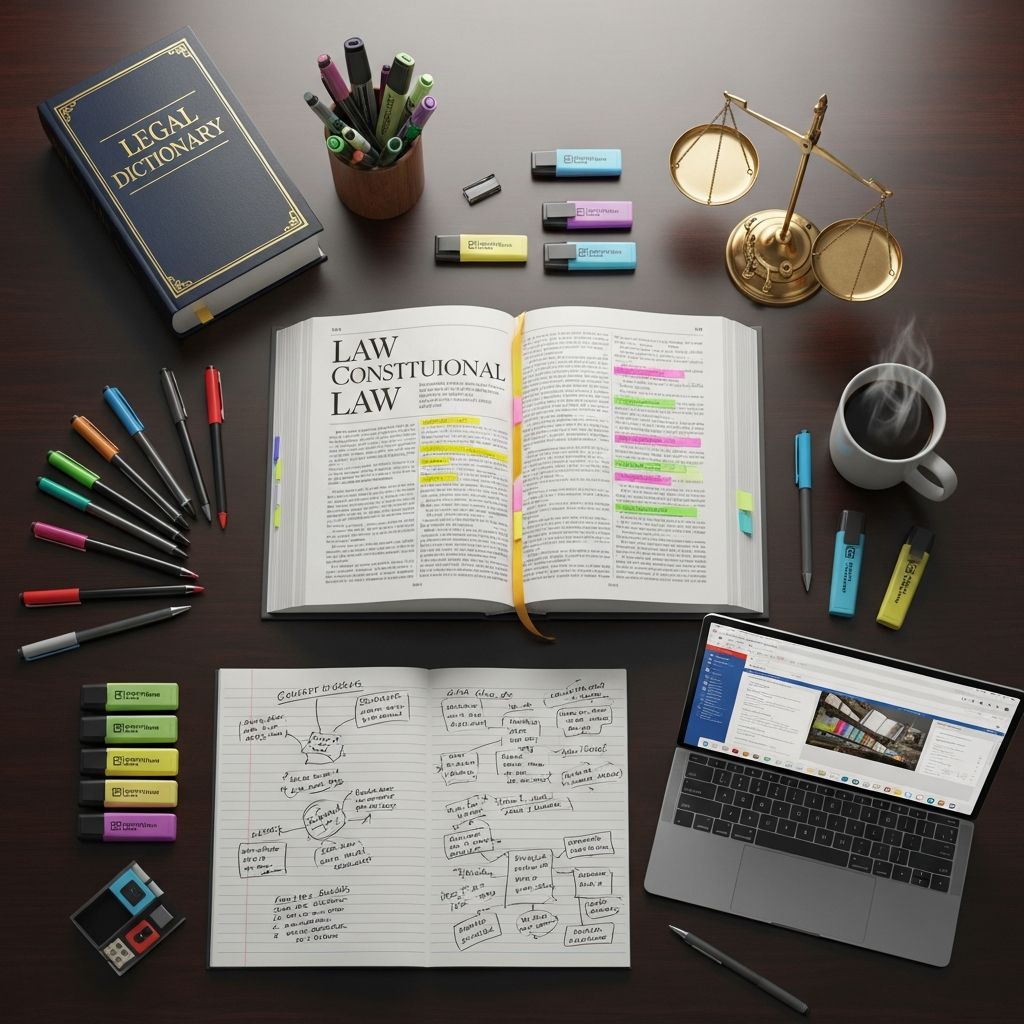
Law school demands rigorous preparation, sharp analytical skills, and efficient study habits. High-quality study aids bridge the gap between dense casebooks and exam mastery, offering structured explanations, practice problems, and concise summaries. These resources, favored by top students and endorsed by leading law schools, help demystify subjects like contracts, torts, and constitutional law. This guide explores premier options, drawing from student surveys and academic recommendations to equip you for academic triumph.
Why Invest in Quality Study Aids?
Effective study aids transform overwhelming coursework into manageable insights. They reinforce core principles through hypotheticals, flowcharts, and targeted practice, aligning with how law professors test knowledge on finals. Unlike passive reading, these tools promote active learning—essential for spotting issue spots and crafting IRAC-structured answers (Issue, Rule, Analysis, Conclusion). Student polls consistently rank them highly for value, with many reporting grade improvements after integration. Law libraries and platforms like West Academic emphasize their role in supplementing class notes, not replacing them.
Choosing aids depends on your learning style: visual learners thrive on diagrams, auditory ones on podcasts, and kinesthetic on flashcards. Budget matters too—free trials from Quimbee or school-subsidized access reduce costs. Start early in the semester to build outlines progressively, avoiding last-minute crunches.
Top-Ranked Hypothetical-Based Learning Resources
Resources emphasizing real-world scenarios excel at building application skills, a cornerstone of law exams.
- Examples & Explanations (E&E) Series: Published by Wolters Kluwer, this series dominates student rankings for its hypothetical-driven format. Each volume covers subjects like criminal procedure or property, presenting problems followed by step-by-step breakdowns. Users praise its clarity in linking rules to facts, making it ideal for 1L courses. Available in print or digital, E&E fosters deep comprehension beyond memorization.
- Glannon Guides: These provide straightforward narratives interspersed with illustrative hypotheticals. Perfect for complex topics like evidence or civil procedure, they break down doctrines into digestible parts, with end-of-chapter quizzes reinforcing retention.
Comprehensive Digital Platforms for Immersive Study
Online tools offer interactive, multimedia experiences that adapt to your schedule, often with school-wide subscriptions.
| Platform | Key Features | Best For | Pricing |
|---|---|---|---|
| Quimbee | Case briefs, video explanations, outlines, MBE-style questions, flashcards | Case analysis, essay practice | $19/month; free via many schools like Yale |
| Crushendo | Audio outlines, memory aids, mobile flashcards, bar prep crossover | Auditory learners, 1L review | $25/month |
| JD Advising | Outlines, flashcards, MCQs, free samples | Quick drills, top-percentile strategies |
Quimbee stands out with its vast brief library and engaging videos, simulating classroom Socratic dialogue. Over 915,000 students use it for its exam simulations. Crushendo leverages audio hacks from a top-BYU grad, ideal for commutes or multitasking.
Outline and Summary Series for Efficient Review
Concise outlines distill hundreds of pages into exam-ready frameworks.
- Emanuel Law Outlines: Covering 20+ subjects, these are lauded for brevity and logical flow. Features like bolded rules and charts aid quick reference, with companion flashcards for drilling.
- Nutshells (West Academic): Compact overviews of black-letter law, great for pre-class priming or post-exam reflection. Written by scholars, they balance depth and accessibility across topics like family law or wills.
Integrate these with your personal outlines: use commercial ones as skeletons, then flesh out with professor emphases.
Exam-Focused Crunch Resources
As finals approach, targeted prep separates honorees from the pack.
- Emanuel CrunchTime: Includes flowcharts, capsule summaries, essay models, and MCQs with explanations. Subjects range from torts to professional responsibility; flowcharts visualize rule application.
- Friedman’s Practice Series: Real past exams with model answers teach essay crafting. Academic analysis highlights grader expectations.
Practice under timed conditions to mimic exam pressure. Track errors to refine weak areas.
Building a Personalized Study Arsenal
No single aid suffices; combine for synergy. A sample semester stack:
- Daily: Quimbee briefs + E&E hypotheticals for class prep.
- Weekly: Emanuel outlines to synthesize notes.
- Pre-Exam: CrunchTime flowcharts + flashcards.
Law school libraries like NYLS or UW offer free access to many, reducing expenses. Track efficacy: after midterms, assess which boosted understanding most.
Free and Low-Cost Alternatives
Budget-conscious? Leverage these:
- School-provided West Academic or Quimbee logins.
- LibGuides from NYU or NYLS with subject-specific recommendations.
- JD Advising free trials for flashcards.
- Cal Bar past exams for universal practice.
Leveraging Technology and Habits
Apps like Anki for spaced repetition amplify flashcards. Podcasts from Crushendo turn downtime productive. Study groups can review aids collectively, debating hypotheticals. Consistency trumps volume—aim for 2-3 hours daily, focused.
Frequently Asked Questions (FAQs)
What are the most popular law school study aids?
Student surveys highlight Examples & Explanations, Quimbee, and Emanuel series as top choices for their quality and exam relevance.
Are digital study aids worth the subscription cost?
Yes, especially with school subsidies; Quimbee’s videos and questions offer unmatched interactivity starting at $19/month.
How do study aids differ from casebooks?
Aids provide synthesized rules, practice, and explanations; casebooks offer raw primary sources for depth.
Can study aids help with bar prep too?
Absolutely—Crushendo and Emanuel bridge law school to bar with overlapping content.
Where can I access study aids for free?
Check your law library’s reserves or platforms like JD Advising samples; many schools subscribe to Quimbee.
Mastering Law School: Your Path Forward
Integrating these aids fosters not just survival, but distinction. Track progress, adapt strategies, and prioritize sleep—burnout undermines even the best tools. With disciplined use, you’ll navigate doctrines confidently, earning spots in moot court or top firms.
References
- Best study aids for law students – National Jurist — National Jurist. 2023. https://nationaljurist.com/best-study-aids/
- Law School Study Aids — JD Advising. 2024. https://jdadvising.com/law-school-study-aids/
- West Academic Study Aids — West Academic. 2025. https://www.westacademic.com/study-aids
- Study Aids for Law School: Online Case Briefs, Outlines — Quimbee. 2025. https://www.quimbee.com/study-aids
- Study Aids – LibGuides at New York Law School — New York Law School Mendik Library (.edu). 2025-04-01. https://libguides.nyls.edu/studyaids
- Study Aids for Law Students — University of Washington Law Library (.edu). 2025. https://lib.law.uw.edu/studyaids
Similar Articles








Read full bio of Sneha Tete




