
Essential North Carolina Traffic Laws Explained
A clear, practical overview of key North Carolina traffic laws to help you drive safely and avoid costly citations.
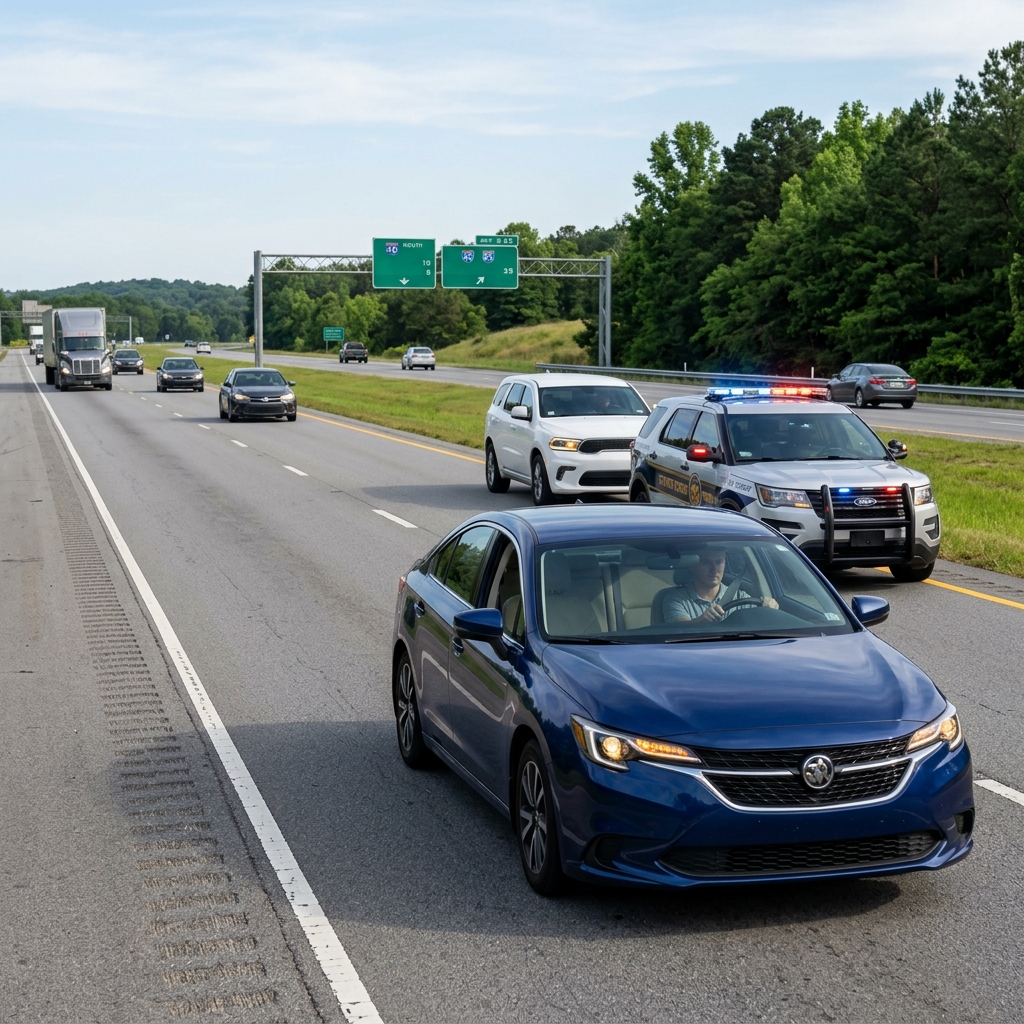
North Carolina has a detailed set of traffic rules designed to keep roads safe, reduce crashes, and make driving more predictable for everyone. Understanding these laws is important not only to avoid tickets and license points, but also to prevent serious injuries and criminal charges.
This guide walks through key North Carolina traffic laws in plain language, drawing on official state sources and recent legal updates. It highlights what everyday drivers, visitors, and parents should know before getting behind the wheel.
Overview of North Carolina Motor Vehicle Law
Most traffic rules in North Carolina are contained in Chapter 20 of the General Statutes, which covers motor vehicles, licensing, registration, and rules of the road. The North Carolina Department of Transportation (NCDOT) also publishes practical summaries of major driving laws and safety rules for the public.
- Chapter 20: The legal foundation for traffic offenses, right-of-way, speed limits, impaired driving, and licensing.
- NCDOT guidance: Plain-language explanations of seat belt laws, helmet rules, texting bans, and crash reporting requirements.
- Recent legislative changes: New provisions adopted in 2025 adjusted speed rules, camera enforcement, lane use for heavy trucks, and penalties for certain serious offenses.
While this article focuses on practical rules, drivers who face a citation or crash-related charge should review Chapter 20 directly or speak with a lawyer, as penalties can depend on the exact statute, prior record, and circumstances.
Speed Limits and Minimum Speeds
Speed rules in North Carolina are designed to balance efficient travel with safety. Exceeding posted limits or driving too slowly on high-speed roads can both lead to enforcement.
Typical Speed Limits by Road Type
North Carolina uses posted signs to set the legal maximum speed, but typical ranges are commonly found on different types of roads.
| Road Type | Typical Speed Range (mph) |
|---|---|
| City streets | 20–35 |
| Undivided rural roads | Up to 55 |
| Divided rural highways | 55–60 |
| Freeways within city limits | 50–70 |
| Freeways outside city limits | 65–70 |
On any road, the posted sign controls. Driving faster than the posted limit can result in tickets, insurance points, and in some cases, license suspension—especially if speeds are significantly above the limit.
New Minimum Speed Requirements on High-Speed Roads
Recent legislation updated minimum speed rules on parts of North Carolina’s interstate and primary highway system. On certain high-speed highways where minimum speed signs are posted, drivers of most passenger vehicles must stay relatively close to the maximum limit.
- On 55 mph roads with a minimum sign: usually at least 45 mph.
- On 60 mph roads with a minimum sign: usually at least 50 mph.
- On 65 mph roads with a minimum sign: usually at least 55 mph.
- On 70 mph roads with a minimum sign: usually at least 60 mph.
These minimums only apply when the state has installed specific signs and only on designated interstate and primary highways. Even where no minimum is posted, drivers must still travel at a speed that is reasonable and safe for weather, traffic, and road conditions.
There are lawful reasons to go below the minimum, such as heavy rain, fog, or mechanical problems, but driving well below the expected speed without a safety reason can result in a stop and citation.
Speed Camera Enforcement and Penalties
North Carolina has authorized the use of speed-measuring systems (often referred to as speed cameras) in specific situations. Violations captured by these systems are generally enforced as noncriminal civil offenses:
- Civil penalty of about $250 per violation.
- Payment or contest must occur within a specified period (often 30 days).
- Failure to respond can result in a late fee and refusal by the DMV to register the vehicle involved.
These camera-based violations do not typically add license or insurance points, but they can still be costly and may affect vehicle registration if ignored.
Right-of-Way Rules at Intersections and Crosswalks
Right-of-way rules tell drivers who must yield in common traffic situations. Proper yielding reduces crashes and improves traffic flow. North Carolina’s primary right-of-way statute is G.S. 20-155.
Vehicle Right-of-Way at Intersections
When two vehicles reach an intersection at approximately the same time from different roads, the law generally requires the driver on the left to yield to the driver on the right.
- Uncontrolled intersections: Yield to vehicles on your right when arriving at the same time.
- Left turns: A driver turning left within an intersection or into a driveway must yield to oncoming vehicles that are close enough to pose an immediate hazard.
- Traffic circles: Drivers approaching a roundabout must yield to vehicles already circulating inside the traffic circle.
Ignoring right-of-way rules can lead to citations and civil responsibility if a crash occurs, since failure to yield is a common basis for finding a driver at fault.
Pedestrian Right-of-Way
In business and residential districts, North Carolina law requires drivers to yield to pedestrians crossing within clearly marked crosswalks or standard crossings at the end of a block. This applies even if the pedestrian crossing is not controlled by a signal, unless a traffic officer or device is actively regulating movement.
- Yield to pedestrians in marked crosswalks.
- Yield at typical crosswalk areas at block ends where sidewalks continue across the street.
- Use extra caution at night or in poor visibility, as failing to see a pedestrian does not excuse a violation.
Drivers must also follow any specific local signage and signal instructions, such as “No Turn on Red” signs that protect crossing pedestrians.
Seat Belts, Child Safety Seats, and Helmet Rules
North Carolina places strong emphasis on occupant protection, requiring seat belts for nearly all vehicle occupants and special restraints for children.
Seat Belt Requirements and Fines
All occupants in a passenger vehicle must wear seat belts. Fines differ by seating position:
- Front-seat passengers: Typically fined around $25 for not wearing a seat belt.
- Back-seat passengers: Typically fined around $10.
Drivers who fail to properly secure children can face higher financial penalties, court costs, and points on their driving record.
Child Passenger Safety
Children face particular risk in crashes, so North Carolina requires age- and size-appropriate restraints.
- Children under age 8 and weighing less than 80 pounds must be secured in a child safety seat.
- As children grow, they must transition to booster seats before using an adult seat belt alone.
- Improperly restraining a child can result in fines and court costs around $125, plus license points for the driver.
Parents and caregivers should follow manufacturer instructions for installation and consider having seats inspected by certified technicians through child passenger safety programs.
Helmet Laws for Motorcycles, Mopeds, and Bicycles
Helmet laws help reduce head injuries and deaths. In North Carolina:
- Motorcycle and moped riders must wear helmets that meet federal safety standards.
- Children under 16 riding bicycles must wear a helmet.
Law enforcement may stop riders who fail to comply, and violations can lead to fines as well as increased risk of severe injury in a crash.
Electronic Devices, Headlights, and Other Safety Rules
Beyond speed and occupant protection, North Carolina law addresses common safety issues such as texting while driving, lighting, and crash reporting.
Texting and Cell Phone Use While Driving
North Carolina law prohibits reading or writing text messages or emails while a vehicle is in motion. This ban applies regardless of age. Additional restrictions apply to younger drivers:
- Texting while driving is illegal for all drivers.
- Drivers under 18 are generally prohibited from using cell phones of any kind while driving, not just for texting.
- Violations can lead to fines (often around $100) and court costs, and may be considered in determining fault if a crash occurs.
Hands-free systems reduce risk but do not eliminate distraction; drivers remain responsible for maintaining safe control of their vehicles.
Headlight Use and Visibility Requirements
Proper lighting is critical for seeing and being seen. North Carolina requires headlights to be used under specific conditions.
- From sunset to sunrise.
- Whenever visibility is limited to 400 feet or less due to darkness, fog, rain, or other conditions.
- Whenever windshield wipers are in continuous use during inclement weather.
Failing to use headlights can result in a traffic citation and increased liability if a crash occurs in low-visibility conditions.
Crash Reporting and Leaving the Scene
Drivers involved in collisions have legal duties regarding reporting and remaining at the scene. Crashes involving death, personal injury, or property damage of $1,000 or more must be reported to the nearest law enforcement officer or agency.
Leaving the scene of a serious crash violates G.S. 20-166 and can carry harsh license revocation periods:
- Crashes causing serious bodily injury: license revocation for four years.
- Crashes causing death: permanent revocation.
These revocation periods reflect the seriousness with which the state treats failure to remain at and report serious crashes.
Driving While Impaired (DWI) and Related Penalties
Driving while impaired by alcohol or drugs is one of the most serious traffic offenses in North Carolina. The law sets a blood alcohol concentration (BAC) limit of 0.08% for most drivers.
Core DWI Standards
- Drivers with BAC at or above 0.08% may be charged with driving while impaired.
- Commercial drivers may face lower limits under federal and state rules (in addition to employer policies).
Law enforcement may also charge DWI based on observed impairment even if exact BAC is not immediately available, particularly where drugs are involved.
DWI Punishments and License Consequences
North Carolina uses a structured system of DWI punishments that considers factors such as prior offenses, aggravating circumstances, and level of impairment. As a baseline:
- Minimum punishment: fine up to about $200 and a possible jail or custody term from roughly 24 hours to 30 days.
- Maximum punishment: fine up to about $4,000 and possible imprisonment ranging from about 30 days to two years, depending on the level of offense.
- License suspension: at least one year following a DWI conviction, imposed by the Division of Motor Vehicles (DMV).
Additional conditions can include substance abuse assessments, treatment requirements, ignition interlock devices, and increased penalties for high BAC levels or crashes causing injury.
Special Rules for Heavy Vehicles and High-Risk Behaviors
Recent changes to North Carolina law address heavy vehicles on multi-lane highways, window tint inspections, speed competitions (racing), and other risky behaviors.
Heavy Trucks in the Left Lane
A new subsection, G.S. 20-146(f), restricts certain heavy motor vehicles from using the left lane on some large highways.
- Applies to vehicles weighing more than 26,000 pounds.
- Restricts travel in the left lane of highways with six or more lanes.
The purpose is to reduce congestion and improve safety by limiting slow or heavy vehicles from occupying passing lanes on major routes.
Prearranged Racing and Speed Competitions
Organized speed competitions on public roads are treated harshly under North Carolina law. Offenses involving prearranged racing and related activities carry significant penalties, which have been increased for cases involving injury or death.
- If a speed competition causes serious injury, certain violations become Class H felonies with longer license revocation periods (generally increased from three to four years).
- If the competition causes serious bodily injury or death, it can be treated as a Class G felony with permanent license revocation.
These laws aim to deter high-speed racing on public roads, which poses severe risks to participants and bystanders.
Window Tint and Traffic Stops
Changes to window tint enforcement mean that vehicles with illegal tint may no longer automatically fail state inspections but can still lead to criminal charges. Drivers are now required to roll down a driver or passenger side tinted window during a traffic stop, depending on which side law enforcement approaches.
This rule improves visibility and safety for both officers and drivers during roadside encounters.
Practical Tips for Staying Compliant in North Carolina
While the legal details can be complex, a few practical habits help most drivers stay within the law:
- Always match your speed to posted limits and conditions; avoid driving much faster or slower than surrounding traffic on high-speed roads.
- Remember right-of-way basics: yield to vehicles on your right at uncontrolled intersections, give way when turning left, and respect crosswalks.
- Make seat belts non-negotiable for every occupant, and ensure children use age-appropriate seats and boosters.
- Use headlights whenever visibility is reduced and whenever wipers are in continuous use.
- Never text while driving and be especially cautious with phone use; younger drivers must avoid handheld use altogether.
- Absolutely avoid driving after drinking or using impairing drugs; use designated drivers or ride services instead.
Because laws can change, checking current information from NCDOT or the General Assembly website before a long trip or after a major legislative session is a good idea.
Frequently Asked Questions (FAQs)
Do I have to wear a seat belt in the back seat in North Carolina?
Yes. North Carolina law requires all vehicle occupants, including back-seat passengers, to wear seat belts. Back-seat violations carry lower fines than front-seat violations but are still enforceable.
Is it legal to text while stopped at a red light?
State law focuses on texting while the vehicle is moving, but engaging with a device at lights can still be risky and may contribute to crashes. For safety and to avoid any misunderstanding, it is best to avoid texting altogether while you are behind the wheel.
When must I turn my headlights on?
You must use headlights from sunset to sunrise, when visibility is reduced to about 400 feet or less, and whenever you are using windshield wipers continuously during bad weather.
What happens if I drive 15 mph over the speed limit?
On many North Carolina roads with limits of 55 mph or higher, driving 15 mph above the limit can lead to severe penalties, including possible license suspension for at least 30 days, depending on circumstances and prior record.
Can I go below the posted minimum speed on a highway?
You may drive below the posted minimum if you have a clear safety reason, such as bad weather, heavy traffic, or mechanical problems. Without such a reason, traveling well below the minimum on signed high-speed roads can result in a ticket.
References
- North Carolina Driving Laws — N.C. Department of Transportation. 2023-05-15. https://www.ncdot.gov/initiatives-policies/safety/driving-safety/Pages/driving-laws.aspx
- Chapter 20 – Motor Vehicles — North Carolina General Assembly. 2024-01-10. https://www.ncleg.gov/Laws/GeneralStatuteSections/Chapter20
- G.S. 20-155 Right-of-way — North Carolina General Assembly. 2019-07-01. https://www.ncleg.net/enactedlegislation/statutes/html/bysection/chapter_20/gs_20-155.html
- Driving Safety Guidelines & Laws — N.C. Department of Transportation. 2023-04-20. https://www.ncdot.gov/initiatives-policies/safety/driving-safety/Pages/default.aspx
- Summer 2025 Motor Vehicle Law Changes — UNC School of Government. 2025-08-06. https://nccriminallaw.sog.unc.edu/2025/08/06/summer-2025-motor-vehicle-law-changes/
- New Minimum Speed Limit Law in North Carolina — Ward Black Law. 2025-12-01. https://www.wardblacklaw.com/blog/new-minimum-speed-limit-law-in-north-carolina/
- Driving in North Carolina: Road Rules & Tips — SIXT Magazine. 2023-02-10. https://www.sixt.com/magazine/tips/driving-tips-north-carolina/
Similar Articles








Read full bio of Sneha Tete


