
Essential New York Traffic Laws for Everyday Drivers
A practical guide to New York’s key traffic rules, penalties, and safe driving responsibilities for motorists, cyclists, and pedestrians.
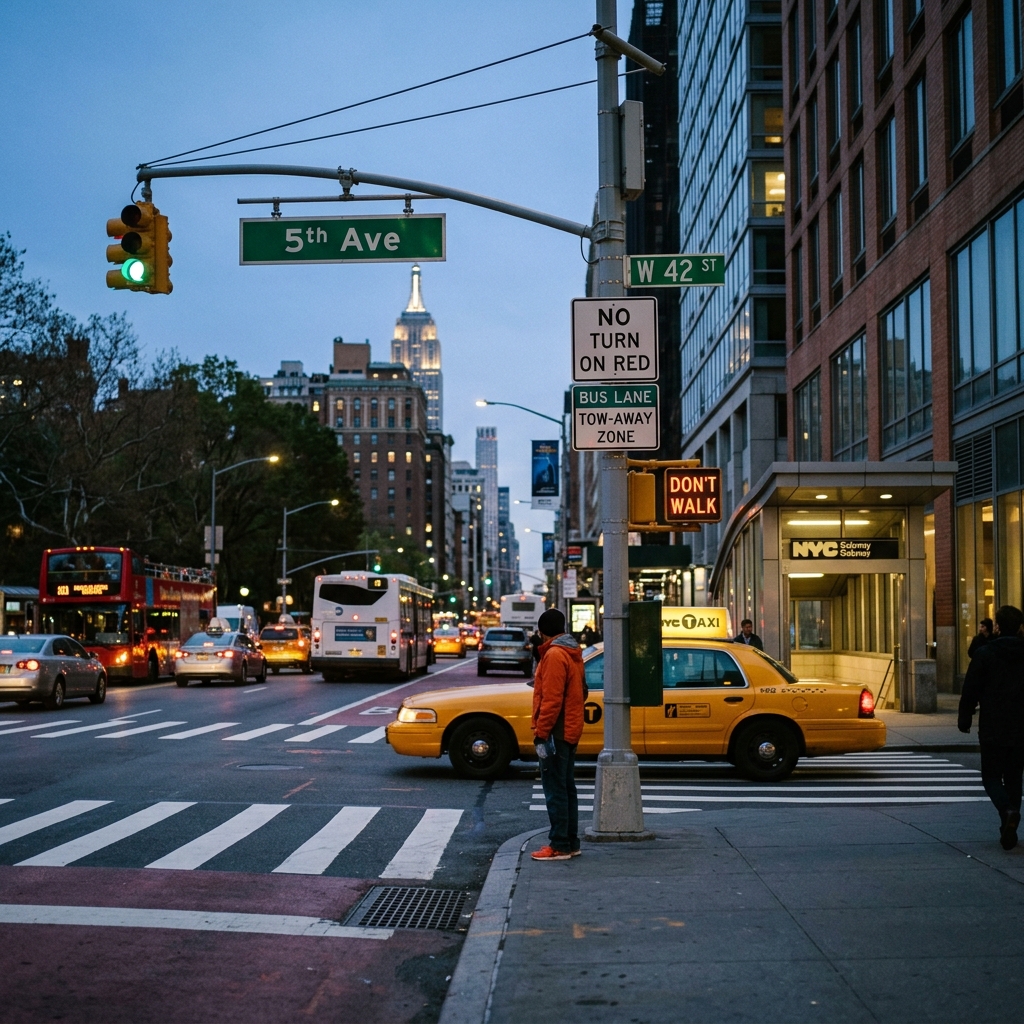
New York’s traffic rules are detailed and sometimes confusing, but understanding the basics can keep you safer, avoid costly tickets, and protect your license. The state’s Vehicle and Traffic Law (VTL) sets standards for how motorists, cyclists, and pedestrians must behave on public roads, while New York City has additional rules that can be stricter than the rest of the state.
This guide summarizes key traffic laws that most road users encounter in everyday driving, using plain language and practical examples. It is not a substitute for legal advice but can help you recognize common obligations and potential consequences.
1. How New York Traffic Laws Are Organized
New York’s traffic rules primarily come from the Vehicle and Traffic Law (VAT/VTL), a set of statutes enacted by the state legislature. These laws are grouped into articles covering topics such as signals, right-of-way, speed limits, licensing, and special rules for bicycles and motorcycles.
The VTL is supplemented by regulations adopted by agencies like the New York State Department of Motor Vehicles (DMV) and specific local rules, particularly in New York City.
- Statewide rules – Apply throughout New York State unless a statute specifies an exception.
- Local ordinances – Cities, towns, and villages may adopt additional traffic regulations as long as they do not conflict with state law.
- NYC traffic rules – New York City maintains its own traffic regulations, including stricter restrictions on some maneuvers and parking.
The full text of the Vehicle and Traffic Law is publicly available through official state resources, and the DMV publishes regulations explaining how laws are enforced in practice.
2. Signals, Signs, and Right-of-Way
Obeying traffic control devices—signs, signals, and pavement markings—is one of the core obligations in New York traffic law. Failure to obey a traffic signal or sign can lead to fines, points on your driving record, and, in serious cases, criminal charges if someone is injured.
2.1 Traffic Lights
New York’s rules for traffic signals follow the familiar red, yellow, green sequence, but details matter:
- Steady red light – You must come to a complete stop before the crosswalk or stop line and remain stopped until the light turns green, except where a legal turn is allowed.
- Steady yellow light – Warns that the signal is turning red; you should stop if you can safely do so.
- Steady green light – You may proceed, but must still yield to pedestrians lawfully in the crosswalk and other vehicles already in the intersection.
2.2 Stop Signs and Yielding
Under New York law, a stop sign requires a full stop at the designated location—usually a marked stop line, crosswalk, or the point nearest the intersection where you can see other traffic. Rolling through a stop sign without fully stopping is treated the same as running the sign.
Right-of-way at an intersection is determined by specific rules, but a useful basic principle is: if two vehicles arrive at the same time at an uncontrolled intersection, the driver on the left must yield to the driver on the right.
2.3 Right on Red: NYC vs. the Rest of the State
Many drivers are surprised to learn that the rules on turning right at a red light differ depending on where you are in New York:
| Location | Right Turn on Red Rule |
|---|---|
| Outside New York City | Generally allowed after a full stop, as long as you yield to pedestrians and other traffic, unless a sign says “No Turn on Red.” |
| Within New York City | Generally prohibited. You may only turn right on red if a posted sign explicitly permits it. |
New York treats cities with a population above one million differently for this rule; in practice, this applies to New York City.
3. Speed Limits and Common Moving Violations
Speed limits and other rules of the road are covered by several articles of the Vehicle and Traffic Law. Exceeding posted limits or ignoring basic driving rules can result in tickets, points, and higher insurance premiums.
3.1 Basic Speed Rules
New York uses posted speed limits and a general requirement to drive at a speed that is reasonable and prudent for conditions. Even if you are at or below the posted limit, you can be ticketed if your speed is unsafe for weather, traffic, or road conditions.
Typical examples include:
- Driving too fast for heavy rain or snow, even if under the posted limit.
- Speeding in work zones or school zones, where fines may be higher.
- Ignoring reduced speed limits in residential areas or near playgrounds.
3.2 Other Frequent Violations
Beyond speeding, other common moving violations under New York law include:
- Failure to obey traffic signals or signs.
- Improper or unsafe lane changes.
- Failing to yield to pedestrians in crosswalks.
- Tailgating (following too closely).
- Not using turn signals when required.
Each violation corresponds to a specific section of the Vehicle and Traffic Law, with defined penalties that can include fines, surcharges, and points on your driving record.
4. New York’s License Points and Penalties System
The New York DMV uses a point system to track driving violations and identify high-risk drivers. While the precise schedule can change over time, the basic idea remains the same: more points within a short period increase the risk of license suspension or revocation.
4.1 How Points Work
Most moving violations add a specific number of points to your driving record. Accumulating too many points in a certain timeframe can trigger administrative penalties.
In general:
- Points are assigned per violation, not per ticket; multiple violations from one incident can add multiple points.
- Higher-risk behaviors, like excessive speeding, often carry more points than minor infractions.
- Points remain on your driving record for a period used by the DMV to evaluate your status.
4.2 Consequences of Too Many Points
If you accumulate a threshold number of points within a specified period, the DMV can take action that may include:
- Requiring you to pay additional assessments or fees.
- Suspending your driving privilege for a set time.
- Revoking your license in severe or repeated cases.
These administrative consequences are separate from any criminal penalties a court may impose, such as fines or jail time for serious offenses like driving while intoxicated.
5. Special Rules in New York City
New York City operates under its own Traffic Rules and Regulations that complement and sometimes tighten statewide Vehicle and Traffic Law requirements. Because of the city’s density and heavy pedestrian activity, many rules are designed to reduce conflicts between vehicles and vulnerable road users.
5.1 NYC Traffic Regulations
The city’s regulations address topics such as parking, stopping and standing, rules for commercial vehicles, turning restrictions, and specific definitions like what constitutes an impounded vehicle.
- Impounded vehicle – Defined as a vehicle taken into custody by the city, limiting the motorist’s ability to use it freely.
- Parking and standing rules – Often stricter than elsewhere in the state, with detailed signage and enforcement.
- Additional turn restrictions – Including the general prohibition on right turns on red unless a sign allows it.
Drivers who regularly travel in New York City should familiarize themselves with these local regulations in addition to statewide laws.
6. Bicycles, Pedestrians, and Sharing the Road
New York law recognizes that cyclists and pedestrians have rights and responsibilities when using or crossing roadways. Many rules explicitly refer to bicycles and pedestrians to promote safer shared use of streets.
6.1 Bicycle-Related Laws
The New York State Department of Transportation (NYSDOT) highlights several Vehicle and Traffic Law provisions that apply to bicycles, focusing on safe operation and interaction with motor vehicles.
Key principles include:
- Bicycles operating on roadways generally must follow the same basic rules as motor vehicles, such as stopping at red lights and stop signs.
- Cyclists should ride in the same direction as traffic and use appropriate lanes when available.
- Safety equipment requirements may apply, such as lights or reflectors when riding at night.
6.2 Pedestrian Right-of-Way
New York law requires drivers to yield to pedestrians in crosswalks under many circumstances, particularly when pedestrians have the right-of-way under a traffic signal. Failing to yield can result in traffic citations and, in more serious cases, civil or criminal liability if a collision occurs.
Drivers should be especially cautious:
- At intersections with heavy foot traffic.
- Near schools and parks.
- Where visibility is limited, such as at night or in poor weather.
7. Enforcement, Tickets, and Legal References
Traffic laws are enforced by police, courts, and administrative agencies. When you receive a ticket, you are being charged with violating a particular section of the Vehicle and Traffic Law or related local rule.
7.1 Finding the Law Behind a Ticket
Each traffic ticket should list the alleged violation and its statutory reference. You can look up the cited section in official resources:
- NYS Legislature / Senate VTL text – Provides the official wording of Vehicle and Traffic Law articles and sections.
- DMV regulations and guidance – Explain how the DMV interprets and applies various provisions, especially for licensing and points.
- Online law compilations – Some sites present searchable databases of VTL sections for convenience.
While private compilations can be useful for quick research, the authoritative sources are the statute itself and official state publications.
7.2 Court and Administrative Processes
Traffic violations can lead to different types of proceedings and consequences:
- Traffic court or local court hearings – Where you can plead guilty or not guilty and present arguments regarding the alleged violation.
- DMV actions – Such as points assessments, license suspensions, or revocations, based on your driving record.
- New York City enforcement – For NYC-specific rules, enforcement may involve city agencies applying local regulations.
Serious infractions, like driving under the influence or reckless driving, can also carry criminal penalties beyond ordinary traffic fines.
8. Practical Tips for Staying Compliant
Given the complexity of New York traffic laws, practical habits can help drivers stay on the right side of the rules.
- Always come to a complete stop at stop signs and red lights before turning, and check for pedestrians and cross traffic.
- Assume right-on-red is illegal in NYC unless you clearly see a sign allowing it.
- Watch for local speed limits, especially in school zones, residential areas, and work zones.
- Use turn signals whenever turning or changing lanes, even if the maneuver seems minor.
- Give space to cyclists and pedestrians, recognizing their legal right to use the road and cross at designated points.
- Check official sources when in doubt about a rule, rather than relying on informal advice.
9. Frequently Asked Questions (FAQs)
9.1 Are traffic laws the same everywhere in New York State?
No. Many rules are statewide, but local governments can enact additional regulations, and New York City has its own traffic rules that are sometimes stricter, such as the general ban on right turns on red.
9.2 Where can I read New York’s Vehicle and Traffic Law?
You can access the VTL through official online resources provided by the New York State Legislature and related state sites, which publish the full text of the law.
9.3 Do cyclists have to obey stop signs and red lights?
Yes. Bicycles using roadways are generally required to follow the same basic traffic control devices as motor vehicles, including stop signs and traffic lights, under applicable Vehicle and Traffic Law sections.
9.4 How does the DMV decide whether to suspend a license?
The DMV considers your driving record, including the number and type of violations and associated points within specific timeframes. Accumulating too many points or committing certain serious offenses can lead to suspension or revocation.
9.5 Is a rolling stop treated differently from running a stop sign?
No. Failing to come to a complete stop at a stop sign is generally treated as a violation of the same law that governs stop sign obedience, and a rolling stop is not recognized as a separate, lesser category.
References
- New York State Traffic Laws Every Driver Should Know — Porter Law Group. 2023-04-01. https://porterprotects.com/an-overview-of-new-york-state-traffic-laws/
- Vehicle and Traffic Law – NYS Open Legislation — New York State Legislature. 2024-01-01. https://www.nysenate.gov/legislation/laws/VAT/T7
- Vehicle and Traffic Law – NY Laws — YPdCrime.com. 2023-01-01. https://ypdcrime.com/vt/
- New York State Vehicle and Traffic Laws Pertaining to Bicycles — New York State Department of Transportation. 2022-06-15. https://www.dot.ny.gov/display/programs/bicycle/safety_laws/laws
- Chapter 4: Traffic Rules and Regulations — City of New York. 2023-05-01. https://codelibrary.amlegal.com/codes/newyorkcity/latest/NYCrules/0-0-0-102231
- DMV Regulations — New York State Department of Motor Vehicles. 2023-02-10. https://dmv.ny.gov/about-dmv/dmv-regulations
- New York Consolidated Laws, Vehicle and Traffic Law – VAT — FindLaw. 2022-01-01. https://codes.findlaw.com/ny/vehicle-and-traffic-law/
Similar Articles








Read full bio of Sneha Tete


