
Essential Marriage Laws for Couples in the U.S.
Understand the key legal rules that govern getting married, staying married, and proving your marital status in the United States.
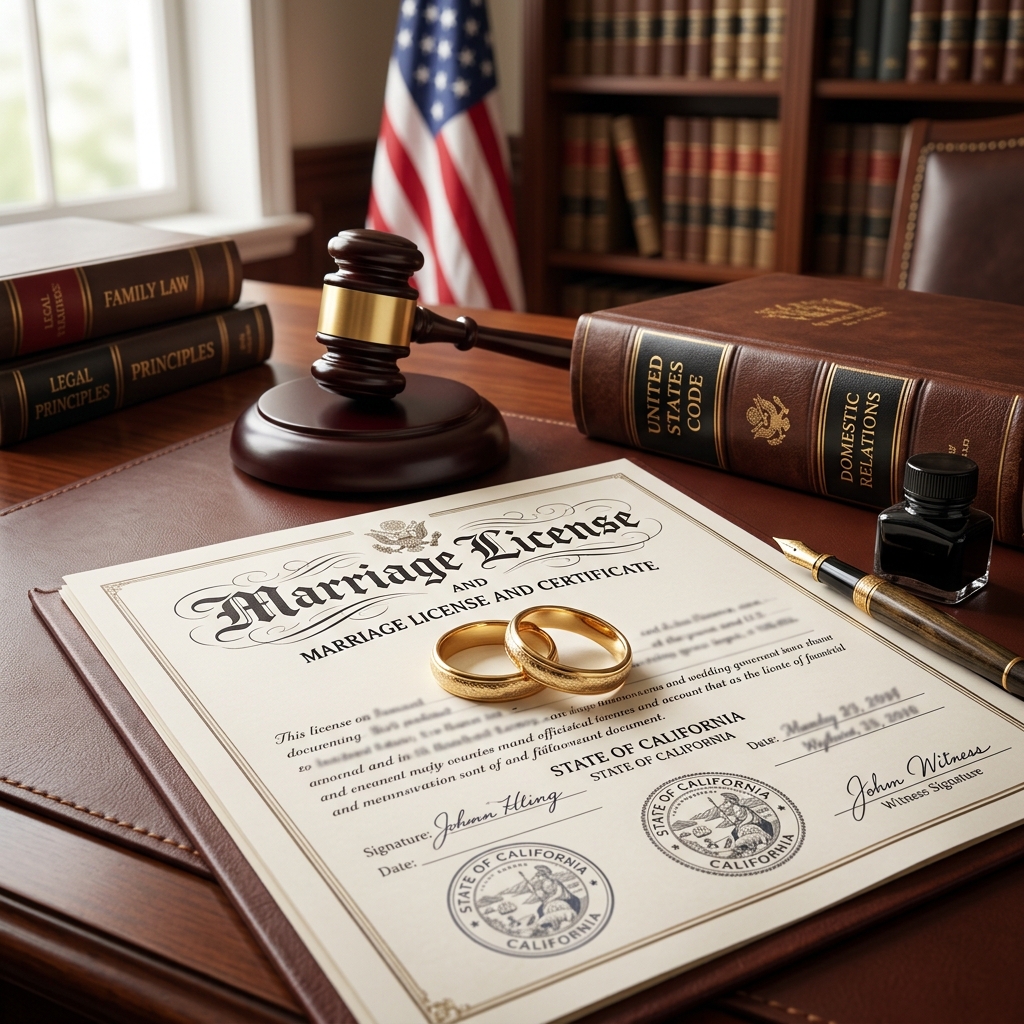
Marriage in the United States is more than a celebration; it is a legally recognized relationship that creates rights, obligations, and protections under state and federal law. Before you walk down the aisle, it is crucial to understand the basic legal rules that govern who can marry, how a marriage becomes valid, and when a marriage will be recognized across state and national borders.
This guide explains the core marriage laws that most couples will encounter, from eligibility and licensing rules to special topics such as same‑sex marriage, common‑law marriage, and child marriage. It is written for general information and does not replace personalized legal advice from a qualified attorney.
1. How U.S. Marriage Law Is Structured
In the United States, marriage law is primarily created and enforced by individual states, not the federal government. Each state sets its own requirements for forming a valid marriage, including age limits, licensing procedures, and residency rules. Federal law mainly determines how marital status affects federal benefits and obligations, such as taxes, immigration, and Social Security.
- State law controls the formation, dissolution, and most day‑to‑day aspects of marriage.
- Federal law recognizes a marriage that is valid in the state where it was entered into, for the purpose of federal rights and benefits.
- Variation by state means couples should always check local rules in the state where they plan to marry.
The basic legal elements of a marriage are consistent across states: legal capacity to marry, mutual consent, and compliance with the formal requirements (such as licenses and ceremonies) required by law.
2. Who Is Legally Allowed to Marry?
States use several criteria to determine whether two people are legally permitted to marry. These criteria usually include age, mental capacity, existing marital status, and whether the parties are closely related by blood.
2.1 Age and Child Marriage
The majority of states set the standard marriage age at 18, sometimes higher, for marrying without parental consent. A limited number of states have higher general ages (for example, Nebraska and Mississippi), and many states allow younger individuals to marry in narrow circumstances.
- Most states allow marriage at 18 without parental consent, with Nebraska (19) and Mississippi (21) as notable exceptions.
- Many states permit marriage under 18 with parental consent, judicial approval, pregnancy, or combinations of these conditions.
- Several states still permit child marriage, where one or both spouses are under 18, subject to waivers.
Child rights organizations advocate setting an absolute minimum age of 18 with no exceptions, due to the links between child marriage and negative outcomes in health, education, and safety. Couples where one party is under 18 should seek guidance about long‑term legal and practical implications.
2.2 Capacity, Consent, and Intoxication
Consent is central to a valid marriage. Both parties must understand the nature of the marriage and voluntarily agree to it.
- Mental capacity: A person who cannot understand the marriage contract because of cognitive impairment may lack legal capacity to marry.
- Intoxication: Severe intoxication from drugs or alcohol can undermine the ability to consent, potentially making the marriage voidable.
- Force or coercion: Forced marriages are antithetical to consent; some jurisdictions specifically criminalize forcing someone into marriage.
If consent is obtained through fraud, pressure, or coercion, courts may later be asked to annul the marriage or consider it invalid. Persons experiencing pressure to marry, especially abroad, may be able to seek help from law enforcement or U.S. embassies.
2.3 Existing Marriages and Bigamy
U.S. law generally prohibits a person from having more than one legal spouse at the same time.
- Monogamy standard: States typically require that each person entering a marriage have no living spouse from a prior marriage.
- Bigamy: Marrying a new spouse while still married to someone else is illegal in all 50 states and the District of Columbia.
- Proof of prior divorce: Many licensing offices require documentation of divorce or death of a prior spouse before issuing a new license.
2.4 Family Relationship Limits
States restrict marriages between close relatives to prevent genetic risks and protect social norms.
- Incest prohibitions: All states ban marriage between very close relatives (such as parent–child or siblings).
- First cousins: Many states prohibit first‑cousin marriage, while some permit it under specified conditions or generally allow it.
3. Same‑Sex Marriage and Equality
Same‑sex marriage is now recognized throughout the United States as a matter of constitutional law. In 2015, the Supreme Court held that same‑sex couples have the fundamental right to marry on the same terms as opposite‑sex couples.
- All states must license marriages between same‑sex couples and provide the same legal rights and responsibilities.
- States must also recognize same‑sex marriages validly performed in other states or countries.
- Federal law treats a marriage as valid if it is between two individuals and recognized in the place where it was entered.
For couples, this means that eligibility and procedures for marriage are generally identical regardless of gender. However, specific administrative processes (for example, updating records with government agencies) may still require documentation to reflect a marital status change.
4. Marriage Licenses and Ceremonies
In most states, a formal civil marriage requires obtaining a license and completing a ceremony that meets legal requirements. Without these steps, a couple may not be considered married, except in limited jurisdictions that recognize common‑law marriage.
4.1 The Marriage License Process
A marriage license is official authorization issued by a local government clerk that permits two people to marry.
- Application: Couples typically apply in person at a county or city clerk’s office.
- Identification: Valid photo identification and sometimes birth certificates are required.
- Fees: A fee is usually charged for issuing the license.
- Waiting periods: Some states impose a waiting period between license issuance and the ceremony, ranging from a couple of days to several days.
- License expiration: Licenses often expire if the marriage is not performed within a specified time (for example, 30 or 90 days, depending on state law).
Most states do not require residency to obtain a license, which allows many couples to marry in a state where they do not live.
4.2 The Ceremony and Officiant
Once a license is issued, a marriage becomes legally effective when a qualifying officiant conducts a ceremony and signs the license, which is then returned to the clerk for registration.
- Officiants: Each state specifies who may legally preside over a marriage (such as judges, religious leaders, or other authorized persons).
- Witnesses: Some states require one or more witnesses to sign the license.
- Return & registration: After the ceremony, the completed license must be filed with the issuing office to create an official marriage record.
The resulting marriage certificate then serves as primary evidence that the marriage was properly performed and legally recognized.
5. Common‑Law Marriage: Marriage Without a Ceremony
Common‑law marriage is a legal doctrine under which a couple is treated as married even though they never obtained a license or held a formal ceremony, provided they meet specific state requirements.
- Only a small number of states and the District of Columbia recognize new common‑law marriages.
- Typical conditions include living together, intending to be married, and holding themselves out publicly as spouses.
- If valid under state law, a common‑law marriage is treated the same as a formally solemnized marriage for most legal purposes.
For federal immigration, the U.S. government applies a “place‑of‑celebration” rule: a marriage, including a common‑law marriage, is generally recognized if valid in the jurisdiction where it was formed and the couple meets local requirements. Couples should be cautious about assuming they have a common‑law marriage and obtain legal advice if they plan to rely on that status.
6. Marriages Across State Lines and Abroad
Modern life often involves crossing borders, whether for residence or destination weddings. The legal question becomes whether a marriage formed in one location will be recognized elsewhere.
6.1 Recognition of Out‑of‑State Marriages
As a general rule, states recognize marriages that were validly entered into in another state, even if local requirements differ.
| Scenario | Typical Legal Treatment |
|---|---|
| Marriage validly licensed and solemnized in State A | Recognized as valid in State B, even if State B’s rules differ. |
| Common‑law marriage valid in State A | Usually recognized in other states for most purposes if valid where formed. |
| Marriage prohibited everywhere (e.g., bigamy) | Not recognized, even if purportedly allowed somewhere. |
6.2 Marrying Abroad and U.S. Recognition
Many couples choose to marry in another country. When doing so, they must comply with the legal requirements in that country, which may differ substantially from U.S. practices.
- Foreign countries may require residency periods, blood tests, parental consent, or proof of termination of prior marriages before allowing marriage.
- Documents often must be translated and authenticated for use both in the foreign country and back in the United States.
- To confirm recognition of a foreign marriage, couples can consult the Attorney General’s office in their home state.
For federal law, a foreign marriage is typically recognized if it is valid where celebrated and it could have been entered into in a U.S. state (that is, it involves two individuals and meets basic eligibility rules).
7. Proving Marriage for Legal and Immigration Purposes
There are many situations where couples must prove that they are legally married, such as applying for immigration benefits, joint tax filing, or survivor benefits. The primary evidence is usually the official marriage certificate.
- Primary documentation: A civil marriage certificate is generally accepted as proof of a valid marriage.
- Secondary evidence: If a certificate is unavailable, other records (such as church certificates, affidavits, or court decisions) may be considered, especially in immigration cases.
- Burden of proof: The person seeking benefits based on marriage must show that the marriage is legally valid and has not been dissolved.
For immigration, the U.S. government will examine whether the marriage is valid where it was celebrated and, in the case of common‑law marriages, whether the couple meets the jurisdiction’s specific requirements and resides there.
8. Practical Checklist for Couples
While legal rules vary, most couples can prepare effectively by following a practical checklist before marriage:
- Verify both partners meet age and capacity requirements in the state or country where you plan to marry.
- Gather required identification and documents, including proof of divorce or death certificates from prior marriages if relevant.
- Confirm waiting periods, license expiration, and officiant eligibility with the local clerk or equivalent authority.
- If marrying abroad, research local legal requirements and U.S. rules for recognition of foreign marriages.
- Consider how marriage will affect taxes, immigration status, property, and inheritance, and seek personalized legal advice where needed.
9. Frequently Asked Questions
9.1 Do we need to live in the state where we get married?
Most states do not require residency to obtain a marriage license, so couples can marry in a state even if they live elsewhere. However, they must still follow that state’s licensing and ceremony rules.
9.2 Is our marriage valid everywhere in the U.S.?
Generally, a marriage that is validly entered into in one state is recognized in other states, including same‑sex marriages. Exceptions apply if the marriage violates fundamental prohibitions, such as bigamy.
9.3 Are common‑law marriages still allowed?
Only a minority of states still permit new common‑law marriages. In those places, couples must meet specific requirements to be treated as married without a license or ceremony, and such marriages are usually recognized elsewhere if valid where formed.
9.4 How does child marriage remain legal in some states?
Although the standard marriage age is 18 in many states, some allow marriage below 18 with parental or judicial consent, or other conditions. Advocacy groups urge setting an absolute minimum age of 18 without exceptions to protect minors.
9.5 Is a religious ceremony alone enough to create a legal marriage?
In most states, a religious ceremony must be accompanied by a valid license and proper registration to create a legal marriage. Without compliance with civil requirements, the union may have religious significance but not legal status.
References
- Marriage in the United States — Wikipedia (background only; primary data drawn from cited laws). Last updated 2024-03-06. https://en.wikipedia.org/wiki/Marriage_in_the_United_States
- Marriage — Legal Information Institute, Cornell Law School. 2020-01-01. https://www.law.cornell.edu/wex/marriage
- State Laws on Marriage — FindLaw. 2023-05-15. https://www.findlaw.com/family/marriage/state-laws-on-marriage.html
- Chapter 2 – Marriage and Marital Union for Naturalization — U.S. Citizenship and Immigration Services Policy Manual. 2022-04-27. https://www.uscis.gov/policy-manual/volume-12-part-g-chapter-2
- 1 U.S.C. § 7 – Marriage — United States Code, Office of the Law Revision Counsel. 2015-06-26. https://uscode.house.gov/view.xhtml?req=(title:1%20section:7%20edition:prelim)
- The Journey to Marriage Equality in the United States — Human Rights Campaign. 2015-06-26. https://www.hrc.org/our-work/stories/the-journey-to-marriage-equality-in-the-united-states
- Child Marriage in the United States — Equality Now. 2022-09-01. https://equalitynow.org/what-we-do/womens-rights-around-the-world/womens-rights-in-north-america/child_marriage_us/
- Marriage Abroad — U.S. Department of State, Travel.gov. 2023-02-10. https://travel.state.gov/en/international-travel/living-abroad/marriage.html
Similar Articles








Read full bio of medha deb


