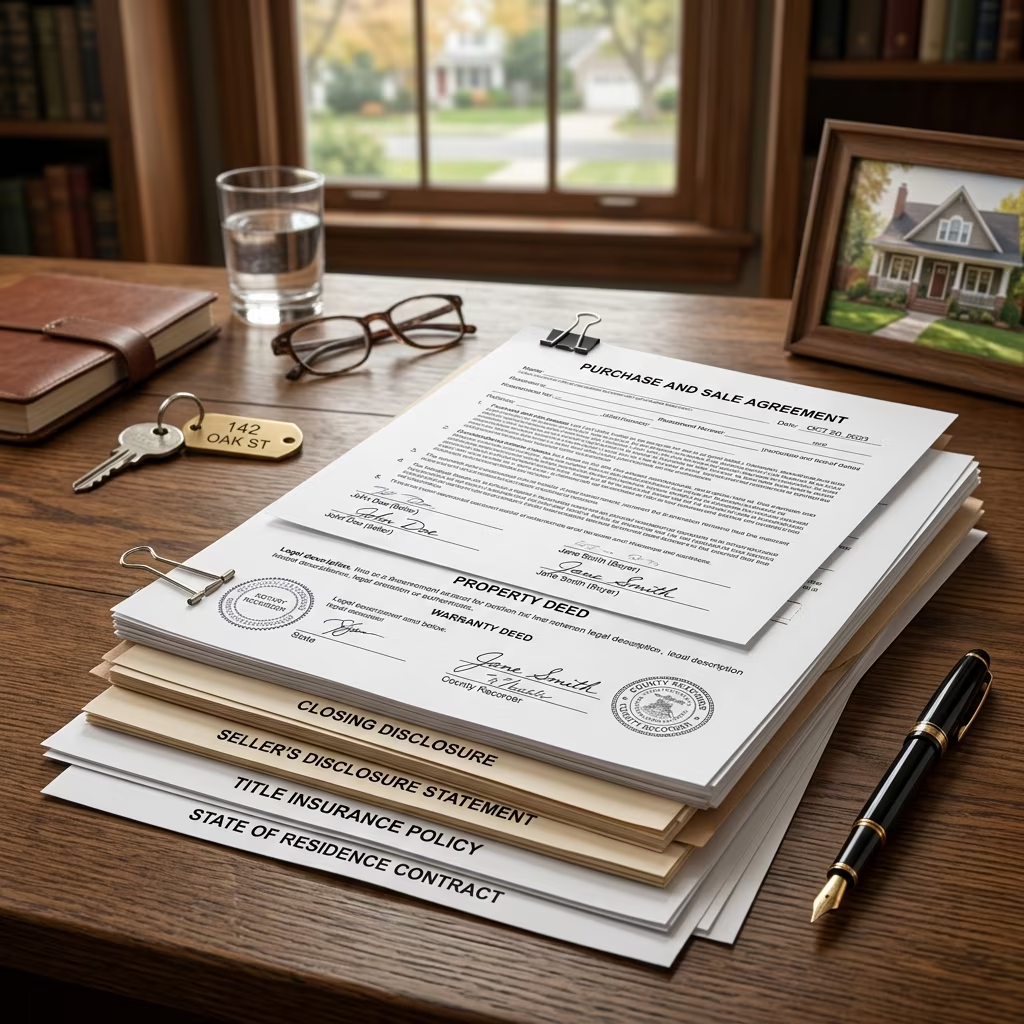
Selling a house involves more than finding a buyer and agreeing on a price. A smooth transaction depends on having the right records ready before the home goes on the market and before closing day arrives. The exact paperwork varies by state, lender, and property type, but most sellers benefit from preparing a core set of legal, financial, and property documents in advance.
Having these records organized can reduce delays, support buyer confidence, and help you avoid disputes later in the process. It also makes it easier to answer questions about ownership, repairs, taxes, and property features when they come up during negotiations.
Why paperwork matters before a home sale
Paperwork is not just administrative clutter. In a real estate transaction, documents help prove ownership, describe the property accurately, disclose known issues, and show how money will move at closing. Buyers, title companies, lenders, and attorneys often rely on these records to confirm that the deal is legitimate and complete.
In many sales, missing documents can slow down financing, postpone closing, or create uncertainty about the condition or legal status of the property. Preparing early gives the seller time to locate records, request replacements, and fix problems before they become urgent.
Start with proof of ownership and transfer records
The first category of documents should establish that you have the legal right to sell the home. These records also help the buyer and title company confirm the chain of ownership and identify any issues that may affect the transfer.
- Property deed: This is one of the most important documents in the sale because it shows how ownership is held and will later be used to transfer title to the buyer.
- Title report or title search: This record helps identify liens, easements, or other claims that may affect ownership.
- Original purchase agreement: The contract from when you bought the property can be helpful if questions arise about the home’s legal history or prior commitments tied to the sale.
- Mortgage statement or loan payoff information: If you still owe money on the home, the lender’s payoff figure is needed to calculate how much must be paid from the sale proceeds.
These papers are especially important when the property has changed hands multiple times, has been refinanced, or has had liens recorded against it. Even if a title company performs its own search, sellers should keep copies available in case questions arise.
Disclosure documents build trust and reduce risk
Most sellers must disclose known material facts about the property. These disclosures are not meant to tell buyers that a home is perfect; they are meant to give buyers a fair picture of what they are purchasing. The exact requirements depend on state law, but the idea is the same: be accurate, complete, and honest.
- Seller disclosure statement: This form typically covers structural issues, water damage, pest problems, environmental hazards, and other known defects.
- Lead-based paint disclosure: For many homes built before 1978, federal rules require sellers to disclose known lead-based paint hazards and provide the buyer with required notices.
- Repair and maintenance history: Records of roof work, plumbing fixes, HVAC servicing, or foundation repairs can support what you say in a disclosure form.
- Inspection reports: If you have recently had the home inspected, the report can provide a clearer picture of condition and help buyers understand the property’s current state.
Disclosure forms do more than satisfy legal requirements. They also show that the seller has taken the process seriously. Buyers are often more comfortable moving forward when they receive clear information instead of vague answers.
Property details buyers often want to review
Beyond the core legal papers, buyers often ask for records that explain how the home has been used, maintained, and improved. These documents are not always mandatory, but they can make the sale easier by answering common questions before they become objections.
| Document | Why it helps |
|---|---|
| Property survey | Shows lot lines, structures, fences, and easements. |
| Permits and building plans | Confirms that renovations or additions were properly approved. |
| Utility bills | Helps buyers estimate monthly operating costs. |
| Property tax records | Lets buyers understand recurring tax obligations. |
| Warranties and manuals | Provides useful information for appliances, systems, or installed features. |
These records can be especially helpful for homes with additions, solar equipment, custom systems, or major upgrades. If work was done without permits, the buyer may raise questions that could delay or complicate the closing process.
Documents tied to homeowner associations and community rules
If the property is part of a homeowners association, the seller should gather the governing documents early. Buyers want to know what restrictions, fees, and responsibilities come with the home, and lenders often need this information too.
- HOA bylaws and rules: These describe community standards, including parking, pets, exterior changes, and other limitations.
- Dues statement: This shows the current assessment amount and helps the buyer budget for future payments.
- CC&Rs: Covenants, conditions, and restrictions define the legal rules that apply to the neighborhood or condominium community.
- Special assessment notices: If the HOA has imposed extra charges, those obligations should be disclosed.
HOA records matter because they affect the buyer’s decision as much as the property itself. A well-documented community can support the sale, while surprise restrictions or unpaid assessments can create friction.
Closing records that finish the transaction
As the sale moves toward closing, several documents help finalize the financial and legal transfer. Some are prepared by the title company or escrow agent, while others require input from the seller.
- Purchase agreement: This contract sets the sale price, contingencies, deposit terms, and closing date.
- Closing statement: Also called a settlement statement, this document summarizes the money flowing in and out of the transaction.
- Deed for transfer: The deed used at closing officially conveys ownership to the buyer once it is signed and recorded.
- Affidavit of title: In many transactions, the seller signs a statement confirming that the property is being sold free of undisclosed claims or defects in ownership.
- Bill of sale: If the sale includes personal property such as appliances or fixtures that are not covered by the deed, a bill of sale may document that transfer.
These closing documents are the bridge between agreeing to sell and actually completing the transfer. Because they often contain final numbers and legal declarations, sellers should review them carefully before signing.
Special documents that may be needed in certain situations
Some homes require extra paperwork because of their age, location, financing, or improvements. Sellers who expect these records ahead of time are less likely to face last-minute requests.
- Certificate of occupancy: This may be required for new construction, major renovations, or certain local approvals.
- Homeowners insurance records: Past coverage details and claims history can give buyers insight into risk and maintenance issues.
- Solar agreements: If the property has solar panels, the seller should have lease, loan, or ownership documents ready.
- Septic, well, or environmental reports: Rural properties may require additional inspection or compliance records.
- Tax forms related to the sale: In some transactions, the closing agent may issue tax reporting documents connected to the sale proceeds.
Not every home will need these items, but when they do apply, they can be crucial. A buyer may walk away from a deal if the seller cannot explain a lease obligation, safety certification, or local compliance requirement.
A practical way to organize your file
The best approach is to create one digital and one physical folder with clearly labeled sections. That way, you can share copies quickly with your agent, attorney, title company, or buyer when needed. You should also keep the originals secure in case a lender or closing officer requests them.
- Ownership records: deed, mortgage papers, title report, payoff statements.
- Property condition records: inspection reports, repair receipts, warranties, permits.
- Financial records: tax bills, utility bills, insurance records, HOA dues.
- Transaction records: offer, purchase agreement, disclosures, closing statement, bill of sale.
This structure makes it easier to respond to buyer questions and to track which documents have already been shared. It also helps you see what is still missing before the closing date gets too close.
Common mistakes sellers can avoid
Many delays happen because a seller assumes a document is unnecessary or can be found later. In reality, that missing paper may be the one item holding up the entire file.
- Waiting until after receiving an offer to gather records.
- Forgetting to disclose known defects or past repairs.
- Misplacing permits for additions, remodels, or structural work.
- Ignoring HOA rules, special assessments, or transfer requirements.
- Failing to check the mortgage payoff amount close to closing.
Careful preparation can reduce the chance of these problems. Even when a document is not legally required in every sale, it may still help the transaction move forward faster and with fewer questions.
Frequently asked questions
What is the single most important document when selling a house?
The deed and the purchase agreement are usually the most critical documents. The deed proves how ownership is transferred, while the purchase agreement sets the terms of the sale.
Do sellers always have to provide a disclosure form?
Disclosure duties depend on state law, but sellers are commonly required to reveal known material defects. Even where the rules differ, honest disclosure is a major part of reducing legal risk.
Are permits really necessary if the work was done years ago?
Yes, because buyers may still ask for proof that additions or renovations were properly approved. Missing permits can raise questions about safety, code compliance, and future resale value.
Can a seller close without an HOA packet?
If the property is in an HOA, closing may be delayed until the required community documents and fee information are provided. Buyers and lenders often expect those records before closing.
Should utility bills be included in the sale file?
Utility bills are not usually the most important legal documents, but they are useful for showing operating costs and confirming that accounts are current at the time of transfer.
References
- Documents Needed To Sell A House — Bankrate. 2025-??-??. https://www.bankrate.com/mortgages/documents-needed-to-sell-house/
- What Paperwork Do I Need to Sell My House Myself? — Zillow. 2025-??-??. https://www.zillow.com/learn/documents-needed-for-selling/
- What Paperwork Do I Need to Sell My House Myself? — LegalTemplates. 2025-??-??. https://legaltemplates.net/resources/real-estate/documents-needed-to-sell-house/
- Which Documents Do You Need to Sell a House? — HomeLight. 2025-??-??. https://www.homelight.com/blog/documents-needed-to-sell-house/
- What Documents Do I Need to Sell a Home in PA? — Home Buyers of Pittsburgh. 2025-??-??. https://www.homebuyersofpittsburgh.com/blog/documents-needed-to-sell-home