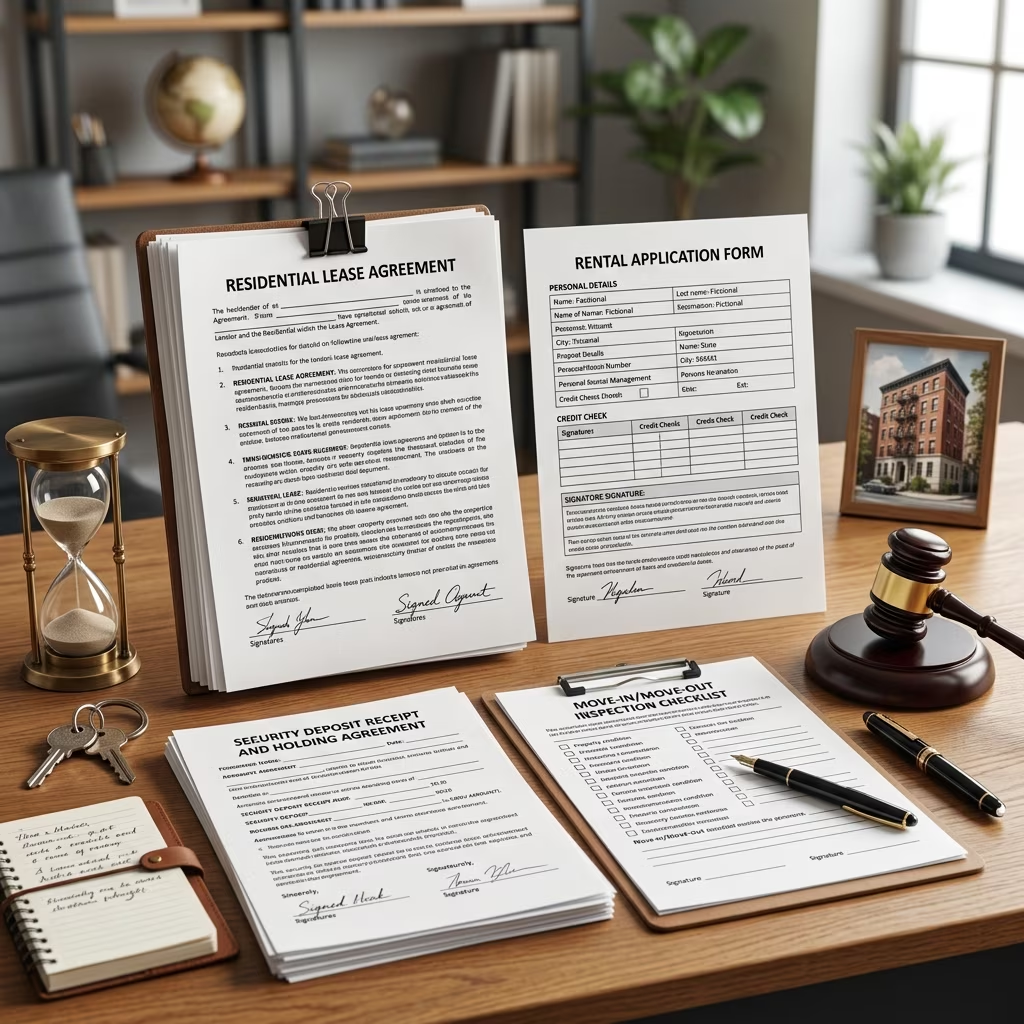
Landlords depend on paperwork to turn a rental property into a predictable business. The right forms help set expectations, document agreements, and create a record if a disagreement later arises. When these documents are complete and organized, they also make everyday property management faster and less stressful.
This guide explains the core legal documents most landlords should consider keeping in their files. It focuses on the practical purpose of each form, how it supports the rental relationship, and why consistent recordkeeping matters from the application stage through move-out.
Why documentation matters in rental housing
Good records do more than keep a landlord organized. They help show what was agreed to, what condition the unit was in, and how each side handled notice, rent, repairs, and deposit issues. That matters because rental relationships often involve several stages, and each stage can create a different type of legal or financial risk.
For example, an application can help a landlord compare applicants fairly. A written lease can define payment terms and house rules. An inspection checklist can reduce later disputes over damage. A notice or receipt can prove that a landlord acted on time and communicated clearly. Together, these papers create a paper trail that can support the landlord’s position if a dispute escalates.
Documentation is also useful for compliance. Many rental rules depend on local law, and written forms can help landlords show they followed required notice periods, explained policies clearly, or recorded deposit handling properly. Because landlord-tenant law varies by jurisdiction, forms should always be reviewed with local rules in mind.
The rental application: the starting point
The rental application is usually the first formal document a landlord collects from a prospective tenant. Its purpose is to gather enough information to evaluate whether the applicant is likely to meet the financial and behavioral obligations of the tenancy.
A strong application often asks for:
- Full contact information
- Employment history
- Income information
- Previous addresses
- Landlord references
- Personal references
- Authorization for screening
The screening authorization is especially important because landlords often need permission to review credit, eviction history, and other background information. Keeping the completed application on file can help explain how the tenant was selected and what information was used in the decision-making process.
It is also wise to keep applications from people who are not approved. Those records may be useful if there is ever a question about how the landlord handled the screening process. In many places, record-retention rules are influenced by federal, state, and local law, so landlords should not assume there is one universal retention period.
Screening records and supporting consent forms
Applications are only part of the screening picture. Many landlords also keep the records used to verify the information that applicants provide. These supporting materials may include reference notes, credit summaries, criminal background reports, and written consent forms.
Keeping these documents together can make the screening process easier to review later. If a rejected applicant questions the decision, the landlord can often point to the same factual information that was used at the time. A clean file also helps a landlord maintain a consistent process across applicants, which is useful for business operations and risk management.
Because screening laws can be sensitive, landlords should use reputable screening services and follow the law applicable to the property. If a landlord collects written permission for a background check, that authorization should be stored with the rest of the application materials.
The lease agreement: the central contract
The lease agreement is the most important document in most rental relationships. It is the contract that explains the rights and duties of the landlord and tenant. Without it, both sides are left to rely more heavily on general law and disputed memory, which is rarely ideal.
A useful lease agreement typically identifies:
- The parties to the agreement
- The rental property address
- The lease term
- The amount of rent
- When and how rent must be paid
- Late fee rules, if allowed
- Security deposit terms
- Maintenance responsibilities
- Guest, noise, and use restrictions
- Pet rules
- Entry and notice procedures
- Renewal or termination terms
Clarity is the main goal. The lease should be specific enough that both sides understand what is expected and what happens if a problem arises. Vague language often creates confusion, and confusion can lead to disputes that are harder to resolve.
In some jurisdictions, a lease may also need legally required disclosures or notices. That is one reason landlords should use a state-specific form or have an attorney review a custom draft before using it in a real tenancy.
Property condition checklists at move-in and move-out
Inspection documents are among the most useful forms a landlord can keep. A move-in checklist records the condition of the unit at the beginning of the tenancy. A move-out checklist compares the unit’s condition at the end of the tenancy to determine whether any damage goes beyond ordinary wear and tear.
These forms often note the condition of:
- Walls and paint
- Floors and carpets
- Windows and doors
- Appliances
- Bathroom fixtures
- Lighting and electrical items
- Cabinets and countertops
Photos or video can strengthen the written checklist, especially if they are dated and stored with the rest of the rental file. When a deposit dispute occurs, this documentation can help show what condition the property was in before and after the tenancy.
Inspection records are also useful operationally. They help a landlord identify damage early, decide what repairs are needed, and track whether a problem existed before the tenant moved in.
Deposit paperwork and payment records
Security deposit paperwork deserves careful attention because deposits often become a source of conflict after move-out. A landlord may need records showing the amount collected, the date it was received, and how it was handled. In some states, landlords must provide specific written information about deposit handling or the financial institution where funds are held.
Rent receipts are another practical document. While digital payment records may sometimes serve the same purpose, a receipt can still be helpful when tenants pay by cash, money order, or another method that is not automatically documented in a bank record. A good receipt should identify the tenant, the amount paid, the date received, and the period covered by the payment.
Keeping a complete payment ledger can also help. A ledger tracks each rent charge, each payment, and any outstanding balance. That record is especially valuable if a tenant later disputes late fees, partial payments, or missed months.
| Document | Main purpose | Why it helps |
|---|---|---|
| Security deposit record | Shows how the deposit was collected and handled | Supports deposit accounting and refund decisions |
| Rent receipt | Confirms a payment was received | Reduces disputes over timing and amount |
| Payment ledger | Tracks the rental account over time | Creates a clear history of charges and payments |
Notices and letters that preserve the record
Many landlord-tenant issues are not solved by the lease alone. They require written notice. Notices create a formal record that something was communicated at a particular time and for a particular reason.
Important examples include:
- Entry notices
- Lease violation notices
- Late rent notices
- Non-renewal notices
- Termination notices
- Move-out reminders
These documents help ensure that the landlord’s communication is consistent and documented. They also give tenants a clear understanding of what problem needs attention and what deadline applies. In many rental situations, a carefully written notice can prevent a minor issue from becoming a larger conflict.
Landlords should keep copies of all notices sent, along with proof of delivery when available. Email confirmations, certified mail receipts, and signed acknowledgments can all strengthen the file.
Maintenance requests and repair history
Maintenance records are often overlooked, but they can be some of the most useful documents in a rental file. A written maintenance request shows when a tenant reported a problem and what issue was described. A repair log shows how the landlord responded, when the repair was completed, and who performed the work.
This information is valuable for several reasons. It helps prioritize repairs, supports communication with vendors, and provides evidence if there is a later disagreement about whether the landlord responded appropriately. It can also reveal recurring problems, such as leaks, appliance failures, or HVAC issues, that may need a longer-term solution.
If a landlord receives requests by text or email, those messages should be saved instead of being treated as informal or disposable. In practice, many disputes turn less on what was said than on whether a landlord can prove what was reported and when action was taken.
Renewals, amendments, and other updates
Rental relationships often change after the original lease is signed. A tenant may renew, a pet may be added, rent may increase, or a rule may be modified. Whenever the original arrangement changes, a landlord should use a written addendum or amendment rather than relying on a verbal understanding.
Common update documents include:
- Lease renewal forms
- Lease amendments
- Rule addenda
- Pet agreements
- Co-signer agreements
- Sublease approvals
Written updates help keep the lease file accurate. They also prevent a situation where the landlord and tenant remember different versions of the agreement. A signed amendment becomes part of the contract history and is easier to enforce than an informal conversation.
Organizing files for long-term use
Having the right papers is only useful if they can be found quickly. Landlords should keep one complete file for each tenancy and organize documents by date and type. Many landlords use both digital and paper storage to reduce the risk of losing important records.
A practical file might include:
- Application materials
- Screening authorizations
- Signed lease and addenda
- Deposit records
- Inspection checklists
- Notices
- Rent receipts and ledgers
- Repair history
- End-of-tenancy documents
Consistency is more important than perfection. The goal is to create a complete, logical record that tells the story of the tenancy from start to finish. If a dispute arises months or years later, an organized file can save time, reduce confusion, and improve the landlord’s ability to respond accurately.
How to build a practical landlord document system
Landlords do not need to create a large legal archive to stay protected. They need a system that covers the most common points of risk: who applied, who was approved, what terms were signed, what condition the unit was in, what was paid, and what notices were sent.
A simple system can begin with three habits. First, use a standard form for each stage of the tenancy. Second, save every signed document in the same place. Third, keep communication in writing whenever a matter could later become disputed. Those habits make it easier to stay consistent across multiple units and multiple tenants.
It is also smart to review forms periodically. Laws change, forms become outdated, and lease language that once seemed adequate may no longer reflect current best practices. Updating documents before a problem occurs is much easier than trying to fix them afterward.
Frequently asked questions
Which document is most important for a landlord?
The lease agreement is usually the most important because it defines the rental relationship, but it works best when supported by applications, inspection checklists, notices, and payment records.
Should landlords keep rejected applications?
Yes, many landlords keep them as part of their screening records. Retention periods can vary by law, so landlords should check applicable local and federal requirements.
Do digital records count?
In many cases, yes. Digital records can be very effective if they are complete, backed up, and easy to retrieve. Landlords should make sure electronic storage is secure and organized.
Can a landlord use a generic lease form?
A generic form may not address state-specific requirements or the unique terms of a particular rental. State-specific review is usually the safer approach.
Why are move-in and move-out checklists so valuable?
They help show the condition of the unit at the beginning and end of the tenancy, which can be critical when deciding whether damage is chargeable to the tenant.
References
- 10 Rental Documents to Keep on File — TransUnion SmartMove. 2025. https://www.mysmartmove.com/blog/rental-documents-landlord-forms
- Lease Forms 101: A Complete Guide for Landlords — TenantCloud. 2025. https://www.tenantcloud.com/lease-agreement/lease-forms-101-a-complete-guide-for-landlords
- A Practical Guide for Tenants and Landlords — Michigan Legislature. 2024. https://www.legislature.mi.gov/publications/tenantlandlord.pdf
- Landlord & Tenant – Rights and Duties — OKLaw.org. 2025. https://oklaw.org/resource/landlord-tenant-rights-and-duties