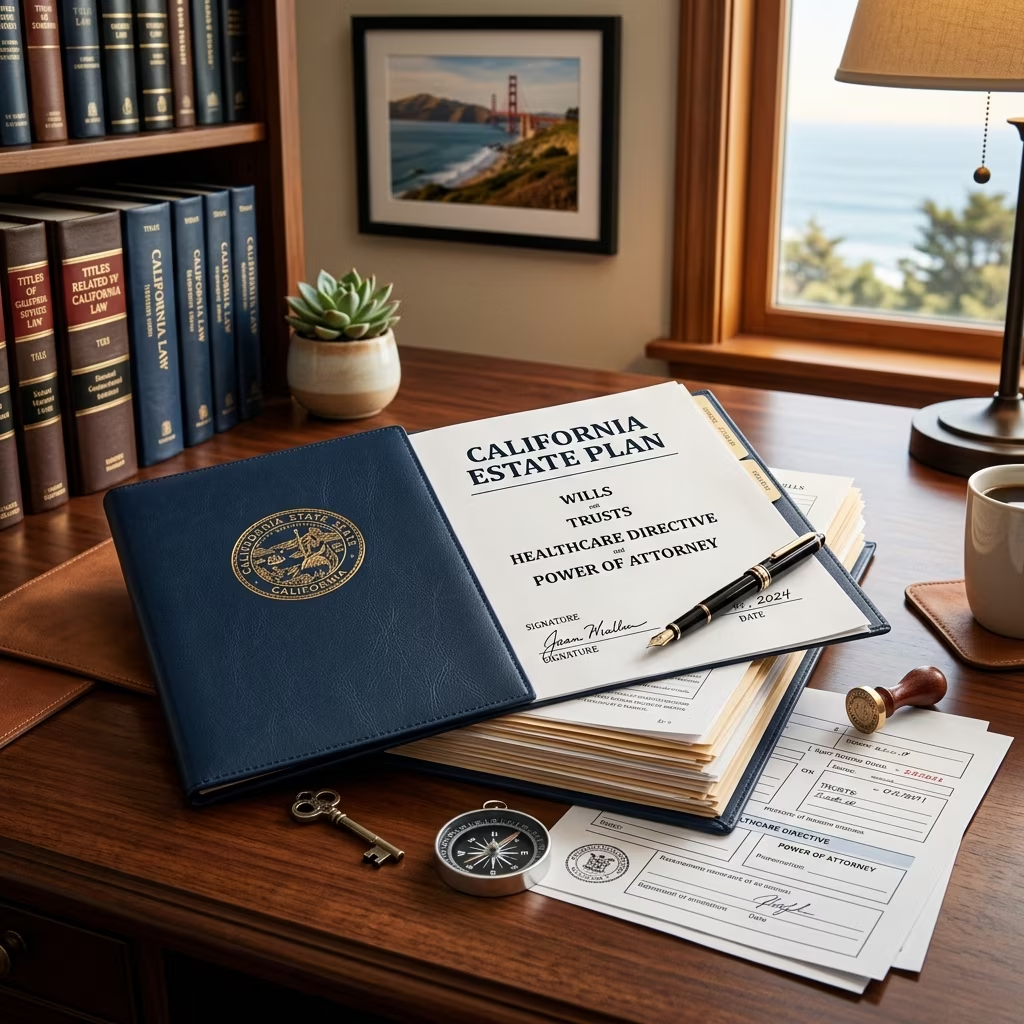
An estate plan is a coordinated set of legal documents and instructions that governs what happens to your property, your finances, and your medical care if you become incapacitated or die. In California, a thoughtful plan can minimize court involvement, reduce stress for your loved ones, and ensure your wishes are honored.
This guide explains how California estate plans work, the key documents involved, and practical steps to get started, using the Super Lawyers article as inspiration but presenting fully original content.
Why a California Estate Plan Matters
Many people assume that a simple will is enough or that their family will “figure things out.” In California, relying on default rules often means probate court and outcomes that may not match your preferences. An estate plan allows you to retain control instead of leaving decisions to state law.
- Control over your assets: Decide who receives your property, in what amounts, and under what conditions.
- Support for loved ones: Provide for a spouse, children, or other dependents, including those with special needs.
- Healthcare clarity: Document medical preferences and appoint someone you trust to make health decisions.
- Efficient administration: Reduce delays, costs, and uncertainty for your family during a difficult time.
- Privacy: Use tools like a living trust to keep details of your estate out of public court records.
Core Components of a California Estate Plan
A typical California estate plan is built around several key documents that work together. Each plays a distinct role before and after death.
Overview of Key Documents
| Document | Main Purpose | Effective When |
|---|---|---|
| Will | Directs who receives property not in a trust; names executor and guardians for minor children. | After death, through probate (unless assets pass another way). |
| Revocable living trust | Holds and manages assets, avoids probate for correctly titled property, and provides continuity if you become incapacitated. | During life and after death. |
| Durable power of attorney | Authorizes a trusted person to handle financial and legal matters if you cannot. | During life, upon incapacity. |
| Advance health care directive | States medical treatment preferences and names a health care agent. | During life, when you cannot communicate decisions. |
| Pour-over will | Acts as a backup to transfer remaining assets into your trust at death. | After death, typically through probate for outside assets. |
Understanding Wills in California
A will is a written document that states how your remaining property should be distributed after you die and identifies who will handle your estate. It is administered through the probate system unless assets pass outside of probate.
Key Features of a Will
- Executor appointment: Your will names an executor who is responsible for gathering assets, paying debts, and distributing property according to your instructions.
- Property distribution: You can leave specific items or amounts to particular beneficiaries, or divide your estate by percentages.
- Guardians for minor children: Parents of children under 18 can nominate guardians to care for them, rather than leaving that decision entirely to the court.
- Interaction with trusts: When you use a living trust, your will usually covers any remaining assets and works as a safety net.
While a will is important, a will alone does not avoid probate for assets that must pass through court adjudication. For many California families, combining a will with a living trust offers stronger protection.
Revocable Living Trusts
A revocable living trust is often the centerpiece of a California estate plan. You transfer certain assets into the trust during your lifetime and retain control as the initial trustee. Because the trust, not you personally, owns those assets, they can usually be distributed without probate.
Benefits of a Living Trust
- Probate avoidance: Assets properly titled in the trust generally do not go through the probate court process.
- Continuity of management: If you become incapacitated, your successor trustee can manage the trust assets without needing a court-appointed conservator.
- Privacy: Trust administration is typically private, unlike probate, which is a public proceeding.
- Flexibility: You can amend or revoke the trust during your lifetime as circumstances change.
To be effective, a living trust must be funded, meaning you change titles and beneficiary designations so assets are actually owned by or payable to the trust. Unfunded trusts leave property exposed to probate despite having a trust document in place.
Financial Powers of Attorney
A durable power of attorney allows you to appoint an agent (sometimes called an attorney-in-fact) to handle financial and legal matters on your behalf if you become unable to act. “Durable” means it continues to be effective even after you lose capacity.
- Scope of authority: Your agent can manage bank accounts, pay bills, sign tax returns, and handle property transactions as specified in the document.
- Timing: The power may be immediate or spring into effect upon incapacity, depending on how it is drafted.
- Conservatorship avoidance: A well-crafted power of attorney can reduce the need for court petitions to appoint a conservator.
Choosing an agent is a significant decision. California courts emphasize that the selected person should be trustworthy, able to manage finances, and willing to take on responsibility when needed.
Advance Health Care Directives
In California, an advance health care directive combines two critical functions: naming a health care agent and documenting your medical treatment preferences. It helps avoid family disputes and ensures your medical care aligns with your values.
What an Advance Directive Covers
- Appointment of a health care agent: You select someone to make medical decisions if you cannot communicate.
- Treatment preferences: You may address life-sustaining measures, pain management, organ donation, and other specific concerns.
- End-of-life care: You can guide decisions about resuscitation, artificial nutrition, or other intensive interventions, reducing uncertainty for your loved ones.
California provides standardized forms and guidance for advance directives, and many health systems encourage patients to complete them as part of routine planning. For validity, you generally must sign in front of appropriate witnesses or a notary, as specified in state rules.
Guardianship Planning for Minor Children
Parents have an additional estate planning concern: who will care for minor children if something happens to them. Estate documents can nominate guardians and address financial management for children.
- Guardian nominations: Your will or separate guardianship documents can identify preferred caregivers, which the court will consider seriously in its decision.
- Financial structure: A trust or custodial accounts can be established so that a responsible adult manages assets for the child until they reach an appropriate age.
- Avoiding foster care: Clear guardianship instructions reduce the risk that children are temporarily placed with strangers while the court determines long-term arrangements.
Probate and Intestate Succession in California
Probate is the court-supervised process of settling an estate when someone dies. It often occurs when assets are not held in a trust or when there is no effective plan in place.
When Probate Is Required
- There is no living trust and the estate exceeds certain statutory thresholds.
- Assets are titled solely in the decedent’s name without beneficiary designations.
- There are disputes among potential heirs or questions about the validity of a will.
If someone dies intestate (without a valid will), California’s Probate Code supplies default distribution rules for their property. These rules may prioritize certain relatives and exclude others, regardless of any informal promises or expectations.
Steps to Start Your California Estate Plan
Creating an estate plan can feel overwhelming, but breaking it into concrete steps makes the process manageable.
Practical Planning Checklist
- 1. Take inventory of assets and debts: List real estate, financial accounts, retirement plans, insurance policies, business interests, and personal property, along with approximate values.
- 2. Identify your beneficiaries: Decide who should inherit, including family, friends, or charities, and consider any special circumstances such as a beneficiary with a disability.
- 3. Consider your goals: Think about what you want your plan to achieve—support for a surviving spouse, equal treatment of children, protection from overspending, or charitable impact.
- 4. Choose key decision-makers: Select your successor trustee, executor, financial agent, health care agent, and potential guardians. Confirm that each person is willing to serve and understands your expectations.
- 5. Work with a qualified professional: Because California law has unique rules and procedures, consulting an attorney who focuses on estate planning is generally recommended.
- 6. Keep documents updated: Review your plan after major life events—marriage, divorce, birth of a child, relocation, or significant changes in assets—to ensure it remains accurate.
Frequently Asked Questions (FAQs)
Do I need an estate plan if I don’t own a home?
Yes. Even without real estate, you likely have bank accounts, retirement funds, personal property, and medical preferences. A basic plan can still appoint decision-makers, avoid unnecessary court involvement, and direct where your assets should go.
Is a living trust always necessary in California?
Not every resident needs a living trust; small or simple estates may rely on streamlined procedures or beneficiary designations. However, for those with significant assets, blended families, or privacy concerns, a revocable living trust is often a central planning tool.
Can I create my estate plan without a lawyer?
Do-it-yourself documents are possible, especially for straightforward situations, and California provides some standardized information and forms. Still, errors or incomplete planning can lead to confusing or unexpected outcomes, so legal advice is generally encouraged for more complex estates.
What happens if I become incapacitated without a power of attorney or health directive?
If you cannot manage your affairs and have not appointed agents, family members may need to seek court-appointed conservatorship to handle your finances and make medical decisions. This process can be time-consuming and costly compared with having documents in place.
How often should I review my estate plan?
Many experts recommend checking your plan every few years or after major life changes, such as marriage, divorce, birth or adoption of a child, significant asset changes, or relocation. Regular reviews help ensure that beneficiaries, agents, and instructions remain aligned with your current situation.
References
- The Essential California Estate Planning Checklist (2025 Update) — Bay Legal. 2025-01-10. https://baylegal.com/the-essential-california-estate-planning-checklist-2025-update/
- California Estate Planning Guide: Wills, Trusts & Probate — Herbert Law Office. 2025-02-03. https://www.herbertlawoffice.com/the-complete-california-estate-planning-guide-wills-trusts-probate-everything-families-need-to-know-in-2025/
- Every Californian’s Guide to Estate Planning — Nolo. 2023-09-01. https://store.nolo.com/products/every-californian-s-guide-to-estate-planning-esca.html
- California Estate Planning Guide: Living Trusts, Wills, and Probate — Clark Allison LLP. 2024-06-15. https://www.clarkallison.com/blog/california-estate-planning-guide
- Estate Planning – Wills and Trusts — California Department of Justice, Office of the Attorney General. 2022-08-05. https://oag.ca.gov/consumers/general/estate-finance
- Wills, estates, and advance care planning — California Courts Self-Help Guide. 2023-11-20. https://selfhelp.courts.ca.gov/wills-estates-probate/legal-documents
- Estate Planning Guide — Cal Poly Humboldt. 2023-02-01. https://legacy.humboldt.edu/sites/calpolyhumbolt/files/2023-02/Calpoly_Estate_Planning_Guide.pdf