
Essential Guide to Tennessee Traffic Laws
Understand key Tennessee traffic rules on speed, seat belts, phones, DUI, licensing and more to stay safe and avoid costly penalties.
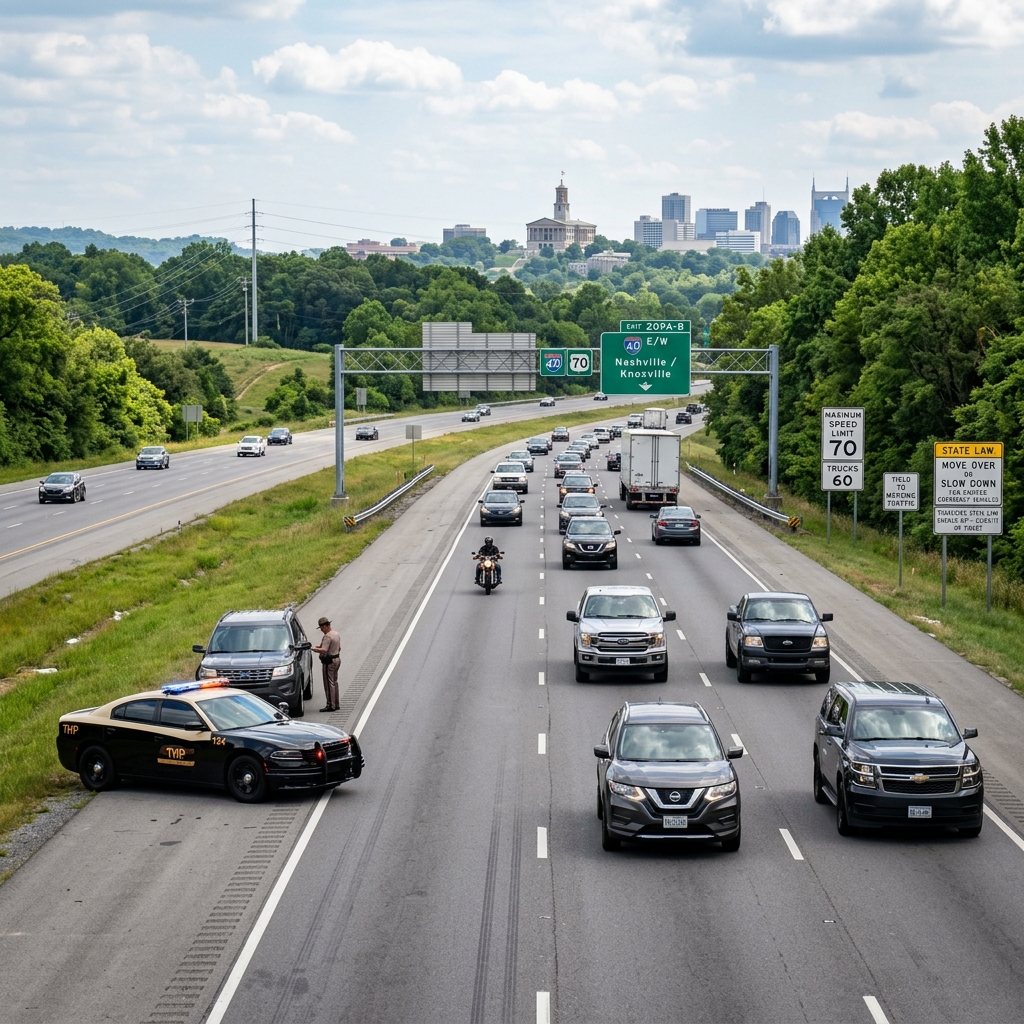
Tennessee traffic laws are designed to reduce crashes, protect road users, and give clear rules for how vehicles must be operated on public roads. Whether you are a new driver, a long-time resident, or a visitor passing through, understanding these rules helps you avoid fines, license consequences, and criminal charges.
This guide summarizes major Tennessee traffic laws in plain language, focusing on everyday issues like speed limits, seat belts, phone use, driving under the influence, and special obligations in construction zones and around emergency vehicles. It is informational only and not a substitute for legal advice or the official Tennessee Code.
Core Rules of the Road in Tennessee
Tennessee’s vehicle operation rules are primarily contained in Title 55 of the Tennessee Code, which governs how drivers must behave on streets and highways. These laws apply to residents and non-residents alike whenever they drive within the state.
Basic Driving Responsibilities
- Drive at a safe speed for conditions and within posted limits.
- Obey traffic signals and signs, including stop signs, yield signs, and lane-control markings.
- Yield the right-of-way when required by law, including to pedestrians, emergency vehicles, and funeral processions.
- Maintain proper control of the vehicle and avoid impaired or distracted driving.
Failure to follow these basic duties can lead to traffic citations, points on your driving record, and potentially civil or criminal liability if you cause a crash.
Speed Limits and Special Speed Rules
Speed management is central to Tennessee traffic safety policy. State law sets maximum and sometimes minimum speeds, and gives additional protection in sensitive areas like construction zones.
Typical Speed Limits
Actual posted limits can vary by local ordinance, but drivers commonly encounter the following ranges across Tennessee:
| Road Type | Common Speed Range (mph) |
|---|---|
| City streets | 30–35 mph |
| Undivided rural roads | 35–65 mph |
| Divided rural highways | 55–65 mph |
| Freeways inside city limits | 55–70 mph |
| Freeways outside city limits | Up to 70 mph |
Drivers must follow the posted limit even when it is lower than these typical ranges, and must reduce speed further for hazards such as rain, fog, or heavy traffic.
Construction Zone Speed Restrictions
Tennessee law imposes enhanced penalties for speeding in highway construction zones, particularly when workers are present. The statute requires drivers to obey reduced speed signs and warns that violations carry a minimum fine of $250 when workers are in the zone.
Key points about construction zone speeding:
- Expect lower posted limits and advanced warning signs.
- Be prepared for lane shifts, narrowed lanes, and workers close to moving vehicles.
- Fines and penalties may be higher than in non-work areas.
Left Lane and “Slow Poke” Requirements
Tennessee restricts unnecessary use of the left lane on multi-lane highways to prevent congestion and reduce aggressive driving. Under the so-called “Slow Poke” law, drivers generally may not cruise in the left passing lane when they are not actively overtaking another vehicle.
In addition, state law prohibits operating a vehicle at such a low speed that it impedes normal traffic flow, unless reduced speed is required by conditions or law.
Seat Belts and Child Passenger Protection
Using a seat belt is one of the simplest and most effective ways to reduce the risk of death or serious injury in a crash. Tennessee treats seat belt use as a primary enforcement issue, meaning officers can stop a vehicle solely for a seat belt violation.
Adult Seat Belt Requirements
Under Tennessee’s seat belt law, the driver must wear a safety belt at all times while operating a motor vehicle, and is responsible for ensuring that all passengers are belted. This applies on public roadways and typically to most passenger vehicles.
- Front-seat occupants must be restrained by a seat belt when the vehicle is in motion.
- Violations may result in fines and can contribute to points on the driver’s record.
- Seat belt use can also affect civil liability and insurance claims after collisions.
Child Restraint and Booster Seat Rules
Tennessee law contains detailed requirements for child passenger safety systems based on age, weight, and height. These rules generally require:
- Infants under 1 year old or under 20 pounds to be secured in an appropriate rear-facing child restraint.
- Children ages roughly 1–3 who meet weight thresholds to use forward-facing child seats.
- Young children under 8 and under 4 feet 9 inches to ride in booster seats until they meet size criteria for adult belts.
Improper child restraint use can lead to citations and increased risk of injury or death in crashes, and may be considered in child welfare or negligence evaluations.
Hands-Free and Texting-While-Driving Laws
Distracted driving, particularly involving mobile phones, has become a major focus of Tennessee traffic enforcement. Tennessee law now prohibits holding or using a handheld device for most purposes while driving.
Hands-Free Requirement
Public Chapter 412, codified in the Tennessee Code, makes it illegal for a driver to hold a cellphone or mobile device with any part of their body while operating a vehicle. The law also bars several specific behaviors:
- Writing, sending, or reading text-based communications while driving.
- Reaching for a phone in a way that takes the driver out of a normal seated position or removes their seat belt.
- Watching movies or videos on a phone while operating a vehicle.
- Recording or broadcasting video using a cellphone while driving.
Earlier Tennessee statutes already banned texting while driving; the hands-free law expanded this to most handheld uses to further reduce distraction.
Penalties and Enforcement
Violations of the hands-free and texting laws can result in fines, court costs, and points on the driving record, leading to possible license consequences for repeat offenders. Enforcement typically occurs through roadside stops when officers observe prohibited device use.
Driving Under the Influence and Open Container Rules
Tennessee imposes strict criminal penalties for operating a vehicle while under the influence of alcohol or drugs, and also regulates possession of alcohol in vehicles.
DUI Standards and Consequences
Drivers with a blood alcohol concentration (BAC) of 0.08% or higher are presumed to be under the influence for standard non-commercial offenses. DUI charges can lead to jail time, fines, license suspension, mandatory treatment, and installation of ignition interlock devices.
For example, first-time offenders face minimum jail time and significant fines under Tennessee law, even without a crash or injury. Penalties increase with higher BACs, prior convictions, or injuries caused.
Open Container Prohibition
Tennessee’s open container statute bans consuming or possessing an open alcoholic beverage or beer while operating a motor vehicle. This applies to the driver and can apply to open containers within the passenger area.
- Unopened, sealed containers are generally permitted in certain areas of the vehicle.
- Local ordinances or specific circumstances may impose stricter limits.
- Open container violations can accompany DUI charges but also stand alone.
Move Over Law and Emergency Vehicle Rules
Tennessee’s “Move Over” and emergency vehicle right-of-way laws aim to protect first responders, service workers, and disabled motorists stopped on the roadside.
Move Over for Stationary Vehicles
When approaching a stopped emergency vehicle with visual emergency lights activated, drivers must yield right-of-way by moving into the lane farthest from the stopped vehicle when safe to do so. If no additional lane is available or lane changes cannot be performed safely, drivers must slow down and provide as much space as possible.
The law applies broadly to emergency and service vehicles and, under related provisions, to other stationary vehicles displaying flashing hazard lights. Violating the Move Over Law can result in fines up to $500 and up to 30 days in jail.
Yielding to Moving Emergency Vehicles
Drivers must also yield to moving emergency vehicles using lights and sirens by pulling to the right-hand side of the roadway and stopping when practical. Failing to yield may result in citations and heightened liability if a collision occurs.
Motorcycle Helmets and Protective Equipment
Motorcycle operation carries unique risks, and Tennessee law mandates helmet use and equipment standards to reduce injury severity.
Helmet Requirements
Every motorcycle operator and passenger must wear a helmet that meets federal motor vehicle safety standards and is certified by the U.S. Department of Transportation (DOT). Approved helmets typically include DOT labeling and must be worn whenever the motorcycle is in motion on public roads.
Teen and New Driver Licensing Rules
Tennessee uses a graduated driver licensing (GDL) system that phases in privileges for young drivers, with special restrictions designed to reduce crash risk during the learning period.
Learner Permit Stage
To obtain a learner permit, applicants must be at least 15 years old, pass written knowledge and vision tests, and provide required identity and school documentation. Permit holders are limited in when and how they may drive, typically requiring supervision and restricting late-night driving.
Intermediate Restricted License
After holding a permit for at least 180 days and completing supervised driving hours, young drivers may qualify for an intermediate restricted license. This stage includes:
- Completion of a road skills test and certification of at least 50 hours of driving, including night hours.
- Restrictions on nighttime driving and passenger numbers.
- Continued obligation for all occupants to wear seat belts.
Full Class D License
A regular Class D license is available at age 18, or earlier upon high school graduation or obtaining a GED, once intermediate requirements are satisfied. No additional exams are required for this final step.
Other Notable Tennessee Traffic Provisions
Beyond the major categories above, several additional Tennessee laws affect everyday driving decisions.
- Right on Red: Drivers may turn right at a red signal after stopping and ensuring the way is clear, unless signs prohibit such turns.
- U-turn Restrictions: U-turns are barred in certain locations, including intersections controlled by signals or officers, areas with limited sight distance, and where “No U-turn” signs are posted.
- Bicycle Helmet Rules: Young bicyclists are subject to helmet requirements when riding on Tennessee roads.
- Funeral Processions: Drivers must not cut into or fail to yield to funeral processions that are lawfully proceeding through intersections.
Practical Tips for Staying Compliant
Because traffic laws can be complex, drivers benefit from a few practical habits:
- Regularly review the Tennessee Comprehensive Driver License Manual for legislative updates and detailed rules.
- Watch for temporary signs indicating construction zones, detours, and special restrictions.
- Use true hands-free technology if phone use is unavoidable, but minimize any interaction that takes attention from driving.
- Plan for a sober ride whenever alcohol may be involved; DUI penalties in Tennessee are severe.
- Ensure children are always secured using age-appropriate restraints and booster seats.
Frequently Asked Questions About Tennessee Traffic Laws
Is it legal to text while driving in Tennessee?
No. Tennessee law specifically prohibits texting while driving and, under the broader hands-free statute, bans most handheld phone use, including reading or sending text-based messages.
Do I have to wear a seat belt if I am sitting in the back seat?
Drivers are responsible for ensuring that all passengers in the vehicle, including those in the rear seats, are properly belted, and child passengers are subject to stricter child restraint rules.
What happens if I speed in a Tennessee construction zone?
Speeding in a construction zone, especially when workers are present, can result in enhanced fines, including a minimum $250 fine under Tennessee law, and may carry additional penalties depending on the circumstances.
Are motorcycle riders required to wear helmets?
Yes. All motorcycle operators and passengers must wear helmets meeting federal safety standards and certified by the Department of Transportation (DOT) whenever riding on Tennessee public roads.
Do Tennessee traffic laws apply to visitors from other states?
Yes. Out-of-state drivers must comply with Tennessee traffic laws whenever they operate a vehicle within the state’s borders, and violations can affect both Tennessee and home-state driving records.
References
- Title 55 – Motor and Other Vehicles — Tennessee Code via Justia. 2024-01-01. https://law.justia.com/codes/tennessee/title-55/
- Traffic Safety Laws — Tennessee Highway Safety Office, TN.gov. 2023-05-10. https://www.tn.gov/safety/publicsafety.html
- Tennessee Comprehensive Driver License Manual — Tennessee Department of Safety and Homeland Security. 2023-01-01. https://www.tn.gov/content/dam/tn/safety/documents/DL_Manual.pdf
- Traffic Safety Laws — Tennessee Highway Safety Office: Topic Index. 2022-08-15. https://tntrafficsafety.org/traffic-safety-laws
- Driving in Tennessee: Road Rules & Driving Tips — Sixt Rent A Car. 2022-04-20. https://www.sixt.com/magazine/tips/driving-tips-tennessee/
- Traffic Laws for Tennessee Visitors — Raybin & Weissman, P.C. 2021-09-01. https://www.nashvilletnlaw.com/traffic-laws-for-tennessee-visitors/
Similar Articles








Read full bio of medha deb


