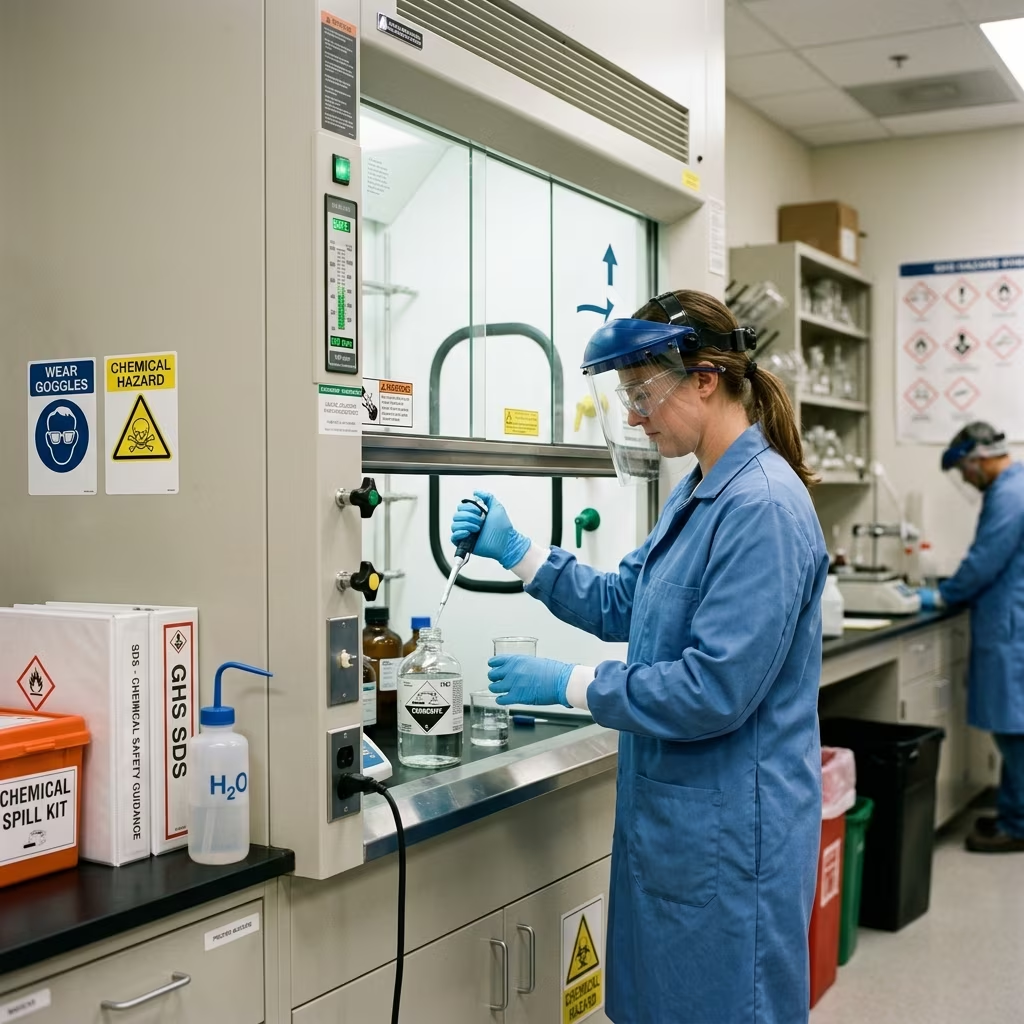
Many jobs involve working with or near hazardous chemicals, from cleaning agents and solvents to industrial gases and laboratory reagents. Whether you work in an office building, hospital, factory, warehouse, or research facility, understanding how to interact safely with chemicals is critical to protecting your health and complying with workplace safety laws.
This article provides a practical, employee-focused overview of chemical safety: how to recognize hazards, read labels and Safety Data Sheets (SDS), apply controls, use personal protective equipment (PPE), store chemicals safely, and respond to emergencies. It is designed to complement your employer’s safety programs and training, not replace them.
1. Why Chemical Safety Matters for Every Employee
Chemicals can pose health, physical, and environmental risks. Exposure may occur through skin contact, inhalation, ingestion, or eye contact, and can lead to short-term effects (irritation, burns, dizziness) or long-term consequences (organ damage, cancer, reproductive effects).
Beyond personal health, chemical incidents can cause fires, explosions, environmental contamination, and business disruption. Laws and regulations—such as the U.S. Occupational Safety and Health Administration (OSHA) standards on chemical hazards and Hazard Communication—exist to reduce these risks by requiring employers to inform and protect workers.
- Every employee who may be exposed to chemicals has the right to know about the hazards and how to work safely.
- Safety is a shared responsibility: employers must provide information and protective measures, and workers must follow procedures and use protective equipment correctly.
2. Your Right to Know: Hazard Communication Basics
OSHA’s Hazard Communication Standard (often called “HazCom”) requires employers to have a written program that explains how chemical hazards will be identified and communicated in the workplace. As an employee, you can expect several key elements:
- Inventory of hazardous chemicals present at the workplace.
- Safety Data Sheets (SDS) for each hazardous chemical, available for you to consult.
- Labels and warnings on chemical containers that describe the hazards and precautions.
- Training when you start a job or when new chemicals are introduced, covering hazards and protective measures.
You should know where your workplace’s written hazard communication program is kept and how to access it. Training should explain not only what chemicals are used, but also how you can identify spills or releases, and what to do if something goes wrong.
3. Understanding Chemical Labels and Safety Data Sheets
Chemical labels and Safety Data Sheets are your primary tools for understanding a substance’s risks and how to work with it safely. Always read them before using or handling a chemical.
3.1 Key Elements of Chemical Labels
Under modern hazard communication systems, labels on hazardous chemical containers include standardized information to help you recognize risks quickly.
- Product identifier – the chemical name or code.
- Signal word – usually “Danger” for more severe hazards or “Warning” for less severe ones.
- Hazard statements – brief explanations of the nature of the hazard, such as “Causes severe skin burns and eye damage” or “Highly flammable liquid and vapor.”
- Precautionary statements – recommended measures to minimize exposure, safe storage instructions, steps to take in case of exposure, and how to dispose of the chemical safely.
- Pictograms – standardized symbols indicating specific hazard types (e.g., flame, skull and crossbones, health hazard).
If you do not understand a label symbol or phrase, ask your supervisor or safety officer before using the chemical.
3.2 Safety Data Sheets: Your Detailed Guide
Safety Data Sheets provide more detailed information about each hazardous chemical than the label can contain. SDS documents are organized into sections and typically include:
| Key SDS Section | What You Learn |
|---|---|
| Identification | Product name, recommended uses, supplier contact details. |
| Hazard(s) identification | Classification of hazards and label elements. |
| Composition/information on ingredients | Chemical components and concentration ranges. |
| First-aid measures | What to do if the chemical gets on skin, into eyes, is inhaled, or ingested. |
| Fire-fighting measures | Suitable extinguishing media and special hazards. |
| Accidental release measures | Spill response, cleanup procedures, and personal precautions. |
| Handling and storage | Safe handling practices and conditions for safe storage. |
Additional sections cover exposure controls, physical and chemical properties, stability and reactivity, toxicological information, and disposal considerations.
Before you work with a chemical you are unfamiliar with, review the SDS to understand:
- Routes of exposure and health effects.
- Required PPE and engineering controls.
- Emergency procedures for spills, fires, or accidental exposure.
4. Recognizing and Controlling Chemical Hazards
Reducing exposure is the most effective way to protect workers from chemical hazards. Modern safety programs often use a hierarchy of controls, ranging from eliminating the hazard to relying on personal protective equipment.
4.1 The Hierarchy of Controls for Chemicals
- Elimination – removing the chemical from the process entirely when possible.
- Substitution – replacing a hazardous chemical with a safer alternative.
- Engineering controls – using physical changes to facilities or equipment (such as fume hoods, ventilation, or isolation) to reduce exposure.
- Administrative and work practice controls – modifying work schedules, procedures, and training to limit exposure duration and improve safe handling.
- Personal protective equipment (PPE) – providing appropriate protective clothing and devices as a final line of defense.
OSHA emphasizes that engineering and work practice controls should be the primary means of reducing exposure, with PPE used when other controls cannot adequately protect workers.
4.2 Your Role in Exposure Control
As an employee, you should:
- Follow established procedures for using, transporting, and disposing of chemicals.
- Use fume hoods, local exhaust ventilation, or other engineering controls whenever required for a task.
- Report ventilation problems or damaged control equipment immediately.
- Adhere to job rotation or scheduling practices intended to limit long-term exposure.
- Use PPE exactly as trained and never bypass safety devices or interlocks.
5. Personal Protective Equipment: Using PPE Effectively
Personal protective equipment must be selected based on the specific chemical and type of exposure risk. Common PPE for chemical work includes gloves, safety glasses or goggles, face shields, aprons, lab coats, coveralls, and respirators.
5.1 Types of PPE for Chemical Hazards
- Eye and face protection – safety glasses, goggles, or face shields appropriate for splashes, dust, or vapors.
- Hand protection – chemical-resistant gloves compatible with the specific substance (different materials protect against different chemicals).
- Body protection – lab coats, aprons, or full-body suits to prevent skin contact.
- Respiratory protection – respirators required when airborne contaminants exceed permissible exposure limits or when engineering controls cannot fully control exposure.
- Foot protection – safety shoes or boots, sometimes with chemical-resistant materials.
5.2 Training and Proper Use of PPE
Employers must train workers on when PPE is necessary, what type is required, how to put it on and take it off correctly, its limitations, and how to maintain and dispose of it.
To use PPE effectively:
- Inspect PPE before each use for cracks, tears, or other damage.
- Ensure respirators are properly fitted and used within a written respiratory protection program when required.
- Do not alter PPE in ways that compromise its protective function.
- Store PPE in clean, dry locations away from contamination.
6. Safe Storage and Housekeeping for Chemicals
Safe storage reduces the likelihood of spills, fires, and unintended reactions between incompatible chemicals. Good housekeeping practices also make it easier to respond quickly in an emergency.
- Store chemicals in designated areas away from direct sunlight, heat sources, and exit routes.
- Keep incompatible chemicals apart (for example, separating strong oxidizers from flammable materials) according to SDS guidance.
- Ensure all containers are clearly labeled and kept closed when not in use.
- Maintain an orderly work area free of unnecessary clutter and chemical residues.
- Do not eat, drink, store food, or apply cosmetics in areas where chemicals are used; wash hands before eating.
Regular inspections and housekeeping audits help identify expired chemicals, damaged containers, and storage issues before they lead to incidents.
7. Preparing for Emergencies: Spills, Exposures, and Fires
No workplace can completely eliminate the possibility of chemical incidents. Being prepared and knowing your role in an emergency can significantly reduce harm.
7.1 General Emergency Preparedness
- Know the location of emergency equipment: eyewash stations, safety showers, fire extinguishers, first-aid kits, phones, and alarm pull stations.
- Understand when it is safe for you to clean up a minor spill and when you must evacuate and call specialized spill response teams.
- Never work alone when performing tasks that involve highly hazardous chemicals.
- Participate in drills and training related to chemical spills, fires, and exposures.
7.2 Responding to Chemical Exposures
Specific first-aid measures depend on the chemical and route of exposure; always refer to the SDS for detailed steps. Common general principles include:
- Skin contact: Immediately remove contaminated clothing and rinse the affected area with water for the time specified in the SDS.
- Eye contact: Use an eyewash station to flush eyes continuously for at least the duration recommended in the SDS, and seek medical attention.
- Inhalation: Move the affected person to fresh air, loosen tight clothing, and obtain medical help.
- Ingestion: Do not induce vomiting unless instructed by medical professionals or SDS guidance; contact emergency medical services.
Report all exposures and near misses to your supervisor or safety office so that underlying causes can be addressed.
8. Training, Communication, and Your Responsibilities
Effective chemical safety relies on continuous training and open communication. Employers are required to provide training that covers the hazards of workplace chemicals, methods for detecting releases, labeling systems, and the details of the hazard communication program.
As an employee, your responsibilities include:
- Attending required training and asking questions if anything is unclear.
- Following established procedures and using controls and PPE as instructed.
- Reviewing SDS and labels for any unfamiliar chemicals before use.
- Reporting unsafe conditions, damaged containers, missing labels, or suspected overexposure.
- Participating in incident investigations and safety improvements when requested.
Active engagement helps ensure that safety programs remain effective and relevant to the actual tasks workers perform.
9. Quick Employee Checklist for Working Around Chemicals
Use this brief checklist as a personal reminder before starting work that involves hazardous chemicals:
- Have I reviewed the label and SDS for this chemical?
- Do I understand the hazards and routes of exposure?
- Are the required engineering controls (ventilation, fume hood, isolation) functioning properly?
- Am I wearing the correct, undamaged PPE?
- Do I know where the nearest eyewash station, safety shower, and fire extinguisher are located?
- Is the work area free of unnecessary items and properly labeled chemicals?
- Do I know the spill response procedure and who to call in an emergency?
10. Frequently Asked Questions (FAQ)
10.1 Do I have to work with a chemical if I do not understand the hazards?
No. You should not work with any hazardous chemical until you have received adequate information and training on its risks and safe handling. Ask your supervisor or safety officer for clarification, and review the label and SDS first.
10.2 Where can I find Safety Data Sheets at my workplace?
Employers must maintain SDS for each hazardous chemical and make them readily accessible to employees during every work shift, either in physical binders or electronic systems. Your hazard communication training should explain where they are stored and how to access them.
10.3 What should I do if a chemical container has no label?
Do not use any unlabeled chemical container. Inform your supervisor immediately so that the material can be identified and properly labeled in accordance with hazard communication requirements.
10.4 Who decides what PPE I need for a particular chemical?
PPE requirements are based on hazard assessments performed by your employer, using information from the SDS, exposure limits, and job tasks. You must follow the PPE guidance provided in training and procedures, and you can request clarification if you are unsure.
10.5 Are office workers affected by chemical safety rules?
Yes. Even offices use products such as cleaners, toner, adhesives, and maintenance chemicals. Hazard communication requirements apply wherever hazardous chemicals are present, and all exposed workers must have access to information and training appropriate to their level of risk.
References
- Chemical Hazards and Toxic Substances — Occupational Safety and Health Administration (OSHA). 2023-05-01. https://www.osha.gov/chemical-hazards
- OSHA Chemical Hazards and Communication — StatPearls Publishing. 2023-02-06. https://www.ncbi.nlm.nih.gov/books/NBK580552/
- Chemical Safety in the Workplace — Tulane University School of Public Health and Tropical Medicine. 2022-07-12. https://publichealth.tulane.edu/blog/chemical-safety-in-the-workplace/
- Guide to Chemical Safety in the Workplace — EcoOnline. 2022-10-10. https://www.ecoonline.com/topics/chemical-safety-importance/
- Preventing Hazards from Unexpected Chemical Releases — Texas Department of Insurance, Division of Workers’ Compensation. 2021-08-30. https://www.tdi.texas.gov/tips/safety/chemrls.html
- General Chemical Safety Guidelines — University of California San Diego. 2023-01-15. https://blink.ucsd.edu/safety/research-lab/chemical/general/index.html
- Keeping the Workplace Safe from Chemical Hazards — Business & Legal Resources (BLR). 2022-03-18. https://blr.com/resources/how-to-take-proper-precautions-around-chemicals-in-the-workplace/