
The Fight for Equal Benefits in U.S. Territories
Unpacking the legal battle over federal benefits and territorial discrimination.
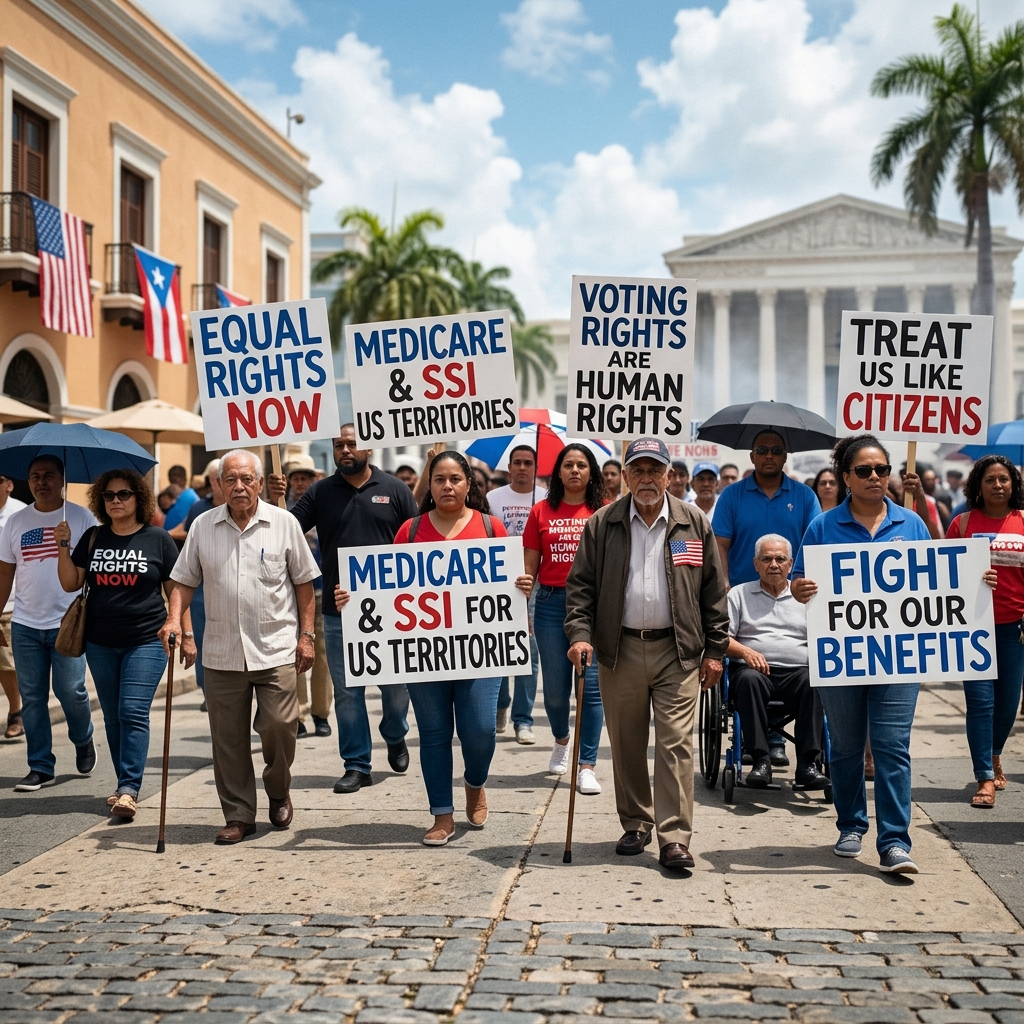
Introduction
The concept of equal justice under the law is a celebrated American ideal, acting as the bedrock of the nation’s legal system. Yet, for millions of citizens residing in United States territories like Puerto Rico, constitutional protections remain inconsistent and geographically dependent. The relationship between the federal government and territorial inhabitants is defined by enduring legal paradoxes, granting citizenship while simultaneously denying full access to the federal social safety net. This constitutional tension culminated in a high-stakes legal dispute over the Supplemental Security Income (SSI) program, highlighting a system that systematically discriminates against citizens based solely on their geographic location.
Excluding territorial residents from vital federal welfare programs forces a critical examination of the Fourteenth and Fifth Amendments. For decades, civil rights advocates have argued that a citizen’s fundamental privileges should not evaporate upon moving to a U.S. territory. However, current legislative frameworks permit differing treatments, leaving the most vulnerable demographics—the elderly, the blind, and individuals with severe disabilities—without adequate financial support. The moral and legal implications of these exclusionary policies extend far beyond a single court case, questioning the true extent of American equality.
The Genesis of the Conflict: José Luis Vaello-Madero’s Journey
The modern debate over territorial equality gained national prominence through the compelling legal case of José Luis Vaello-Madero. Born in Puerto Rico, Vaello-Madero moved to New York, where severe health complications unfortunately left him unable to work. In 2012, recognizing his physical and financial distress, the federal government approved him for Supplemental Security Income (SSI). Established in 1972, SSI provides direct cash assistance to low-income elderly, blind, or disabled individuals. It operates as an essential safety net, ensuring vulnerable citizens avoid extreme poverty.
In 2013, Vaello-Madero relocated back to Puerto Rico to care for his wife. Unaware that moving to a U.S. territory impacted his eligibility, he continued receiving his SSI payments via direct deposit. The Social Security Administration (SSA) eventually discovered his relocation and abruptly terminated his benefits. Furthermore, the federal government sued Vaello-Madero, demanding the immediate repayment of over $28,000 in SSI funds disbursed after his move. In response, Vaello-Madero mounted a rigorous constitutional defense, arguing that categorically excluding Puerto Rico residents from SSI violated the equal protection component of the Fifth Amendment’s Due Process Clause. He contended that stripping an American citizen of life-sustaining benefits simply for moving from a state to a territory lacked any valid justification and was fundamentally discriminatory.
The Core Legal Argument: Equal Protection vs. The Territory Clause
At the heart of this legal battle was a monumental clash between two foundational constitutional doctrines: the implicit guarantee of equal protection and the extensive powers granted to the federal government under the Territory Clause. Article IV, Section 3, Clause 2 of the Constitution—the Territory Clause—grants Congress the power to make all needful rules and regulations respecting the territory belonging to the United States. Historically, federal courts have interpreted this clause as granting Congress plenary, or absolute, legislative power over U.S. territories, theoretically allowing the legislative branch to treat territories vastly differently than the fifty states.
Vaello-Madero’s defense team, supported by numerous civil liberties organizations, argued that while Congress possesses broad authority, it cannot wield that power to violate fundamental constitutional rights. The Fifth Amendment’s Due Process Clause restricts the federal government from engaging in arbitrary and unjustified discrimination. Advocates emphasized that denying safety-net benefits to individuals living in Puerto Rico—who are birthright U.S. citizens—is wholly irrational. They stressed that poverty and physical disabilities do not change character across geographic lines; an elderly, disabled citizen in San Juan faces the exact same survival needs as one living in New York City. The dispute essentially asked the federal judiciary to determine the absolute constitutional limits of congressional power concerning the welfare of territorial residents.
The Supreme Court’s Ruling and the Tax Exemption Rationale
In April 2022, the United States Supreme Court delivered its final decision in United States v. Vaello-Madero, ruling 8-1 in favor of the federal government. The Court concluded that the Constitution does not mandate Congress to extend SSI benefits to residents of Puerto Rico. Writing for the majority, the Court applied a highly deferential “rational-basis” review, the lowest standard of constitutional scrutiny. Under this judicial test, a law is upheld as long as there is any conceivable rational justification for the government’s policy.
The primary justification cited by the federal government and accepted by the Supreme Court was the territory’s unique federal tax status. Because residents of Puerto Rico are generally exempt from most federal income taxes, the Court reasoned that it is constitutionally permissible for Congress to exclude them from certain federal benefit programs. The Court’s logic suggested a reciprocal relationship between federal taxation and representation in social benefits, concluding that Congress could rationally balance its fiscal expenditures by denying financial assistance to a region that does not contribute heavily to the general federal income tax pool.
Justice Sonia Sotomayor, acting as the sole dissenter, forcefully dismantled this prevailing reasoning. She pointed out an inherent logical flaw in the tax-based justification: the SSI program is specifically designed for individuals living in extreme, debilitating poverty. By definition, individuals qualifying for SSI in the fifty states do not earn enough income to pay federal income taxes either. Therefore, using the lack of federal income tax contribution as a legal basis to exclude disabled and elderly Puerto Ricans from a program expressly designed for the indigent is a stark contradiction. Sotomayor argued that the geographic classification was completely irrational and served only to perpetuate systemic territorial inequality.
The Dark Shadow of the Insular Cases
To truly comprehend the Court’s overwhelming deference to Congress regarding territorial affairs, one must examine a highly controversial chapter of American legal history known as the Insular Cases. Following the conclusion of the Spanish-American War in 1898, the United States acquired several overseas territories, including Puerto Rico, Guam, and the Philippines. The sudden acquisition of these diverse lands forced the U.S. legal system to address a novel constitutional question: Does the Constitution seamlessly follow the flag into newly acquired territories?
In a series of early twentieth-century rulings, the Supreme Court established the doctrine of “territorial incorporation.” The Court categorized newly acquired lands into two distinct groups: incorporated territories, which were destined for eventual statehood and where the Constitution fully applies, and unincorporated territories, where only loosely defined fundamental rights apply. The legal reasoning behind this framework was heavily steeped in the blatant racism and imperialism of the era. Presiding justices openly described the inhabitants of these new territories as alien races and savage tribes, claiming they were unfit for Anglo-Saxon legal principles, administration, and full constitutional protection.
The Insular Cases effectively created a constitutional gray zone, rendering millions of territorial residents as colonial subjects rather than equal American citizens. Despite widespread and continuous condemnation from modern legal scholars, prominent civil liberties advocates, and even several current Supreme Court justices, the Insular Cases have never been formally overturned by the judiciary. They stubbornly continue to serve as the foundational legal precedent that allows Congress to legislate differently for U.S. territories. In the Vaello-Madero decision, while the modern Court did not explicitly rely on the Insular Cases to reach its conclusion, the historical legacy of these decisions undeniably created the permissive legal environment that allows the ongoing disparate treatment of Puerto Rico and other territories. The failure to wholly repudiate this racist doctrine leaves an indelible stain on modern American jurisprudence.
Tangible Disparities: The Human Cost of Exclusion
The abstract legal arguments surrounding constitutional clauses, equal protection, and historical precedents unfortunately translate into devastating real-world consequences for individuals living in Puerto Rico. Because the island is purposefully excluded from the modern SSI program, its low-income elderly and disabled residents must rely on a legacy block-grant program known as Aid to the Aged, Blind, and Disabled (AABD). The resulting disparity in federal funding and individual benefits between SSI and AABD is staggering.
According to comprehensive data analyzed by the Government Accountability Office (GAO) and numerous civil rights organizations, SSI recipients on the mainland regularly receive an average of well over $500 per month, with maximum benefits frequently exceeding $800 depending on the specific year’s cost-of-living adjustments. In stark, painful contrast, vulnerable individuals relying on the AABD program in Puerto Rico often receive a meager fraction of that amount—historically averaging between $70 and $80 per month. This drastic reduction in basic financial support is wholly inadequate to cover the essential costs of food, medicine, and adequate shelter.
This massive loophole in the federal safety net essentially punishes American citizens for their geographic location. It creates a perverse and harmful incentive, forcing vulnerable individuals to abandon their homes, vibrant communities, and extended support networks in Puerto Rico to migrate to the mainland United States simply to survive economically. The structural inequality inherent in substituting the robust SSI program with the severely underfunded AABD program intentionally exacerbates poverty levels on the island. It severely strains local social services, compounding the overarching economic challenges currently faced by the territory.
The Path Forward: Congressional Responsibility
The Supreme Court’s definitive ruling in Vaello-Madero clarified one crucial, unyielding reality: the legal power to resolve this ongoing discrimination lies squarely in the hands of the United States Congress. While the judiciary formally determined that the Constitution does not actively compel the inclusion of Puerto Rico in the SSI program, it is equally true that absolutely nothing in the Constitution prevents Congress from granting these vital benefits. The Territory Clause, which gives Congress plenary power, explicitly means that federal lawmakers can vote tomorrow to amend the Social Security Act and extend full, equal SSI coverage to all U.S. territories.
Civil liberties advocates vehemently argue that Congress cannot simply hide behind the protective shield of judicial deference. The legislative branch has a profound moral obligation to ensure that all American citizens, regardless of their specific zip code or territorial status, are adequately protected from extreme poverty and severe disability-related hardships. Bipartisan efforts have periodically emerged in Washington to close this discriminatory gap, with proposed legislation frequently aiming to phase in territorial inclusion for vital safety net programs. However, achieving systemic change requires sustained, dedicated political will and a firm rejection of the discriminatory legacies of the past. The ongoing, passionate advocacy for territorial equality serves as a stark, necessary reminder that the long fight for civil rights in the United States is far from over.
Frequently Asked Questions
- What is the Supplemental Security Income (SSI) program?
SSI is a crucial federal assistance program established in 1972 and administered by the Social Security Administration. It provides direct monthly financial support to low-income individuals who are aged 65 or older, completely blind, or severely disabled, actively helping them meet basic human needs like food, clothing, and secure shelter.
- Why are residents of Puerto Rico excluded from SSI?
Under current federal statutes, SSI is exclusively available to residents of the 50 states, the District of Columbia, and the Northern Mariana Islands. In 2022, the U.S. Supreme Court upheld this geographic exclusion, formally citing that since most Puerto Rico residents are exempt from federal income taxes, Congress has a constitutionally rational basis for excluding them from the federal program.
- What exactly are the Insular Cases?
The Insular Cases are a series of controversial Supreme Court decisions from the early 1900s that established the legal doctrine of unincorporated territories. They ruled that full constitutional rights do not automatically extend to places like Puerto Rico and Guam. These outdated cases, influenced by the racial prejudices of the colonial era, are widely criticized today for enabling the unequal treatment of territorial residents.
- Can the exclusion of Puerto Rico from SSI be legally changed?
Yes. While the Supreme Court definitively ruled that the Constitution does not legally force Congress to include Puerto Rico in the SSI program, Congress has the absolute legislative authority to amend the existing law and extend full SSI benefits to all U.S. territories at any given time.
References
- United States v. Vaello Madero, 142 S. Ct. 1539 (2022) — Supreme Court of the United States. 2022-04-21. https://www.supremecourt.gov/opinions/21pdf/20-303_6q37.pdf
- Puerto Rico: Information on How Statehood Would Potentially Affect Selected Federal Programs and Revenue Sources — U.S. Government Accountability Office (GAO). 2014-03-04. https://www.gao.gov/products/gao-14-31
- United States v. Vaello-Madero — Harvard Law Review. 2021-01-10. https://harvardlawreview.org/print/vol-134/united-states-v-vaello-madero/
- The Insular Cases Run Amok: Against Constitutional Exceptionalism in the Territories — Columbia Law Review. 2015-07-10. https://columbialawreview.org/content/the-insular-cases-run-amok-against-constitutional-exceptionalism-in-the-territories/
Similar Articles








Read full bio of Sneha Tete




