
The Enduring Fight for Ballot Access Post-Shelby v. Holder
Navigating the evolving landscape of U.S. voting rights and federal law.
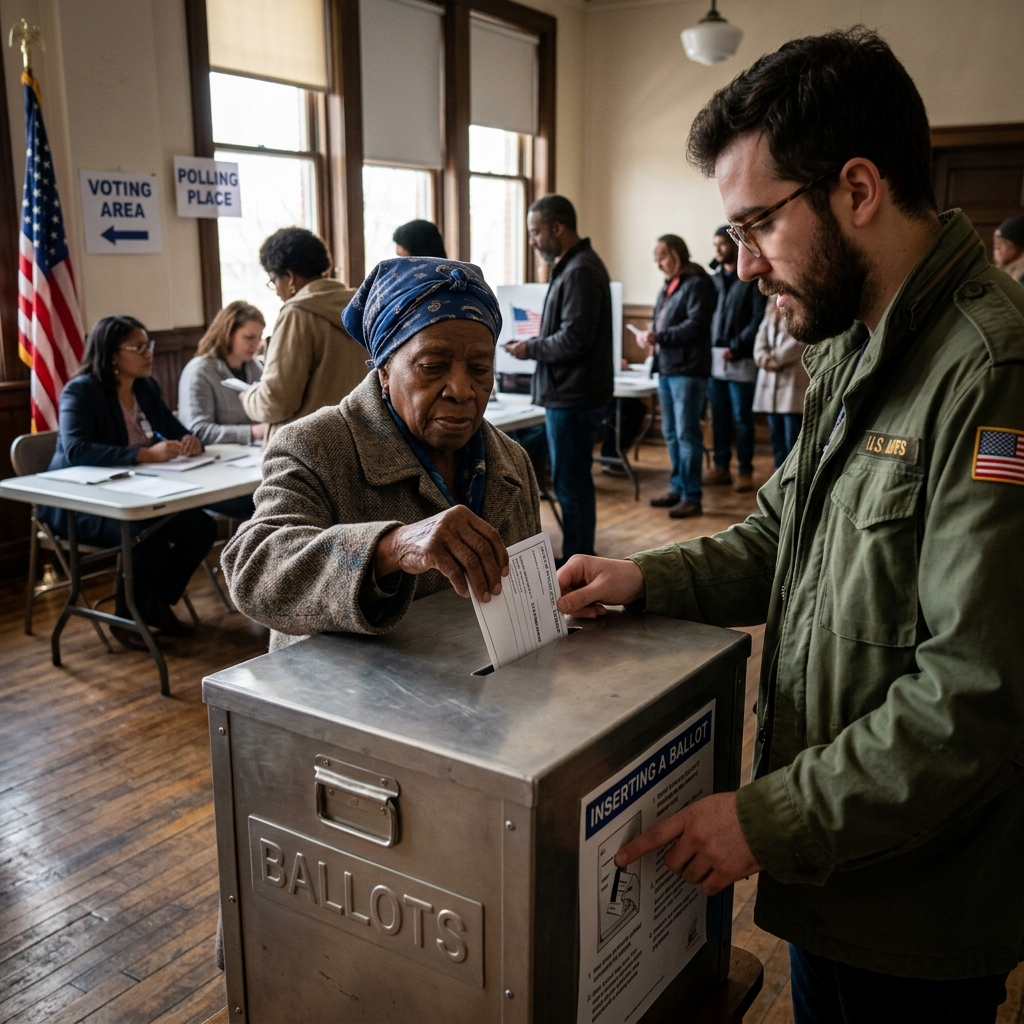
Introduction: The Bedrock of American Democracy
The right to vote is universally recognized as the cornerstone of any functioning democracy. In the United States, this right has been the subject of profound struggle, negotiation, and extensive legal evolution. For nearly five decades, the Voting Rights Act of 1965 (VRA) stood as the most effective piece of civil rights legislation in the nation’s history, systematically dismantling barriers that had historically disenfranchised racial and language minorities. However, the legal architecture protecting these rights experienced a seismic shift following the 2013 Supreme Court decision in Shelby County v. Holder. More than a decade later, the ramifications of this landmark ruling continue to shape election law, civil rights litigation, and the daily realities of ballot access for millions of Americans.
Understanding the current landscape of voting rights requires examining the mechanisms that once protected voters, analyzing the void left by the Supreme Court’s intervention, and exploring the innovative, though arduous, legal strategies currently employed by civil rights defenders to ensure equitable access to the ballot box.
The Architecture of Protection: Preclearance and the VRA
To grasp the magnitude of the Shelby County decision, one must first understand the structural ingenuity of the original Voting Rights Act. Enacted during the height of the Civil Rights Movement, the VRA was designed to enforce the guarantees of the 15th Amendment, which prohibits the denial of the right to vote on the basis of race, color, or previous condition of servitude.
The true power of the VRA resided in the interplay between Section 4(b) and Section 5. Section 4(b) established a highly specific “coverage formula,” identifying states and local jurisdictions with a documented history of severe and persistent voting discrimination—such as the use of literacy tests or alarmingly low voter registration rates. Once a jurisdiction was “covered” by this formula, it was subject to the strict requirements of Section 5.
Section 5 instituted a revolutionary concept known as “preclearance.” Covered jurisdictions were legally prohibited from implementing any changes to their voting laws, practices, or procedures—no matter how minor—without first obtaining approval from either the United States Department of Justice or a federal court in Washington, D.C. This proactive mechanism placed the burden of proof squarely on the state or local government to demonstrate that the proposed change would not have a discriminatory purpose or effect.
For decades, preclearance quietly and efficiently blocked thousands of discriminatory voting changes before they could disenfranchise a single voter. It prevented discriminatory redistricting, the abrupt closure of polling places in minority neighborhoods, and the implementation of restrictive registration requirements. It was a shield that protected the fragile progress of integration at the ballot box.
The Shelby County Shockwave: Dismantling the Shield
In June 2013, the legal paradigm of federal election oversight was fundamentally altered. In Shelby County v. Holder, a county in Alabama challenged the constitutionality of the VRA’s coverage formula and the preclearance requirement. In a 5-4 decision, the Supreme Court struck down Section 4(b) of the Act.
Chief Justice John Roberts, writing for the majority, argued that the “conditions that originally justified these measures no longer characterize voting in the covered jurisdictions.” The Court reasoned that the coverage formula was outdated, relying on decades-old data that did not reflect the contemporary racial progress and voter registration parity achieved in the South. While the Court did not strike down Section 5 itself, rendering the coverage formula unconstitutional effectively neutralized the preclearance requirement. Without a formula to determine who is covered, Section 5 was left dormant.
The dissenting opinion, authored by Justice Ruth Bader Ginsburg, famously warned that “throwing out preclearance when it has worked and is continuing to work to stop discriminatory changes is like throwing away your umbrella in a rainstorm because you are not getting wet.”
The Post-Shelby Landscape: A Resurgence of Restrictions
The consequences of the Shelby County decision were immediate and profound. Within hours of the ruling, several formerly covered states announced their intentions to implement strict voting laws that had previously been blocked by the Department of Justice under the preclearance regime. Without the proactive shield of Section 5, states were free to pass and enact sweeping changes to election administration.
Civil rights advocates and legal scholars quickly noted a trend of new legislation that disproportionately impacted minority communities, the elderly, and low-income voters. These legislative changes generally fall into several distinct categories:
| Type of Electoral Change | Description and Impact | Post-Shelby Prevalence |
|---|---|---|
| Strict Voter ID Laws | Requirements to present specific forms of government-issued photo identification, which minority and low-income voters are statistically less likely to possess. | Widely implemented in formerly covered states immediately following the ruling. |
| Polling Place Closures | The elimination or consolidation of polling locations, often leading to excessive wait times and transportation barriers in densely populated minority neighborhoods. | Thousands of polling places have been closed in previously covered jurisdictions since 2013. |
| Voter Roll Purges | Aggressive maintenance programs that remove voters from registration lists for infrequency of voting or minor administrative discrepancies. | Significantly accelerated, often without adequate notice to the disenfranchised voter. |
| Curtailing Early Voting | Reductions in the number of early voting days or the elimination of Sunday voting (traditionally utilized by “Souls to the Polls” initiatives). | Adopted in numerous states to restrict alternative ballot access avenues. |
This avalanche of legislation fundamentally changed the nature of civil rights enforcement. Instead of states proving their laws were fair before implementation, the burden shifted to voters and advocates to prove the laws were discriminatory after the fact.
The Shift to Section 2: Reactive Litigation and Its Burdens
With Section 5 paralyzed, the primary weapon left in the federal arsenal to combat voting discrimination is Section 2 of the Voting Rights Act. Unlike Section 5, Section 2 applies nationwide and is a permanent provision that forbids any voting practice or procedure that “results in a denial or abridgement of the right of any citizen of the United States to vote on account of race or color.”
While Section 2 remains a vital tool, it is fundamentally different from preclearance. Section 2 requires reactive litigation. Plaintiffs—often civil rights organizations or the Department of Justice—must file lawsuits against discriminatory laws after they have been enacted.
This shift from proactive defense to reactive litigation imposes severe burdens on those fighting for ballot access. First, Section 2 litigation is notoriously complex, time-consuming, and expensive. Cases often require extensive expert testimony on historical discrimination, demographic analysis, and political science metrics like “racially polarized voting” (analyzed under the legal framework established in the 1986 Supreme Court case Thornburg v. Gingles). A single Section 2 case can take years to wind its way through the federal court system and cost millions of dollars.
Secondly, and perhaps most detrimentally, the discriminatory law remains in effect while the litigation is pending unless a judge grants a preliminary injunction—a high legal hurdle. Consequently, multiple election cycles can occur under an illegal, discriminatory map or voting restriction before a court finally strikes it down. The damage to representation during that period is irreversible.
Recent Triumphs and the Evolution of the Courts
Despite the immense challenges inherent in Section 2 litigation, advocates have secured critical victories that reaffirm the enduring necessity of the Voting Rights Act. A prominent example is the ongoing battle over racial gerrymandering in congressional redistricting maps.
Following the 2020 Census, several states drew new electoral maps that civil rights groups argued severely diluted the voting power of minority populations. In a surprisingly robust defense of the VRA, the Supreme Court ruled in the 2023 case Allen v. Milligan that Alabama’s congressional map likely violated Section 2 by unlawfully diluting the power of Black voters. The Court ordered the state to draw a new map containing a second district where Black voters had a realistic opportunity to elect a candidate of their choice.
The Milligan decision was a crucial reaffirmation of the “results test” of Section 2. It demonstrated that even in a highly conservative federal judiciary, the core mathematical and demographic protections against vote dilution remain legally binding. It empowered parallel litigation in other states, leading to the redrawing of maps in jurisdictions with similar demographic configurations and histories of racially polarized voting.
Additionally, advocates are increasingly exploring the “bail-in” provision of Section 3(c) of the VRA. Under this provision, if a federal court finds that a jurisdiction has engaged in intentional racial discrimination, the court can order that jurisdiction to be subjected to preclearance for a set period. While proving intentional discrimination is exceedingly difficult, successful Section 3(c) claims provide a localized mechanism to restore proactive oversight.
Legislative Horizons: The Call for Modernization
The consensus among voting rights scholars and advocates is that while litigation under Section 2 is necessary, it is insufficient to fully protect the franchise on a national scale. Relying solely on case-by-case lawsuits is akin to playing a perpetual game of “whack-a-mole” against an ever-evolving array of voter suppression tactics.
The ultimate solution lies in congressional action. Advocates have consistently pushed for federal legislation to modernize the VRA and respond directly to the Supreme Court’s invitation in Shelby County to update the coverage formula. Proposals like the John Lewis Voting Rights Advancement Act aim to establish a new, dynamic “rolling” formula based on recent evidence of voting rights violations over the past 25 years. This would ensure that preclearance is applied fairly to any state—regardless of its geography—that demonstrates a contemporary pattern of discrimination.
Furthermore, in the absence of federal action, several states have taken the initiative to pass state-level Voting Rights Acts. States like New York, California, Washington, and Connecticut have enacted laws that create state-level preclearance mechanisms for local municipalities, lowered the burden of proof for vote dilution claims, and expanded language access for minority voters. These state-level innovations offer a blueprint for comprehensive statutory protection.
Conclusion
The anniversary of Shelby County v. Holder serves as a somber reminder of the fragility of civil rights progress. The removal of federal preclearance fundamentally altered the balance of power, unleashing a wave of restrictive voting laws that test the limits of our democratic infrastructure. Yet, the response to this judicial setback has been defined by fierce resilience. Through meticulous Section 2 litigation, strategic legal advocacy, and grassroots mobilization, the fight for equal ballot access continues unabated. Until Congress restores the full protective power of the Voting Rights Act, the preservation of American democracy will rely on the vigilance of those willing to challenge disenfranchisement in the courts, legislature, and at the ballot box.
Frequently Asked Questions (FAQs)
- What was the preclearance requirement?
Preclearance was a provision (Section 5) of the Voting Rights Act of 1965 that required jurisdictions with a history of voting discrimination to obtain federal approval before making any changes to their election laws, ensuring the changes would not disenfranchise minority voters. - Why did the Supreme Court strike down Section 4(b)?
In Shelby County v. Holder (2013), the Court ruled that the coverage formula used to determine which states were subject to preclearance was unconstitutional because it relied on decades-old data that did not reflect current conditions and violated the principle of equal state sovereignty. - Is the Voting Rights Act still in effect?
Yes. While Section 5 is currently unenforceable due to the lack of a coverage formula, other critical parts of the Act remain active. Most notably, Section 2 remains a permanent, nationwide prohibition against voting practices that discriminate on the basis of race or color. - How does Section 2 differ from Section 5?
Section 5 was proactive; the state had to prove a new law was fair before using it. Section 2 is reactive; a plaintiff must file a lawsuit to prove a law is discriminatory after it has already been passed.
References
- Shelby County v. Holder, 570 U.S. 529 (2013) — Supreme Court of the United States. 2013-06-25. https://www.supremecourt.gov/opinions/12pdf/12-96_6k47.pdf
- History Of Federal Voting Rights Laws — United States Department of Justice, Civil Rights Division. 2017-07-28. https://www.justice.gov/crt/history-federal-voting-rights-laws
- Section 2 Of The Voting Rights Act — United States Department of Justice, Civil Rights Division. 2023-04-05. https://www.justice.gov/crt/section-2-voting-rights-act
- Section 4 Of The Voting Rights Act — United States Department of Justice, Civil Rights Division. 2023-11-17. https://www.justice.gov/crt/section-4-voting-rights-act
Similar Articles








Read full bio of Sneha Tete


