
Ending a Marriage When Your Spouse Won’t Cooperate
Learn how divorce can move forward even if your spouse refuses to participate, ignores papers, or cannot be located.
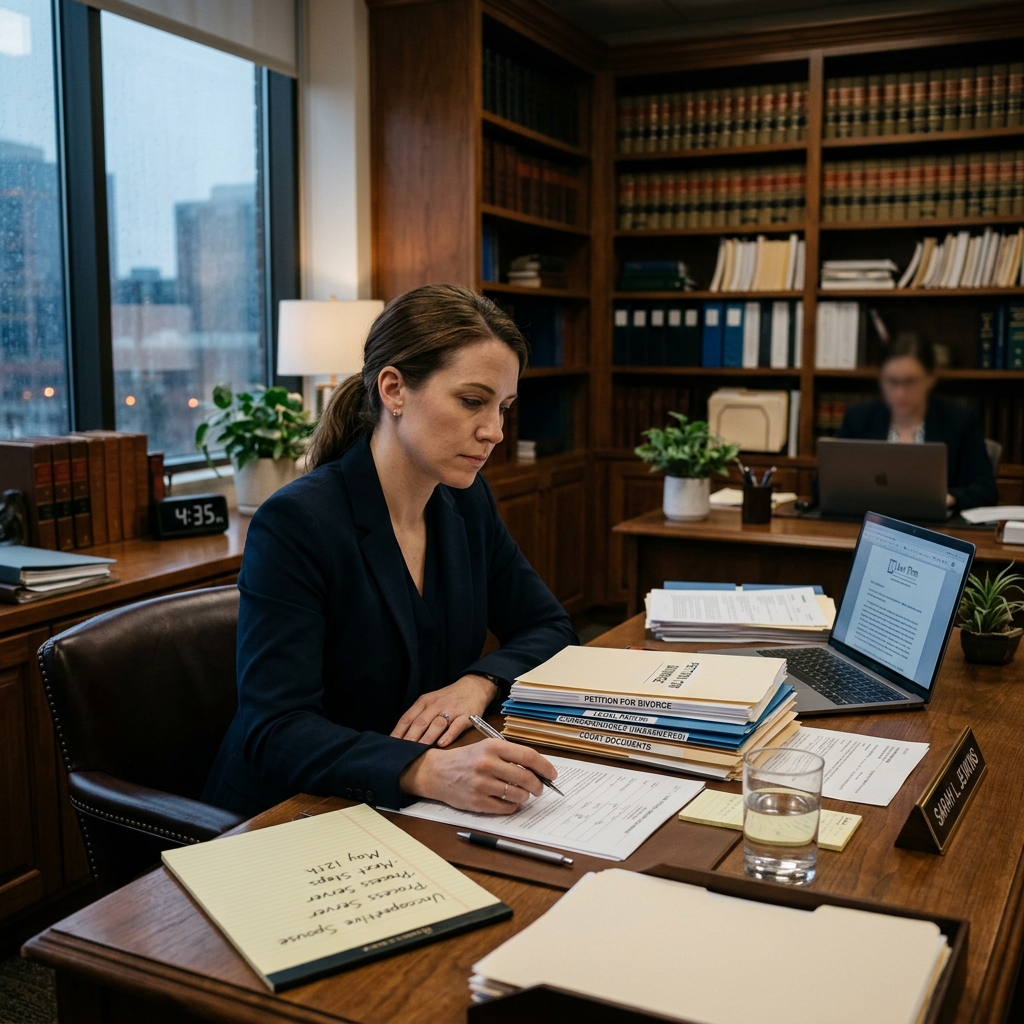
Many people assume that both spouses must agree and actively participate for a divorce to be granted. In most places across the United States, that is not true. You can usually end a marriage even if your spouse refuses to sign papers, will not respond to court documents, or cannot be found, so long as you follow the required legal steps in your state.
This article explains how divorce works when one spouse is uncooperative or absent, how courts handle default divorces, and what practical steps you can take to move your case forward.
Key Principles: You Can Divorce Without Mutual Agreement
Modern divorce law in the U.S. is built around no‑fault grounds in most states. That means you do not need to prove misconduct like adultery or cruelty to get divorced, and your spouse’s consent is generally not required.
However, courts must ensure basic fairness and due process. That is why, even when your spouse is unwilling or absent, you still need to:
- File a formal divorce petition or complaint with the proper court.
- Notify your spouse through legally recognized service of process.
- Wait for a response period set by state law.
- Ask the court to finalize the divorce if your spouse fails to participate.
Think of it this way: your spouse does not have to agree with the divorce, but they must be given an opportunity to know about the case and respond.
Step 1: Check Residency and Where to File
Before you start, you need to make sure the court you choose has authority to hear your case. This typically depends on residency rules and where your spouse lives.
Common patterns across states include:
- Minimum time living in the state – Many states require you or your spouse to have lived there for a set period, such as six months or more, before filing for divorce.
- County rules – You may have to file in the county where your spouse currently lives, or where you last lived together, though some states let you file where you live if your spouse moved recently.
- Special rules for military or incarceration – If your spouse is incarcerated or lives on a military base, states often provide specific guidance on which county is appropriate.
| State example | Minimum residency to file | Typical filing location |
|---|---|---|
| California | 6 months in the state, 3 months in the county | County where the filer lives |
| Georgia | 6 months in the state (longer if living on base) | Generally county where spouse lives |
| Pennsylvania (example from practice) | 6 months in the state | County where either spouse lives |
Because these rules vary, check the official self‑help resources or legal aid information for your state to confirm where you can file. Official court or legal aid sites often provide detailed, state‑specific instructions.
Step 2: Starting the Case — Filing Your Divorce Papers
The divorce process begins when you file a petition or complaint with the court. The document’s name and format differ by state, but its purpose is the same: to tell the court you want a divorce and explain what you are asking for.
Typical information in the initial filing includes:
- Names, addresses, and basic details about both spouses.
- The date and place of the marriage.
- Whether there are minor children and any initial custody or support requests.
- Your proposed division of marital property and debts.
- Whether you are seeking spousal support (alimony).
- The legal grounds for divorce (often “irretrievable breakdown,” “irreconcilable differences,” or similar no‑fault phrases).
You will generally need to pay a filing fee when you submit these papers. Many counties and states offer fee waivers for people with limited income.
Step 3: Serving Your Spouse — Proving Notice to the Court
The most important step in divorcing without your spouse’s cooperation is service of process. This is the legal way of delivering the initial divorce papers to your spouse and proving to the court that you did so.
States usually recognize specific methods of service, such as:
- Personal service – A sheriff, constable, or private process server hand‑delivers the papers to your spouse.
- Service by mail – In some cases, certified mail with a return receipt may be permitted.
- Service by publication – If you cannot locate your spouse after diligent effort, a court may allow notice through a newspaper or other publication.
When personal service is used, the server will complete a proof of service or return of service form that gets filed with the court, showing the date and manner of delivery. This proof is crucial, because it triggers the deadline for your spouse to respond.
What if You Cannot Find Your Spouse?
If your spouse has disappeared, moved without providing an address, or otherwise cannot be located, courts typically require you to show that you made serious attempts to find them. This may include:
- Checking previous addresses and talking to mutual contacts.
- Reviewing public records or online databases.
- Contacting last known employers, if appropriate.
If, after reasonable efforts, you still cannot locate your spouse, you can usually ask the court for permission to use alternative service, such as publication. Some states also allow posting at the courthouse or other methods if supported by statute or court rules.
Step 4: Waiting for Your Spouse’s Response
After service, your spouse has a specific number of days to respond by filing an answer or other papers. That timeframe can differ by state, but periods like 20 or 30 days are common. If your spouse files an answer, the case is considered contested, and the court will address the disputed issues in hearings or trial.
When your spouse does not respond by the deadline, the case can usually move forward as an uncontested or default divorce. The exact terminology and process differ, but the idea is the same: the court can grant the divorce and decide requested relief based on your filings and evidence.
Default Divorce: Moving Forward Without Participation
A default divorce occurs when:
- You properly file and serve your spouse.
- The spouse fails to respond within the required time.
- You ask the court to finalize the case based on that lack of response.
In many states, you will need to take additional steps to get a default judgment, such as:
- Submitting proposed final orders (for property division, custody, support).
- Filing an affidavit or declaration explaining the facts and confirming your spouse’s lack of response.
- Attending a brief hearing, where the judge may ask you questions before signing the final decree.
Some courts allow default divorces to be completed entirely through paperwork, especially if there are no minor children and the property division is straightforward. Others still require a short in‑person or remote hearing.
Common Situations When Your Spouse Will Not Cooperate
Divorces where one spouse is not participating fall into several recurring patterns. Understanding which situation applies to you can help you plan your next steps.
1. Spouse Refuses to Sign or “Doesn’t Believe” in Divorce
In this scenario, you know where your spouse is, and they are aware of your intentions, but they refuse to sign any forms. You can still proceed as long as they are formally served. If they never file an answer with the court, you can request a default judgment after the response period ends.
2. Spouse Intentionally Ignores the Papers
Some spouses simply refuse to engage, hoping that ignoring documents will block the divorce. It usually does not. Proper service plus lack of response ordinarily leads to an uncontested or default outcome. Judges may pay closer attention to issues like child support or property division, but they will not force you to stay married just because your spouse did nothing.
3. Spouse Has Disappeared or Cannot Be Located
If your spouse is missing, your main challenge is proving that you made reasonable efforts to find and serve them. Once a court approves alternate service—often publication—you can move ahead toward a default judgment after the time for response passes.
Issues the Court Still Must Decide
Even in a divorce without spouse cooperation, the court must address certain legal questions. The fact that your spouse is absent does not erase these issues; it simply means the judge will rely on the evidence you present.
- Property and debt division – Courts need a clear picture of marital assets and liabilities to divide them fairly.
- Child custody and parenting time – When minor children are involved, judges prioritize their best interests and may set parenting schedules accordingly.
- Child support – Support is usually determined by statutory guidelines and may be ordered even if one parent does not appear.
- Spousal support – Alimony may be granted based on factors like length of the marriage, income difference, and each spouse’s needs.
Because these decisions can have long‑term financial and personal impacts, consider collecting thorough documentation of income, assets, debts, and your children’s needs before your hearing.
Self‑Representation vs. Legal Help
Some people choose to represent themselves, especially in relatively simple cases with no children and little property. Many legal aid organizations and court self‑help centers provide detailed instructions and standardized forms for self‑represented litigants.
However, divorces involving:
- Significant assets or complex property (businesses, real estate in multiple states).
- Disputes over child custody.
- Long‑term spousal support.
are often more effectively handled with guidance from a family law attorney. Even if your spouse is not participating, those issues still require careful analysis under state law.
Practical Tips to Keep Your Case on Track
- Follow your state’s forms and procedures exactly – Official court or legal aid websites usually explain steps in detail for divorces with and without children.
- Document all efforts to locate and serve your spouse – Keep records of addresses checked, calls made, and any responses you receive.
- Stay organized – Maintain a file with copies of everything you submit or receive from the court.
- Prepare for hearings – Arrive with your paperwork, financial information, and a clear explanation of what you are requesting from the judge.
- Ask about default prove‑up options – Some courts allow default divorces to be finalized through written affidavits instead of in‑person testimony.
Frequently Asked Questions
Do I need my spouse’s signature to get divorced?
In most U.S. states, you do not need your spouse’s signature on divorce papers to end the marriage. What you need is proof that they were properly served and had a chance to respond. If they fail to respond after service, you can generally seek a default judgment.
Can I get a divorce if my spouse lives in another state?
Yes, as long as your state’s residency and jurisdiction requirements are met. You may need to arrange service of process in the other state using a sheriff or process server there. The court where you filed will still handle the case if it has jurisdiction over the marriage and the issues involved.
What happens if my spouse is in prison?
Incarceration does not prevent a divorce. States typically allow filing in the county where the spouse last lived before incarceration or the county of the prison, and they provide procedures to serve incarcerated individuals with court papers.
Can my spouse stop the divorce by contesting it?
They can contest terms such as property division or custody, which may lead to hearings or trial, but they usually cannot prevent the court from granting the divorce itself in a no‑fault system. Eventually, the judge will issue final orders resolving disputed issues.
Is a default divorce worse than a negotiated settlement?
A default divorce is not automatically worse, but it is less predictable. Because your spouse is not participating, the judge will rely largely on your evidence and legal standards. Many people prefer negotiated agreements or mediation when possible, because those can produce more tailored solutions both parties understand. Still, when cooperation is impossible, a default judgment may be the only practical path.
References
- Divorce in California: Self-Help Guide — Judicial Council of California. 2023-06-01. https://selfhelp.courts.ca.gov/divorce-california
- What Should I Know About Filing a Divorce? — Georgia Legal Services Program. 2022-09-15. https://www.georgialegalaid.org/resource/what-should-i-know-about-filing-a-divorce
- How to File for Divorce in Pennsylvania Without Your Spouse — Iwanyshyn & Reinke Family Law. 2021-05-10. https://iwanyshyn.com/blog/how-to-file-for-divorce-in-pennsylvania-without-your-spouse/
- I Need a Divorce. We Do Not Have Minor Children. — Texas Legal Services Center / TexasLawHelp.org. 2023-04-20. https://texaslawhelp.org/guide/i-need-a-divorce-we-do-not-have-minor-children
- Introduction to Divorce without Children — Michigan Legal Help. 2022-03-30. https://michiganlegalhelp.org/resources/family/introduction-divorce-without-children
Similar Articles








Read full bio of Sneha Tete


