
Ending Debt-Based License Revocation in Tennessee
How a landmark federal ruling reshaped Tennessee’s driver’s license laws for people unable to pay court debt.
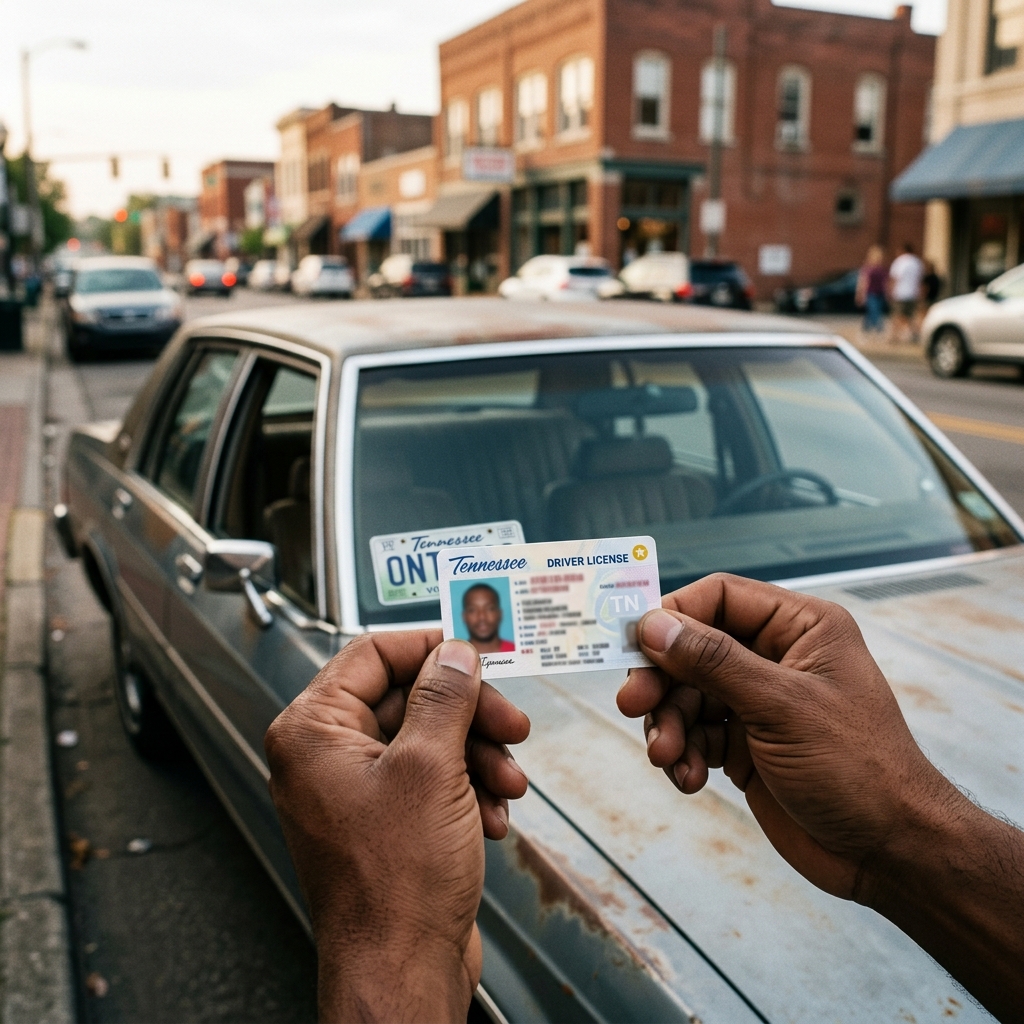
Tennessee’s practice of revoking driver’s licenses because people could not afford to pay court debt came under intense constitutional scrutiny, ultimately resulting in a federal ruling that changed the landscape for thousands of low-income drivers. That decision made clear that a driver’s license cannot be taken away solely for being poor.
This article explains how debt-based revocation worked, why it was challenged, the court’s reasoning, and what the ruling means for people living and driving in Tennessee today.
From Traffic Fines to Loss of Mobility: How Debt-Based Revocation Worked
For years, Tennessee law allowed the state to revoke a person’s driver’s license when court-imposed financial obligations remained unpaid beyond a fixed period. These obligations could include:
- Criminal fines and surcharges
- Court costs and administrative fees
- Traffic tickets and related penalties
Under this policy, once certain court debt was more than a year overdue, the Department of Safety and Homeland Security could revoke the person’s license not because of dangerous driving or criminal conduct, but purely due to nonpayment. The law did not require courts to distinguish between:
- People who could pay but chose not to, and
- People who genuinely lacked the means to pay
As a result, an inability to pay—often rooted in low wages, unemployment, health issues, or family responsibilities—could trigger the loss of a driver’s license, even if the individual posed no safety risk on the road.
Why Revoking Licenses for Debt Hits Poor Tennesseans Hardest
Driving is not a constitutional right, but in a state where many communities lack robust public transportation, a driver’s license is often essential for everyday life. Research on Tennessee’s revocation policies has shown that debt-based revocations create significant collateral consequences that extend far beyond the courtroom.
Common impacts on low-income drivers include:
- Reduced ability to work: Many jobs require reliable transportation. Losing a license may mean job loss or inability to accept employment.
- Limited access to healthcare and childcare: Drivers without licenses struggle to reach medical appointments, pharmacies, and childcare providers.
- Greater risk of criminal charges: Some people continue driving out of necessity, leading to arrests for driving on a suspended or revoked license and further fines or jail time.
- Deepening cycles of debt: New fines and costs are added when individuals are caught driving without a valid license, compounding existing financial burdens.
In short, a policy designed to collect money from people who already cannot afford to pay often makes it harder for them to earn the income needed to pay those debts. Empirical work in Tennessee has found that revocation for unpaid court debt is ineffective at increasing court collections.
The Constitutional Challenge: Poverty, Due Process, and Equal Protection
The legal challenge to Tennessee’s debt-based revocation policy centered on fundamental constitutional principles. While specific arguments varied, several core themes emerged:
Ability to Pay as a Constitutional Requirement
Modern constitutional doctrine recognizes that it can be unlawful to punish a person more harshly solely because of their poverty, particularly when fines and fees are involved. Courts have held that, before imprisonment or similar serious sanctions are imposed for failure to pay, the government must consider whether the person is unable to pay despite good-faith efforts.
Advocates argued that Tennessee’s revocation scheme failed this standard: it treated unpaid debt as a basis for severe administrative punishment without requiring any individualized determination of ability to pay, and without exploring less restrictive alternatives.
Procedural Due Process Concerns
The ability to drive legally affects employment, family life, and access to services, making a driver’s license a significant property interest under state law. When the government takes away such an interest, the Due Process Clause generally requires:
- Clear notice of what is at stake
- An opportunity to be heard
- Fair procedures before the deprivation takes effect
Debt-based revocation often occurred through automatic administrative processes. The key procedural concern was that people could lose their license without a meaningful hearing on whether their nonpayment stemmed from willful refusal or genuine inability.
Equal Protection and Wealth-Based Discrimination
Another argument sounded in equal protection: although the law appeared neutral, its real-world effect was to divide Tennesseans into two groups:
- Those who could pay fines and keep their licenses, and
- Those who were too poor to pay and therefore lost the ability to drive legally
Because wealth is not a protected class like race or gender, these cases rarely receive the highest level of judicial scrutiny. Nonetheless, federal courts have repeatedly cautioned that the state may not impose punishments that fall only on the poor when compliant behavior (such as paying a fine) is realistically impossible for them.
The Federal Court’s Ruling: Poverty Cannot Be the Sole Reason
In the Tennessee litigation, a federal judge ultimately held that the state could not revoke driver’s licenses solely because individuals were too poor to pay their court debt. The ruling did not prevent Tennessee from revoking licenses for dangerous driving or serious criminal conduct. Instead, it targeted the narrow practice of tying revocation directly to unpaid monetary obligations without regard to ability to pay.
Key features of the decision included:
- Unconstitutionality of the 2012 debt-based revocation law: The court found the particular statute enacted in 2012 invalid, making licenses revoked under that law eligible for relief.
- Recognition of the practical harm: The opinion highlighted how revocation for unpaid debt undermined the ability of low-income people to work and meet basic needs, thereby frustrating the supposed goal of collecting revenue.
- Focus on inability to pay: The reasoning distinguished people who chose not to pay from those who simply could not pay, making ability to pay a central constitutional question.
This ruling marked a turning point: Tennessee could no longer treat unpaid court debt, by itself, as sufficient grounds to strip someone of their driver’s license.
What the Ruling Does Not Change: Safety-Based Suspensions and Revocations
The decision did not eliminate all forms of suspension or revocation. Tennessee still revokes licenses for serious driving-related misconduct and other statutory grounds. Examples include:
- DUI and implied consent violations
- Vehicular manslaughter or homicide
- Felony offenses involving vehicles
- Multiple reckless driving convictions in a short period
- Certain drug and theft offenses committed while driving
Driving on a suspended or revoked license remains a criminal offense in Tennessee. A first offense can be charged as a misdemeanor, with potential jail time and fines, and penalties escalate for repeat violations or when the underlying suspension stems from serious offenses like DUI.
In other words, the ruling largely affected drivers whose licenses were revoked only because of unpaid debt—not those whose licenses were revoked for dangerous conduct or public safety reasons.
Reinstatement Pathways: How Drivers Regain Their Licenses
After the federal court’s decision, many drivers whose licenses were revoked under the unconstitutional statute became eligible to seek reinstatement. The general process for license reinstatement in Tennessee still follows established administrative rules and depends on the reason for suspension or revocation.
| Requirement | What It Involves |
|---|---|
| Determining eligibility | Confirm that the revocation period has ended or that the underlying law has been invalidated. |
| Resolving court obligations | Clear any remaining court issues, which may include payment plans, waivers, or documented compliance. |
| Gathering compliance documents | Collect records such as court judgments, payment receipts, restitution documents, and proof of completion of required programs. |
| Proof of financial responsibility | Obtain appropriate insurance documentation, often an SR-22 form, as evidence of financial responsibility. |
| Paying reinstatement fees | Submit all required fees to the Department of Safety and Homeland Security. |
| Applying for a new license | Complete the application for a valid license; in some cases, an exam may be required. |
The Tennessee Department of Safety and Homeland Security provides detailed reinstatement requirements, including options to reinstate by mail, at Driver Services Centers, or via special reinstatement centers. For certain drivers still under suspension or revocation, restricted licenses may be available if they satisfy specified court and insurance conditions.
Policy Lessons: Debt, Enforcement, and Effective Collection
The controversy over debt-based license revocation highlights broader policy questions at the intersection of criminal justice, revenue collection, and economic inequality. Tennessee-specific data show that revoking licenses for unpaid court debt is not an effective way to increase collections. Instead, the practice tends to:
- Reduce the likelihood that people can maintain or secure employment
- Increase interactions with the criminal legal system through driving offenses
- Generate additional administrative costs for courts and agencies
- Shift financial stress onto families and communities rather than resolving underlying debt
Recognizing these dynamics, policy advocates have urged lawmakers to consider alternatives, such as:
- Income-based payment plans tailored to the person’s ability to pay
- Community service or non-monetary sanctions where appropriate
- Partial forgiveness of uncollectible debt that has become decades old
- Clear separation between public safety sanctions and purely fiscal penalties
The federal ruling in Tennessee underscores that enforcement tools must be evaluated not only for revenue potential, but also for their compliance with constitutional protections and their practical impact on residents’ lives.
Frequently Asked Questions (FAQs)
1. Can Tennessee still revoke a license for unpaid fines?
Tennessee can enforce court-ordered financial obligations, but a federal court has held that revoking a driver’s license solely because a person is too poor to pay certain court debt is unconstitutional. Revocation tied only to poverty and unpaid debt under the 2012 law is no longer permitted, though other enforcement mechanisms may remain.
2. Does the ruling apply to all types of license suspensions?
No. The ruling targeted revocations based only on unpaid court debt and inability to pay. Licenses can still be suspended or revoked for safety-related reasons such as DUI, reckless driving, or serious vehicular crimes.
3. If my license was revoked for debt, can I automatically drive again?
Not automatically. Even if your revocation was based on the invalidated law, you must follow Tennessee’s reinstatement process, which includes confirming eligibility, addressing remaining court obligations, submitting compliance documents, providing proof of financial responsibility, and paying reinstatement fees.
4. What happens if I drive while my license is still suspended or revoked?
Driving on a suspended or revoked license is a criminal offense in Tennessee. Penalties range from fines to jail time, and they become more severe for repeat offenses or if the underlying suspension stems from serious conduct like DUI. You should not drive until your license is fully reinstated.
5. Where can I find official information about reinstating my license?
The Tennessee Department of Safety and Homeland Security publishes official reinstatement requirements and procedures, including mail, in-person, and in some cases online options. Because requirements vary by case, official state guidance is the most reliable source.
References
- Driver’s License Revocation Report — Think Tennessee. 2022-11-01. https://www.thinktennessee.org/wp-content/uploads/2022/11/drivers-license-revocation-report.pdf
- Driving on a Suspended or Revoked License in Tennessee — Nolo / CriminalDefenseLawyer.com. 2023-04-15. https://www.criminaldefenselawyer.com/resources/criminal-defense/crime-penalties/driving-suspended-license-tennessee
- Reinstatements — Tennessee Department of Safety and Homeland Security. 2024-01-10. https://www.tn.gov/safety/driver-services/reinstatements-and-moving-violations/reinstatements.html
- Restricted License Information — Tennessee Department of Safety and Homeland Security. 2023-09-05. https://www.tn.gov/safety/driver-services/reinstatements-and-moving-violations/reinstatements/frrestricteddl.html
- Reinstating Your Tennessee Driver’s License — TNDUI.com. 2022-06-20. https://www.tndui.com/reinstating-your-tennessee-drivers-license/
- Tennessee Driver Licenses – Debt-Based Revocation Ruling (Discussion) — Facebook Legal Q&A Group (summary of Trauger ruling). 2018-07-30. https://www.facebook.com/groups/floridalegalquestionsanswered/posts/1562443291574203/
Similar Articles








Read full bio of medha deb


