
Ending Cash Bail: The True Cost of Presumed Innocence
Exploring the devastating impact of wealth-based pretrial incarceration.
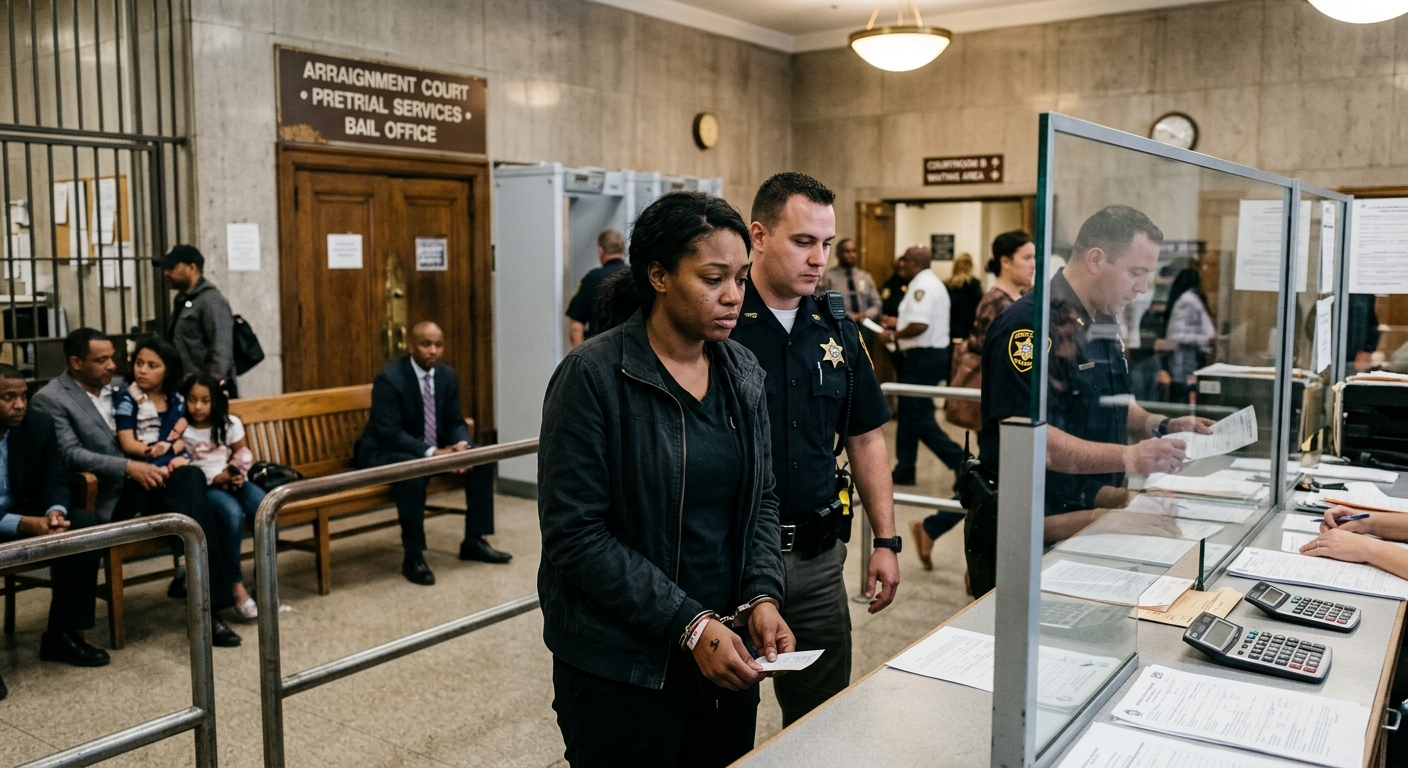
The High Cost of Presumed Innocence: Reevaluating the Cash Bail System
The cornerstone of the American legal system rests upon a vital, widely celebrated promise: the presumption of innocence. From the earliest days of jurisprudence, the principle that an individual is innocent until proven guilty has been heralded as a fundamental human right. However, a stark divergence exists between this constitutional ideal and the daily reality playing out in courtrooms across the nation. In a myriad of jurisdictions, an individual’s freedom before trial is frequently dictated not by the danger they pose to the community or their likelihood to flee from prosecution, but simply by their financial means. This divergence is largely driven by the pervasive use of the cash bail system—a mechanism originally intended to ensure court appearances that has instead devolved into a wealth-based detention framework.
By requiring individuals to purchase their pre-trial liberty, the system effectively creates two tiers of justice: one for the affluent, who can comfortably secure their release and prepare their defense from home, and another for the impoverished, who are forced to languish behind bars regardless of their actual guilt or innocence. Reevaluating this financial release framework is not merely a matter of legal administration; it is an urgent civil rights imperative. As the national discourse shifts toward comprehensive justice reform, the glaring inequities of wealth-based pretrial incarceration demand rigorous scrutiny and systemic transformation.
The Mechanics of Financial Release: How Did We Get Here?
To comprehend the deep-seated inequities inherent in the modern criminal justice landscape, one must first dissect the mechanics of financial release and trace how we arrived at the current paradigm. Historically, bail was conceived as a form of collateral—a financial guarantee designed to incentivize a defendant to return for their scheduled court appearances. The theory was straightforward: an individual would temporarily surrender a sum of money or property to the court, which would be refunded upon the successful completion of the legal process. Unfortunately, the contemporary implementation of this concept has strayed far from its origins.
In numerous jurisdictions today, judges and magistrates rely on standardized “bail schedules.” These schedules assign a predetermined, fixed dollar amount to specific criminal charges, stripping away the nuanced, individualized assessment that justice requires. A one-size-fits-all approach inherently ignores a defendant’s unique financial capacity to pay. A five-thousand-dollar bail might be a minor inconvenience for a wealthy defendant, but for a minimum-wage worker living paycheck to paycheck, it is an insurmountable fortune.
Compounding this systemic flaw is the deeply entrenched role of the commercial bail bond industry—a uniquely American enterprise that monetizes the pretrial process. When defendants cannot afford to pay their full bail amount to the court, they are often forced to turn to commercial bail bondsmen. These entities typically charge a non-refundable fee, usually around ten percent of the total bail amount, to post a surety bond on the defendant’s behalf. This predatory model extracts wealth directly from impoverished families and vulnerable communities. Even if the charges are eventually dropped, the defendant is acquitted, or the case is dismissed, that ten percent fee is gone forever. This framework fundamentally transforms the justice system into an engine for wealth extraction, punishing people financially before a single piece of evidence has been presented at trial.
Poverty as a Pretrial Barrier to Freedom
The reality of wealth-based incarceration paints a grim, undeniable picture of how poverty is penalized in the current legal framework. A significant portion of the total jail population in the United States does not consist of individuals serving sentences for convicted crimes. Rather, they are legally innocent people awaiting trial. According to a comprehensive 2022 report by the U.S. Commission on Civil Rights, more than sixty percent of defendants who are detained pretrial remain incarcerated simply because they cannot afford to post bail . This statistic underscores a profound failure in the pursuit of equal protection under the law.
The burden of this system does not fall evenly across the population; it disproportionately impacts Black, Latino, and Indigenous individuals. These demographic groups are routinely assigned higher bail amounts than white defendants facing similar charges, compounding systemic racial disparities with punishing financial barriers.
The collateral consequences of even brief periods of pretrial incarceration are devastating and wide-ranging. When an individual is locked in a jail cell because they cannot afford bail, the disruption to their life is immediate and catastrophic. Missing even forty-eight to seventy-two hours of work can easily result in termination from employment. The sudden loss of income rapidly leads to missed rent payments and eviction, triggering housing instability and homelessness. Furthermore, parents held in pretrial detention risk losing custody of their children, and students face severe interruptions to their education. The financial and emotional devastation spirals outward, destabilizing entire families and weakening the fabric of local communities. For those caught in this trap, pretrial detention is not merely an inconvenience; it is a life-altering crisis that punishes them for their economic status.
The Coercive Power of Pretrial Detention on Case Outcomes
Perhaps the most insidious aspect of wealth-based pretrial detention is its fiercely coercive influence on case outcomes and the fundamental right to a fair trial. The modern criminal justice system is heavily reliant on plea bargains to process high volumes of cases, and the cash bail system acts as a primary engine driving this dynamic. When a defendant is detained pretrial because they cannot afford their bail, they are systematically stripped of their legal leverage.
Studies have consistently demonstrated that detained individuals are significantly more likely to plead guilty compared to those who are released prior to trial . The rationale behind this disparity is both tragic and profoundly rational: pleading guilty often results in an immediate release, usually in the form of time served or a sentence of probation. In contrast, fighting the charge to prove one’s innocence requires remaining incarcerated in a dangerous, overcrowded county jail for months or even years while waiting for a trial date to be scheduled.
Faced with the terrifying prospect of losing their jobs, their homes, and their families, many legally innocent individuals make the agonizing decision to accept a plea deal simply to secure their physical freedom. This coercive dynamic actively undermines the constitutional right to a trial by jury and the bedrock requirement that guilt be proven beyond a reasonable doubt. The long-term effects of a criminal conviction obtained through this coercive process are severe. A permanent criminal record acts as a lifelong barrier to securing gainful employment, accessing safe housing, qualifying for educational loans, and, in many states, participating in the democratic process through voting. By weaponizing pretrial detention to extract guilty pleas, the system subverts justice and prioritizes bureaucratic efficiency over truth.
Measuring the Economic and Societal Toll
Beyond the immediate personal tragedies inflicted on defendants and their families, the reliance on financial conditions of release imposes a staggering economic and societal toll on the public at large. Pretrial detention is an enormously expensive endeavor. Local and state governments spend billions of taxpayer dollars annually to house, feed, provide medical care for, and guard individuals who have not been convicted of a crime.
This massive expenditure represents a profound misallocation of public resources. Instead of investing taxpayer money into community-based resources, mental health treatment, substance abuse programs, or robust pretrial services that actually address the root causes of crime, funds are continuously diverted to maintain and expand carceral facilities. Communities are drained of resources that could otherwise be used to foster genuine safety and prosperity.
Moreover, the argument that cash bail ensures public safety is fundamentally flawed. In fact, research indicates that the opposite is often true. According to findings published by the Bureau of Justice Statistics, low-risk individuals who are detained for mere days are statistically more likely to commit future offenses upon release due to the intense destabilizing effect of jail . Incarceration severs community ties, induces psychological trauma, and exposes individuals to criminogenic environments. By disrupting a person’s employment and housing stability, pretrial detention actively manufactures desperation, thereby decreasing public safety in the long run. The severe financial burden placed on taxpayers, coupled with the systemic destabilization of communities, renders the cash bail framework an unsustainable and counterproductive public policy.
Evidence-Based Alternatives and the Path to Reform
The growing consensus among legal scholars, civil rights advocates, and progressive policymakers is that wealth should never dictate an individual’s liberty. Fortunately, recognizing the deep flaws in the current system has led several jurisdictions to pave the way for evidence-based alternatives to financial conditions of release. Moving away from wealth-based detention involves a fundamental paradigm shift: treating pretrial release as the default standard and reserving detention solely as a carefully considered exception for severe, demonstrable threats to public safety.
One of the primary alternatives gaining traction is the use of non-monetary conditions of release. These alternatives can include mandatory check-ins with pretrial services officers, court date reminders sent via text message or email, and community-based supervision programs. These methods have proven highly effective at ensuring individuals return for their court appearances without the need for financial collateral.
Furthermore, some jurisdictions have adopted validated risk assessment tools designed to evaluate a defendant’s likelihood of returning to court and their potential risk to public safety. These algorithmic tools aim to replace the arbitrary nature of bail schedules with objective, data-driven decision-making. However, advocates rightly caution that these tools must be rigorously and continuously monitored to ensure they do not replicate or exacerbate historical racial biases already embedded in criminal justice data. Successful reforms have already been demonstrated at the state level. In a historic and monumental move, Illinois implemented the SAFE-T Act, effectively becoming the first state in the nation to completely abolish cash bail in 2023 . This legislation established a new standard where pretrial detention is based strictly on evaluated risk rather than financial capacity, proving that systemic transformation is both entirely possible and highly practical.
Legislative Action and the Road Ahead
The path toward comprehensive justice reform requires sustained legislative action and a willingness to confront entrenched institutional practices. Across the country, lawmakers are increasingly recognizing that the cash bail system is incompatible with the foundational principles of equitable justice. The National Conference of State Legislatures continuously tracks these critical shifts, noting that numerous states are actively evaluating their state constitutional approaches to bail and exploring progressive frameworks that emphasize risk-based pretrial release .
True reform necessitates a collaborative effort between the judiciary, public defenders, prosecutors, and community organizers to dismantle the mechanisms of wealth extraction. It requires rewriting state constitutions and statutory codes to expressly prohibit the detention of individuals solely due to their inability to pay. As more jurisdictions analyze and follow the blueprints laid out by pioneering states, the momentum for ending wealth-based incarceration continues to grow, promising a future where justice is truly blind to a person’s bank account.
Frequently Asked Questions (FAQ)
What is the fundamental difference between bail and a bail bond?
Bail is the total monetary amount set by a judge that a defendant must pay to the court to secure their release before trial. If the defendant attends all court dates, this entire amount is typically refunded at the conclusion of the case. A bail bond, however, is an agreement made with a private commercial bail bondsman. The defendant pays a non-refundable percentage (usually around ten percent) as a fee to the bondsman, who then guarantees the full bail amount to the court. This fee is never returned to the defendant, regardless of the case outcome, which directly extracts wealth from low-income defendants.
Does abolishing cash bail lead to an increase in crime rates?
No, comprehensive data from jurisdictions that have implemented significant bail reform does not support the claim that ending cash bail increases crime. In areas that have shifted away from financial conditions of release, court appearance rates have remained consistently high, and rates of new offenses committed by individuals on pretrial release have remained low. Comprehensive reform focuses on detaining only those who pose a genuine, evidence-based threat to public safety, rather than releasing individuals simply because they are wealthy.
If judges do not use cash bail, how do they decide who gets released?
In systems that have eliminated or reduced reliance on cash bail, judges utilize individualized hearings and risk assessments to determine release conditions. They carefully consider the specific facts of the case, the defendant’s criminal history, their ties to the community, and their past record of appearing in court. Based on this holistic information, a judge can order release on personal recognizance or impose non-monetary conditions, such as electronic monitoring, travel restrictions, or mandatory check-ins with pretrial services.
Why is pretrial detention considered a fundamental civil rights issue?
Pretrial detention is a profound civil rights issue because it routinely violates the principle of equal protection under the law. When freedom is intrinsically tied to financial means, the justice system inherently discriminates against low-income individuals. Furthermore, the practice disproportionately impacts communities of color, exacerbating systemic inequalities and depriving legally innocent people of their constitutional rights to due process and a fair trial.
References
- The Civil Rights Implications of Cash Bail — U.S. Commission on Civil Rights. 2022-01-20. https://www.usccr.gov/files/2022-01/USCCR-Bail-Reform-Report-01-20-22.pdf
- Pretrial Release and Misconduct in Federal District Courts, Fiscal Years 2011–2018 — Bureau of Justice Statistics. 2022-03-24. https://bjs.ojp.gov/content/pub/pdf/prmfdc1118.pdf
- Illinois Becomes First State to Abolish Cash Bail — Equal Justice Initiative. 2023-09-20. https://eji.org/news/illinois-becomes-first-state-to-abolish-cash-bail/
- Pretrial detention — Prison Policy Initiative. 2026-05-27. https://www.prisonpolicy.org/research/pretrial_detention/
- Brief Pretrial Release: State Constitutional Right to Bail — National Conference of State Legislatures. 2026-03-26. https://www.ncsl.org/civil-and-criminal-justice/pretrial-release-state-constitutional-right-to-bail
Similar Articles








Read full bio of Sneha Tete




