
Florida Guardianship Termination 2025: What Guardians Must Do
Understand when and how Florida guardianships end, the required court steps, and what guardians and wards must do to close a case properly.
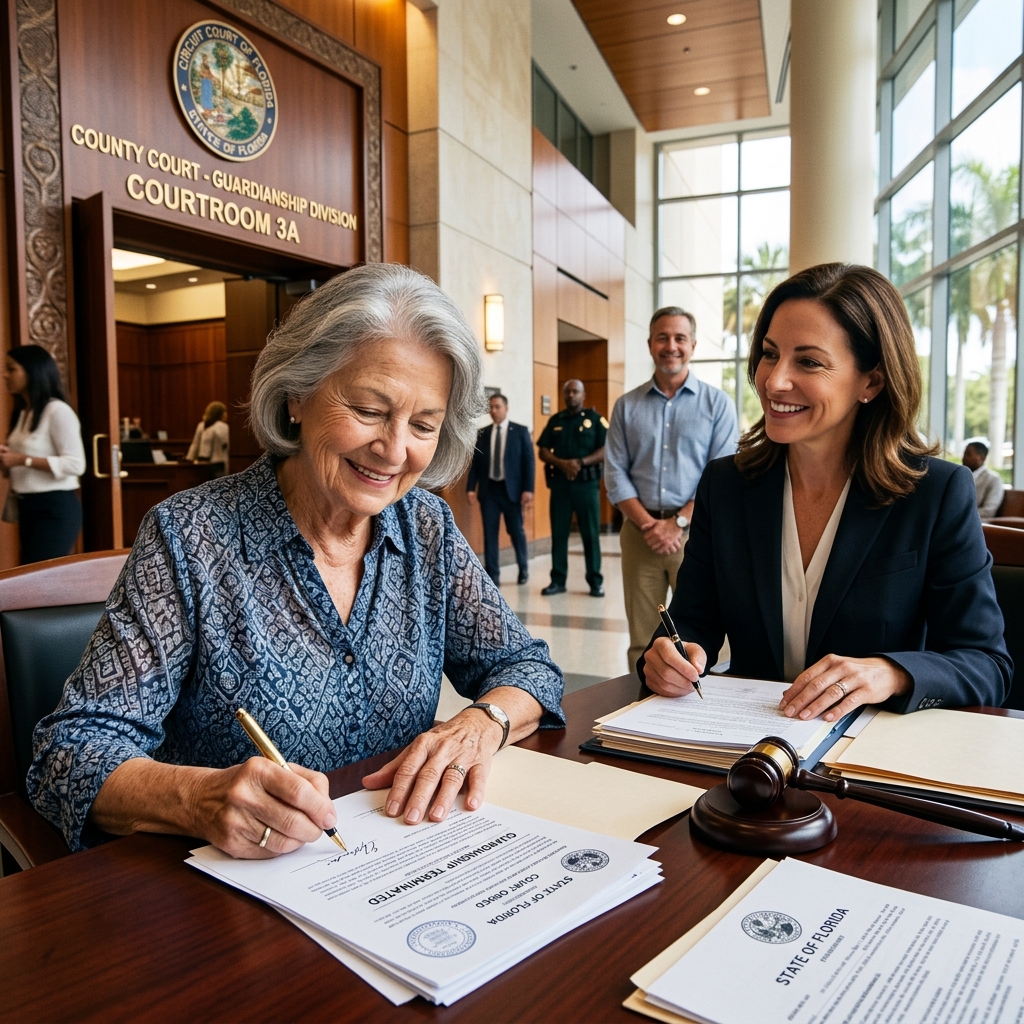
Guardianships in Florida do not simply fade away on their own. Even when it is clear that a ward has regained capacity, reached adulthood, or there is no property left to manage, the guardianship legally continues until the court enters an order of discharge for the guardian. Understanding how and when a guardianship ends is essential for guardians, wards, and family members who want to close the case properly and avoid lingering legal responsibilities.
This guide explains the common reasons a Florida guardianship ends, the legal steps required to obtain discharge, and the practical issues guardians should anticipate when filing their final reports and distributing assets.
Why Florida Guardianships Terminate
Florida law recognizes several situations in which a guardianship should come to an end. However, termination is not automatic; the court must review the circumstances and enter appropriate orders.
Common Grounds for Termination
- Ward reaches legal adulthood (for minor guardianships)
- Ward is restored to capacity after previous incapacity
- Guardianship property is exhausted or fully distributed
- Ward dies (for guardianship of the person)
- Guardian resigns or is removed by the court
- Voluntary guardianship is revoked by the ward
Each of these grounds leads to different procedural requirements, but all roads ultimately lead to a final report and an order of discharge when the court is satisfied that the guardian has completed their duties.
Minor Guardianships Ending at Majority
When a minor ward reaches the age of 18 and is not incapacitated, Florida law treats them as capable of managing their own affairs. At that point, the guardianship of the minor must end, and assets held for the minor are transferred directly to the newly adult individual.
- The guardian must prepare a final report covering all assets and transactions up to the termination date.
- After court review and an order of discharge, the guardian’s legal duties cease.
Restoration of Capacity for Adult Wards
For adult wards originally found incapacitated, termination often occurs when the ward is restored to capacity. Florida Statute 744.521 provides that when a ward becomes sui juris (legally capable) or is restored to capacity, the guardian must file a final report and seek discharge. The court may require proof that incapacity has been removed, which can include medical evidence and testimony.
- Anyone, including the ward, may suggest to the court that the ward has regained capacity.
- The court reviews evidence and may partially or fully restore the ward’s rights before terminating the guardianship.
Exhaustion of Guardianship Property
When a guardian of the property has no remaining assets to manage—because they have been spent for the ward’s benefit or properly distributed—the guardian may seek termination based on exhaustion of the guardianship estate.
- Under Florida law, exhaustion of property is a recognized basis for termination of a property guardianship.
- The guardian still must file a final accounting and obtain a discharge order; the absence of assets does not itself end liability.
Death of the Ward
If the ward dies, a guardian of the person may be discharged upon filing a certified copy of the ward’s death certificate. The court can require additional information where guardianship of property is involved, such as coordination with the ward’s estate or personal representative.
Voluntary Guardianships and Ward-Initiated Termination
Florida allows voluntary guardianships in some circumstances, particularly when a competent adult seeks help managing property. In these cases, the ward can terminate the guardianship at any time by filing a notice with the court.
- The ward’s written notice stating they wish to end the voluntary guardianship is sufficient to initiate termination.
- The guardian still must provide a final report and seek discharge, but the ward’s decision controls whether the arrangement continues.
Removal of a Guardian vs. Termination of Guardianship
In some situations, the issue is not whether the ward still needs protection, but whether the current guardian should remain in the role. Florida courts can remove a guardian while continuing the guardianship under a new guardian.
| Aspect | Removal of Guardian | Termination of Guardianship |
|---|---|---|
| Primary goal | Replace the guardian | End the guardianship itself |
| Ward’s legal status | Usually still incapacitated or minor | Ward becomes capable, dies, or no property remains |
| Triggering reasons | Misconduct, neglect, conflict of interest, incapacity of guardian | Majority, restored capacity, death, exhaustion of estate |
| Court outcome | New guardian appointed | Final report, discharge, guardianship closed |
Removal typically requires a petition alleging specific grounds, such as failure to perform duties, mismanagement of assets, or criminal conduct. Termination, by contrast, focuses on the ward’s status and the necessity of continuing court oversight.
The Legal Path to Termination
No matter why the guardianship is ending, Florida courts expect a clear, documented process so they can verify that the guardian has met their obligations and that the ward’s interests have been protected.
Step 1: Identify the Basis for Termination
The first step is to identify and document why the guardianship should end. Typical bases include:
- Ward reached 18 and is not incapacitated
- Order restoring the ward’s capacity or rights
- Exhaustion of guardianship property
- Ward’s death (for guardian of the person)
- Ward’s notice ending a voluntary guardianship
Step 2: Prepare the Final Accounting and Reports
Florida guardians are generally required to submit a final accounting and final report when seeking discharge.
- The accounting lists all receipts, disbursements, investments, and current balances as of the termination date.
- The report describes the guardian’s actions, any remaining property, and how assets will be distributed.
If the guardian also serves in another fiduciary role—such as personal representative of the ward’s estate—copies of the final report may need to be served on affected beneficiaries, who are given time to file objections.
Step 3: Fee Petitions and Cost of Administration
Before discharge, the court must address compensation and reimbursement for the guardian and their attorney. Guardians typically file final fee petitions asking the court to approve reasonable fees and expenses.
- The guardian may retain sufficient funds to pay approved fees and costs of administration.
- However, those funds cannot be disbursed until the court enters an order authorizing payment.
Step 4: Distribution of Assets
Once the court approves the accounting and fee petitions, the guardian must distribute remaining property to the appropriate parties:
- To the ward directly, if the ward has become capable or reached majority
- To the ward’s estate or designated beneficiaries, if the ward has died
- To other proper recipients identified in court orders or the ward’s estate plan
Guardians should obtain receipts signed by recipients as proof of distribution; courts often require evidence before entering the discharge order.
Step 5: Order of Discharge
The guardianship ends formally only when the court issues an order of discharge. Until that order is entered, the guardian’s legal responsibilities and potential liability continue.
- The court reviews the final accounting, fee petitions, and distribution evidence.
- If satisfied, it enters the discharge order releasing the guardian from further duties regarding the ward.
Even after discharge, Florida law generally requires guardians to retain their records for a period of time (commonly at least three years) in case questions arise later.
Guardian Responsibilities After Termination
Termination does not erase past obligations. Both the guardian and any surety remain potentially liable for acts or omissions occurring before the order of discharge.
- Entry of the termination order does not automatically exonerate the guardian from liability previously incurred.
- Accurate records and careful compliance with court orders are essential to defend against any future claims.
Best practices for guardians after termination include:
- Keeping copies of all reports, accountings, and court orders
- Retaining receipts and supporting documentation for asset distributions
- Documenting communications with the ward and beneficiaries about the closing of the case
Special Issues: Change of Domicile and Court Jurisdiction
Florida guardianships may end or change when a ward moves to another state or jurisdiction. Florida statutes address termination or modification upon change of domicile for resident wards, including coordination with a receiving court when guardianship is transferred.
In practice, this can involve:
- Obtaining permission from the Florida court to move the ward permanently
- Transferring guardianship records and authority to the new state
- Filing appropriate termination or modification documents once another court assumes oversight
Practical Checklist for Florida Guardians Ending a Case
Guardians can use the following checklist as a practical overview when they believe a Florida guardianship should end:
- Confirm the basis for termination (majority, capacity restoration, death, exhaustion of property, ward notice).
- Gather financial records for the final accounting: bank statements, receipts, invoices, and investment records.
- Prepare the final report summarizing all actions taken, current status of the ward, and remaining property.
- Draft fee petitions for guardian and attorney compensation, with supporting documentation.
- Plan asset distribution and identify who should receive remaining funds or property.
- File required documents with the court and serve any parties entitled to notice.
- Obtain receipts for distributed assets and provide them to the court as proof of completion.
- Request the order of discharge and confirm the date on which your duties end.
- Store records securely for at least several years after discharge.
Frequently Asked Questions About Ending Florida Guardianships
1. Does a guardianship end automatically when my child turns 18?
Substantively, a guardianship of a minor should end when the child reaches 18 and is not incapacitated, and the assets are then transferred to the now-adult ward. However, the guardian still needs to complete a final report and obtain a discharge order so the court can formally close the case and release the guardian from further duties.
2. If a ward regains capacity, can they simply start making their own decisions?
A ward may regain capacity in fact, but until the court restores their rights and terminates the guardianship, the guardian remains legally responsible. A suggestion of capacity can be filed with the court, and if the court finds the ward capable, it may restore some or all rights and order termination of the guardianship.
3. What happens to my liability once the guardianship is terminated?
Termination and discharge end ongoing responsibilities, but they do not automatically erase liability for acts taken while serving as guardian. Maintaining accurate records and full compliance with court requirements is the best protection against future questions or claims.
4. Can a voluntary guardianship be ended by the ward at any time?
Yes. In a voluntary guardianship, the ward can terminate the arrangement by filing a notice with the court stating they wish to end the guardianship. After the notice, the guardian must still complete a final report and discharge process, but the ward’s decision controls whether the guardianship continues.
5. Do I remain a guardian until the court signs the discharge order?
Yes. In all situations involving ending a guardianship, the guardian must continue to fulfill their role and obey court orders until formal discharge papers are issued. Acting as though the guardianship has ended before that time can create legal risk and confusion.
References
- Termination of Florida Guardianships — FindLaw. 2023-05-01. https://www.findlaw.com/state/florida-law/termination-of-florida-guardianships.html
- Florida Statute 744.521 – Termination of Guardianship — Florida Legislature (Online Sunshine). 2025-01-01. https://www.leg.state.fl.us/Statutes/index.cfm?App_mode=Display_Statute&URL=0700-0799/0744/Sections/0744.521.html
- The 2025 Florida Statutes, Chapter 744 — Florida Legislature (Online Sunshine). 2025-01-01. https://www.leg.state.fl.us/statutes/index.cfm?App_mode=Display_Statute&URL=0700-0799/0744/0744.html
- Florida Guardianship Law and Information — University of Miami Bioethics Program. 2014-06-01. https://bioethics.miami.edu/_assets/pdf/education/guardianship-and-ethics/guardianship-and-elder-law-bibliography/florida-guardianship-law-and-information.pdf
- Types of Guardianship — Disability Rights Florida. 2022-10-01. https://disabilityrightsflorida.org/disability-topics/disability_topic_info/types_of_guardianship
- Guardianships — Florida Law Help. 2021-09-01. https://www.floridalawhelp.org/families-children/guardianships
Similar Articles








Read full bio of medha deb


