
Empowering Democracy: Ballot Access and Systemic Equity
Unlocking systemic equality requires dismantling modern barriers to the ballot.
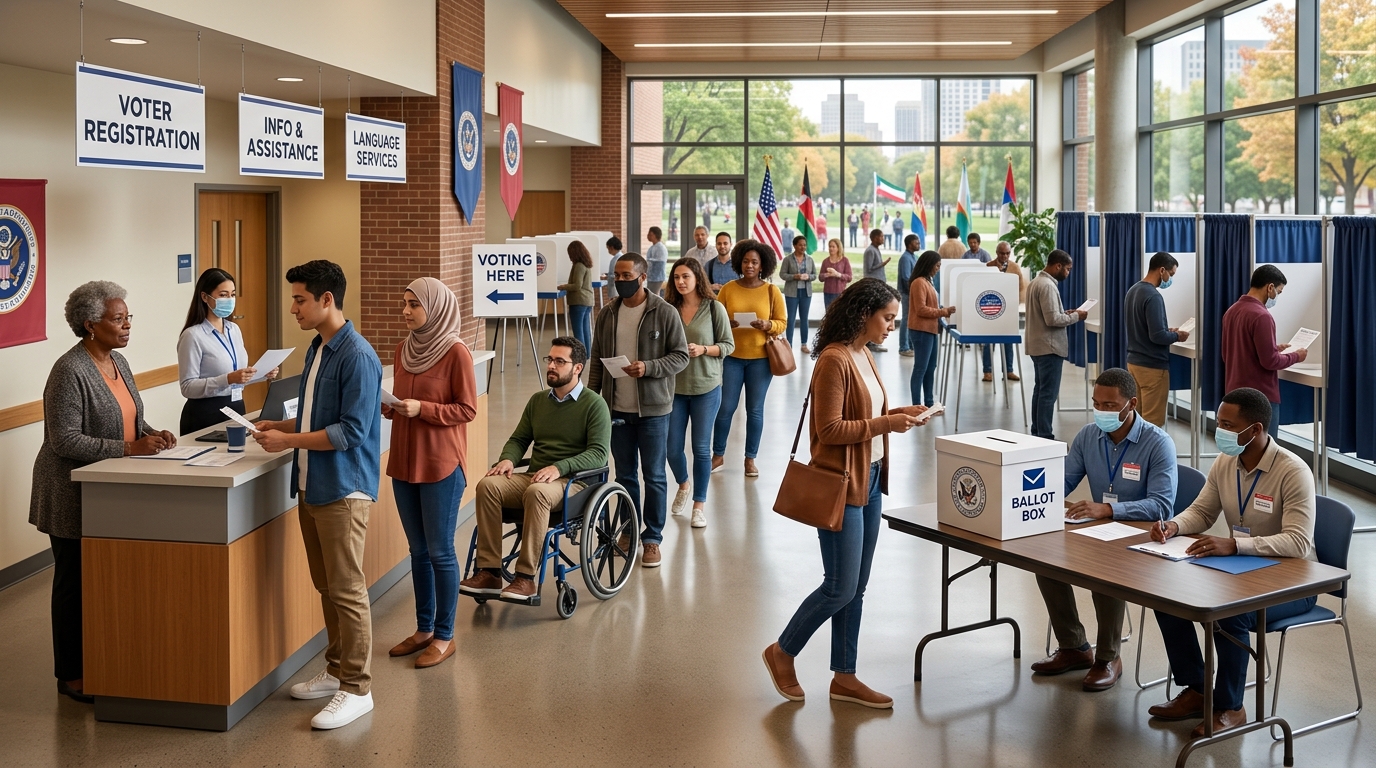
The Bedrock of Democratic Representation
The foundation of any functioning democracy rests upon the principle of equal representation. When citizens cast their ballots, they are not merely selecting a candidate; they are expressing their socio-economic needs, demanding accountability, and shaping the legislative framework of their communities. However, the theoretical promise of universal suffrage often collides with the practical realities of systemic barriers. The pursuit of systemic equality—a societal structure where marginalized groups have the same unhindered opportunities as historically privileged populations—relies fundamentally on unimpeded access to the voting booth.
To understand the profound connection between the ballot and broader societal equity, one must analyze voting not simply as an isolated civic duty, but as the primary engine for policy transformation. Without equitable access to elections, the voices of marginalized communities are silenced in the halls of power, leading to legislative outcomes that further entrench educational, economic, and judicial disparities. Therefore, recognizing and dismantling the architectures of disenfranchisement is the first and most crucial step toward achieving authentic systemic equality.
The Historical Context: Safeguards and Their Erosion
The struggle for equitable voting access in the United States is deeply historical, marked by cycles of legislative progress and judicial retrenchment. Following the ratification of the 15th Amendment, which theoretically prohibited racial discrimination in voting, numerous states implemented insidious measures such as poll taxes, literacy tests, and grandfather clauses to suppress minority participation. It was not until the civil rights movement of the 1960s that the federal government took decisive action to dismantle these barriers.
The Voting Rights Act (VRA) of 1965 emerged as one of the most transformative pieces of civil rights legislation in American history. A critical component of the VRA was Section 5, which instituted a “preclearance” requirement. Under this provision, jurisdictions with documented histories of discriminatory voting practices were mandated to obtain federal approval from the Department of Justice or a federal court before implementing any changes to their election laws. This proactive mechanism successfully thwarted thousands of proposed discriminatory voting changes for nearly five decades, serving as a powerful safeguard for systemic equality.
However, the landscape of electoral protections experienced a seismic shift on June 25, 2013. In the landmark Supreme Court decision Shelby County v. Holder, the Court ruled that the coverage formula outlined in Section 4(b) of the VRA—which determined which jurisdictions were subject to preclearance—was outdated and therefore unconstitutional. While the Court did not strike down Section 5 itself, invalidating the coverage formula rendered the preclearance requirement effectively dormant. The ruling immediately opened the floodgates for formerly covered states to enact restrictive voting laws without prior federal oversight, significantly altering the trajectory of voting rights in the modern era.
Contemporary Architectures of Disenfranchisement
In the aftermath of the Shelby County v. Holder decision, the methods used to restrict ballot access have evolved. Modern disenfranchisement rarely relies on explicit bans; instead, it utilizes bureaucratic hurdles, resource starvation, and systemic dilution to suppress targeted demographics. These contemporary barriers are meticulously crafted to appear neutral on their face while delivering disproportionately negative impacts on low-income communities and voters of color.
Strict Voter Identification Mandates
One of the most pervasive modern hurdles is the implementation of strict photo identification laws. Proponents often argue that these laws are necessary to prevent voter fraud—a phenomenon that extensive research has repeatedly proven to be exceedingly rare. In reality, strict ID mandates function as a modern-day poll tax. Acquiring the necessary identification often requires underlying documents, such as birth certificates, which cost money to obtain. Furthermore, the logistical challenges of navigating administrative offices during standard working hours disproportionately burden wage-earners, individuals lacking reliable transportation, and the elderly.
Polling Place Consolidations and Resource Deficits
Another systemic barrier involves the strategic reduction of polling locations. Following the neutralization of the VRA’s preclearance requirement, hundreds of polling stations were permanently closed across various states, particularly in areas with high concentrations of minority voters. This phenomenon creates what researchers term “turnout deserts.” When polling locations are consolidated, the remaining sites face massive resource deficits, resulting in hours-long wait times. For a salaried worker, a three-hour wait to vote might be an inconvenience; for an hourly worker without paid time off, it is an insurmountable financial penalty that directly forces them to abandon their civic right.
Gerrymandering and the Dilution of Representation
Beyond the physical act of casting a ballot, the value of the vote itself is frequently manipulated through partisan and racial gerrymandering. By intricately drawing electoral district boundaries, politicians can artificially inflate their own party’s power while neutralizing the opposition. This is typically achieved through two methods: “packing,” which concentrates the opposing party’s voters into a single district to reduce their influence elsewhere, and “cracking,” which scatters them across multiple districts to ensure they remain a permanent minority. Gerrymandering severs the chain of accountability between lawmakers and their constituents, severely damaging the pursuit of systemic equality.
Analyzing the Data: Demographic Gaps in Electoral Participation
The tangible consequences of these systemic barriers are clearly reflected in national electoral data. The U.S. Census Bureau’s analysis of recent election cycles reveals stark disparities in voter participation across different demographic groups. For example, during the 2022 congressional elections, non-Hispanic White populations, individuals with a bachelor’s degree or higher, and citizens aged 65 or older were significantly overrepresented among actual voters compared to their share of the eligible voting-age population.
Research from the Brennan Center for Justice further highlights that the racial turnout gap has consistently widened since 2012. The data indicates that this gap is growing most rapidly in regions that were previously subject to the preclearance requirements of the Voting Rights Act prior to the 2013 Supreme Court ruling. Socioeconomic status also plays a profound role in determining access to the ballot. Housing stability, for instance, correlates directly with voter turnout.
| Demographic / Socioeconomic Factor | Impact on Voter Participation | Underlying Systemic Barrier |
|---|---|---|
| Housing Status | Homeowners consistently vote at much higher rates than renters. | Frequent changes of address require constant re-registration, complicating ballot access. |
| Age and Mobility | Older citizens (65+) are heavily overrepresented at the polls. | Younger voters and students face complex residency rules and lack of transportation. |
| Educational Attainment | Higher education correlates strongly with higher voter turnout. | Complex registration bureaucracies disproportionately deter those with less formal education. |
| Racial Demographics | Widening racial turnout gaps, especially in formerly covered jurisdictions. | Targeted voter roll purges, polling location closures, and strict ID requirements. |
The Interconnected Web: How Voting Shapes Broader Social Outcomes
The struggle for voting access does not exist in a vacuum; it is the central nexus from which all other forms of systemic equality are derived. When specific demographic groups are systematically excluded from the electoral process, the resulting legislative bodies fail to reflect the diverse needs of the populace. This misrepresentation has devastating downstream effects on multiple facets of civil society.
Consider the realm of criminal justice reform. Communities that face high rates of policing and mass incarceration are frequently the same communities targeted by voter suppression tactics. Furthermore, in many states, individuals with felony convictions are permanently stripped of their voting rights. This creates a vicious cycle where those most impacted by harsh judicial policies are politically silenced, removing any electoral incentive for lawmakers to champion systemic criminal justice reform. The system sustains its own inequities by disenfranchising those who would vote to change it.
Economic and educational disparities follow a similar pattern. Public school funding, healthcare accessibility, and infrastructure investments are all dictated by local, state, and federal representatives. If low-income neighborhoods are prevented from exercising their political power due to consolidated polling locations or complex registration laws, their communities will inevitably receive a smaller share of public resources. Thus, ensuring unhindered access to the ballot box is an absolute prerequisite for closing the wealth gap and achieving holistic systemic equality.
Charting a Path Forward: Legislative and Grassroots Solutions
Reversing the trend of democratic erosion requires comprehensive, multi-tiered action. At the federal level, restoring the protections that were dismantled by the Supreme Court is paramount. Legislative proposals aimed at updating the VRA’s coverage formula would reinstate the necessary federal oversight to prevent discriminatory election laws from taking effect. National standards for ballot access are required to ensure that a citizen’s fundamental rights do not wildly fluctuate based solely on their geographic location or zip code.
Beyond federal legislation, states possess the autonomy to implement proactive, pro-democracy reforms. Automatic Voter Registration (AVR) transforms the registration process from an “opt-in” bureaucratic hurdle to a seamless, standard procedure when citizens interact with government agencies, such as the Department of Motor Vehicles. Expanding early voting periods and implementing no-excuse mail-in voting are equally critical. These measures dismantle the “time tax” imposed on working-class citizens, providing the flexibility necessary to accommodate modern economic realities.
Grassroots mobilization also remains an indispensable tool. Voter education initiatives, community-led registration drives, and legal advocacy challenge suppressive laws directly in the courts while simultaneously empowering disenfranchised communities to navigate existing bureaucratic labyrinths. Ultimately, achieving systemic equality is an ongoing pursuit that demands unwavering vigilance. A democracy functions authentically only when every eligible voice is granted an equal opportunity to echo through the corridors of power.
Frequently Asked Questions (FAQs)
What was the significance of the Voting Rights Act of 1965?
The Voting Rights Act of 1965 was a landmark piece of federal legislation designed to eliminate racial discrimination in voting. It outlawed discriminatory practices like literacy tests and established a preclearance system (Section 5) that required jurisdictions with a history of voter suppression to get federal approval before changing their election laws.
How did the Supreme Court case Shelby County v. Holder impact voting access?
In 2013, the Supreme Court ruled in Shelby County v. Holder that the formula used to determine which states were subject to federal preclearance was unconstitutional. This effectively ended the preclearance requirement, allowing states with histories of discrimination to pass new, restrictive voting laws without prior federal review.
What is a “turnout desert”?
A turnout desert refers to a geographic area or local community where voter participation is severely depressed. This is often the result of systemic barriers such as the closure of polling places, lack of early voting options, and complex registration requirements that disproportionately impact minority and low-income residents.
Why is ballot access connected to systemic equality?
Voting is the primary mechanism through which citizens influence policy. When marginalized groups are denied equal access to the ballot, their specific needs regarding education, economic opportunity, and criminal justice are ignored by lawmakers, thereby perpetuating cycles of systemic inequality.
References
- Civil Rights Division | The Shelby County Decision — Department of Justice. 2023-11-17. https://www.justice.gov/crt/about-section-5-voting-rights-act
- Reflecting On the 10th Anniversary of Shelby County v. Holder — Department of Justice. 2023-06-23. https://www.justice.gov/opa/blog/reflecting-10th-anniversary-shelby-county-v-holder
- Census Bureau Releases 2022 Congressional Election Voting Report — U.S. Census Bureau. 2024-04-23. https://www.census.gov/newsroom/press-releases/2024/2022-congressional-election-voting-report.html
- Growing Racial Disparities in Voter Turnout, 2008–2022 — Brennan Center for Justice. 2024-03-02. https://www.brennancenter.org/our-work/research-reports/growing-racial-disparities-voter-turnout-2008-2022
Similar Articles








Read full bio of Sneha Tete


