
Empowering Citizens to Defend Free Speech: A Guide to First Amendment Advocacy
Everyday citizens hold the ultimate power to combat censorship and protect constitutional freedoms in their local communities.
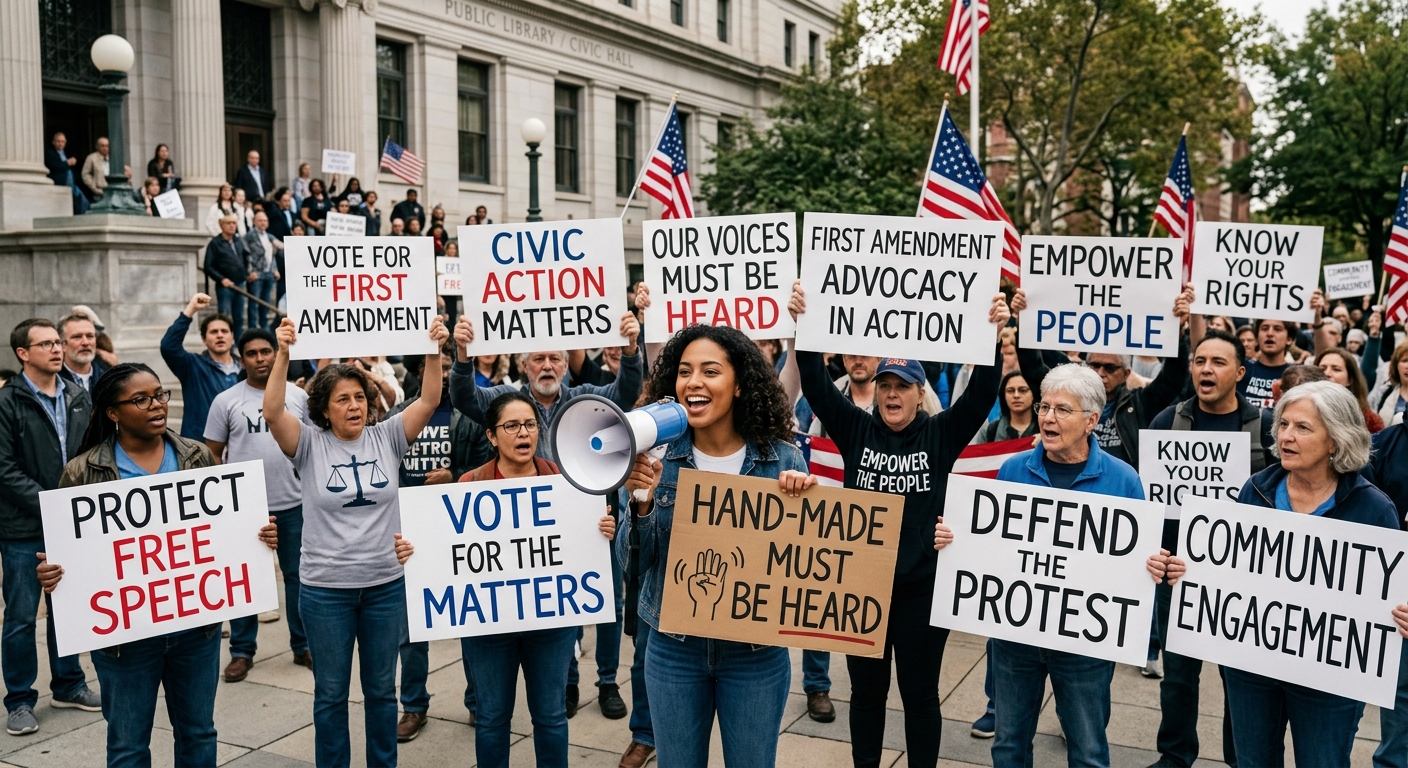
The Ongoing Battle for Intellectual Freedom
Freedom of expression is not a self-sustaining phenomenon; it requires constant, vigilant defense by the very people it empowers. The right to speak, read, and access diverse information without government interference forms the absolute bedrock of a functioning democratic society. Yet, history and current events continually demonstrate that this fundamental right is perpetually under siege. From sweeping state-level legislation aimed at suppressing marginalized voices to localized, highly organized efforts to strip public library shelves of specific literature, the mechanisms of censorship are constantly adapting to the modern political era. However, the antidote to these authoritarian impulses is not found exclusively within the walls of high courts or the halls of Congress—it is found in the everyday actions of ordinary citizens. Every single person possesses the inherent capacity to stand as a vital bulwark against the erosion of civil liberties. This comprehensive guide explores the deep historical context of free speech, the alarming current landscape of educational censorship, and highly actionable strategies that empower local communities, educators, and especially the youth, to reclaim and fiercely protect their First Amendment rights.
The Bedrock of Liberty: Understanding First Amendment Protections
To effectively defend free speech in any community, one must first possess a thorough understanding of the legal framework that guarantees it. The First Amendment to the United States Constitution explicitly states that the government shall make no law abridging the freedom of speech, or of the press, or the right of the people to peaceably assemble. Ratified in 1791 as the cornerstone of the Bill of Rights, this amendment establishes a profound and necessary limitation on government power, ensuring that the state cannot dictate what its citizens are allowed to think, say, or read.
Crucially, it is essential to understand that the First Amendment protects individuals specifically from government censorship, not from consequences imposed by private entities. Therefore, when public institutions—such as public school districts, city councils, state-funded universities, and community library boards—attempt to suppress specific ideas or literature, they are operating directly within the restrictive domain of the First Amendment. Public schools and libraries serve as the quintessential marketplaces of ideas for developing minds. They are intentionally designed to facilitate voluntary inquiry and expose individuals to a vast, unrestricted spectrum of human experiences, scientific facts, and diverse viewpoints. When governmental bodies attempt to restrict access to information within these shared public spaces based on ideological, religious, or political disagreements, they directly challenge the constitutional right of the citizen to receive information. Understanding this critical distinction empowers local activists to accurately identify unconstitutional violations and mount effective, legally grounded defenses against local and state overreach.
Public vs. Private Forums in Free Speech
To better understand where your rights apply, it is helpful to categorize spaces into legal forums. The level of First Amendment protection you enjoy depends heavily on the type of forum in which the speech occurs.
| Forum Type | Legal Definition | First Amendment Protection Level | Common Examples |
|---|---|---|---|
| Traditional Public Forum | Spaces long devoted to public assembly and debate. | Highest. Government cannot restrict speech based on content without a compelling state interest. | Public parks, sidewalks, town squares. |
| Designated Public Forum | Government spaces intentionally opened for public expression. | High. Content restrictions face strict scrutiny, though reasonable time, place, and manner rules apply. | School board meeting open floor, municipal theater. |
| Non-Public Forum | Government properties not open to the general public for free speech. | Limited. Restrictions must simply be reasonable and strictly viewpoint-neutral. | Government offices, active school classrooms. |
| Private Property | Spaces owned by private individuals or corporations. | None against the owner. Private entities can legally restrict speech as they see fit. | Private social media platforms, private businesses. |
The Alarming Rise of Modern Censorship and Book Bans
In recent years, the United States has witnessed an unprecedented, highly coordinated surge in campaigns to ban books and broadly restrict educational curricula. This is not a disconnected series of isolated, local incidents, but rather a nationwide, systemic effort to control the historical narratives and social concepts available to the public. According to organizations that diligently track intellectual freedom, the scale of the current censorship movement is truly staggering. Data collected continuously by the American Library Association (ALA) and free expression groups like PEN America highlights an alarming reality: thousands of unique literary titles are being targeted for removal from public and school libraries every single year. For instance, recent reports from PEN America documented well over 6,800 distinct instances of book bans during the 2024-2025 academic school year alone, affecting countless school districts and millions of students across the nation.
The targets of these modern bans are rarely random or accidental. A highly disproportionate number of challenged books feature themes directly related to LGBTQ+ identities, comprehensive racial history, systemic civil rights struggles, and the lived experiences of historically marginalized communities. The proponents of these sweeping bans frequently utilize the political guise of “protecting children” from purportedly inappropriate or explicit content. However, the practical, undeniable effect of these policies is the systematic erasure of diverse voices and the strict enforcement of a singular, narrowly defined worldview upon an entire, diverse student population. This toxic climate of censorship creates a chilling effect that extends far beyond the physical library shelves; educators across the country increasingly report quietly self-censoring their own classroom lesson plans simply to avoid targeted harassment, online doxing, or professional retribution. By actively limiting what people can read, modern censors are fundamentally attempting to limit how people can think, directly violating the core tenets of an open, democratic society.
Legal Precedents: The Courts on Our Side
While the contemporary wave of aggressive censorship is undoubtedly daunting, everyday citizens fighting back are armed with incredibly powerful legal precedents. One of the most significant and enduring shields against localized book banning is the landmark 1982 United States Supreme Court case, Board of Education, Island Trees Union Free School District No. 26 v. Pico. In this highly consequential case, a local, politically motivated school board had ordered the immediate removal of several books from junior high and high school libraries, publicly characterizing the literature as “anti-American, anti-Christian, anti-Semitic, and just plain filthy.”
The Supreme Court, however, decisively ruled against the overreaching school board, firmly affirming that local boards of education may not arbitrarily remove books from school library shelves simply because they personally dislike the ideas contained within those specific books. The highest court explicitly recognized that the First Amendment rigorously protects not only the fundamental right to speak but also the equally important “right to receive information and ideas.” School libraries were specifically identified by the Justices as unique places of voluntary inquiry, legally distinct from compulsory classroom curricula. The Pico decision established a vital, lasting boundary: while school boards unquestionably have broad discretion in managing general school affairs, that discretion must always be exercised in a manner that strictly comports with the transcendent, constitutional imperatives of the First Amendment. Today, this specific ruling serves as the foundational legal backbone for ongoing lawsuits and aggressive advocacy campaigns challenging arbitrary and ideologically driven book removals.
Youth at the Vanguard: How Students Drive Systemic Change
Perhaps the most inspiring and effective element of the ongoing fight for civil liberties is the fierce leadership of young people. Time and again throughout American history, students have definitively proven that age is not a prerequisite for effective, sophisticated constitutional advocacy. Because youth are the demographic most directly impacted by censorship in public schools—they are the ones whose educational materials are being unfairly stripped away—they possess a unique, undeniable, and powerful moral authority in these complex debates.
Modern student activism takes many highly creative forms, proving extremely disruptive to the normalization of censorship. Across the nation, student government associations, campus clubs, and independent youth coalitions have rapidly mobilized against restrictive local policies. When faced with impending book bans, young activists have successfully organized packed attendances at local school board meetings, delivering impeccably researched, impassioned public testimonies that force adult administrators to publicly confront the real-world impact of their discriminatory policies. They have staged massive walkouts, actively distributed challenged literature through underground “banned book clubs,” built independent community lending libraries, and masterfully utilized social media algorithms to transform quiet, local administrative disputes into massive national headlines. Furthermore, highly organized students frequently partner directly with established civil liberties organizations to mount formal legal challenges in federal court. By aggressively refusing to accept an impoverished educational experience, youth activists not only secure their own constitutional rights but also effectively reinvigorate the stagnant democratic process for their entire communities.
Actionable Steps for Everyday Citizens to Defend Free Speech
The critical fight against censorship is not an exclusive domain reserved for legal experts, constitutional scholars, or politicians; it requires the sustained, vocal engagement of the community at large. Here are practical, high-impact strategies that any individual can immediately employ to stand up for the First Amendment locally:
- Stay Informed and Attend Local Governance Meetings: The most consequential decisions regarding public access to information are almost always made in historically overlooked local venues, such as late-night school board and library board meetings. Regular attendance, active monitoring of meeting agendas, and understanding local procedural rules allow vigilant citizens to spot censorship attempts long before they are formally finalized.
- Report Censorship and Build a Public Record: If you personally witness a challenge to library materials, or an attempt to unfairly silence a speaker in a public forum, meticulously document it. National organizations heavily rely on local community reports to accurately track national censorship trends and provide immediate strategic support to communities facing unexpected free speech crises.
- Organize and Mobilize Your Community: A single dissenting voice is easily dismissed by a hostile board, but an organized coalition is formidable. Form strategic alliances with parents, educators, local business owners, and youth advocacy groups. Creating a structured grassroots organization can efficiently coordinate mass letter-writing campaigns, visible public protests, and strategic voter mobilization drives to elect proudly pro-First Amendment candidates.
- Exercise the Right to Public Comment: Effectively use the designated public comment periods at local government meetings to articulate clear, evidence-based, and legally sound arguments against censorship. Always frame the public debate strictly around constitutional rights and the severe intellectual harms of limiting access to diverse, representative information.
- Support Civil Liberties Organizations: Complex constitutional litigation is an incredibly powerful but highly resource-intensive tool. By financially or physically supporting established legal defense funds and prominent civil rights organizations, everyday citizens ensure that vulnerable communities lacking the financial means to fight unconstitutional bans have guaranteed access to top-tier legal representation.
Frequently Asked Questions (FAQ)
What exactly constitutes a violation of free speech?
A First Amendment violation typically occurs when a recognized government entity, institution, or official actively restricts, punishes, or retaliates against an individual’s expression or right to receive information based specifically on the viewpoint or content of that expression, outside of very narrowly defined legal exceptions like direct incitement to violence.
Why are book bans in public schools generally considered unconstitutional?
Based on enduring Supreme Court precedents, public school libraries are legally considered dedicated hubs for voluntary inquiry. Government officials and school boards cannot remove library books simply because they personally disagree with the political, social, or moral ideas presented in those texts. Doing so actively violates the students’ First Amendment right to freely receive information.
How can a student legally protest at school?
Students firmly retain their First Amendment rights within the walls of public schools. Students can legally engage in peaceful, non-disruptive protests—such as wearing expressive armbands, safely distributing flyers, or organizing peaceful walkouts—provided the activity does not cause a “material and substantial disruption” to the core educational environment.
Does the First Amendment apply to private businesses or social media?
No. The First Amendment strictly and solely restricts government actors (federal, state, and local entities). Private corporations, social media platforms, and private employers can generally moderate speech, ban users, or restrict expression on their private platforms or physical premises without violating the U.S. Constitution.
What is the role of a local school board in educational censorship?
Local school boards possess significant authority to set general educational curricula and manage district resources. However, this power is not absolute. They operate as government entities and are therefore strictly bound by the Constitution; they cannot leverage their administrative power to enforce ideological conformity or suppress disfavored political viewpoints.
Conclusion
The preservation of our foundational civil liberties is an active, ongoing, and demanding endeavor that requires the courage of conviction from every single one of us. The insidious mechanisms of censorship rely entirely on public apathy, exhaustion, and silence to succeed. By deeply understanding the profound protections offered by the First Amendment, recognizing the powerful legal precedents that shield our public institutions, and taking concrete, organized action in our local communities, we can effectively thwart attempts to control public information. Whether you are a high school student addressing a hostile school board, a parent organizing a local coalition, or a citizen casting an informed vote, your distinct voice is an indispensable instrument of American democracy. Standing up for freedom is not merely a theoretical, abstract ideal; it is a highly practical, everyday duty that ensures the marketplace of ideas remains robust, diverse, and entirely open for all generations to come.
References
- The Bill of Rights: A Transcription — National Archives. 1789-09-25. https://www.archives.gov/founding-docs/bill-of-rights-transcript
- Island Trees Sch. Dist. v. Pico by Pico, 457 U.S. 853 (1982) — Justia U.S. Supreme Court Center. 1982-06-25. https://supreme.justia.com/cases/federal/us/457/853/
- Banned in the USA: The Normalization of Book Banning — PEN America. 2025-10-01. https://pen.org/report/the-normalization-of-book-banning/
- Censorship by the Numbers: Banned Books Data — American Library Association. 2024-03-01. https://www.ala.org/advocacy/bbooks/banned-books-data
Similar Articles








Read full bio of medha deb


