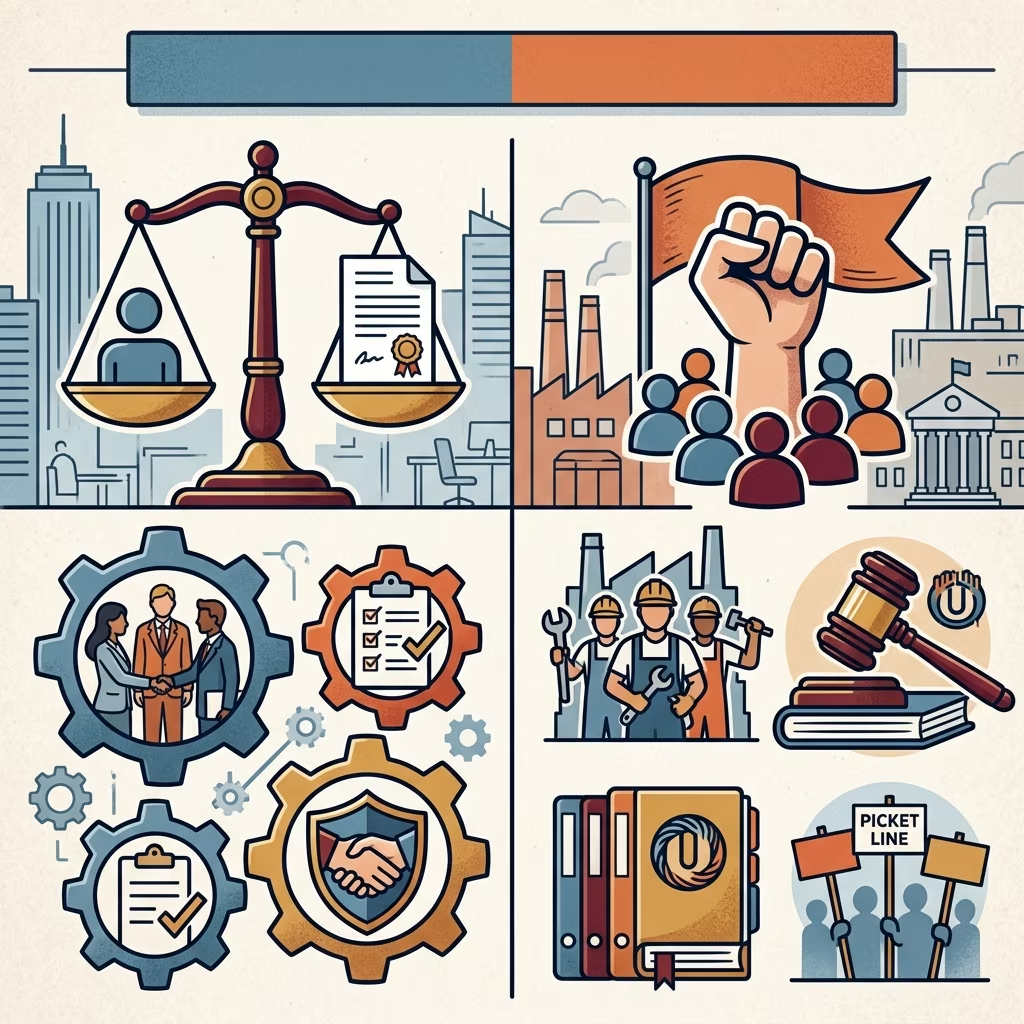
People often use the terms employment law and labor law as if they mean the same thing, but they address different parts of the workplace relationship. Employment law usually focuses on the rights and duties that arise between an individual worker and an employer, while labor law centers on collective worker activity, especially unions and bargaining over workplace conditions.
That distinction matters because the rules, agencies, and legal remedies can change depending on whether the issue involves one employee, a group of employees, or a union. In practical terms, the legal path for a discrimination claim is not the same as the path for a union representation dispute or a bargaining conflict.
What Employment Law Usually Covers
Employment law is the broader category in many everyday workplace conversations. It covers the legal relationship between employers and employees on an individual basis, including hiring, pay, workplace treatment, leave, discipline, and termination.
This area of law often includes claims or rules involving:
- Discrimination and harassment
- Wage and hour requirements
- Workplace leave and benefits
- Wrongful termination disputes
- Employment contracts and policy enforcement
Federal workplace laws commonly associated with employment law include the Fair Labor Standards Act, Title VII of the Civil Rights Act, and the Occupational Safety and Health Act, among others.
What Labor Law Usually Covers
Labor law is narrower and more collective in nature. It generally deals with the relationship between employers and groups of workers, particularly where a union is involved or workers are trying to organize.
Core labor law topics often include:
- Union organizing and representation
- Collective bargaining
- Collective bargaining agreements
- Protected concerted activity
- Labor-management disputes
In the United States, the National Labor Relations Act is the main federal statute associated with labor law because it protects employee rights to organize, join together, and bargain collectively.
The Main Difference: Individual Rights vs. Group Rights
The easiest way to tell the two apart is to ask whether the issue involves one person or a group. If the dispute concerns one employee’s pay, harassment complaint, or termination, it usually falls under employment law. If the dispute concerns a workforce acting together, a union election, or negotiations with an employer, it generally falls under labor law.
This difference is not just theoretical. It affects who can represent the workers, which agency may be involved, and what kind of legal process follows. Individual claims are often handled through courts or administrative agencies, while collective labor disputes may involve union procedures and labor relations boards.
A Side-by-Side Comparison
| Topic | Employment Law | Labor Law |
|---|---|---|
| Primary focus | Individual workplace rights | Collective worker rights |
| Typical setting | Employee and employer | Union, group of employees, and employer |
| Main issues | Pay, discrimination, leave, termination | Organizing, bargaining, strikes, union rules |
| Main federal law | Varies by topic | National Labor Relations Act |
| Common decision-maker | Courts and employment agencies | Labor relations agencies and bargaining processes |
How Federal Law Shapes Both Areas
Federal law plays a major role in both employment and labor matters. The U.S. Department of Labor administers and enforces many workplace statutes that affect wages, safety, benefits, and related labor standards.
For employment law, federal protections often address minimum wage, overtime, workplace safety, anti-discrimination obligations, and leave-related rules. For labor law, the key federal framework supports union activity and collective bargaining rights.
Employers and workers should also remember that state law may provide stronger protections than federal law. In many situations, state rules add to the protections available under federal law rather than replacing them.
Examples That Show the Difference
A discrimination complaint brought by a single employee is usually an employment law issue. The worker is asserting personal legal rights, and the dispute typically turns on the facts of that person’s treatment in the workplace.
By contrast, if employees join together to seek better wages or conditions through a union, that is a labor law issue. The focus is on collective action and the legal structure for bargaining between a group of workers and the employer.
Another example is wage rules. Minimum wage and overtime obligations are generally discussed within employment law because they govern how individual employees must be paid. But if a union negotiates wage scales in a collective bargaining agreement, the issue also involves labor law because the terms are being set through collective negotiation.
Why the Distinction Matters for Employers
For employers, confusing the two areas can lead to mistakes in compliance, communication, and dispute handling. A company facing a single-employee harassment complaint must respond differently than it would to a union demand for bargaining.
- Employment disputes often require policy review, documentation, and legal investigation.
- Labor disputes often require bargaining strategy, labor relations guidance, and knowledge of union rights.
- Some workplace issues may overlap, especially when a unionized workforce is also protected by general employment laws.
Because of that overlap, employers benefit from understanding both categories rather than assuming one legal framework will solve every workplace problem.
Why the Distinction Matters for Workers
Workers also benefit from knowing which legal category applies to their situation. An employee who believes they were denied overtime, subjected to discrimination, or terminated unfairly needs to look at employment law remedies. A group of workers who want representation or collective bargaining rights must look to labor law protections.
Knowing the difference helps workers identify the right agency, the right deadlines, and the right kind of claim. It also helps them understand whether they are acting as individuals or as part of a protected group effort.
Common Areas Where the Two Overlap
Although the categories are different, they can overlap in real workplaces. Unionized employees still have individual rights under employment laws, and nonunion workers may still engage in certain protected group activities.
Overlap is especially likely in matters involving:
- Wages and compensation
- Retaliation complaints
- Workplace safety concerns
- Employee handbooks and discipline systems
- Negotiated workplace policies
The key point is that one workplace event can raise more than one legal question. A wage dispute, for example, may involve both statutory pay rules and union contract terms.
How to Think About the Two in Practice
A simple way to approach the issue is to ask three questions. First, is the concern about one person or a group? Second, is the issue about individual treatment or collective bargaining? Third, does the matter involve a union or organizing activity?
If the answer points to one employee’s rights, the problem is likely employment law. If the answer points to group action or union representation, the problem is likely labor law. This practical test is not perfect, but it is often the fastest way to identify the right legal frame.
Frequently Asked Questions
Is labor law part of employment law?
They are related, but they are not the same thing. Labor law focuses on collective worker rights and unions, while employment law focuses on the broader individual employment relationship.
Does employment law only apply to nonunion workers?
No. Employment law can apply to union and nonunion workers alike. A unionized employee may still have claims for discrimination, wage violations, or retaliation under employment law.
What law protects the right to unionize?
In the United States, the National Labor Relations Act is the central federal law protecting collective worker activity, including organizing and collective bargaining.
Can state law provide more protection than federal law?
Yes. State laws often provide stronger or broader employee protections, and employers usually need to comply with both federal and state requirements.
Why do people mix up the two terms?
The terms are often used loosely because both deal with workplace rights. However, the legal issues, procedures, and decision-makers can be very different depending on whether the case is individual or collective.
Final Thoughts for Workers and Employers
Employment law and labor law both shape modern workplaces, but they do so in different ways. One protects the rights of individual employees in areas like pay, discrimination, and termination. The other protects group activity, union organization, and collective bargaining.
Understanding the difference makes it easier to identify the right legal issue, follow the correct process, and respond effectively to workplace disputes. In a legal environment where federal and state rules may both apply, that clarity is especially valuable.
References
- How Does Labor Law Differ From Employment Law? — Texas Discrimination Attorney. n.d. https://www.texasdiscriminationattorney.com/how-does-labor-law-differ-from-employment-law/
- Employment Law vs. Labor Law — The Brown Firm PLLC. n.d. https://brownfirmpllc.com/employment-law-vs-labor-law/
- What’s the Difference Between Employment Law, Labor Law … — King Siegel LLP. n.d. https://www.kingsiegel.com/blog/what-is-employment-law/
- The Difference Between Labour and Employment Law — DPH Legal. n.d. https://dphlegal.com/the-difference-between-labour-and-employment-law/
- Difference Between Federal and State labor Law — Workwise Compliance. n.d. https://www.workwisecompliance.com/blog/difference-between-federal-and-state-labor-law-usa.html
- Summary of the Major Laws of the Department of Labor — U.S. Department of Labor. n.d. https://www.dol.gov/general/aboutdol/majorlaws
- What Are the Five Major Kinds of Employment Laws to Know? — Tulane University Law School, Online Law Program. n.d. https://online.law.tulane.edu/blog/a-guide-to-common-employment-laws