
Employer Vicarious Liability for Employee Misconduct
Understanding when and why employers are legally responsible for the actions and misconduct of their employees at work.
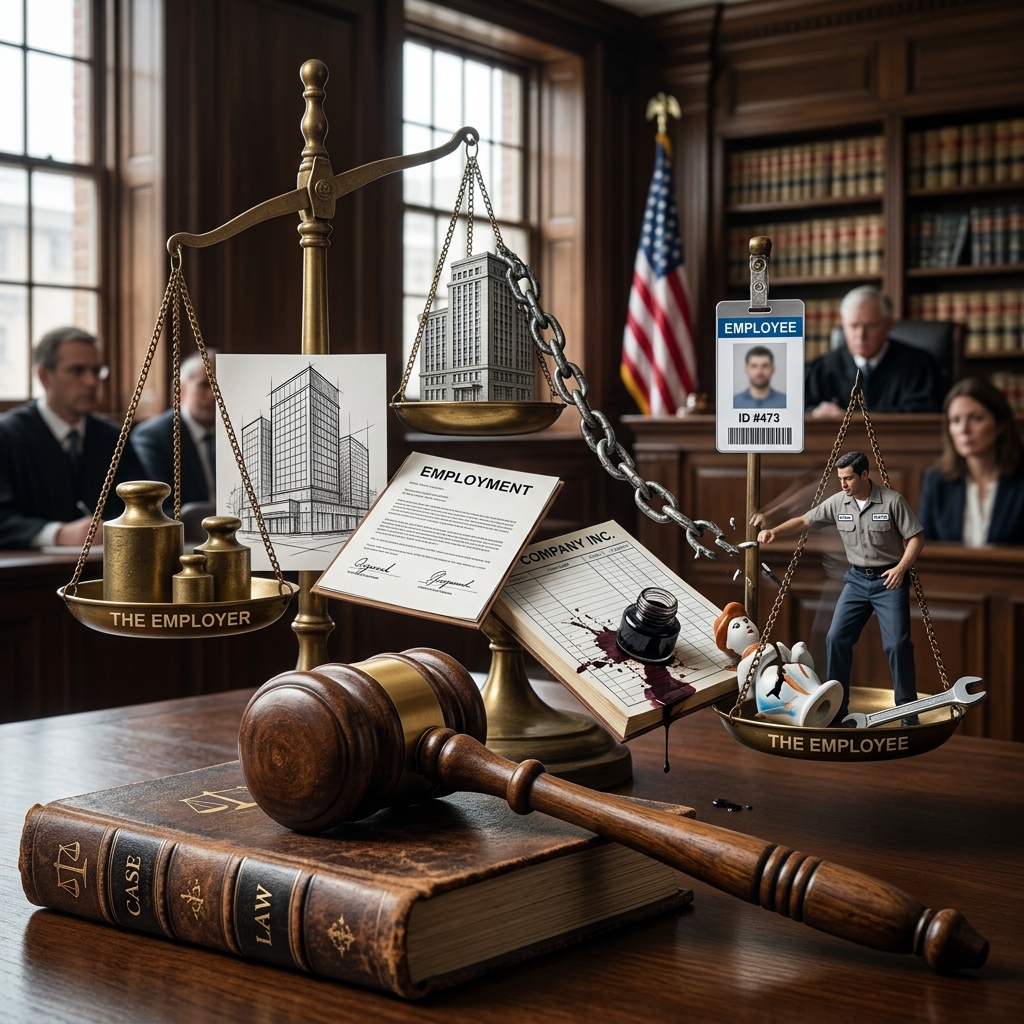
Employers do not just answer for their own decisions. Under the doctrine of vicarious liability, they can also be held legally responsible for what their employees do while performing their jobs. This concept, often described by the Latin phrase respondeat superior (“let the master answer”), is a cornerstone of modern employment law.
This article explains how vicarious liability works, when it applies, where courts draw the line on employer responsibility, and practical steps businesses can take to reduce exposure to claims.
What Is Vicarious Liability in the Workplace?
Vicarious liability is a legal rule that allows an injured person to sue an employer for harm caused by an employee who was acting in the course of employment at the time of the incident. The employer may be liable even if it did not personally act negligently.
In the employment context, vicarious liability typically arises when:
- An employee commits a negligent act or omission while doing their job duties.
- The conduct occurs within the scope of employment (more on this below).
- The act causes injury, property damage, or another legally recognized harm.
Importantly, vicarious liability is different from claims based on an employer’s own negligence, such as negligent hiring, supervision, or retention. Those theories require proof that the company itself failed to act reasonably; vicarious liability focuses on the employee’s conduct.
Vicarious Liability vs. Direct Employer Negligence
Courts often distinguish between two pathways to employer responsibility:
| Type of Liability | What Must Be Shown? | Key Focus |
|---|---|---|
| Vicarious liability / respondeat superior | Employee was negligent and acting within the scope of employment. | Conduct of the employee, not the employer’s own fault. |
| Direct negligence (hiring, supervision, retention) | Employer unreasonably hired, supervised, or kept an employee who posed a foreseeable risk; that failure caused harm. | Decisions and policies of the employer. |
In many lawsuits, both theories are pleaded together: the plaintiff claims that the employee acted negligently and, separately, that the employer’s own practices were unsafe.
Who Counts as an Employee for Vicarious Liability?
Vicarious liability usually applies only when there is a genuine employer–employee relationship. In contrast, businesses are often not vicariously liable for the acts of independent contractors, although there are exceptions.
Courts consider multiple factors to determine whether a worker is an employee rather than an independent contractor, including:
- Whether the business has the right to control how the work is performed, not just the final result.
- Who supplies tools, equipment, and the work environment.
- Whether the worker is paid a salary or hourly wage versus by the project.
- Whether taxes and benefits are handled like a typical employment relationship.
Because control is central, a worker can be treated as an employee for liability purposes even if they are labeled as a contractor in paperwork, if the business closely directs day-to-day tasks.
Understanding “Scope of Employment”
The phrase scope of employment is critical. An employer is usually liable only when the employee’s conduct is sufficiently connected to their job duties.
Courts commonly ask whether:
- The conduct was of the general type the employee was hired to perform.
- It occurred substantially within authorized work hours and at an appropriate location.
- It was motivated, at least in part, by an intent to serve the employer’s interests.
When these factors are satisfied, the conduct is often considered within the scope of employment, even if the employee was careless, violated company policy, or temporarily deviated slightly from assigned tasks.
Minor vs. Major Detours
Courts frequently distinguish between:
- Minor deviations (sometimes called “frolic and detour” in older case law): short, personal side trips or brief distractions that do not fundamentally change the work-related nature of the activity. Employers are often still liable for these.
- Major departures: conduct that is purely personal or substantially outside the time and place of employment. Employers are less likely to be held liable in these scenarios.
This is a fact-intensive inquiry, and similar situations can lead to different outcomes depending on the jurisdiction and specific evidence.
Negligence, Intentional Acts, and Harassment
Most vicarious liability cases involve negligence—for example, careless driving, unsafe handling of equipment, or failure to follow safety protocols. However, claims sometimes arise from more serious misconduct, including intentional wrongdoing or workplace harassment.
Negligent Acts
Negligence claims are the classic setting for respondeat superior. If an employee accidentally injures someone while doing their job, and the incident occurs within the scope of employment, courts regularly hold the employer responsible.
Intentional Misconduct
Intentional harm—such as assault or fraud—raises more complex questions. Many courts are reluctant to impose liability for conduct that appears entirely personal and malicious. Still, liability can arise where the intentional act is closely tied to job duties, involves an authorized use of force, or is a foreseeable outgrowth of the employee’s responsibilities.
Unlawful Harassment and Discrimination
Federal and state civil rights laws overlay vicarious liability principles in the harassment and discrimination context. The U.S. Equal Employment Opportunity Commission (EEOC) has issued detailed guidance on an employer’s responsibility for harassment by supervisors and co-workers.
Key points from EEOC guidance include:
- An employer is vicariously liable for a hostile work environment created by a supervisor when the harassment results in a tangible employment action (such as firing, demotion, or loss of benefits).
- When no tangible employment action occurs, employers may still be liable but have a potential affirmative defense if they acted reasonably to prevent and correct harassment and the employee unreasonably failed to use those procedures.
- For harassment by non-supervisory employees, the standard often focuses on whether the employer was negligent in preventing or addressing the misconduct.
These rules highlight how vicarious liability intersects with statutory anti-discrimination duties.
Special Focus: Company Vehicles and Driving Risks
Vehicle use is one of the most common and financially significant areas of vicarious liability. When employees drive as part of their jobs—using company or personal vehicles—employers may be responsible for collisions or traffic-related injuries that occur in the scope of employment.
According to risk-management guidance for justice and transportation organizations, courts often focus on whether the trip was work-related, aligned with job duties, and intended to further the employer’s business.
To reduce exposure arising from driving activities, employers are frequently advised to:
- Screen drivers carefully, including checking driving records and qualifications.
- Adopt clear written policies governing use of company vehicles and personal vehicles for work.
- Require and verify valid licenses and adequate insurance for employees who drive for business purposes.
- Provide regular safety training and enforce rules consistently.
- Maintain vehicles properly and keep records of inspections and repairs.
Insurance and Financial Impact
Vicarious liability has substantial implications for insurance coverage and risk allocation. Commercial general liability (CGL) and employer’s liability policies often cover injuries or damage caused by employees acting within the course of employment. Auto liability policies may address vehicle-related incidents.
Insurers and courts typically examine:
- Whether the person who caused the harm qualifies as an insured (for example, as an employee).
- Whether the conduct occurred within the scope of employment or in connection with covered business activities.
- Any exclusions for intentional acts, criminal conduct, or other categories of risk.
Businesses should review policies with counsel or insurance professionals to ensure that their coverage matches the level of risk created by employee activities.
Common Employer Defenses and Limitations
Employers are not automatically liable for everything an employee does. Several defenses and limitations may apply depending on the facts and governing law.
- Outside the scope of employment: If the employee’s actions were purely personal or occurred far outside work hours and locations, employers may argue that vicarious liability does not apply.
- Worker is an independent contractor: When a worker is genuinely independent and not subject to close control, vicarious liability is less likely, though some non-delegable duties may still exist.
- No underlying tort: If the employee did not act negligently or wrongfully, there is no basis for liability.
- Affirmative defenses in harassment cases: In some hostile work environment claims without tangible employment actions, employers may avoid liability by demonstrating reasonable preventive measures and an unreasonable failure to complain by the employee, consistent with EEOC guidance.
Because these defenses can be technical and jurisdiction-specific, employers facing claims should consult employment counsel promptly.
Practical Risk-Management Strategies for Employers
While vicarious liability cannot be eliminated entirely, employers can significantly reduce risk by implementing thoughtful governance and workplace practices.
1. Clarify Roles, Authority, and Expectations
- Use clear job descriptions that identify core responsibilities and any use of vehicles, equipment, or authority over others.
- Define who has power to hire, fire, discipline, or promote, since this may influence liability in harassment and discrimination cases.
- Communicate performance and conduct expectations in written policies and employee handbooks.
2. Strengthen Hiring, Training, and Supervision
- Screen applicants appropriately for the risks associated with the role (e.g., driving records for drivers, background checks where legally permitted).
- Provide training on safety procedures, ethics, anti-harassment rules, and relevant legal obligations.
- Offer periodic refresher training and document attendance.
- Monitor high-risk activities (such as vehicle operation, use of heavy machinery, or handling of sensitive data) more closely.
3. Develop Robust Anti-Harassment and Anti-Discrimination Programs
- Adopt clear policies prohibiting harassment and discrimination that comply with EEOC guidance.
- Create multiple reporting channels for complaints, including options that bypass direct supervisors.
- Act promptly to investigate complaints and take corrective action where warranted.
- Train supervisors on their unique responsibilities and the potential for vicarious liability based on their actions.
4. Address Vehicle and Travel Risks
- Implement a written fleet safety program if employees drive as part of their duties.
- Set standards for permissible driving (e.g., restrictions on mobile phone use, fatigue management) and enforce them consistently.
- Review routes, schedules, and workload to minimize incentives for unsafe driving.
5. Review Contracts and Outsourcing Arrangements
- Where work is outsourced to independent contractors, ensure agreements accurately reflect the relationship and allocate risk appropriately.
- Avoid exerting day-to-day control over contractors in ways that could convert them into de facto employees for liability purposes.
- Verify that contractors carry adequate insurance and comply with safety standards.
6. Maintain Adequate Insurance and Incident Response Plans
- Periodically review liability coverage limits and exclusions in light of the organization’s size, industry, and exposure.
- Develop response protocols for accidents, injuries, and harassment complaints so that managers know how to preserve evidence and involve legal counsel.
- Track incidents and near misses to identify patterns and address systemic risks.
Frequently Asked Questions (FAQs)
Is an employer always liable for everything an employee does?
No. Vicarious liability usually applies only when the employee is acting within the scope of employment. Conduct that is purely personal, far outside work hours or locations, or unrelated to job duties is less likely to impose liability on the employer.
Does vicarious liability apply to independent contractors?
Generally, no. Courts typically limit vicarious liability to true employees, not independent contractors, unless specific legal doctrines or non-delegable duties apply. However, if a business tightly controls a contractor’s methods, a court may treat the person as an employee for liability purposes.
Can an employer be liable for an employee’s intentional assault?
Sometimes. Many courts are reluctant to hold employers liable for intentional violence that is clearly personal. Yet liability may arise if the use of force was authorized, closely tied to the employee’s duties, or reasonably foreseeable given the role.
How does vicarious liability apply to workplace harassment?
Under EEOC guidance and U.S. Supreme Court precedent, employers are vicariously liable when a supervisor’s harassment results in a tangible employment action, such as firing or demotion. In other situations, employers may defend themselves by showing that they took reasonable preventive steps and the employee unreasonably failed to complain.
What should employers do after a workplace incident?
Employers should prioritize safety and medical assistance, promptly preserve relevant evidence, notify insurance carriers as appropriate, and consult with legal counsel. Internal investigations should be conducted carefully, particularly when harassment, discrimination, or serious injury is involved.
References
- Vicarious Liability — EBSCO Research Starters. 2019-01-01. https://www.ebsco.com/research-starters/social-sciences-and-humanities/vicarious-liability
- Vicarious Liability in the Employer-Employee Relationship — LawShelf Educational Media. 2020-01-01. https://www.lawshelf.com/videocoursesmoduleview/vicarious-liability-in-the-employer-employee-relationship–module-1-of-5-/
- An Employer’s Liability for Employee’s Acts — FindLaw. 2022-06-01. https://www.findlaw.com/smallbusiness/liability-and-insurance/an-employer-s-liability-for-employee-s-acts.html
- Vicarious Liability for Unlawful Harassment by Supervisors — U.S. Equal Employment Opportunity Commission. 2016-06-18. https://www.eeoc.gov/laws/guidance/enforcement-guidance-vicarious-liability-unlawful-harassment-supervisors
- Understanding Vicarious Liability: Employer Risks and Best Practices — Justice Speakers Institute. 2020-05-01. https://www.justicespeakersinstitute.com/understanding-vicarious-liability-for-company-vehicles-how-employers-can-mitigate-risk/
- Vicarious Liability Explained: Examples and How to Prevent It — Investopedia. 2023-03-15. https://www.investopedia.com/terms/v/vicarious-liability.asp
- When Is an Employer Liable for the Actions of Its Employees? — Disability Law Group of Virginia. 2021-02-01. https://www.dlgva.com/when-is-an-employer-liable-for-the-actions-of-its-employees/
Similar Articles








Read full bio of Sneha Tete




