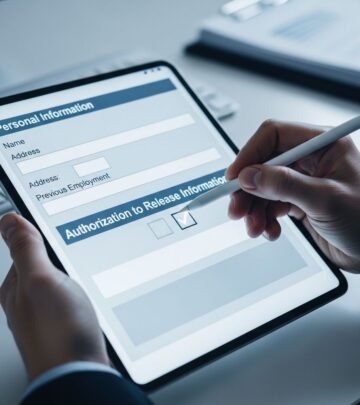
Employer Mandates for Office Return: Legal Boundaries
Navigate employer demands to return to work amid health concerns: Know your rights under federal laws like ADA, FMLA, and OSHA protections.

Employers hold significant authority to dictate workplace presence, particularly in at-will employment states, but federal and state laws impose critical limits during health emergencies like pandemics. This article examines when companies can compel physical attendance, employee protections, and practical steps for navigating disputes.
Understanding At-Will Employment and Exceptions
In the United States, most private sector jobs operate under at-will employment, allowing employers to alter conditions—including requiring on-site work—without advance notice, provided no discrimination or retaliation occurs. This principle underpins mandates for office returns once local restrictions lift, unless contracts, union agreements, or statutes intervene.
- Employment contracts or collective bargaining agreements may guarantee remote work or notice periods for changes.
- State-specific laws, such as expanded paid leave in some regions, can override at-will defaults.
- Federal protections like the Americans with Disabilities Act (ADA) and Family and Medical Leave Act (FMLA) create carve-outs for vulnerable workers.
For non-essential roles in reopened areas, refusal without legal grounds risks termination, as unemployment benefits typically cease upon job availability.
Essential Workers: Heightened Obligations
Essential workers—including healthcare providers, emergency responders, and food supply chain staff—face stricter duties to report, as defined by state guidelines. These classifications, varying by locality, prioritize public needs over individual preferences.
| Category | Examples | Typical Requirements |
|---|---|---|
| Healthcare | Nurses, doctors | Report unless quarantined or ADA-qualified |
| Public Safety | Police, firefighters | Mandatory attendance with safety protocols |
| Critical Infrastructure | Water treatment, manufacturing | Exempt from broad stay-home orders |
Even essentials can invoke protections if exposed or disabled, but general fear alone seldom suffices.
Health-Related Protections: ADA and High-Risk Status
The ADA mandates reasonable accommodations for qualified disabilities, potentially including remote work for those with conditions amplifying pandemic risks, such as asthma or immunosuppression. Employers must engage in an interactive process to assess requests without undue hardship.
- High-risk individuals: Underlying conditions qualifying as disabilities may warrant adjustments like staggered shifts or barriers.
- Mental health: Conditions like severe anxiety exacerbated by contagion fears could qualify.
- Process: Submit medical documentation; employer evaluates feasibility.
Post-illness, the ADA permits medical clearance requirements before return. Discrimination claims arise if policies disproportionately impact protected groups.
Family and Caregiving Leave Under FMLA and FFCRA
Eligible employees can access unpaid, job-protected leave via FMLA for serious health conditions affecting themselves or family members, requiring 12 months tenure and 1,250 hours worked[10]. The Families First Coronavirus Response Act (FFCRA) expanded paid options for COVID-related childcare closures or quarantines at smaller firms.
Key eligibility:
- Covered employers: 50+ employees for FMLA; under 500 for FFCRA paid leave.
- Quarantine orders or provider advice trigger paid sick leave up to 80 hours.
- Care for child with school/daycare shutdown qualifies for expanded FMLA.
Retaliation for invoking these rights violates law, opening wrongful termination avenues.
Workplace Safety Standards and OSHA Rights
OSHA compels employers to maintain hazard-free environments, empowering employees to report perceived COVID risks via complaints, potentially triggering inspections. Refusal is defensible if protocols like masking, distancing, and cleaning are implemented.
- Employee rights: File anonymous complaints; walk off if imminent danger exists (rarely applies to viruses).
- Employer duties: Follow CDC return guidelines post-positive tests.
- Outcomes: Compliant workplaces prevail; non-compliance risks fines and mandates.
General apprehension without evidence rarely justifies refusal.
Navigating Return Policies: Employer and Employee Strategies
Companies must apply policies uniformly to avoid disparate treatment claims, ensuring remote exceptions tie to legitimate needs like disabilities rather than favoritism.
| Stakeholder | Best Practices |
|---|---|
| Employers | Communicate clearly; document accommodations; train on protocols |
| Employees | Document concerns; request formally; consult labor departments |
Unemployment ends with suitable work offers, pressuring compliance absent protections.
State Variations and Evolving Regulations
Laws differ: California emphasizes accommodations; Texas leans at-will with FMLA overlays. Monitor state labor sites for updates, as pandemic rules evolve.
Frequently Asked Questions
Can I be fired for refusing to return due to COVID fears?
Generally yes, if no disability, leave eligibility, or unsafe conditions exist; unemployment stops.
Does remote work qualify as an ADA accommodation?
Possibly, if proven effective and not burdensome; requires medical evidence.
What if my child’s school is closed?
FFCRA provides paid leave for caregiving if eligible.
Can OSHA protect me from returning?
Only if hazards persist despite protocols; file complaints for review.
Are essential workers exempt from all protections?
No, ADA/FMLA still apply alongside duties.
Practical Steps for Employees Facing Mandates
1. Review your employment docs for remote clauses.
2. Gather medical proof for accommodations.
3. Contact HR formally in writing.
4. Consult state labor office or EEOC.
5. Explore unemployment if terminated unjustly.
Proactive dialogue often resolves issues without escalation. For personalized advice, seek legal counsel.
References
- What You Should Know About COVID-19 and the ADA, Rehabilitation Act, and Other EEO Laws — U.S. Equal Employment Opportunity Commission (EEOC). 2023-05-15. https://www.eeoc.gov/wysk/what-you-should-know-about-covid-19-and-ada-rehabilitation-act-and-other-eeo-laws
- COVID-19 – Frequently Asked Questions — Occupational Safety and Health Administration (OSHA). 2024-10-01. http://www.osha.gov/coronavirus/faqs
- Employment – COVID-19 & Texas Law — Texas State Law Library. 2023-08-20. https://guides.sll.texas.gov/covid-19/employment
Similar Articles








Read full bio of medha deb