
Employer Liability for Distracted Driving Crashes
How and when employers can be held legally and financially responsible for employees’ distracted driving accidents on the job.
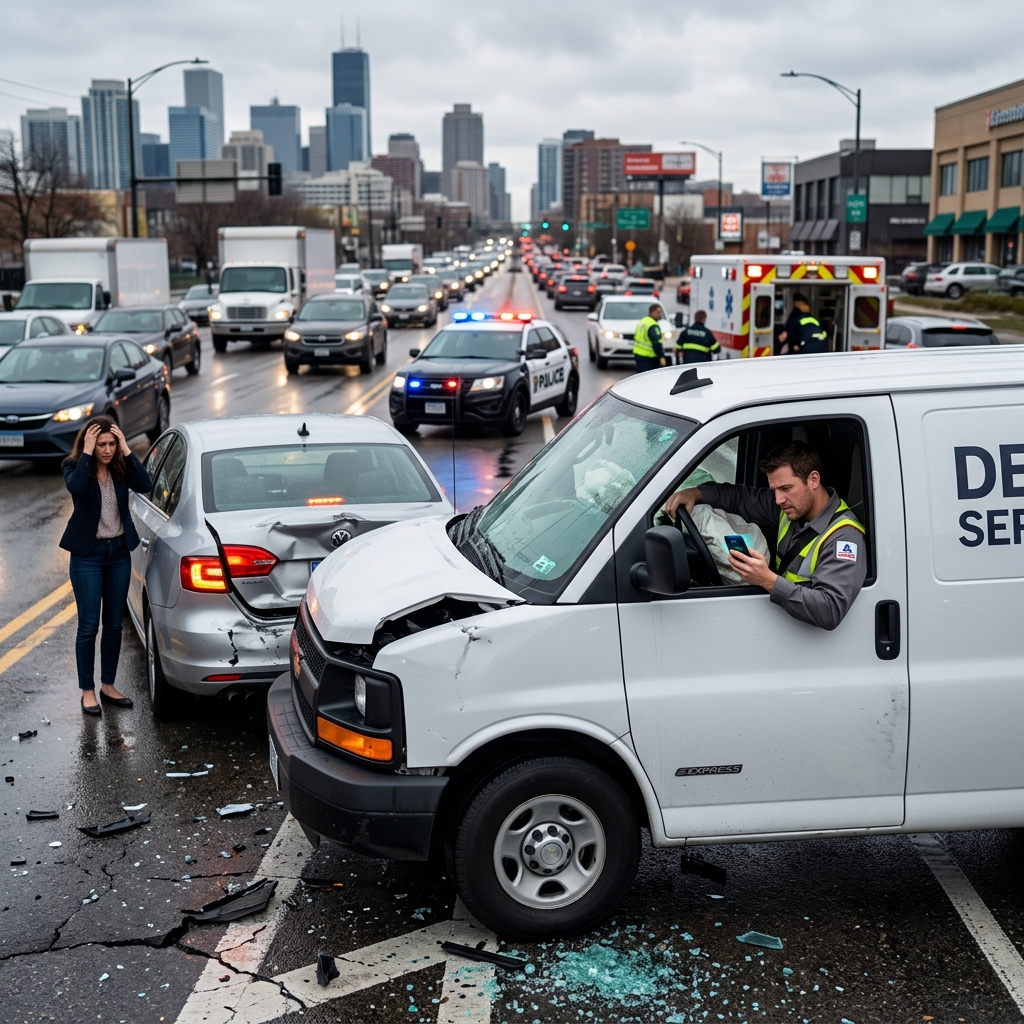
When an employee causes a distracted driving crash while performing work-related tasks, the consequences rarely end at the roadside. In many situations, the employer can be held legally and financially responsible for the accident, even if the employee was driving a personal vehicle and using a hands-free device. Understanding how and when this liability arises is critical for small businesses and larger organizations alike.
Why Distracted Driving Is a Legal Risk for Employers
Distracted driving is not only a roadway safety crisis; it is also a growing source of corporate exposure. National safety organizations report that drivers using cell phones are several times more likely to crash, and employers have faced liability in the tens of millions of dollars for collisions involving employees on work-related calls or messages. As more workers rely on smartphones, tablets, and in-vehicle systems to do their jobs, companies are increasingly drawn into litigation when those devices contribute to an accident.
From a legal standpoint, employer liability arises because the law often treats the actions of employees, while they are performing job duties, as actions of the employer itself. When those actions include unsafe driving behaviors—such as texting, checking email, or interacting with work applications behind the wheel—the employer may be required to “answer” for the harm that results.
Core Legal Concepts Behind Employer Liability
Although the details vary by jurisdiction, several common legal doctrines shape when and how employers are held responsible for distracted driving crashes:
- Respondeat superior – The principle that an employer is liable for its employee’s negligent acts committed within the scope of employment.
- Vicarious liability – Liability imposed on one party (the employer) for another’s conduct (the employee), based on their relationship and the nature of the work.
- Negligent supervision – Claims that the employer failed to properly control or supervise employees, leading to foreseeable harm, such as unsafe phone use while driving.
- Negligent entrustment – Claims that the employer knowingly or negligently allowed an unsafe driver, or an unsafe vehicle configuration, on the road.
In most distracted driving cases, plaintiffs try to show that the employee was performing work duties and that the employer either bears automatic responsibility under respondeat superior or contributed to the risk through poor policies or oversight.
When Employers Are Most Likely to Be Held Liable
Employer liability depends heavily on what the employee was doing at the time of the crash and how closely those activities connect to the business. Courts and insurers usually focus on whether the employee was acting within the scope of employment—that is, in furtherance of the employer’s interests.
Typical Scenarios That Create Exposure
Examples of situations where employer liability often arises include:
- Employees driving to client meetings while answering work-related calls or texts.
- Delivery drivers checking routing apps, messaging dispatchers, or entering data into work systems while moving.
- Sales staff using company-issued phones to negotiate with customers on the road.
- Remote workers responding to supervisor emails or chat messages while running a work errand.
- Truck drivers interacting with outdated or distracting communications equipment required by the company.
In these examples, the employee’s behavior is tied directly to their job duties. As a result, the law often treats the negligent driving—such as reading a text or adjusting a device—as part of the employer’s business activity, rather than a purely personal choice.
Scope of Employment: Key Factors Courts Consider
Although phrasing differs among jurisdictions, courts generally examine whether the employee’s conduct:
- Was the type of activity the employee was hired to perform;
- Occurred during authorized working hours or a reasonable extension of them;
- Took place in a location or geographic area tied to the employee’s work; and
- Served, at least in part, the employer’s business interests.
If the answer to these questions is “yes,” the employee is likely within the scope of employment. In distracted driving cases, this generally means that an employer can be drawn into the lawsuit and may be required to pay damages.
Personal Vehicles, Company Cars, and Device Ownership
Many business leaders assume that liability is reduced when employees use their own vehicles or personal phones. In reality, most courts focus on the work activity, not who owns the car or the device.
| Factor | Common Assumption | Legal Reality |
|---|---|---|
| Vehicle ownership | Employer is safer if the employee drives a personal car. | Liability usually follows the employee’s work duties, not the name on the title. |
| Phone ownership | Personal phones mean personal responsibility. | If calls or texts are work-related, the employer can still be liable. |
| Hands-free technology | Hands-free use is always safe and legally protected. | Even hands-free calls have led to multi-million-dollar employer liability. |
Because liability turns on the connection to work, businesses cannot rely on ownership as a shield. Strong policies and training are more effective than shifting assets to employees.
Common Theories of Employer Fault in Distracted Driving Cases
Beyond vicarious liability, plaintiffs often try to show that the employer itself acted negligently. Several recurring themes appear in distracted driving litigation and legal analysis.
Negligent Supervision and Communication Demands
Negligent supervision claims argue that the employer knew or should have known that employees were using phones or devices dangerously during work-related driving and failed to intervene. Risk factors include:
- High-pressure expectations for immediate responses to emails, calls, or messages, regardless of whether the employee is on the road.
- Supervisors who frequently contact employees while they are known to be driving.
- Lack of clear rules on when driving employees may safely return calls or messages.
- No monitoring or enforcement of existing distracted driving policies.
In these circumstances, plaintiffs may argue that unreasonable communication demands effectively encourage employees to multitask behind the wheel, making crashes foreseeable.
Negligent Entrustment and Unsafe Drivers or Equipment
Negligent entrustment focuses on the employer’s decision to place a particular driver or vehicle on the road. Liability may arise where a company:
- Assigns driving duties to employees with poor driving records or known safety issues.
- Provides outdated or inherently distracting communications equipment, such as radios that require manual operation while driving.
- Fails to maintain in-vehicle systems, leading employees to compensate with risky device use.
In trucking and delivery contexts, plaintiffs sometimes point to workflow problems that make it nearly impossible for drivers to avoid interacting with devices while moving—for example, routing systems that can only be updated on the road or dispatch protocols that penalize drivers for pulling over.
Industry and State Variations
While core principles such as respondeat superior are widely recognized, practical rules can vary by industry and state. For example, some courts apply a “dual purpose” rule: if a trip simultaneously serves the employee’s personal affairs and the employer’s business, the employer can still be liable as long as business interests are being advanced. This can cover scenarios like stopping for personal errands during a client visit route.
States also differ in how they treat cell phone and device use behind the wheel. Some have explicit hands-free laws; others focus on broader definitions of distraction. However, national guidance emphasizes that employers may be held accountable when employees are using a phone or otherwise distracted while performing job-related driving.
Risk Management: How Employers Can Reduce Liability
Although employers cannot control every action an employee takes, they can significantly reduce both crash risk and legal exposure through structured programs. Federal safety agencies and nonprofit organizations encourage comprehensive employer distracted driving initiatives that combine policy, training, and enforcement.
Key Elements of an Effective Distracted Driving Policy
A strong policy should clearly communicate expectations and apply to all work-related driving, regardless of vehicle ownership or job title. Consider including:
- Absolute ban on texting and manual device use while moving, for both company-issued and personal devices.
- Restrictions on hands-free calls, especially for complex conversations that demand cognitive attention.
- Requirements to safely stop the vehicle before returning calls, checking email, or interacting with work applications.
- Rules for supervisors limiting contact with employees known to be driving, except in emergencies.
- Clear consequences for violations, such as disciplinary measures or loss of driving privileges.
Policies should be written, distributed to all employees who drive for work, and periodically reviewed and updated to reflect changes in law and technology.
Training, Culture, and Enforcement
Paper policies alone rarely change behavior. Effective programs combine written rules with practical education and a safety-focused culture.
- Regular training sessions explaining the risks of driving distractions, including cognitive distraction, and reviewing company rules.
- Leadership commitment, with managers modeling safe behavior and avoiding calls to employees who are driving.
- Incident review processes that examine whether device use or workflow contributed to any crash or near-miss.
- Technology support, such as apps or vehicle systems that limit device functionality while the vehicle is moving.
- Integration with broader safety programs, treating distracted driving as part of occupational health and safety responsibilities.
National guidance suggests that employer programs can be implemented within a few months, with costs primarily tied to training time and educational materials rather than specialized equipment.
Practical Steps for Small Businesses
Smaller employers may lack dedicated safety departments, but they are not exempt from liability. Even a single distracted driving crash involving an employee can be financially devastating. Owners and managers can take pragmatic steps to protect both people and the business:
- Identify which roles involve any driving on behalf of the company, including occasional errands or client visits.
- Develop a concise, plain-language distracted driving policy and share it during onboarding.
- Set expectations that messages and calls can wait until employees stop safely, and back up those expectations in performance reviews.
- Consult with legal or insurance professionals to ensure policies align with state law and coverage requirements.
- Review workflows that may pressure employees to respond immediately, and adjust deadlines or communication norms accordingly.
By proactively addressing distracted driving, small businesses can demonstrate due care, which may reduce liability exposure even if a crash occurs.
Frequently Asked Questions (FAQs)
Are employers always liable if an employee crashes while driving?
No. Liability depends on whether the employee was acting within the scope of employment—that is, performing job duties or furthering the employer’s interests at the time of the crash. If the employee was purely on personal time, with no work-related purpose, the employer is less likely to be held responsible.
What if the employee was using a personal vehicle?
In many cases, the fact that the employee was driving their own car does not shield the employer. Courts and insurers focus on the work connection rather than vehicle ownership. If the employee was on a work errand, visiting a client, or otherwise performing job duties, the employer may still face vicarious liability.
Does hands-free phone use protect the employer?
Not necessarily. Even hands-free calls can create significant cognitive distraction, and employers have been held liable for serious crashes that occurred while employees were using hands-free devices for work purposes. A thorough policy should address both handheld and hands-free communication.
Can an employer be liable if the worker was responding to a supervisor’s text?
Yes. If an employee causes a crash while replying to a manager or client in the course of their job, that communication can help show that the employee was acting within the scope of employment, exposing the employer to liability. High-pressure expectations for immediate responses can strengthen claims of negligent supervision.
What practical steps should employers take right away?
Employers should adopt a written distracted driving policy, train employees on its requirements, limit work-related communications to employees who are driving, and review workflows that encourage multitasking behind the wheel. Consulting legal counsel for state-specific guidance can further tailor protections.
References
- Employer Programs: Distracted Driving — National Highway Traffic Safety Administration. 2023-04-01. https://www.nhtsa.gov/book/countermeasures-that-work/distracted-driving/countermeasures/other-strategies-behavior-change
- Distracted Driving for Employers — National Safety Council. 2024-03-15. https://www.nsc.org/road/safety-topics/distracted-driving/distracted-driving-for-employers
- Employers Can Be Liable for Distracted Driving — Society for Human Resource Management. 2016-09-28. https://www.shrm.org/topics-tools/employment-law-compliance/employers-can-liable-distracted-driving
- Employer Liability in Distracted Driving Accidents — Markoff & Barabou, P.C. 2022-07-12. https://mblawfirm.com/insights/employer-liability-in-distracted-driving-accidents/
- Employer Liability for Distracted Driving Accidents in Massachusetts — Bailey & Burke. 2021-05-04. https://www.baileyandburke.com/blog/massachusetts-employer-liability-distracted-driving/
- Hackensack Distracted Driving Accident Caused by a Company Driver — Maggiano, DiGirolamo & Lizzi. 2020-08-10. https://www.maggianolaw.com/blog/hackensack-distracted-driving-accident-caused-by-a-company-driver/
- Employer Liability for Distracted Truck Drivers in Rhode Island — Kirshenbaum & Kirshenbaum. 2023-02-21. https://www.kirshenbaumri.com/faqs/employer-liability-for-distracted-truck-drivers.cfm
Similar Articles








Read full bio of medha deb




