Election periods often bring out two very different kinds of activity: intense public debate and opportunistic fraud. Scammers know that voters are paying attention, campaign messages are everywhere, and people may be more willing than usual to answer calls, open emails, or donate money. That combination creates ideal conditions for deception.
Fraud tied to elections usually does not involve vote rigging on a large scale. Research from the Brennan Center for Justice describes actual voter fraud as rare, with documented incidents appearing at extremely low rates, and it notes that many supposed fraud reports turn out to be clerical mistakes or bad data matching rather than criminal schemes. The more common threat for consumers is not ballot tampering, but identity theft, donation fraud, fake surveys, and other tricks that exploit election themes.
This article explains the most common election-season scams, how they work, and what warning signs can help you avoid them. It also offers practical steps to protect your personal information before, during, and after an election.
Why scammers target election season
Election cycles create urgency, emotion, and confusion, which are useful tools for fraudsters. People may receive messages that look official, sound patriotic, or appear to come from a candidate, party, pollster, or civic group. Because many voters expect legitimate outreach during campaign season, they may be less suspicious than usual.
Scammers also benefit from the fact that election-related messages often ask for small donations, quick survey responses, or confirmation of personal details. Those requests may not look alarming at first, but even routine contact can become dangerous if a criminal uses it to collect names, addresses, payment information, or account access credentials.
In practice, the risk is usually not that someone will steal an election through individual consumer fraud. The real threat is that criminals will use election language to steal money and data from ordinary people.
Fake polls and surveys that harvest personal information
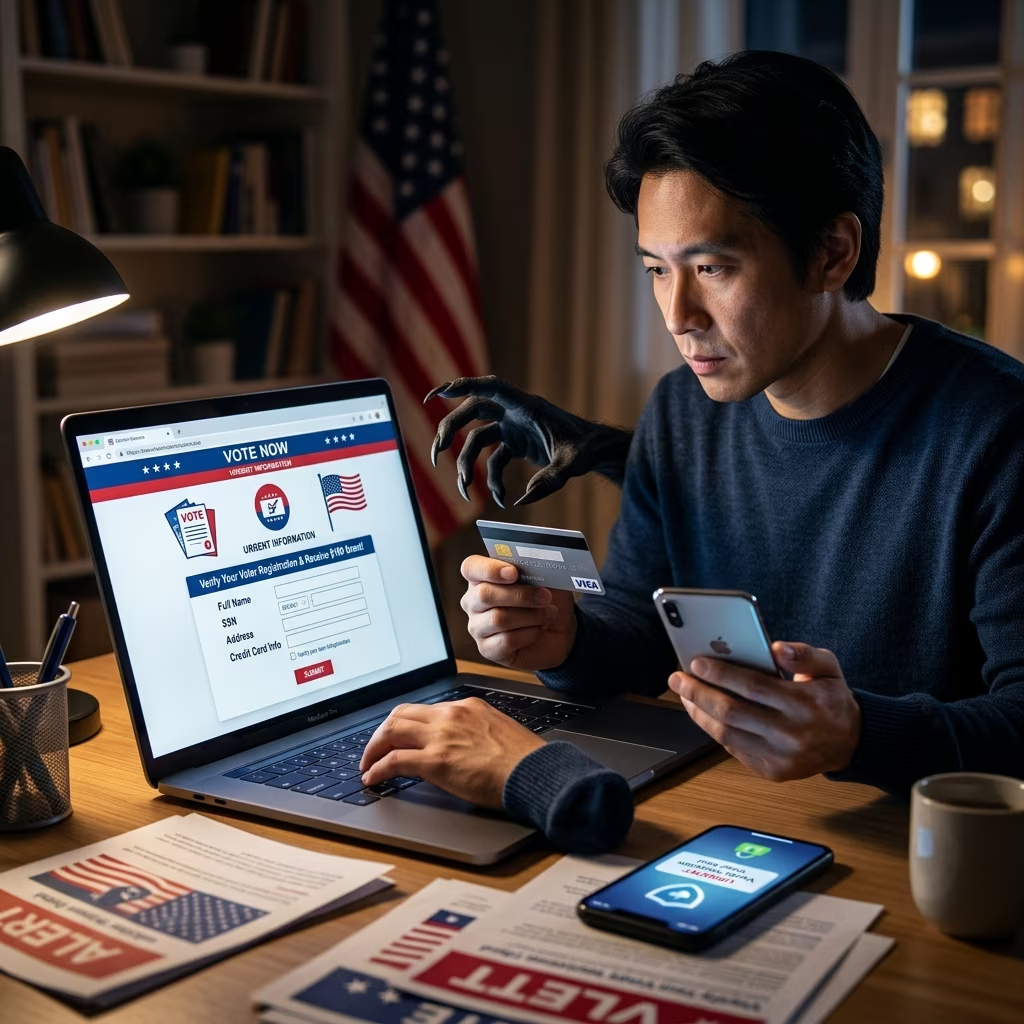
One common scam uses the appearance of a political poll to collect valuable data. A caller, text message, social post, or email may claim to be conducting a legitimate election survey. The questions may begin innocently, asking about political preferences, issues, or likely voting behavior. Then the request becomes more invasive, with prompts for a full name, home address, birth date, email account, or even a Social Security number.
Real polling organizations may ask about opinions, age ranges, or broad demographics, but they do not need sensitive identifiers to record a response. They also do not typically offer prizes, demand payment, or ask for financial account details. If the interaction shifts from opinion gathering to identity collection, that is a strong sign of fraud.
Scammers use these details to open fraudulent accounts, answer security questions, or build a fuller identity profile for later abuse. The danger is not limited to one election season; once stolen, personal information can be used repeatedly.
Warning signs of a fake poll
- The caller asks for your Social Security number, bank information, or driver’s license number.
- The message promises a reward, gift card, or prize for participation.
- The survey feels rushed or pushes you to “verify” identity details immediately.
- The contact information is unclear or does not match a known organization.
- The message arrives through an unexpected text, direct message, or suspicious email.
Donation scams disguised as campaign fundraising
Another major election-season fraud involves fake fundraising appeals. Criminals may pretend to represent a candidate, a party, a political committee, or a cause tied to the campaign. They may call, email, or post online with emotional appeals that ask for a small contribution right away. In some cases, the donor is persuaded that the money will go directly to a candidate or legitimate political effort when it will actually go to the scammer.
These schemes can be especially persuasive because political giving often happens quickly and in small amounts. A convincing message may use logos, real photos, or realistic language to make the request look authentic. Some fraudsters also exploit fear by claiming that a candidate is behind, that support is urgently needed, or that a donation must be made before a deadline ends.
Consumers should remember that legitimate campaigns provide a verifiable donation path. The safest approach is to donate only through the campaign’s official website or office, and to independently confirm the organization before entering payment information.
| Safer donation practice | Risky behavior to avoid |
|---|---|
| Type the official campaign address directly into your browser | Clicking unfamiliar donation links in email or text messages |
| Verify the organization before giving money | Sending payment during an unsolicited phone call |
| Use a payment method you can review later | Sharing card numbers or banking credentials with a stranger |
| Check for signs of a legitimate campaign site | Trusting a lookalike page because it uses campaign imagery |
Impersonation scams that misuse candidate voices and names
Some fraudsters go beyond generic fundraising and impersonate an actual candidate or campaign representative. They may spoof caller ID to make the call appear to come from a trusted source, or they may use recorded audio that sounds like a known political figure. The goal is often to convince the victim to donate money or to transfer the call to a fake “representative” who then captures payment details.
This type of impersonation can be particularly effective because people are more likely to trust familiar names during election season. If a message says it comes from a candidate you recognize, you may lower your guard and respond quickly. That is exactly what scammers want.
A good rule is simple: do not trust the name alone. Verify the source independently. If the request is real, it should be possible to confirm it through official campaign channels rather than through the contact information supplied in the suspicious message.
Petitions and voter outreach that collect too much information
Political petitions can be legitimate tools for civic engagement, but they can also be used to gather personal data. A petition organizer may ask for a name, address, email address, or phone number, which can be reasonable depending on the petition’s purpose. Trouble begins when the form requests information that is unnecessary for the petition itself.
Scammers may use petition forms to build mailing lists, harvest identity details, or pressure people into sharing more than they intended. Some people sign quickly because the issue sounds important, but a hurried signature can expose them to future spam, phishing attempts, or identity fraud.
Consumers should pause whenever a petition seems to require sensitive information that is not obviously connected to the request. If the form asks for data beyond what is needed for participation, it is safer to stop and decline.
Questions to ask before signing
- Why is this information being requested?
- Is the request more detailed than the petition appears to require?
- Can I verify the group organizing this petition?
- Would I be comfortable sharing this information if I did not know the organizer?
How to protect yourself during election season
Protecting yourself does not require advanced technical knowledge. It starts with a cautious approach to unsolicited contact. If a message is about voting, a candidate, a donation, or a poll, treat it like any other request for money or personal information: slow down, verify it, and avoid giving away data too quickly.
Several practical habits reduce risk. First, never provide a Social Security number, bank details, or login credentials in response to an unverified election-related message. Second, avoid clicking donation or survey links sent through texts or emails unless you have already confirmed the sender independently. Third, be wary of urgency, because “immediate action” is one of the most common tactics used in scams.
It also helps to understand what legitimate organizations will not ask for. Real political polling rarely offers prizes, and legitimate campaigns generally do not need your private financial information just to confirm your opinion or political preference. If a request crosses that line, assume it is unsafe.
What to do if you think you were targeted
If you suspect that you responded to a scam, act quickly. Change passwords for any accounts that may be affected, monitor your financial accounts for unauthorized activity, and review credit reports if sensitive identity information was shared. If you donated through a suspicious link, contact your bank or card issuer to ask whether a charge can be disputed.
You should also report the incident to the appropriate election officials if the scam involved voter information, fake campaign claims, or misleading election contact. In some cases, your state consumer protection office or attorney general may also be able to help. Keeping screenshots, call logs, and email records can make the report more useful.
If you shared highly sensitive data, consider placing a fraud alert or security freeze with credit bureaus. That step can make it harder for criminals to open accounts in your name.
Frequently asked questions
Are election scams the same as voter fraud?
No. Election scams usually target consumers with fake donations, fake surveys, or identity theft schemes, while voter fraud refers to attempts to manipulate voting itself. Research shows that actual voter fraud is rare, and many alleged cases turn out to be errors rather than crimes.
Can a political survey legally ask for my personal information?
Some surveys may ask limited demographic questions, but there is no good reason for a poll to demand highly sensitive information such as your Social Security number or banking details. Requests for that kind of data are a major warning sign.
How can I tell whether a campaign donation request is real?
The safest method is to visit the candidate’s or organization’s official website directly and donate there. Do not rely on links sent by email, text, or social media unless you have independently confirmed the source.
What should I do if I already clicked a suspicious link?
Do not enter more information. If you entered payment details, contact your financial institution. If you entered passwords, change them immediately. If you shared identity data, monitor accounts closely and consider credit protection steps.
Why do scammers use election themes at all?
Election-related messages feel timely and important, which makes them effective for persuasion. Scammers exploit the public’s attention to politics to make their requests seem credible and urgent.
References
- Debunking the Voter Fraud Myth — Brennan Center for Justice. 2024-01-01. https://www.brennancenter.org/our-work/research-reports/debunking-voter-fraud-myth
- Mail voting fraud: Data points to low risk and high benefits for voters — Brookings Institution. 2024-06-12. https://www.brookings.edu/articles/mail-voting-in-the-us-data-points-to-very-low-fraud-and-significant-benefits-to-voters/
- Beware of These 5 Voter- and Election-Related Scams — ID Watchdog. 2024-10-15. https://www.idwatchdog.com/education/-/article/voter-election-identity-scams
- Avoid Election Season Scams: Donations and cruises to avoid — We Live Security. 2012-10-12. https://www.welivesecurity.com/2012/10/12/avoid-election-season-scams/
- 3 Election-Related Scams to Watch Out For in 2012 — FindLaw. 2012-10-01. https://www.findlaw.com/legalblogs/consumer-protection/3-election-related-scams-to-watch-out-for-in-2012/