
Election Reforms and the Impact on Disabled Voters
Analyzing how recent election laws intersect with disability rights and voting.
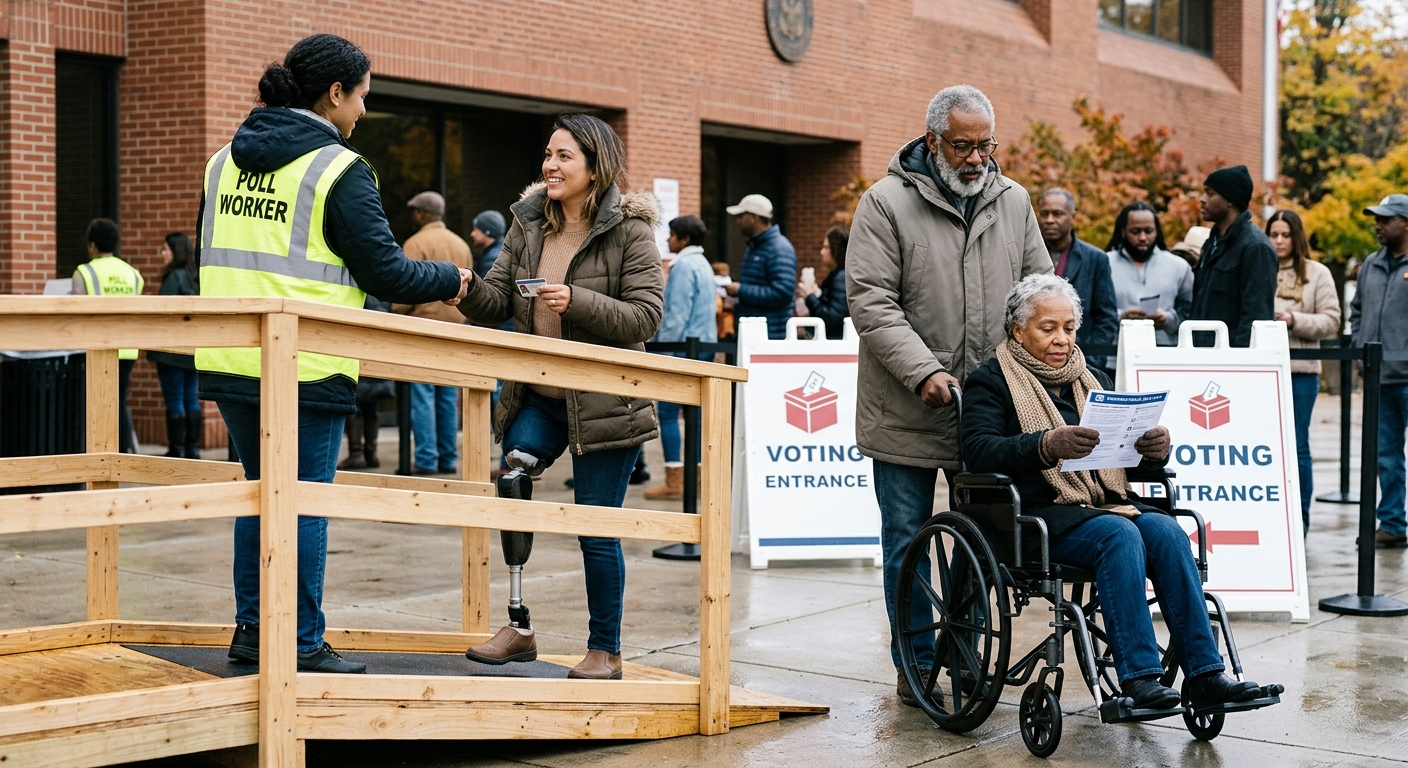
The Hidden Toll of Election Overhauls on Voters with Disabilities
Voting is fundamentally recognized as the cornerstone of democratic engagement. It is the primary mechanism through which citizens influence public policy, allocate resources, and hold elected officials accountable. However, the architecture of elections—specifically how ballots are requested, cast, and counted—dictates who can effectively participate in this civic ritual. Over recent years, sweeping changes to election laws across various states have fundamentally reshaped this architecture. While proponents argue that these overhauls are necessary to ensure election integrity and standardize procedures, disability rights advocates point to a troubling secondary effect: the disenfranchisement of voters with disabilities.
For individuals facing physical, cognitive, visual, or systemic mobility challenges, participating in an election involves navigating a complex web of logistical hurdles. When state legislatures introduce stringent identification requirements, limit the availability of drop boxes, or criminalize the provision of assistance in polling lines, they inadvertently—or perhaps negligently—compound these hurdles. Analyzing the intersection of these new legislative frameworks and disability rights reveals a systemic regression in voting accessibility, threatening to reverse decades of hard-fought civil rights advancements.
The Federal Framework Protecting Accessibility
To understand the gravity of recent state-level election overhauls, one must first recognize the federal baseline established to protect marginalized voters. The passage of the Americans with Disabilities Act (ADA) in 1990 established a critical civil rights foundation. Specifically, Title II of the ADA requires state and local governments to ensure that people with disabilities have a full and equal opportunity to participate in all public programs, which explicitly includes the voting process .
Furthermore, the Voting Rights Act of 1965 (VRA) and the Help America Vote Act of 2002 (HAVA) mandated that election infrastructure accommodate voters with disabilities, ranging from wheelchair-accessible polling locations to the provision of independent voting systems for individuals with visual impairments. Despite these robust federal mandates, data reveals that true equality remains elusive. According to post-election research conducted by the U.S. Election Assistance Commission (EAC) and Rutgers University, approximately 14% of voters with disabilities encountered some form of difficulty voting in the 2022 elections . While the turnout gap between voters with and without disabilities has narrowed over the last two decades, legislative pivots that restrict flexible voting methods threaten to widen this gap once again.
Understanding the Wave of Election Overhauls
The catalyst for many recent election law revisions was the unprecedented expansion of accessible voting methods during the 2020 global pandemic. To mitigate health risks, states temporarily implemented widespread mail-in voting, extended early voting periods, and deployed numerous secure ballot drop boxes. For the disability community, this temporary infrastructure was a revelation. It removed traditional barriers such as inaccessible public transit, physically exhausting polling lines, and incompatible voting machines.
However, the legislative response in the subsequent years saw states retreating from these accessible models. A prominent example is the comprehensive legislative package passed in Georgia, known as Senate Bill 202 (SB 202) . This extensive legislation fundamentally revised the state’s election code, targeting nearly every phase of the voting process from absentee ballot applications to the regulation of polling place environments. While framed as a standardization effort, the granular mechanics of such laws create distinct, disproportionate burdens for the millions of Americans navigating life with a disability.
Dissecting Administrative Barriers and Their Impact
To fully grasp how modern voting laws impact disabled populations, it is necessary to examine specific administrative changes and cross-reference them with the physical and logistical realities of living with a disability.
The Bureaucracy of Absentee Ballots
Absentee voting has long been a vital mechanism for individuals whose physical conditions, chronic illnesses, or mobility limitations make traveling to a traditional polling place hazardous or impossible. Recent legislative changes have imposed strict new identification requirements on the absentee voting process. Instead of relying on signature matching—a process that already poses challenges for individuals with motor conditions like Parkinson’s disease or multiple sclerosis—new laws often require voters to provide a driver’s license number, state ID number, or a photocopy of another acceptable form of identification.
For an individual without a driver’s license, obtaining a state-issued ID requires a trip to a government agency, presenting a monumental barrier for those lacking paratransit access. Furthermore, requiring a photocopy of an ID assumes that the voter has access to a printer or a copier in their home. For low-income voters with disabilities, this is a financial and logistical burden that effectively conditions their right to vote on their ability to navigate complex technology and afford peripheral computer hardware.
The Contraction of Drop Box Availability
For many individuals with disabilities, the logistics of returning a completed ballot are just as complex as casting one. Mail collection times can be unpredictable, and post offices are not always easily accessible. Ballot drop boxes emerged as a secure, predictable, and highly accessible alternative, often available 24/7 and positioned in drive-through formats.
Recent statutes have aggressively contracted the availability and placement of these resources. Under new frameworks, drop boxes are often capped at a low number per county, mandating that they be placed strictly indoors at election offices or early voting locations. Consequently, these boxes are only accessible during standard business hours. The U.S. Department of Justice has emphasized that drop boxes must meet specific accessibility standards under the ADA to ensure voters with disabilities can use them independently . By moving drop boxes indoors and restricting their hours, state laws inadvertently discriminate against disabled voters who rely on family members or caregivers—who may work standard business hours—to provide transportation to these centralized locations.
Criminalizing Sustenance and Polling Place Assistance
One of the most highly publicized and debated components of recent legislative overhauls is the strict prohibition on providing food or water to voters waiting in lines, a practice colloquially known as “line warming.” While lawmakers argue this prevents improper campaigning or electioneering near polling locations, the physiological impact on voters is profound.
Long lines at polling places are disproportionately common in densely populated, under-resourced precincts. For an able-bodied voter, standing in line for three hours is an inconvenience. For a voter with dysautonomia, chronic pain, a spinal cord injury, or severe fatigue, standing for hours without access to hydration or immediate physical relief can trigger a severe medical emergency. By criminalizing the distribution of water or folding chairs by non-partisan volunteers, the law effectively creates a hostile, medically dangerous environment that forces voters with chronic illnesses to abandon their place in line and forfeit their vote.
Restricting Caregiver and Community Assistance
Because navigating the voting process can require fine motor skills, visual acuity, or cognitive endurance, many voters with disabilities rely heavily on assistance from caregivers, neighbors, or community advocates. This assistance ranges from reading the text on a ballot to physically dropping the sealed envelope into a mailbox.
Recent laws have narrowed the legal definition of who is permitted to assist a voter with returning an absentee ballot, often limiting it strictly to immediate family members or legal guardians. This fails to reflect the reality of the disability community. Many individuals reside in assisted living facilities or rely on neighbors, in-home nurses, or community volunteers for daily survival. Criminalizing the act of a trusted non-family caregiver dropping off a ballot isolates disabled voters, severing their access to the ballot box under the guise of preventing ballot tampering.
The Compounding Effect of the Digital Divide
In tandem with physical barriers, legislative overhauls often introduce new technological hurdles. Stricter deadlines for requesting absentee ballots require voters to navigate state-run portals that are not consistently optimized for screen readers used by the blind or visually impaired. When election websites fail to adhere to Web Content Accessibility Guidelines (WCAG), a voter with a visual or cognitive impairment is locked out of the vital information needed to comply with new, shortened voting windows. As election administration becomes increasingly digitized, the failure to prioritize digital accessibility acts as a secondary layer of disenfranchisement.
Summary of Legislative Impacts
The intersection of strict election laws and disability rights reveals clear operational barriers. The table below outlines how seemingly neutral administrative shifts disproportionately impact voters with disabilities.
| Legislative Change | Impact on Voters with Disabilities |
|---|---|
| Strict ID Photocopy Requirements | Places a financial and physical burden on voters unable to access or operate printing technology. |
| Indoor Drop Box Relocation | Eliminates 24/7 drive-up access, creating transit dependencies during narrow business hours. |
| Line Warming Bans (No Food/Water) | Creates a physically dangerous environment for individuals with chronic illness, pain, or fatigue. |
| Narrowed Voter Assistance Rules | Disenfranchises individuals who lack family support and rely on neighbors or professional caregivers. |
Advocacy and the Legal Horizon
In response to these systemic challenges, disability rights advocates and civil rights organizations have increasingly turned to the federal judiciary. Lawsuits argue that when states implement rigid election rules without carving out broad, functional exceptions for individuals with disabilities, they are in direct violation of the ADA and the Voting Rights Act. The Department of Justice continues to issue guidance reminding state election officials that equal access is not an optional courtesy, but a binding federal mandate.
True election integrity means ensuring that every eligible citizen has a viable, unencumbered path to casting their ballot. As state legislatures continue to debate the mechanics of election administration, the voices of the disability community must be centralized in the drafting process. Until voting laws are designed with proactive accessibility rather than retroactive accommodation, the democratic process will remain fundamentally unequal.
Frequently Asked Questions (FAQs)
How does the Americans with Disabilities Act (ADA) protect voters?
Title II of the ADA requires that state and local governments ensure people with disabilities have a full and equal opportunity to participate in voting. This includes accessible polling places, accommodating voting machines, and accessible drop boxes. Failure to provide these accommodations can result in federal intervention.
Why are drop box restrictions particularly harmful to disabled voters?
Many disabled voters lack access to reliable transportation or paratransit services. Moving drop boxes indoors limits their availability to standard business hours. Outdoor, 24/7 drop boxes allow voters to return their ballots whenever they can secure a ride, and drive-up boxes remove the physical strain of exiting a vehicle.
What is the issue with requiring a photocopy of an ID for absentee voting?
Requiring a photocopy of a state ID to request or return an absentee ballot necessitates access to a printer or copier. For individuals with severe visual or motor impairments, operating this technology is difficult or impossible. Additionally, traveling to a store to make a copy creates the exact physical barrier that absentee voting is meant to solve.
References
- The Americans with Disabilities Act and Other Federal Laws Protecting the Rights of Voters with Disabilities — U.S. Department of Justice (ADA.gov). 2024-04-18. https://www.ada.gov/topics/voting/
- Disability and Voter Turnout in the 2022 Elections — U.S. Election Assistance Commission. 2023-07-27. https://www.eac.gov/research-and-data/disability-and-voter-turnout-2022-elections
- Ballot Drop Box Accessibility — U.S. Department of Justice (ADA.gov). 2022-12-20. https://www.ada.gov/resources/ballot-drop-box-accessibility/
- Senate Bill 202 (As Passed) — Georgia General Assembly. 2021. https://www.legis.ga.gov/legislation/59827
Similar Articles








Read full bio of medha deb


