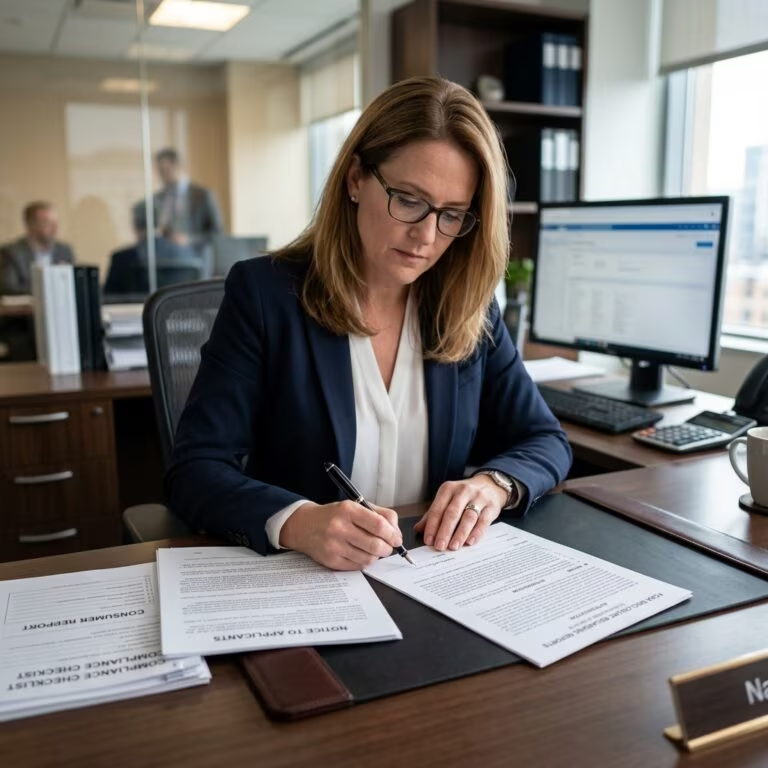
Strong agendas are the backbone of productive elder fraud prevention and response meetings. A clear plan for how time will be used helps busy professionals coordinate, collaborate, and commit to shared next steps to protect older adults from financial exploitation.
This guide offers detailed, adaptable ideas for building effective agendas for both in-person and virtual convenings focused on elder fraud prevention and response networks.
Why Structured Agendas Matter for Elder Protection Work
Elder fraud and financial exploitation are complex problems that often require collaboration among financial institutions, social services, law enforcement, legal aid, health providers, and community organizations. Without a focused agenda, meetings can drift, leaving critical issues unresolved and partners unsure of their roles.
- Clarifies purpose: A well-designed agenda ensures every participant understands why they are meeting and what outcomes are expected.
- Uses limited time wisely: Many network members juggle heavy caseloads; time-boxed items keep the meeting efficient.
- Promotes accountability: Documented agenda items and next steps make it easier to track commitments between convenings.
- Supports multidisciplinary collaboration: Structured discussion creates space for different disciplines to contribute and learn from one another.
Core Elements of an Elder Fraud Prevention Meeting Agenda
Most agendas for fraud prevention and response networks, whether for a one-time convening or recurring meeting, benefit from including several core elements.
| Agenda Element | Main Purpose | Typical Time Allocation |
|---|---|---|
| Welcome and logistics | Set tone, review objectives, cover housekeeping | 10–15 minutes |
| Participant introductions | Build relationships and understand roles | 15–30 minutes (shorter for recurring groups) |
| Background or context-setting | Share data, research, or legal updates | 20–30 minutes |
| Interactive exercises or case work | Apply knowledge, identify gaps, improve coordination | 45–90 minutes |
| Training or expert presentations | Deepen skills or knowledge on priority topics | 30–120 minutes (can be split into sessions) |
| Discussion, Q&A, and decisions | Clarify next steps, answer questions | 20–40 minutes |
| Wrap-up and next steps | Confirm responsibilities and timelines | 10–20 minutes |
Planning an In-Person Elder Protection Convening
In-person convenings are powerful opportunities to launch or revitalize an elder fraud prevention and response network. Research and federal guidance highlight that bringing multidisciplinary teams together in the same room improves information sharing, clarifies roles, and strengthens case coordination for vulnerable adults.
Before the Meeting: Preparation and Room Setup
A detailed internal agenda for organizers and facilitators should begin well before participants arrive.
- Arrive early to confirm room layout, audiovisual needs, and accessibility (e.g., microphones, captioning, large-print materials).
- Post clear directional signs from building entry points to the meeting room.
- Arrange seating to encourage engagement, such as a U-shape or small group clusters rather than rows.
- Set up a check-in area with name tags, sign-in sheet, and printed agendas.
- Designate roles in advance, such as facilitator, note taker, and timekeeper.
Suggested Flow for a One-Day In-Person Convening
The outline below illustrates how a full-day elder fraud prevention convening may be structured. Times can be shortened or extended depending on your network’s goals.
- Informal arrival period (30–45 minutes)
Light refreshments and informal conversation give people time to arrive, network, and settle in before formal proceedings begin. - Opening and welcome (10–15 minutes)
The convening host explains the purpose of the day, names the partner organizations involved, and reviews logistics such as restrooms, emergency exits, and expectations for participation. - Participant introductions (20–30 minutes)
Each attendee briefly states their name, organization, role, and connection to elder fraud issues. To save time in large groups, use table introductions or a short written bio sheet collected at registration. - Context and background (20–30 minutes)
A facilitator or guest speaker provides an overview of elder financial exploitation trends, recent research, and key laws or regulations. Federal and state data consistently show that older adults face significant risk from scams, abuse of powers of attorney, and other forms of financial exploitation. - Networking break (15–30 minutes)
Breaks give participants time to reflect on content, follow up with potential partners, and recharge before more intensive group work. - Interactive group work (60–90 minutes)
Small group exercises may focus on mapping current referral pathways, identifying barriers to case coordination, or walking through a hypothetical elder fraud case from first report to resolution. - Lunch and informal networking (30–60 minutes)
Whether participants bring their own lunch or it is provided, encourage cross-sector mingling rather than organizational clusters. - Training or expert sessions (60–120 minutes total)
Invite subject-matter experts—for example, a prosecutor, adult protective services representative, financial institution investigator, or legal aid attorney—to deliver focused presentations or skills-based sessions. - Full-group Q&A and discussion (20–30 minutes)
Reserve time for participants to ask clarifying questions and raise cross-cutting issues that emerged during the day. - Defining next steps (20–30 minutes)
End with a clear plan, including priority goals, potential working groups, and the schedule for future meetings.
Designing Agendas for Virtual or Hybrid Meetings
Virtual convenings can reach participants who cannot travel, including rural providers and busy professionals. However, they require extra attention to pacing and engagement. Best practices from virtual meeting research and adult education suggest using shorter sessions, varied activities, and built-in breaks.
Key Design Considerations for Online Sessions
- Shorter segments: Plan agenda items in 15–30 minute blocks to combat screen fatigue.
- Interactive tools: Use polls, chat prompts, and breakout rooms to keep participants involved.
- Accessible materials: Provide slides and handouts in advance, and consider captioning or sign language interpretation.
- Tech check: Build in time at the beginning for troubleshooting audio, video, and platform access.
Sample Structure for a Half-Day Virtual Meeting
The following flow can be adapted for a stand-alone virtual convening or a recurring online meeting of an established elder protection network.
- Tech and arrivals (10–15 minutes)
Participants join the platform, test microphones and cameras, and answer an icebreaker question in chat. - Welcome and objectives (10 minutes)
The facilitator reviews ground rules (muting when not speaking, using the raise-hand feature, etc.) and outlines the goals for the session. - Quick introductions (10–20 minutes)
Depending on group size, use verbal introductions, chat-based introductions, or a quick poll to capture participants’ roles and sectors. - Topic overview or mini-lecture (20–25 minutes)
A speaker provides a focused overview—for example, recent scams targeting older adults, new state reporting requirements, or lessons learned from a specific case type. - Breakout discussions (30–40 minutes)
Small groups discuss guided questions such as “What are your biggest obstacles in sharing information across agencies?” or “How do you currently respond when a financial institution flags suspicious activity on an older customer’s account?” - Report-back and synthesis (15–20 minutes)
Representatives from each breakout summarize key points, while the facilitator captures cross-cutting themes on a shared screen or collaborative document. - Action planning and wrap-up (15–20 minutes)
The group identifies 2–4 concrete actions to take before the next meeting, who is responsible, and by when.
Multi-Session Meeting Series for Ongoing Networks
Some elder fraud prevention and response networks benefit from spreading content across multiple sessions instead of a single long meeting. This approach supports deeper learning and allows participants to test new strategies between sessions.
Example Three-Session Series
- Session 1: Understanding the Problem and Mapping Resources
- Review data on elder financial exploitation locally or regionally.
- Map current partners and referral pathways for suspected abuse or fraud.
- Identify gaps and opportunities for collaboration.
- Session 2: Strengthening Coordination and Response
- Highlight model practices from multidisciplinary teams that address elder abuse and neglect.
- Work through two or three anonymized or hypothetical cases.
- Clarify protocols for sharing information while respecting privacy and legal requirements.
- Session 3: Implementation, Training, and Sustainability
- Identify shared training needs (e.g., recognizing financial grooming, documenting capacity concerns).
- Develop a basic workplan, including leadership roles, meeting frequency, and communication methods.
- Discuss funding or resource strategies to sustain the network over time.
Adapting Agenda Templates to Local Needs
No single agenda works for every community. Effective elder protection networks adapt templates to reflect local laws, organizational capacity, and cultural considerations.
Questions to Guide Customization
- What is the primary purpose of this meeting—relationship building, education, case coordination, or decision-making?
- Who needs to be in the room for that purpose to be achieved?
- How much time do participants realistically have, and what is the best format for them (in-person, virtual, hybrid)?
- Are there language access, disability access, or cultural considerations that should shape agenda design?
- What past meeting feedback can inform changes in timing, content, or facilitation?
Tips for Facilitators and Network Coordinators
Even the best-designed agenda can fall flat without effective facilitation. Consider the following strategies to keep elder fraud prevention meetings focused and inclusive.
- Share agendas in advance: Send the agenda, objectives, and any pre-reading at least several days before the meeting, allowing participants to prepare.
- Assign roles: In addition to a lead facilitator, identify co-facilitators, a note taker, and a timekeeper.
- Balance voices: Encourage quieter participants to contribute while gently limiting those who dominate discussion.
- Use plain language: Avoid jargon and explain specialized terms, especially when participants come from different professional backgrounds.
- Document decisions: Capture agreements, action items, and unresolved issues in writing and share them promptly after the meeting.
- Protect confidentiality: When discussing real cases, follow applicable laws and policies regarding protected information and consent.
Simple Agenda Outline Template (Editable)
The following generic outline can be copied and customized for any elder fraud prevention or response meeting.
- Meeting title: [Elder Fraud Prevention & Response Network Meeting]
- Date and time: [Insert]
- Location or platform: [Insert]
- Meeting objectives:
- [Objective 1]
- [Objective 2]
- [Objective 3]
- Agenda items:
- Welcome, overview, and logistics
- Introductions or roll call
- Updates or background presentation
- Discussion, case example, or group activity
- Training or expert segment (optional)
- Next steps, assignments, and meeting evaluation
Frequently Asked Questions (FAQs)
How long should an elder fraud prevention meeting last?
Length depends on your goals. A recurring coordination meeting may work well at 60–90 minutes, while a regional convening that includes training, case exercises, and planning often requires a half or full day. For virtual settings, shorter segments with more frequent breaks are usually more effective.
Who should be invited to an elder fraud prevention and response meeting?
Typical invitees include adult protective services, law enforcement, prosecutors, financial institutions, long-term care ombuds programs, aging services, legal aid, health and mental health providers, and community-based organizations that work with older adults. Your network may also include guardianship programs, victim advocates, and tribal or cultural community leaders where relevant.
How often should an elder protection network meet?
Frequency varies. Many multidisciplinary teams and networks meet monthly or quarterly, with occasional special convenings for training or strategic planning. Choose a schedule that is frequent enough to maintain momentum but realistic given participant workloads.
How detailed should the agenda be?
Agendas should be detailed enough to clarify timing, topics, and responsibilities but flexible enough to adjust if a high-priority issue emerges. For internal planning, you may keep a more detailed version that lists specific tasks and facilitators for each segment.
What is the difference between an internal agenda and an external agenda?
An internal agenda guides the planning team and typically includes behind-the-scenes tasks, roles, and timing (such as room setup or technology checks). An external agenda is shared with participants and focuses on the meeting’s schedule, topics, and objectives in a clear, concise format.
References
- Protecting older consumers 2023–2024: Insights from complaints and enforcement — Consumer Financial Protection Bureau. 2024-10-23. https://www.consumerfinance.gov/data-research/research-reports/protecting-older-consumers-2023-2024/
- Report and recommendations: Fighting elder financial exploitation through community networks — Consumer Financial Protection Bureau, Office for Older Americans. 2016-11-30. https://www.consumerfinance.gov/data-research/research-reports/fighting-elder-financial-exploitation-through-community-networks/
- National Elder Abuse Multidisciplinary Team Summit — U.S. Department of Justice, Elder Justice Initiative. 2016-10-06. https://www.justice.gov/archives/elderjustice/national-elder-abuse-multidisciplinary-team-summit
- Adult Protection Multidisciplinary Team Toolkit — UNC School of Government. 2021-06-01. https://protectadults.sog.unc.edu/mdt-toolkit/
- Building Strong Coalitions: Meeting Agenda Template — Prevention Network. 2020-09-01. https://www.preventionnetwork.org/resources/meeting-agenda-template/
- Tribal Elder Protection Team Toolkit — International Association for Indigenous Aging. 2020-01-01. https://iasquared.org/naeji/resource/tribal-elder-protection-team-toolkit/