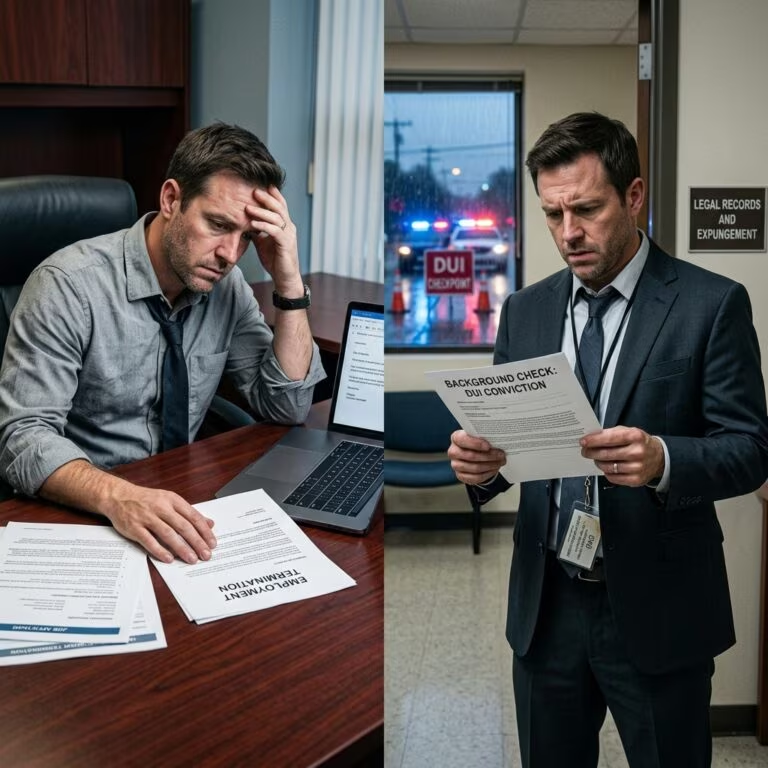
Facing a DUI charge requires immediate action and a deep understanding of legal vulnerabilities in the prosecution’s case. Skilled attorneys focus on dismantling evidence through targeted challenges, often leading to reduced penalties or full dismissals. This guide explores proven approaches to build a strong defense.
Understanding the Core of DUI Prosecutions
DUI cases hinge on two primary elements: operating a vehicle while impaired and proof of that impairment via tests or observations. Prosecutors must establish both beyond reasonable doubt. Defenses exploit weaknesses here, such as lack of probable cause or unreliable evidence collection.
Every case begins with police interaction. Officers must justify every step, from the stop to the arrest. Violations of constitutional rights, particularly the Fourth Amendment against unreasonable searches, form the bedrock of many successful defenses.
Scrutinizing the Initial Vehicle Stop
The foundation of most DUI defenses lies in examining the traffic stop’s legality. Law enforcement needs reasonable suspicion—specific, articulable facts indicating a violation—to pull you over. A hunch or minor issue without evidence won’t suffice.
- Weaving or Speeding Claims: Officers often cite erratic driving, but without dashcam or bodycam footage confirming it, these claims weaken. Courts demand concrete proof.
- Equipment Violations: A broken taillight or expired tag must be observed directly; assumptions invalidate the stop.
- Pretextual Stops: If the real motive was suspicion of intoxication without visible signs, evidence from the stop gets suppressed.
Reviewing video evidence is crucial. Inconsistent officer accounts or absence of footage can lead to dismissal. For instance, if the stop occurred in a high-DUI area without observed infractions, it’s challengeable.
Evaluating Field Sobriety Tests
Standardized Field Sobriety Tests (SFSTs)—Horizontal Gaze Nystagmus, Walk-and-Turn, One-Leg Stand—are designed to detect impairment. However, they’re subjective and prone to errors, especially for non-impaired individuals.
| Test Type | Common Flaws | Defense Angle |
|---|---|---|
| Horizontal Gaze Nystagmus | Requires precise eye tracking; medical conditions mimic signs | Expert testimony on natural nystagmus |
| Walk-and-Turn | Uneven surfaces, poor instructions, age factors | Video review showing compliance issues |
| One-Leg Stand | Balance affected by weight, shoes, nerves | Alternative explanations like fatigue |
Non-standardized tests like alphabet recitation or finger-to-nose are even less reliable and often inadmissible. Challenging administration—poor lighting, medical issues like inner ear problems, or officer bias—undermines credibility.
Challenging Chemical Testing Reliability
Blood Alcohol Concentration (BAC) tests via breath, blood, or urine provide the prosecution’s strongest evidence. Yet, these methods have inherent flaws exploitable in defense.
Breathalyzer Defenses
Breath tests assume a 2100:1 air-to-blood alcohol partition ratio, inaccurate for many. Factors like acid reflux, keto diets, or recent mouth alcohol (from burping) skew results. Devices require regular calibration; lapsed maintenance invalidates readings.
- Radio frequency interference from nearby electronics.
- Inadequate observation period before testing.
- Chain of custody breaks for mouthpieces.
Blood Test Challenges
Blood draws demand sterile conditions and proper preservation. Fermentation in samples can falsely elevate levels over time. Prescription meds or medical conditions (e.g., diabetes) interfere with results. Experts can testify on lab errors or improper anticoagulant use.
Rising BAC Argument
If tested soon after drinking, BAC might still rise post-driving, meaning you weren’t over the limit while operating the vehicle. Retrograde extrapolation by toxicologists supports this.
Police Procedure and Rights Violations
Post-stop, officers must follow protocols. Failure to read Miranda rights before custodial interrogation can suppress statements. Implied consent laws vary by state, but refusals trigger penalties—yet voluntary tests can be challenged if coerced.
Arrest requires probable cause beyond SFSTs. Inconsistent reports or biased testimony crumble under cross-examination. Dashcam discrepancies often reveal exaggerated impairment claims.
Leveraging Medical and Personal Factors
Impairment-like symptoms arise from legitimate causes:
- Health Conditions: Vertigo, neurological disorders, or low blood sugar mimic intoxication.
- Medications: Legal prescriptions causing drowsiness; labels warn against driving.
- Fatigue or Stress: Nervousness during stops affects performance.
Expert witnesses, like toxicologists or physicians, provide testimony refuting impairment links.
Strategic Alternatives to Trial
Not all cases go to trial. Experienced attorneys negotiate:
- Plea Bargains: Reducing DUI to reckless driving or wet reckless.
- Diversion Programs: First-time offenders complete classes, avoiding conviction.
- Motions to Suppress: Pre-trial hearings exclude tainted evidence.
Tailoring to case specifics—prior record, BAC level—maximizes outcomes.
The Role of Skilled Legal Counsel
Hiring a DUI specialist early is pivotal. They dissect reports, secure footage, and deploy experts. Local knowledge aids in navigating court nuances and judge tendencies. Self-representation risks overlooking defenses, leading to harsher penalties.
Frequently Asked Questions
What if I refused a breath test?
Refusal leads to license suspension but preserves test challenges. It doesn’t admit guilt and strengthens procedural defenses.
Can medical marijuana affect my case?
Yes, zero-tolerance laws in some states complicate defenses, but improper testing or medical authorization can counter.
How long do I have to fight a DUI?
Deadlines vary; act fast to request hearings and avoid automatic suspensions.
Is dashcam footage always available?
Not always, but attorneys subpoena it. Absence benefits the defense.
What penalties if I lose?
Fines, jail, license loss, ignition interlocks—multiplied for repeats.
Building Your Defense Plan
Compile all evidence: videos, witness statements, medical records. Consult an attorney for a customized strategy. Many charges falter under scrutiny, turning arrests into victories.
References
- DWI Defense Strategies | DUI Defence Lawyer Tips — Novo Legal Group. 2023. https://www.novo-legal.com/en/criminal-defense/dui/defense-strategies
- What is the Best Defense Strategy for DUI Charges in Ohio? — Defense Ohio. 2023. https://www.defenseohio.com/what-is-the-best-defense-strategy-for-dui-charges-in-ohio/
- Top 5 Legal Strategies for Fighting DUI Charges Successfully — Patton and Pittman. 2025-07-01. https://www.pattonandpittman.com/blog/2025/july/top-5-legal-strategies-for-fighting-dui-charges-/
- DWI Defense Strategies for Winning Your Case — Combs Waterkotte. 2023-11-30. https://www.combswaterkotte.com/2023/11/30/dwi-defense-strategies-for-winning-your-case/
- OVI and DUI Defense Strategies: Protect Your Future — Botnick Law Firm. 2023. https://www.botnicklawfirm.com/ovi-and-dui-defense-strategies-protect-your-future/
- DUI Defenses: How to Fight a Drunk Driving Charge — Nolo. 2023. https://www.nolo.com/legal-encyclopedia/dui-dwi-defenses-32254.html
- Defense Strategies to Know in a DUI Case — ALU.edu. 2023. https://alu.edu/alublog/defense-strategies-to-know-in-dui-case/