
The Fight for Educational Equity and Free Speech in Schools
How communities are defending students' right to learn and speak freely.
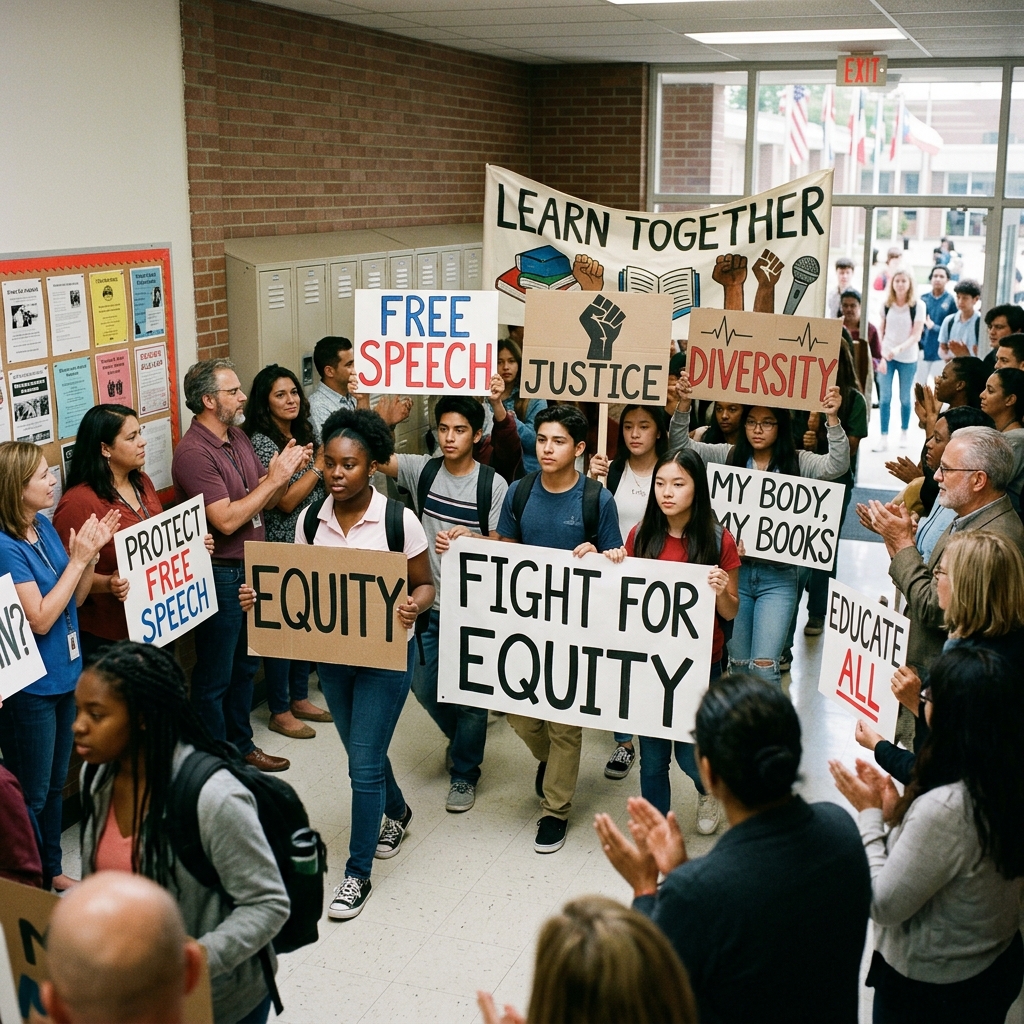
Education is widely regarded as the great equalizer, a foundational pillar of democracy designed to equip the next generation with the knowledge, critical thinking skills, and empathy necessary to navigate a complex world. In recent years, however, the American classroom has been transformed into a fraught ideological battleground. At the center of this storm are profound debates over educational equity, free expression, and the constitutional rights of students and educators. Rather than serving as safe havens for intellectual curiosity, many schools have become the focal point of coordinated political campaigns aiming to restrict what can be taught, read, and discussed.
Advocates across the nation are tirelessly fighting to secure true educational equity, recognizing that a student’s right to receive an inclusive, comprehensive education is inextricably linked to their ability to participate fully in a democratic society. This ongoing struggle extends far beyond the basic allocation of financial resources; it is fundamentally about whose histories are taught, whose voices are amplified, and whether the public education system will fulfill its promise to serve all students equally, regardless of their race, gender identity, or socioeconomic background. Championing this cause requires a multi-faceted approach, combining legal challenges, grassroots organizing, and policy advocacy to push back against a rising tide of censorship.
The Intersection of Education and Constitutional Rights
The legal and philosophical framework governing student rights in public schools is deeply anchored in the United States Constitution, particularly the First and Fourteenth Amendments. For decades, courts have navigated the delicate balance between a school district’s administrative authority to manage educational environments and the fundamental rights of students to express themselves and access information. The bedrock legal precedent for these issues remains the landmark 1969 Supreme Court decision in Tinker v. Des Moines Independent Community School District, which famously declared that students do not “shed their constitutional rights to freedom of speech or expression at the schoolhouse gate” .
Despite this clear legal precedent, contemporary political movements are increasingly testing the limits of these constitutional protections. “Divisive concepts” bills and other legislative efforts have sought to ban discussions of systemic racism, sexism, and gender identity in the classroom. Civil rights advocates argue that these restrictions constitute blatant viewpoint discrimination, an unconstitutional practice where the government suppresses speech simply because it disagrees with the underlying ideology. When state legislatures dictate that certain historical facts or social issues cannot be discussed, they infringe upon the First Amendment rights of educators to teach and the corollary rights of students to receive information.
Furthermore, the Fourteenth Amendment’s Equal Protection Clause is frequently invoked in the battle for educational equity. When educational policies disproportionately harm specific groups of students—such as trans youth targeted by restrictive bathroom and sports bills, or Black students whose history is erased from the curriculum—advocates argue that the state is failing in its duty to provide equal protection under the law. Protecting these rights in the classroom is essential to preventing the marginalization of vulnerable youth.
The Chilling Effect of Classroom Censorship and Book Bans
The normalization of book banning represents one of the most pressing and visible threats to educational equity today. Across the country, organized factions are utilizing school board meetings and state legislation to systematically remove literature from school libraries and curriculum reading lists. According to comprehensive data from PEN America, the 2023-2024 school year witnessed over 10,000 instances of book bans in public schools, a staggering escalation that essentially doubled the censorship figures from the previous academic year . This unprecedented wave of censorship creates a profound chilling effect, discouraging educators from teaching diverse materials out of fear of professional retaliation.
Book bans do not merely remove physical texts from shelves; they send a powerful psychological message to students about whose stories are considered valid and acceptable by society. When literature exploring complex social issues, historical injustices, or diverse identities is branded as inappropriate or obscene, it inherently stigmatizes the communities reflected in those pages. Furthermore, PEN America notes that there has been a significant rise in the banning of nonfiction books, erasing authentic histories and reflecting an embrace of anti-intellectualism that severely hampers students’ ability to understand the world around them.
The fight against these bans is not simply about protecting the rights of authors; it is a battle for the intellectual freedom of the next generation. By restricting access to a broad spectrum of ideas, censors undermine the primary function of education: teaching students how to think critically, analyze differing perspectives, and engage in informed civic discourse.
Defending Marginalized Voices: The Impact on LGBTQ+ and Students of Color
When examining the specifics of classroom censorship, a glaring and disturbing pattern emerges: the materials most frequently targeted for removal are those that center on the lived experiences of LGBTQ+ individuals and people of color. Research conducted by PEN America underscores this reality, revealing that roughly 36% of banned books in recent periods featured characters or real people of color, while nearly 30% included LGBTQ+ characters or themes . This targeted erasure is occurring precisely as the population of American students becomes more diverse, exacerbating the disconnect between the student body and the curriculum.
For LGBTQ+ youth, the stakes of this representation are a matter of life and death. The removal of affirming literature and the implementation of policies that forcibly out students or prohibit the use of their chosen pronouns create a hostile educational environment. Data from The Trevor Project reveals that LGBTQ+ youth who attend schools with affirming policies and inclusive curricula have significantly lower odds of attempting suicide compared to their peers in non-affirming, unsupportive environments . When a school district bans a book featuring a transgender protagonist or prohibits a teacher from displaying a Pride flag, it actively harms the mental health and well-being of its queer students.
Similarly, efforts to restrict the teaching of American history—particularly the legacy of slavery, the civil rights movement, and systemic racism—disproportionately affect students of color. These curriculum restrictions not only invalidate the lived realities of marginalized communities but also prevent all students from developing a comprehensive, truthful understanding of their nation’s past. True educational equity demands that the curriculum reflects the diversity of the human experience, providing “mirrors” for marginalized students to see themselves and “windows” for others to build empathy.
The Role of Educators in Fostering Inclusive Environments
Educators serve as the frontline defenders of educational equity, yet they often find themselves caught in the crossfire of political disputes. Teachers and librarians are trained professionals who carefully curate materials to challenge students and broaden their worldviews. When legislative mandates force them to strip their classrooms of inclusive literature or abandon culturally responsive teaching methods, it undermines their professional autonomy and pedagogical expertise.
Furthermore, the threat of legal repercussions or job termination for discussing so-called “divisive concepts” creates an atmosphere of anxiety that detracts from effective teaching. Many educators report feeling forced to self-censor, avoiding important historical discussions—such as the legacy of the civil rights movement or the realities of structural inequality—to avoid drawing the ire of vocal community factions. To achieve true educational equity, school districts must actively support their teaching staff, providing them with the legal backing and professional development necessary to navigate these challenges. By trusting educators to foster open, respectful dialogue, schools can maintain their status as vibrant hubs of intellectual exploration rather than sterile environments stripped of diverse thought.
Grassroots Movements and Legal Advocacy: Fighting Back
In response to the escalating attacks on public education, a robust and dynamic counter-movement has emerged, spearheaded by parents, students, educators, and civil liberties organizations. This coalition is employing a wide array of strategies to defend educational equity, from grassroots organizing at the local school board level to filing high-profile federal lawsuits. Organizations like the American Civil Liberties Union (ACLU) and the Lawyers’ Committee for Civil Rights Under Law have consistently taken legal action against state governments attempting to enforce unconstitutional censorship laws .
Legal advocacy often focuses on securing preliminary injunctions to halt the enforcement of “divisive concepts” bills and book bans while litigation proceeds. These legal battles are crucial, as they establish vital precedents that protect academic freedom and First Amendment rights. However, litigation is only one piece of the puzzle. At the grassroots level, students are increasingly utilizing their own voices to protest restrictive policies. From organizing walkouts in response to anti-LGBTQ+ legislation to forming banned book clubs, young people are fiercely defending their right to an equitable education. Advocacy organizations play a supportive role in these efforts by providing students with resources, legal guidance, and platforms to amplify their activism.
Civil rights groups have also initiated public awareness campaigns aimed at educating voters about the impact of school board elections. Because many curriculum and library policies are decided at the local level, turning out informed voters for local elections has become a critical strategy in the fight against educational censorship. By building broad coalitions that include parents, civil rights advocates, and the students themselves, this grassroots resistance is working to ensure that the educational system remains transparent, inclusive, and protective of First Amendment rights.
Defining and Achieving True Educational Equity
While combating censorship is a crucial defensive strategy, the ultimate goal of these advocacy efforts is to establish proactive, comprehensive educational equity. The concept of educational equity extends far beyond the traditional metric of equal funding; it encompasses the systemic dismantling of structural barriers that prevent marginalized students from thriving. According to research compiled by the U.S. Department of Education, true educational equity requires the implementation of culturally responsive schooling, robust social-emotional support frameworks, and policies that guarantee both physical and emotional safety for every student .
Achieving this vision necessitates a paradigm shift in how communities approach public schooling. Districts must commit to recruiting and retaining diverse educators, investing in comprehensive professional development that addresses implicit bias, and actively engaging with marginalized communities in the decision-making process. Furthermore, equity requires the equitable distribution of resources—ensuring that schools serving predominantly low-income families have access to advanced placement courses, modern technology, and adequate mental health professionals. Ultimately, fighting for educational equity is about building a system that actively empowers every student to reach their full potential, free from discrimination and censorship.
Frequently Asked Questions (FAQs)
- What constitutes a book ban in a public school?
A book ban occurs when access to a previously available book is removed or restricted within a school environment (such as a library or classroom) following challenges from parents, community members, or political figures. This restricts students’ ability to independently choose and read the material. - Do students have First Amendment rights in the classroom?
Yes. The Supreme Court has affirmed that students maintain their First Amendment rights to free speech and expression within public schools, provided that their actions do not cause a substantial and material disruption to the educational process. - What are “divisive concepts” bills?
“Divisive concepts” bills are legislative proposals or enacted laws that seek to restrict how topics related to race, gender, and systemic inequality can be taught in public schools and universities. Critics and civil rights organizations argue they illegally suppress free speech, erase the history of marginalized groups, and constitute unconstitutional viewpoint discrimination. - How does educational equity differ from educational equality?
Educational equality means providing every student with the exact same resources, regardless of their starting point. Educational equity, however, involves distributing resources based on the specific, individualized needs of students to ensure they all have equal opportunities to succeed, often requiring more support for historically marginalized groups. - Why is LGBTQ+ representation in school curricula important?
Inclusive representation is vital for the mental health and academic success of LGBTQ+ youth. Studies have shown that when marginalized students see their identities positively reflected in their coursework, it fosters a sense of belonging, reduces bullying, and significantly lowers the risk of depression and suicidal ideation.
References
- Book Bans — PEN America. 2024. https://pen.org/issue/book-bans/
- Book Bans in Schools Sweep Across Reading Levels, Genres and Topics — PEN America. 2025-02-27. https://pen.org/press-release/book-bans-in-schools-sweep-across-reading-levels-genres-and-topics-while-censorship-erases-stories-about-people-of-color-and-lgbtq-topics-most-often/
- Protective Factors for LGBTQ+ Students in Middle & High School — The Trevor Project. 2023-08-24. https://www.thetrevorproject.org/research-briefs/protective-factors-for-lgbtq-students-in-middle-high-school/
- What the First Amendment Really Protects — American Civil Liberties Union (ACLU). 2025-10-30. https://www.aclu.org/news/free-speech/what-the-first-amendment-really-protects
- Educational Equity: What Does It Mean? How Do We Know When We Reach It? — Center for Public Education / ERIC (U.S. Department of Education). 2016-01-01. https://eric.ed.gov/?id=ED608822
Similar Articles








Read full bio of medha deb


