New York treats alcohol-related driving offenses with more precision than many people expect. The legal system does not use one single label for every impaired-driving case. Instead, it distinguishes between offenses based on how impaired the driver was, what substance was involved, and how much evidence exists to prove that impairment. That distinction matters because the difference between a DWAI and a DWI can change the penalties, the criminal exposure, and the long-term impact on a person’s record.
For drivers, the practical issue is simple: a charge that sounds similar on paper may carry very different consequences in court. Understanding the line between these offenses helps explain why one case may be treated as a traffic infraction while another becomes a misdemeanor with harsher penalties.
What New York means by DWAI and DWI
DWAI stands for Driving While Ability Impaired, while DWI stands for Driving While Intoxicated. In New York, DWAI generally describes a lower level of impairment than DWI.
A DWAI alcohol case usually involves a driver whose ability to operate a vehicle is impaired to some extent by alcohol, even if the driver is below the standard DWI threshold. By contrast, a DWI charge requires a stronger showing of impairment or a blood alcohol content at or above the legal limit.
In everyday terms, DWAI is the lesser alcohol-related offense, while DWI is the more serious one.
The core legal difference: how much impairment must be proven
The main legal divide between the two charges is the level of impairment prosecutors must establish. For a DWI, the state must show substantial impairment, meaning the alcohol affected the driver’s ability to operate safely in a meaningful way.
For a DWAI, prosecutors need only show that alcohol impaired the driver’s ability to operate the vehicle to any extent. That lower threshold makes DWAI easier to charge in borderline cases where a driver appears affected, but not severely intoxicated.
New York’s DMV describes DWAI/alcohol as involving more than 0.05 BAC but less than 0.07 BAC, or other evidence of impairment. The DWI threshold is generally 0.08 BAC or higher.
How blood alcohol content fits into the analysis
Blood alcohol content, or BAC, is often the most familiar part of these cases, but it is not the entire story. A BAC reading can support the charge, yet officers and prosecutors may also rely on driving behavior, field sobriety observations, and other evidence.
In New York, a BAC between 0.05 and 0.07 is commonly associated with DWAI/alcohol. At 0.08 or above, the case may support a DWI charge. A driver can also face charges based on other proof of impairment even if a chemical test is unavailable or below those levels.
This means the legal inquiry is not just about the number on a breath test. It also includes whether the driver’s physical or mental abilities were affected in a way that made safe driving more difficult.
Offense categories in New York
New York’s impaired-driving laws cover more than one kind of conduct. Alcohol is only one part of the picture, and the state also recognizes drug-related and combined impairment offenses.
- DWAI/alcohol: impairment by alcohol at a lower threshold than DWI.
- DWI: driving while intoxicated by alcohol, generally tied to a BAC of 0.08 or more or strong evidence of substantial impairment.
- DWAI/drug: impairment caused by drugs.
- Aggravated DWI: a more serious charge involving a very high BAC.
Because these categories are separate, the label attached to the case affects not only the immediate penalties but also how the offense is counted later if there is a repeat charge.
Why the distinction matters in real life
The difference between DWAI and DWI is not just technical. It affects whether a person faces a traffic infraction or a criminal misdemeanor, how long a license is suspended or revoked, and whether the case can create a permanent criminal record.
A first DWAI/alcohol offense is treated more lightly than a first DWI offense. A first DWI can carry jail exposure, a criminal conviction, and a mandatory license revocation period. The consequences often extend beyond the courtroom because employers, insurers, and licensing agencies may also consider the charge.
Penalties for a first DWAI in New York
According to the New York DMV, a first DWAI/alcohol offense is punishable by a mandatory fine of $300 to $500, up to 15 days in jail, and a 90-day license suspension. Other summaries of New York law also note that a driver may face a driver responsibility assessment and, in some cases, additional administrative consequences.
Compared with a DWI, those penalties are narrower and generally less disruptive. Still, a DWAI is not harmless. Even as a lower-level offense, it can affect a person’s driving privileges and create a record that may matter later.
Penalties for a first DWI in New York
A first DWI is much more serious. The DMV lists a mandatory fine of $500 to $1,000, a maximum jail term of one year, and a license revocation of at least six months. Other reporting on New York law also identifies the possibility of an ignition interlock requirement and a driver responsibility assessment.
That difference in penalty structure reflects the higher level of impairment associated with a DWI charge. New York treats intoxication at that level as a serious public safety concern, which is why the offense is prosecuted as a misdemeanor rather than a noncriminal violation.
Side-by-side comparison
| Issue | DWAI/Alcohol | DWI |
|---|---|---|
| Typical BAC range | More than 0.05 but less than 0.07 | 0.08 or higher |
| Level of impairment | Impairment to any extent | Substantial impairment |
| First-offense classification | Traffic infraction | Misdemeanor |
| Typical fine | $300 to $500 | $500 to $1,000 |
| Possible jail time | Up to 15 days | Up to 1 year |
| License action | 90-day suspension | At least 6-month revocation |
This comparison captures the practical difference most drivers want to know: a DWAI may be the lesser offense, but both charges can still disrupt daily life and future driving privileges.
Common evidence used in these cases
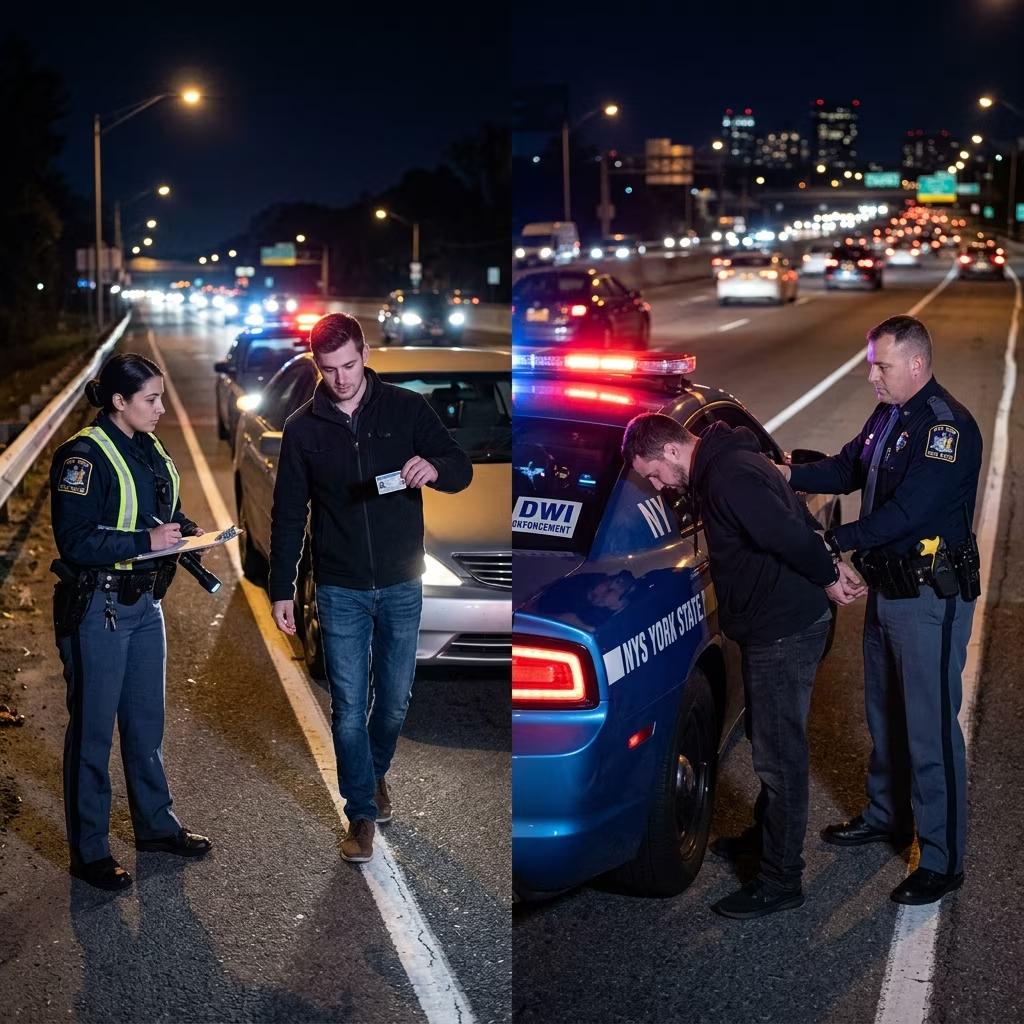
Police and prosecutors typically rely on several kinds of evidence to support either charge. That may include a breath or chemical test, an officer’s observations, poor driving patterns, field sobriety performance, and statements made by the driver.
- Observed weaving, speeding, or other unsafe driving behavior
- Odor of alcohol or signs of physical impairment
- Performance on standardized field sobriety tests
- Breath, blood, or other chemical test results
- Statements or admissions made during the stop
Because a DWAI can be based on impairment to any extent, smaller signs of alcohol use may still be enough for prosecutors to proceed.
What repeat offenses can change
Repeat alcohol-related driving offenses are treated more harshly than first offenses. New York’s DMV explains that multiple alcohol- or drug-related violations within ten years can lead to stronger license consequences, including longer revocations and, in some situations, permanent revocation.
That escalation is important because a case that begins as a first offense may have consequences later if the person is charged again. Prior violations can also affect plea bargaining and sentencing exposure.
Possible defense issues in DWAI and DWI cases
Defense strategies depend on the facts, but several issues commonly arise in New York impaired-driving cases. The prosecution must still prove the elements of the offense, and weaknesses in the evidence can matter.
- Was the stop lawful?
- Were the field sobriety tests administered correctly?
- Was the BAC result reliable?
- Did the officer have enough evidence to identify impairment?
- Could another explanation account for the driver’s behavior?
These questions matter because the distinction between “some impairment” and “substantial impairment” is often litigated through the evidence. A defense may focus on whether the facts actually support the stronger DWI charge or only a lesser offense.
FAQs
Is DWAI the same as DWI in New York?
No. DWAI is generally the lesser offense. It involves impairment to some extent, while DWI requires substantial impairment or a BAC at or above the legal limit.
Can someone get a DWAI with a BAC below 0.08?
Yes. New York’s DMV describes DWAI/alcohol as involving more than 0.05 BAC but less than 0.07 BAC, or other evidence of impairment.
Is a first DWAI a criminal offense?
Typically, a first DWAI/alcohol is a traffic infraction rather than a misdemeanor. A first DWI, by contrast, is generally a criminal misdemeanor.
Do both charges affect a driver’s license?
Yes. Both can lead to suspension or revocation, but DWI usually carries a harsher and longer license penalty.
Can drugs lead to DWAI charges too?
Yes. New York recognizes drug-related and combined impairment offenses in addition to alcohol-based charges.
References
- DWI vs. DWAI in New York: Understanding the Difference — Greenspans Law. 2025. https://www.greenspans-law.com/dwi-vs-dwai-in-new-york-understanding-the-difference/
- DUI vs. DWI vs. DWAI: What’s the Difference? — Sobol Law. 2025. https://sobolaw.com/car-accident/dui-dwi-dwai-in-new-york-whats-the-difference/
- What Is a DWAI in New York? — Bassett Law. 2026. https://jbassettlaw.com/what-is-a-dwai/
- Penalties for Alcohol or Drug-Related Violations — New York State Department of Motor Vehicles. 2026. https://dmv.ny.gov/points-and-penalties/penalties-for-alcohol-or-drug-related-violations
- New York DWI Laws — NCDD. 2025. https://www.ncdd.com/new-york-dwi-laws
- What is the difference between a DUI and DWI in New York? — Brill Legal Group. 2025. https://www.brill-legal.com/our-services/criminal-defense/criminal-defense-faq/what-is-the-difference-between-a-dui-and-dwi-in-new-york/