
DUIs on the Water: When Boating Becomes a Crime
Understand how boating under the influence laws work, including when small motors, paddles, and even water skis can still lead to criminal charges.
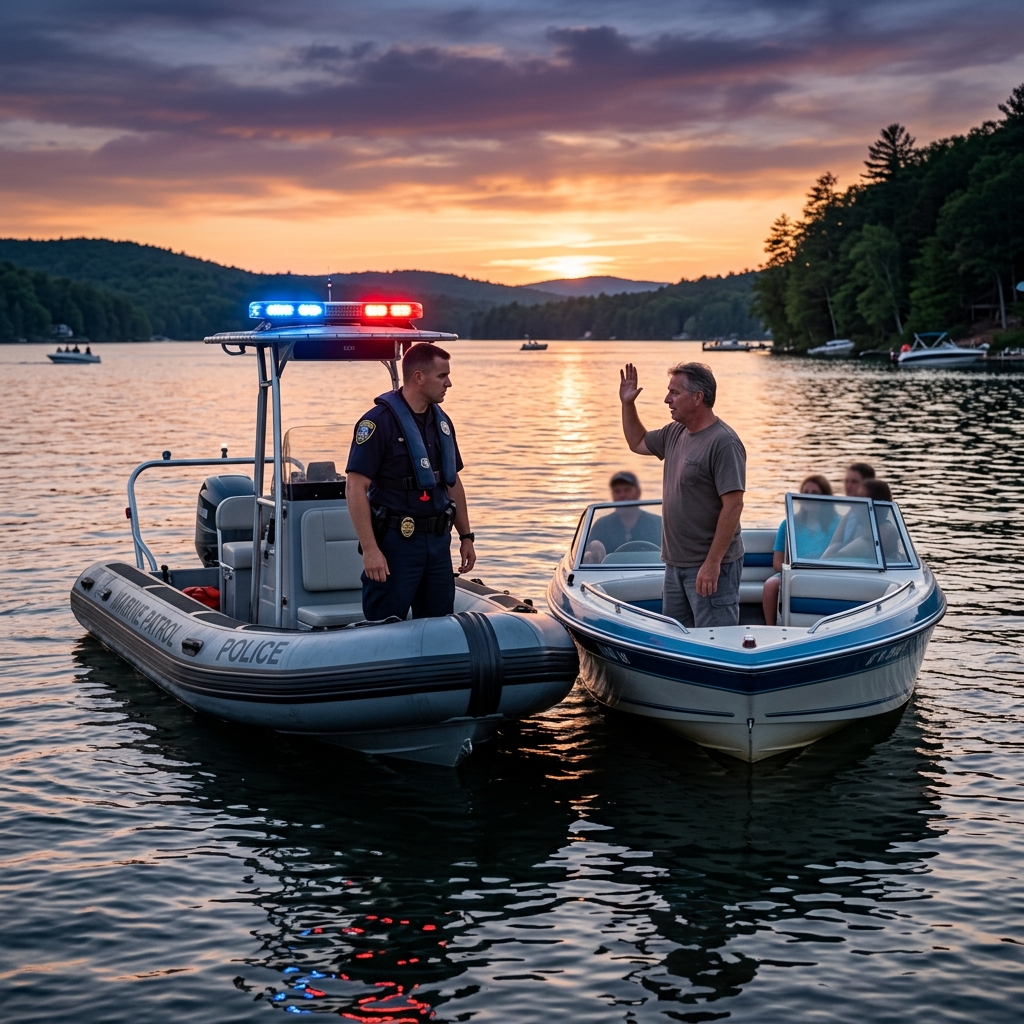
Many boaters assume that drunk driving laws only apply to cars, or that having a small trolling motor or battery-powered engine offers some kind of legal shield. In reality, boating under the influence (often called BUI or BWI) is a criminal offense in every U.S. state, and it can apply to surprisingly small and simple watercraft.
This guide explains how BUI laws work, why motor size does not usually matter, how blood alcohol concentration (BAC) rules apply on the water, and what safe options you have if you want to enjoy both boating and alcohol.
Boating Under the Influence: Core Legal Concepts
Although terminology varies by state, the underlying idea is the same: operating a vessel while impaired by alcohol or drugs can lead to arrest and prosecution.
- Common names: Boating Under the Influence (BUI), Boating While Intoxicated (BWI), Boating While Impaired (BWI/BUI).
- Scope: Applies to the operation of a boat or other watercraft on public waters, not just to driving on roads.
- Legal basis: Each state has its own statute specifically targeting boating and other water activity under the influence.
Unlike road-focused DUI statutes that refer to “vehicles” on highways, BUI laws are tailored to the realities of rivers, lakes, coastal waters, and reservoirs.
Does Motor Size Matter? Small Engines and Trolling Motors
A widespread myth is that only large or gas-powered engines trigger BUI rules, or that battery-powered trolling motors are too small to count. This is usually incorrect. In most jurisdictions, what matters is whether the craft has a motor at all, not how powerful it is.
General rule: any motor can bring BUI into play
- If the vessel is powered by a motor, it is normally subject to BUI statutes.
- Electric trolling motors and small outboards are treated the same as larger gasoline engines for impairment purposes.
- Labeling the craft as a “fishing boat” or “small skiff” does not change the legal status.
Some confusion arises because other laws, such as licensing or registration requirements, may use horsepower thresholds. For example, a state may require a safety course only for motors of 10 horsepower or more, but its BUI law still applies to any motorized vessel.
Illustrative comparison: safety vs. alcohol laws
| Legal Topic | What Triggers the Rule? | Example |
|---|---|---|
| Boating safety education | Motor above a set horsepower threshold (e.g., 10 hp). | Virginia requires a safety course for operators of boats with motors of 10 hp or greater. |
| Boating under the influence (BUI) | Operation of a motorized vessel while impaired, typically regardless of horsepower. | A trolling-motor fishing boat can be subject to BUI rules if the operator is intoxicated. |
The key takeaway: do not rely on motor size as protection from BUI laws. If there is a motor, assume DUI-style rules apply.
Motorized vs. Non-Motorized Craft: Where the Line Is Drawn
States often distinguish between motorized vessels and craft powered solely by wind, paddles, or human strength. In many states, BUI statutes specifically reference “motorboats” or “vessels powered by machinery,” while separate rules may cover non-motorized devices.
Motorized vessels
- Included: Motorboats, personal watercraft (jet skis), battery-powered craft, and sailboats with auxiliary engines.
- Typical treatment: Subject to BUI laws with defined BAC limits and implied consent to testing.
Non-motorized watercraft and devices
- Examples: Canoes, kayaks, rowboats, paddleboards, and sailboats without motors.
- Legal status:
- In many states, these are not covered by core BUI statutes but may be covered by separate safety or public intoxication laws.
- Some states go further and explicitly ban manipulating water skis or similar devices while under the influence.
For instance, one state’s boating safety law makes it illegal to operate any vessel underway on its waters while under the influence, and separately prohibits manipulating water skis or non-motorized vessels while impaired.
Blood Alcohol Limits on the Water
Most states use the same per se BAC limit for boating as they do for driving: 0.08% for adults operating recreational vessels.
Typical BAC thresholds
- 0.08% BAC – Standard legal limit for most non-commercial boaters age 21 and over.
- 0.04% BAC – Common limit for operators of certain commercial vessels, mirroring federal standards for commercial drivers.
The law usually allows prosecutors to rely on two alternative theories:
- Per se violation: BAC at or above the statutory limit, regardless of observed impairment.
- Impairment-based violation: Any level of alcohol or drug use that substantially impairs the person’s ability to operate the vessel safely, even if BAC is below 0.08%.
The required level of impairment varies. Some states require proof of substantial impairment; others allow conviction for any measurable impairment while operating.
How BUI Investigations and Arrests Occur
Boating enforcement looks different from roadside stops. Officers and game wardens rely on water-specific cues and safety checks to identify potential impairment.
Common triggers for BUI investigations
- Operating at unsafe speeds or creating dangerous wakes near other boats or docks.
- Collisions, near-misses, or property damage incidents.
- Running without required lights or safety equipment.
- Complaints from other boaters about erratic operation or loud parties.
- Routine safety or registration checks that reveal signs of intoxication.
Once an officer suspects impairment, they may conduct observations, request sobriety tests adapted for boaters, and administer breath or blood tests if local law allows.
Operation vs. anchoring
Most BUI statutes focus on the operation of the vessel.
- A person typically must be operating or in control of the vessel while underway to be convicted.
- If a boat is anchored or firmly tied to a dock and not being operated, BUI charges are generally harder to sustain, though other charges may still be possible.
Penalties and Consequences of Boating Under the Influence
The penalties for BUI can be comparable to those for road DUIs, particularly when injuries or fatalities occur. Even a first offense can carry meaningful legal and financial consequences.
Typical criminal penalties
- Misdemeanor charges for first-time or non-injury BUI in many states, often with mandatory fines and possible jail time.
- Felony charges where serious injury, death, or repeat offenses are involved.
- Minimum fines specified by statute, sometimes starting at a few hundred dollars.
Administrative and collateral consequences
- Boating privileges: Suspension or revocation of the right to operate vessels in the state.
- Driver’s license impacts: In some jurisdictions, BUI can lead to suspension of road driving privileges as well.
- Insurance implications: Increased premiums or denial of coverage for boats and vehicles following a conviction.
- Criminal record: A BUI conviction may appear on background checks similarly to DUI offenses.
Given these stakes, treating BUI as “less serious” than road DUI is a mistake. Many states explicitly emphasize that alcohol-related boating offenses are dangerous and will be punished accordingly.
Risk Factors: Why Alcohol and Boating Are a Dangerous Mix
Public safety agencies consistently warn that combining boating and alcohol amplifies risk. The U.S. Coast Guard has long identified alcohol use as a leading contributor to recreational boating fatalities, particularly where capsizing, falls overboard, or collisions are involved.
- Environmental stressors: Sun, heat, wind, and motion from waves can intensify fatigue and disorientation.
- Balance and coordination: Moving around unstable surfaces while impaired increases fall risk.
- Delayed rescue: Incidents on water may take longer to reach emergency services, increasing the harm of any accident.
- Group dynamics: Social drinking can obscure who is truly fit to operate the boat, leading to poor decisions.
These factors explain why lawmakers treat BUI seriously and often mirror DUI legal thresholds and penalties.
Safe Ways to Enjoy the Water Without a BUI
Want to relax on the water and still avoid criminal charges? There are practical approaches that reduce both legal and safety risks.
Choose non-motorized activities
- Paddle a canoe or kayak: In many states, non-motorized vessels are not subject to standard BUI laws, though you must still avoid reckless or dangerous conduct.
- Rowboats or pedal boats: Human-powered craft typically fall outside motor-focused BUI rules, but public intoxication and safety laws still apply.
Think of non-motorized boating as closer to riding a bicycle while under the influence: the exact legal risks differ, but you can still face charges if your behavior endangers others or violates public order.
Designate a sober operator
- Assign one responsible person to remain fully sober and operate the vessel for the entire outing.
- Make clear that the operator must meet the same standards as a designated driver on land.
Anchor or dock before drinking
- Plan your day so that any drinking occurs only after the boat is securely anchored or tied up.
- Ensure that no one moves the vessel while impaired, even for short repositioning.
Frequently Asked Questions (FAQs)
1. Can I get a DUI on a boat with only a trolling motor?
In most states, yes. If the boat is powered by any motor—electric or gas—BUI laws generally apply, regardless of engine size. You can be arrested if you operate that boat while your BAC exceeds the legal limit or you are otherwise impaired.
2. Is paddling a canoe or kayak while drunk illegal?
Standard BUI statutes in many states focus on motorized vessels, so a canoe or kayak may fall outside those specific provisions. However, you can still face other charges, such as unsafe boating, disorderly conduct, or public intoxication, if your behavior endangers others or violates safety rules.
3. Are water skis covered by BUI laws?
Some states explicitly prohibit manipulating water skis, surfboards, or similar devices while under the influence. That means both the boat operator and, in some cases, the person being towed can face legal consequences if impaired.
4. Does it matter whether my boat uses gas or a battery?
No. BUI statutes generally care about whether the vessel is motorized, not about the energy source. Electric trolling motors and battery-powered craft are treated as motorboats for purposes of impairment laws.
5. If my boat is anchored and I’m drinking, can I still be arrested?
A boater usually must be operating or in control of the vessel while underway to be convicted of BUI. However, you could still face other charges if you act dangerously, interfere with others, or violate local ordinances while intoxicated. Anchoring or docking before drinking greatly reduces legal risk but does not remove all responsibility.
6. Will a BUI affect my driver’s license?
In some jurisdictions, boating offenses can trigger license suspensions similar to road DUIs, while in others, the impact is limited to boating privileges. Because this is highly state-specific, it is important to review local law or consult a qualified attorney.
Practical Tips to Stay Legal and Safe on the Water
- Know your state’s laws: BUI statutes and definitions of “vessel” or “watercraft” vary; check local rules before boating.
- Complete a boating safety course: Many states require training for operators of motorboats above certain horsepower, which also covers alcohol-related rules.
- Plan sober operation: Decide in advance who will drive the boat and keep that person alcohol-free.
- Limit onboard alcohol: Reducing quantity and pace of drinking lowers the odds of crossing legal thresholds.
- Use life jackets and safety gear: Impairment aside, proper equipment dramatically reduces harm if something goes wrong.
References
- Can You Get a DUI in a Boat Without a Large Motor? — Super Lawyers. 2020-08-06. https://www.superlawyers.com/resources/dui-dwi/dui-life-impacts-and-other-areas/can-you-get-a-dui-in-a-boat-without-a-large-motor/
- Can you get a DWI on a boat? — Landon White Law. 2020-04-09. https://landonwhitelaw.com/2020/04/can-you-get-a-dwi-on-a-boat/
- Is It Illegal to Operate a Boat While Under the Influence? — Nolo. 2022-06-01. https://www.nolo.com/legal-encyclopedia/is-it-illegal-to-operate-a-boat-while-under-the-influence.html
- Safe Boating — Virginia Department of Wildlife Resources. 2023-05-10. https://dwr.virginia.gov/boating/boaters-guide/safe-boating/
Similar Articles








Read full bio of Sneha Tete




