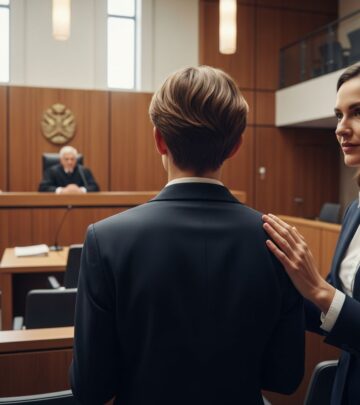
DUI While on Probation: Risks, Process, and Defense
Understand what happens when a DUI occurs during probation, from violations and hearings to penalties and possible legal defenses.
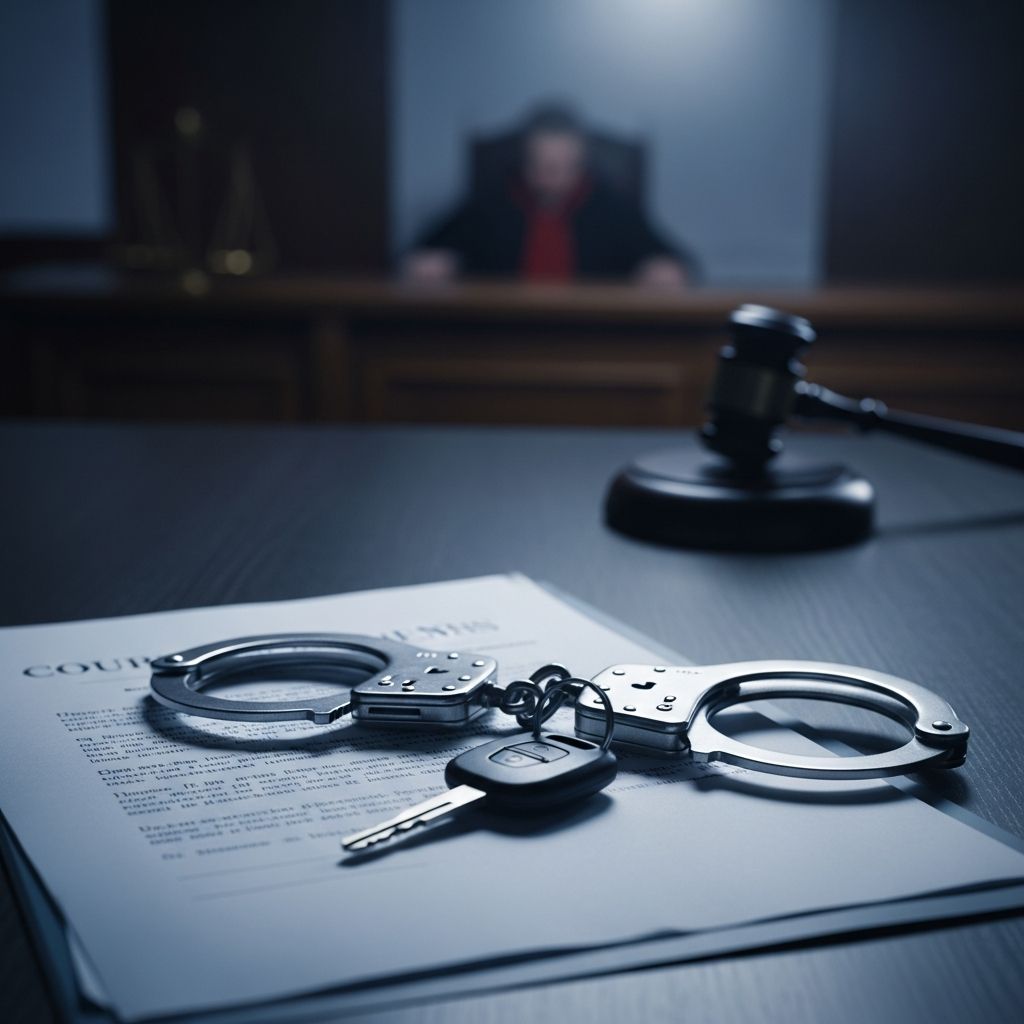
DUI While on Probation: What Really Happens and What You Can Do
Being arrested for a driving under the influence (DUI) offense while you are already on probation can put your freedom and your future at serious risk. You are suddenly facing two problems at once: a new criminal case for DUI and a potential probation violation based on that arrest.
This guide explains how a DUI during probation is treated in many U.S. jurisdictions (with examples drawn from Florida law), what consequences you may face, how the court process typically unfolds, and what steps you can take to protect yourself.
Understanding Probation and Why a DUI Is So Serious
Probation is a court-ordered alternative to jail or prison that allows a person to remain in the community under supervision and strict conditions. If you violate those conditions, the court can revoke that opportunity and send you to jail for some or all of the original sentence.
Typical Conditions of Probation
Although details vary by state and by case, many probation orders include conditions such as:
- Obey all laws and avoid new criminal charges
- Report regularly to a probation officer (often monthly)
- Pay fines, court costs, and restitution if ordered
- Complete counseling, treatment, or educational programs
- Submit to random alcohol or drug testing
- Follow restrictions on travel or residency changes
- Avoid possession of firearms or weapons
When the original conviction involved DUI, probation terms are often even more specific about alcohol and driving behavior, including mandatory DUI education and substance abuse evaluation.
Why a New DUI Counts as a Major Violation
Courts generally classify probation violations into two broad types:
- Technical violations – such as missing a meeting with your probation officer or being late on payments.
- New law violations – being arrested or charged with a new crime, such as DUI, while still on probation.
A new DUI is almost always treated as a serious violation because it shows alleged criminal conduct, often involving impaired driving and a risk to public safety.
How a DUI Can Violate Multiple Probation Terms
A single DUI arrest can break probation in several ways at once, especially if your original case involved alcohol or driving offenses.
Common Ways a DUI Triggers a Violation
- Committing a new crime – DUI is a separate criminal offense under state law.
- Breaking alcohol restrictions – some probation orders forbid any alcohol use or bar you from going to bars or clubs.
- Ignoring license or driving limits – you may have been ordered not to drive, to drive only with an ignition interlock, or to drive only for work or school.
- Missing probation appointments – time spent in custody following the DUI arrest may cause you to miss scheduled check-ins.
- Failing to complete DUI programs – if you were already required to attend treatment or education and stop going after the arrest.
Illustrative Comparison: Technical vs. DUI-Based Violations
| Type of Violation | Example | Typical Court View |
|---|---|---|
| Technical | Missed one meeting with probation officer but quickly rescheduled | Often seen as less serious; may lead to a warning or added conditions |
| New law (DUI) | Arrested for drunk driving with a blood alcohol level at or above the legal limit | Seen as a major breach of trust; court may consider revoking probation and imposing jail time |
Legal Background: DUI and Probation in Practice
Every state defines DUI (or DWI/OWI) and probation in its statutes. As one example, Florida’s DUI law makes it a crime to drive or be in actual physical control of a vehicle while impaired or with a blood alcohol concentration of 0.08 or higher. Florida law also requires that anyone convicted of DUI receive a period of probation as part of the sentence, along with specific conditions like reporting and alcohol evaluation.
While the exact penalties and procedures differ among states, the general pattern is similar:
- A new DUI can form the basis for a formal violation of probation allegation.
- The court gains broad power to revoke, modify, or continue probation depending on the facts.
- DUI penalties (fines, license consequences, possible jail) stack on top of any punishment for the probation violation.
What Happens After a DUI Arrest While on Probation
Once you are arrested on suspicion of DUI, several legal processes begin almost immediately, often moving in parallel.
1. The DUI Arrest and Booking
Most DUI cases begin with a traffic stop, crash investigation, or sobriety checkpoint. If the officer believes there is probable cause to think you were impaired, you may be:
- Given field sobriety tests and/or a breath, blood, or urine test
- Placed under arrest and transported to jail or a holding facility
- Booked and possibly held until you can see a judge or post bond
In many jurisdictions, the probation officer is notified automatically when a probationer is arrested, particularly for new criminal charges like DUI.
2. Probation Officer Reaction and Violation Allegation
After learning of the arrest, the probation officer may:
- Review your probation terms and the DUI arrest report
- Prepare a written report or affidavit describing the alleged violation
- Submit that document to the court to request a violation of probation (VOP) hearing
- Recommend arrest or continued custody if the violation seems serious
3. Bond and Custody Issues
Depending on the jurisdiction and whether you are on felony or misdemeanor probation, you may:
- Be held without bond until you appear in front of a judge
- Be granted bond on the new DUI case but held on the probation violation
- Need a separate hearing to request release or a bond reduction
Some state laws allow courts to deny bond altogether when a probationer is accused of committing a new offense while on supervision, especially for felony cases.
4. The Probation Violation Hearing
The violation hearing is not the same as the DUI trial. It is a separate proceeding focused on whether you broke the terms of probation. Key differences from a criminal trial often include:
- Lower burden of proof – many states require only proof by a “preponderance of the evidence,” not beyond a reasonable doubt.
- No jury – the judge alone decides whether a violation occurred.
- Relaxed evidence rules – courts may allow evidence that would not be permitted at a criminal jury trial, such as certain hearsay.
If the judge finds that you willfully and substantially violated probation, the court can move to sentencing on the violation, separate from the DUI case.
Possible Consequences if the Violation Is Proven
Judges have considerable discretion when sentencing for a probation violation caused by a new DUI. Outcomes can range from relatively lenient adjustments to extremely harsh sanctions.
Common Court Options
- Revoking probation and imposing all or part of the original suspended jail or prison sentence.
- Extending probation for additional months or years.
- Adding stricter conditions, such as more frequent reporting, curfew, or electronic monitoring.
- Mandating treatment, such as alcohol counseling, inpatient or outpatient rehabilitation, or support group attendance.
- Imposing additional community service or higher fines.
On top of this, you still face whatever penalties your state law imposes for the DUI conviction itself, such as license suspension, ignition interlock requirements, fines, and possible jail time.
Long-Term Collateral Effects
Beyond immediate punishment, a DUI-based probation violation can carry serious long-term consequences:
- A permanent criminal record showing both the DUI and the violation
- Greater difficulty obtaining employment, professional licenses, or housing
- Increased insurance premiums or loss of vehicle insurance
- Harsher treatment by courts if you are ever charged again
Defending Against a DUI-Based Probation Violation
Although the situation is serious, a violation allegation does not automatically mean you will go to jail. There are strategic ways to respond and defend your case.
Key Defense Strategies
- Challenging the DUI – if the evidence of impairment is weak, you may be able to fight the DUI in criminal court and argue that there was no willful violation.
- Contesting the violation – even if you were arrested, the prosecution must still show that you violated a specific probation condition and that the violation was substantial.
- Presenting mitigation – evidence of employment, family support, community involvement, and voluntary treatment can sometimes persuade a judge to continue or modify probation instead of revoking it.
- Showing compliance – demonstrating that you have otherwise followed all probation rules and completed required programs can help reduce the severity of the response.
Why Early Legal Help Matters
Because there are often two cases at once (the DUI case and the probation violation case), having an experienced criminal defense or DUI attorney involved early can be critical. An attorney can:
- Review the arrest for legal or constitutional problems
- Advise you on whether to fight the charges or pursue plea negotiations
- Request a bond hearing or supervised release if you are held in jail
- Present mitigation and legal arguments at the violation hearing
Many state court and public defender systems publish resources explaining probation and violations, but they also emphasize that specific legal advice must come from a licensed attorney who understands local law and practice.
Practical Steps to Take After a DUI Arrest on Probation
If you find yourself in this situation, some practical actions can help you limit the damage and demonstrate responsibility to the court.
Immediate Actions
- Consult a defense lawyer as soon as possible.
- Attend all court dates and probation meetings; missing appearances can make things worse.
- Follow any release conditions, such as no alcohol use, curfew, or ignition interlock.
- Gather documents that show your positive ties to the community (employment records, school transcripts, volunteer records).
Proactive Rehabilitation
In many courts, judges look favorably on people who take steps to address substance use issues before being ordered to do so. Depending on your situation, you may consider:
- Voluntarily enrolling in an alcohol education or treatment program
- Attending support meetings (and keeping proof of attendance)
- Undergoing a professional evaluation for substance use
These steps do not erase the violation, but they may help your lawyer negotiate a more favorable outcome or argue for continued probation instead of full revocation.
Frequently Asked Questions (FAQs)
Q: Can I be violated for DUI even if my probation paperwork never mentions drunk driving?
Yes. Almost all probation orders require that you obey all laws and avoid new criminal offenses. A DUI counts as a new crime even if it is not named specifically in your paperwork.
Q: Do I automatically go to jail if I get a DUI while on probation?
Not automatically. The judge has options, including extending or modifying probation instead of revoking it, but the risk of jail or prison time is significantly higher when the violation involves a new DUI.
Q: Can I be held without bond on a DUI-based probation violation?
In some states, especially when you are on felony probation, courts may deny bond or hold you until a violation hearing when you are accused of committing a new offense such as DUI.
Q: Does a probation violation make my DUI penalties worse?
Yes. You can be punished separately for the DUI itself under state DUI laws and for the probation violation. That can mean more jail exposure, longer supervision, and stricter conditions overall.
Q: Will a DUI violation of probation stay on my record?
In many jurisdictions, both the DUI conviction and the finding that you violated probation remain part of your court and criminal record, which can affect employment, licensing, and future sentencing if you ever face charges again.
References
- Florida Statutes §316.193: Driving under the influence — Florida Legislature / Online Sunshine. 2023-01-01. https://www.leg.state.fl.us/statutes/index.cfm?App_mode=Display_Statute&URL=0300-0399/0316/Sections/0316.193.html
- What are the conditions of probation for DUI? — Orlando Criminal Team. 2022-06-01. https://orlandocriminalteam.com/faq/florida-law/dui/what-are-the-conditions-of-probation-for-dui/
- DUI Probation Laws in Florida — Moses & Rooth Attorneys at Law. 2023-05-10. https://www.mosesandrooth.com/dui-probation-laws-in-florida/
- Understanding the Impact of a DUI During Probation — MM Defense. 2023-03-15. https://www.mmdefense.law/blog/understanding-the-impact-of-a-dui-during-probation/
- What Happens if You Violate Probation in Florida by Getting a DUI? — Musca Law. 2022-08-20. https://www.muscalaw.com/blog/what-happens-if-you-violate-probation-florida-getting-dui
- What Are the Minimum Sentences for a DUI Violation of Probation in Florida? — Leppard Law. 2023-04-01. https://leppardlaw.com/criminal-law/violation-of-probation/what-are-the-minimum-sentences-for-a-dui-violation-of-probation-in-florida/
- What Are the Penalties for Violating Probation in Florida? — Carlson Meissner Hart & Hayslett, P.A. 2022-11-05. https://carlsonmeissner.com/blog/what-are-the-penalties-for-violating-probation-in-florida/
Similar Articles







Read full bio of Sneha Tete