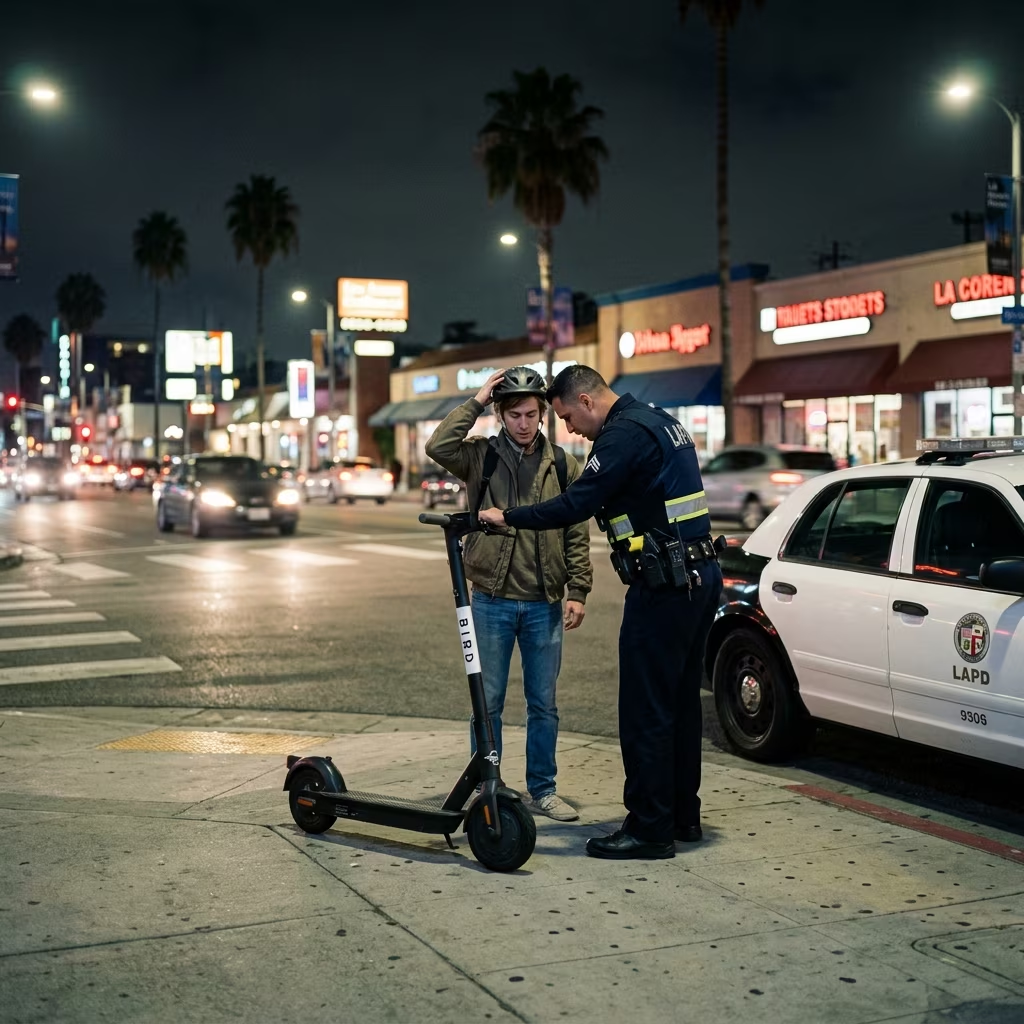
Electric scooters have become a familiar sight in many cities, promising quick, low-cost transportation and an alternative to driving a car. Yet as one of Los Angeles’s early criminal prosecutions showed, riding a scooter while drunk is not a legal loophole—it can lead to a formal DUI conviction, fines, probation, and a criminal record. This article uses that landmark case as a starting point to explain how DUI laws apply to electric scooters, what penalties riders can face, and how to stay safe and within the law.
From Novelty Ride to Criminal Charge: What Happened in LA
When shared e-scooters first appeared on Los Angeles streets, many users treated them as harmless toys rather than vehicles governed by traffic law. That perception changed sharply when a rider operating a Bird-branded electric scooter in West Los Angeles struck a pedestrian while heavily intoxicated and was later convicted of DUI. Prosecutors emphasized that this was the first time the city had obtained a DUI conviction involving a motorized scooter, marking a clear shift in how these devices would be treated in court.
Key elements of that case included:
- The rider’s blood alcohol concentration (BAC) measured at 0.279, more than three times the standard legal limit of 0.08 for drivers.
- A collision with a 64-year-old pedestrian, who was knocked down and required medical attention.
- Charges for operating a motorized scooter under the influence and for leaving the scene of the incident (hit-and-run).
- A sentence including probation, fines, mandatory DUI alcohol education, and an order not to operate scooters with any alcohol in his system.
While the facts were specific to one person, the legal message was broad: shared scooters are not exempt from DUI rules simply because they are small, electric, or rented by the minute.
How DUI Laws Treat Electric Scooters
In most U.S. jurisdictions, DUI statutes focus on the operation of a vehicle while impaired by alcohol or drugs, not strictly on cars. Many states define a vehicle as any device capable of transporting a person or property on public roads, a wording that easily encompasses e-scooters, electric bikes, and similar devices.
Important legal points include:
- Vehicle status – Electric scooters are treated as vehicles or motorized scooters in many states, meaning DUI provisions apply when they are operated on public streets.
- BAC threshold – A BAC of 0.08% or higher generally triggers per se DUI liability, but some states allow charges at lower BAC levels when impairment can be proven.
- Motorized vs. human-powered – Laws are more likely to apply where a motor assists propulsion; some jurisdictions distinguish between motorized scooters and manual devices such as skateboards or non-motorized bikes.
Legal professionals note that, at least in California, riders of motorized scooters are subject to many of the same rules as any other driver, including DUI provisions. The LA case demonstrates that prosecutors are willing to use existing statutes to address dangerous scooter riding rather than treating it as a minor nuisance.
Penalties: What Riders Risk with a Scooter DUI
Penalties for DUI on an electric scooter vary by state, but they often resemble those imposed for a traditional drunk driving conviction. A scooter DUI is typically a misdemeanor, yet it can carry consequences that affect a person’s life for years.
Common Legal Consequences
- Fines – Scooters may involve lower statutory fines than car-related DUIs, but amounts can still reach several hundred dollars or more.
- Probation – Courts frequently impose probation, during which the individual must obey specific conditions and avoid further offenses.
- DUI education programs – Many jurisdictions require completion of an alcohol education or treatment program for first-time offenders.
- License consequences – Even though scooter riders may not need a license to operate the device, a DUI can still lead to suspension or other restrictions on a driver’s license.
- Restitution and civil liability – If someone is injured or property is damaged, the rider can be ordered to repay medical costs or repair expenses and may face separate civil lawsuits.
Some states explicitly set out penalties for intoxicated operation of personal mobility devices. In Washington, D.C., for example, regulations prohibit operating electric mobility devices while under the influence of any alcohol or drug, reinforcing that impaired riding is not treated more lightly simply because the device is small and electric.
Table: Comparing Car DUI and Scooter DUI
| Aspect | Typical Car DUI | Electric Scooter DUI |
|---|---|---|
| Vehicle type | Gas or electric car/truck | Motorized scooter/e-scooter |
| BAC threshold | 0.08% per se in most states | Often the same, but may be enforced at lower levels if impairment is proven |
| License impact | Suspension or revocation common | Suspension possible even if device does not require a license |
| Fines | Hundreds to thousands of dollars | Similar range, though some statutes set lower maximums for scooters |
| Criminal record | Criminal conviction | Criminal conviction; not routinely treated as a simple infraction |
Public Safety: Why Scooter DUIs Matter
One reason authorities pursued the LA scooter case so aggressively was concern for public safety. Impaired riders may underestimate how fast scooters travel, how quickly they need to react to obstacles, and how much injury they can cause if they collide with pedestrians or vehicles.
Traffic safety agencies warn that any form of motorized transport combined with impairment raises the risk of crashes and injuries. Even at relatively low speeds, scooters can:
- Knock down pedestrians or cyclists, leading to fractures or head injuries.
- Veer into traffic lanes, causing drivers to swerve or brake abruptly.
- Strike fixed objects like curbs or poles, ejecting the rider into the roadway.
Because scooters are often used in crowded entertainment districts and near nightlife venues, the combination of alcohol and limited helmet use can be particularly dangerous. The LA case, involving an older pedestrian hit on a public street, illustrates that these risks are not hypothetical.
Local Variations: Not Every State Handles Scooters the Same Way
While the LA conviction showed scooters can fall squarely under DUI statutes, not all states handle electric scooters identically. Legal classifications and enforcement priorities differ.
Example: Nevada’s Approach
In Nevada, for instance, electric scooters are treated more like bicycles for many regulatory purposes, such as speed limits and equipment requirements. However, DUI law is primarily directed at vehicles, and some interpretations suggest e-scooters may be outside certain motor vehicle definitions for DUI penalties. That does not mean intoxicated riders are free from consequences; police can, and do, arrest riders for reckless endangerment or related offenses when behavior is dangerous.
This mixed approach highlights that:
- Classification matters – Whether a scooter counts as a vehicle or a specialized device affects which statutes apply.
- Alternative charges – Even if DUI law is ambiguous, officers may rely on other public safety laws (such as reckless driving or endangerment) to respond to intoxicated riding.
- Local ordinances – Cities and counties may pass their own rules on scooter operation, helmet use, and acceptable behavior in entertainment districts, adding another layer of regulation.
Because these variations are significant, riders who plan to use scooters while traveling should check local rules rather than relying on assumptions from their home state.
Practical Guidance for Riders: Staying Legal and Safe
The LA case and similar incidents in other jurisdictions send a clear message: scooters are convenient, but they must be treated like other vehicles when it comes to sobriety and safety. The following practical steps can help riders avoid legal trouble and protect themselves and others.
Core Safety and Compliance Tips
- Do not ride impaired – If you have been drinking or using drugs, choose a taxi, rideshare, or public transit. The belief that a scooter is a “safer” way to get home while drunk is legally and practically flawed.
- Understand local laws – Look up your city or state’s regulations on e-scooters, especially rules about DUI, helmet use, age limits, and where scooters may be ridden.
- Use protective gear – Helmets are strongly recommended even when not legally required, particularly for nighttime trips or routes with heavy traffic.
- Follow traffic rules – Obey signals, speed limits, and lane markings, and avoid weaving between pedestrians and vehicles.
- Respect shared devices – Rental companies typically include terms of use that prohibit riding while intoxicated; violating them can result in account suspension and, in some cases, cooperation with law enforcement investigations.
When an Incident Occurs
If an intoxicated rider strikes someone or causes property damage, they should:
- Remain at the scene and call emergency services if anyone is injured.
- Provide accurate information to police and medical responders.
- Avoid further operation of the scooter and comply with instructions from officers.
- Seek legal counsel promptly, especially if charges such as DUI, reckless driving, or hit-and-run are mentioned.
Leaving the scene can escalate a case, turning an already serious situation into one involving hit-and-run allegations, as seen in the LA prosecution.
Frequently Asked Questions (FAQs)
Can I really get a DUI on an electric scooter?
Yes. In many states, DUI laws apply to motorized scooters just as they do to cars, provided the device is operated on public roads or areas covered by traffic laws. The Los Angeles case was an early, widely publicized example of this enforcement.
Do I need a driver’s license for a scooter DUI to affect my driving record?
You may not need a license to rent or operate a scooter, but a DUI conviction can still lead to suspension or other action against your driver’s license where one exists. The law focuses on the offense, not the type of device you were using.
Is riding a scooter drunk safer than driving a car drunk?
From a legal standpoint, both are prohibited and can result in DUI charges. From a safety perspective, scooters introduce different risks, including exposure to traffic and vulnerability in collisions. Authorities and safety organizations consistently advise against operating any vehicle while impaired.
Are electric scooters always classified as vehicles for DUI purposes?
No. Classification differs by jurisdiction. Some states and cities treat scooters like bicycles, while others explicitly include motorized scooters in DUI statutes. However, even where classification is complex, riders may face charges such as reckless endangerment for dangerous behavior while intoxicated.
What should cities do to reduce scooter DUIs?
Policy options include clearer signage near nightlife districts, public awareness campaigns about scooter DUI risks, coordination with rental companies to show warnings in-app, and targeted enforcement in high-risk areas. The LA case demonstrates that prosecution alone is possible but may work best alongside prevention and education.
References
- Man convicted of driving electric scooter under the influence, striking pedestrian in West LA — ABC7 / KABC-TV. 2018-09-28. https://abc7.com/post/man-convicted-of-driving-bird-scooter-drunk-striking-pedestrian-in-west-la/4354311/
- Can You Get a DUI on an Electric Scooter? 2024 Guide — Isinwheel. 2024-02-01 (approx.). https://www.isinwheel.com/blogs/news/can-you-get-a-dui-on-an-electric-scooter
- Can You Get a DUI on a Scooter in My State? — Super Lawyers / Thomson Reuters. 2022-06-15 (approx.). https://www.superlawyers.com/resources/dui-dwi/can-you-get-a-dui-on-a-scooter-in-my-state/
- DUI on an Electric Bike, Scooter, or Skateboard? — Intoxalock. 2023-08-10 (approx.). https://www.intoxalock.com/knowledge-center/dui-on-electric-bikes-scooters-skateboards
- Electric Scooter Legality and Regulations in Nevada — BO Mobility. 2026-01-05. https://bo.world/blogs/scooter-research/electric-scooter-legality-and-regulations-in-nevada