
Can You Get a DUI on a Horse in Kentucky?
Why riding a horse drunk in Kentucky can still lead to a DUI-style charge, what the law says, and what riders need to know.
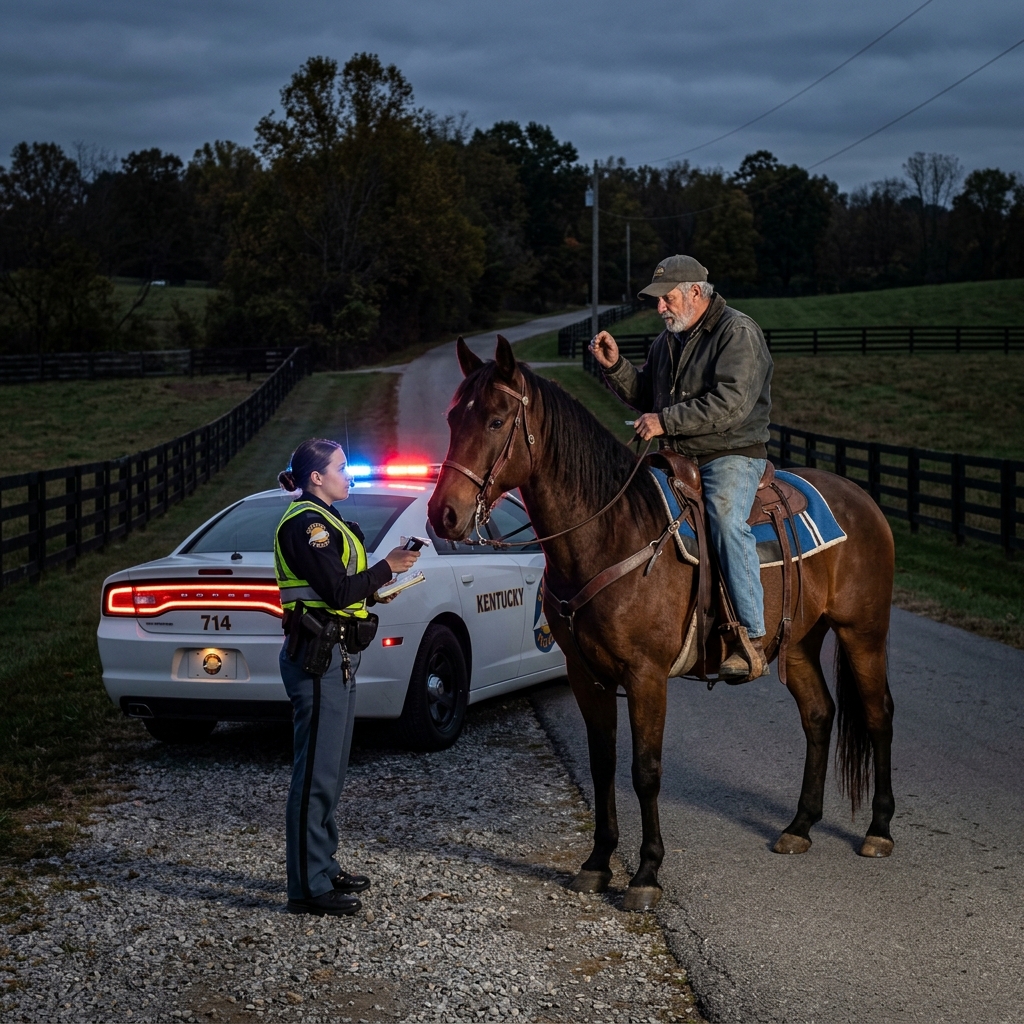
Stories of people being arrested for riding a horse after drinking often sound like something out of a tall tale. Yet in Kentucky, being on horseback while intoxicated is not just a punchline—it can lead to a criminal charge very similar to driving under the influence. Understanding how and why that happens requires a closer look at Kentucky’s traffic and criminal laws and how they treat non-motorized vehicles, including horses.
This article breaks down how a person can be charged for riding a horse drunk in Kentucky, what statutes are involved, the potential penalties, and what practical lessons riders should take from these unusual but very real cases.
Why Horseback DUIs Are a Real Legal Issue
Kentucky has a long history of horseback riding, from rural farm roads to trail riding and local events. Alcohol is often part of social life in these settings. When those traditions collide with public safety concerns, the question arises: can a horse count as a “vehicle” for DUI purposes?
Under Kentucky law, the answer is effectively yes—not because horses are treated as cars, but because the law creates a separate category of offenses for non-motorized vehicles, and horses fall squarely in that group.
- Kentucky law prohibits operating a non-motorized vehicle while under the influence of alcohol or substances that impair driving ability.
- A horse or horse-drawn carriage is treated as a vehicle propelled by muscular power, not a motor vehicle, but still covered by the law.
- Real cases in Kentucky show riders charged after allegedly riding while drunk.
The Legal Foundation: How Kentucky Defines Vehicles
The key to understanding horseback DUI charges in Kentucky is how the law defines different types of vehicles and what it prohibits on public roads.
Motorized vs. Non-Motorized Vehicles
Kentucky’s traffic statutes distinguish between motor vehicles and other vehicles. One statute defines vehicles propelled by muscular power—like bicycles and horse-drawn vehicles—as separate from motor vehicles, which are powered by an engine.
| Type | Example | How Kentucky Treats It |
|---|---|---|
| Motor Vehicle | Car, truck, motorcycle | Covered by traditional DUI statutes, with license suspension and harsher penalties. |
| Non-Motorized Vehicle | Horse, bicycle, horse-drawn buggy, skateboard | Covered by a separate statute that prohibits operation while under the influence. |
Because horses and horse-drawn vehicles are powered by muscular power (the horse’s, not an engine), they fall under the non-motorized vehicle category.
The Non-Motorized DUI Statute
Kentucky’s law on non-motorized vehicles prohibits any person from operating a vehicle that is not a motor vehicle anywhere in the state while under the influence of intoxicating substances. This language is broad and is what allows prosecution of people who ride horses or drive horse-drawn carriages while allegedly intoxicated.
In practical terms, that means:
- You do not need to be driving a car to be charged with an alcohol-related roadway offense.
- Using a horse or carriage to “avoid a DUI” can still expose you to a non-motorized vehicle violation.
- Police can stop and cite a rider if they have reasonable grounds to believe the rider is impaired and operating a non-motorized vehicle in a way that falls under the statute.
What a Horseback DUI Charge Looks Like
Although Kentucky’s traditional DUI statutes focus on motor vehicles, the state has seen multiple cases where law enforcement cited people riding horses or driving horse-drawn buggies while allegedly under the influence.
How These Cases Typically Arise
Based on publicly reported cases and commentary from Kentucky lawyers, horse-related DUI-type charges often start in one of the following ways:
- Police receive a complaint about a rider weaving in and out of traffic or creating a hazard on a roadway.
- A collision occurs involving a horse-drawn carriage and a motor vehicle, prompting investigation.
- Officers observe a rider on a public road appearing unsteady or smelling strongly of alcohol.
- Someone riding late at night on or near a highway draws attention because visibility and safety are in question.
Once stopped, officers may administer field sobriety tests, breath tests, or other investigative steps commonly seen in traditional DUI cases.
Blood Alcohol Level vs. Other Evidence
Similar to motor vehicle DUI, non-motorized vehicle cases can involve a blood alcohol concentration (BAC) measurement of 0.08 or higher, but impairment can also be proven through other evidence.
Evidence may include:
- Observed erratic behavior while riding
- Slurred speech or difficulty standing steadily
- Odor of alcohol and admission of drinking
- Witness statements about the rider’s condition
Penalties: How Serious Is a Horseback DUI in Kentucky?
Although being charged with operating a non-motorized vehicle while under the influence is serious, Kentucky distinguishes this offense from traditional DUI. A non-motorized vehicle case is treated as a violation, not a misdemeanor or felony.
Typical Consequences
For a non-motorized DUI-type offense involving a horse, the statute allows for a fine in a relatively modest range:
- Fines usually range from about $20 to $100 per offense.
- Court costs can be added on top of the fine.
- Courts may order participation in an alcohol treatment or education program, particularly if substance abuse appears to be a recurring issue.
Unlike a standard DUI with a car:
- You typically do not face jail time solely for the non-motorized vehicle violation.
- Your driver’s license suspension rules under Kentucky’s main DUI framework usually do not apply directly, because the offense is not within the motor vehicle DUI statute.
How This Differs from a Traditional DUI
For comparison, Kentucky’s standard DUI laws for motor vehicles can involve license suspensions, ignition interlock program requirements, higher fines, and potential jail time, especially for repeat offenses.
| Aspect | Non-Motorized DUI (Horse) | Motor Vehicle DUI |
|---|---|---|
| Offense Level | Violation (non-criminal classification) | Criminal offense (usually misdemeanor, can be felony) |
| Possible Jail Time | Generally no jail for this offense alone | Possible jail, especially for higher BAC or repeat offenses |
| Driver’s License | Ordinarily not suspended under non-motorized statute | Suspension, ignition interlock, and compliance conditions possible |
| Fine Range | Approx. $20–$100 plus costs | Substantially higher fines and additional fees |
Why Lawmakers Care: Safety and Public Policy
At first glance, a horseback DUI may sound harmless compared to drunk driving a car. But Kentucky’s policy choice to prohibit impaired operation of non-motorized vehicles reflects broader safety concerns.
Key public safety considerations include:
- Risk to riders and horses: An impaired rider may misjudge traffic, terrain, or the horse’s behavior, increasing the risk of falls or collisions.
- Risk to other road users: A horse on a roadway can create sudden hazards for drivers, especially at night or in poor visibility.
- Shared roads: Many rural roads in Kentucky are narrow and lack shoulders, making any impaired activity on the road more dangerous.
By treating horses and other non-motorized vehicles as subject to impairment laws, Kentucky attempts to reduce those risks even when engines are not involved.
Common Misunderstandings About Riding Drunk
People sometimes assume that using a horse or bicycle instead of a car after drinking is a clever way to stay on the right side of the law. Kentucky’s non-motorized vehicle statute contradicts that assumption.
Myth vs. Reality
- Myth: “If I ride a horse, I can’t get a DUI.”
Reality: You can be cited for operating a non-motorized vehicle under the influence, and that is exactly how horseback riders have been charged. - Myth: “Because there’s no engine, the law doesn’t apply.”
Reality: The statute specifically targets vehicles that are not motor vehicles, which is why horses are included. - Myth: “The worst that can happen is a small ticket.”
Reality: While fines are lower than motor vehicle DUIs, additional charges (such as drug possession, disorderly conduct, or public intoxication) may accompany the non-motorized violation, depending on the facts.
Potential Defenses and Legal Issues
As with any criminal or traffic-related allegation, a person charged with operating a non-motorized vehicle under the influence has rights and possible defenses. The strength of those defenses depends heavily on the specific facts and evidence in the case.
Challenging the Stop or Investigation
Attorneys in Kentucky often look at whether the police had a lawful basis to stop the rider in the first place and whether the investigation was conducted properly.
- Questionable stop: If there was no reasonable suspicion of a violation, the defense may argue that the stop was improper.
- Search and seizure issues: Evidence obtained through an unlawful search may be subject to suppression.
- Unreliable field sobriety tests: Poor lighting, unstable ground, or the rider’s physical condition can affect test results.
Disputing Impairment or Operation
Other potential defense angles can include:
- Contesting whether the person was truly operating the horse or carriage (for example, if the animal was stationary or someone else was in control).
- Attacking the accuracy or calibration of breath tests or blood tests used to measure alcohol level.
- Arguing that observed behavior was due to factors other than intoxication (fatigue, health conditions, or medication).
Because each case is unique, anyone charged with an offense involving a horse and suspected intoxication should speak with a qualified Kentucky criminal defense attorney for advice tailored to their circumstances.
Practical Tips for Riders in Kentucky
Even if the penalties are lighter than for a standard DUI, dealing with any criminal or violation-level charge can be costly and stressful. Riders who use horses on public roads can reduce their risk by following some practical guidelines.
- Avoid riding on public roads after drinking. Treat horseback riding like driving when it comes to impairment.
- Plan ahead for transportation. If alcohol may be involved, arrange a sober driver or alternative transportation instead of assuming a horse is a safe workaround.
- Use proper lighting and reflective gear. If you must be near roads, improve visibility for drivers to reduce collision risk.
- Understand local ordinances. Some counties or cities may have additional rules regarding horses on roadways.
- Consult a lawyer promptly if charged. Early legal advice can help protect rights and explore possible defenses.
Frequently Asked Questions About Horseback DUI in Kentucky
Can I really be charged with a DUI for riding a horse in Kentucky?
You can be charged with an offense closely related to DUI for operating a non-motorized vehicle, such as a horse or horse-drawn carriage, while under the influence of alcohol or other intoxicating substances. The statute does not use the exact same framework as motor vehicle DUI, but the practical effect is similar: the law targets impaired operation on public roads.
Is a horse treated the same as a car under Kentucky DUI laws?
No. A horse is not considered a motor vehicle, and so traditional motor vehicle DUI laws do not apply directly. Instead, horses fall under the non-motorized vehicle statute, which carries different penalties and typically does not include jail time or license suspension for that offense alone.
What penalties could I face if convicted of a non-motorized DUI involving a horse?
Penalties generally include a fine ranging from approximately $20 to $100 per violation, plus court costs. In some cases, a court may order alcohol treatment or education programs, especially if there is evidence of ongoing substance abuse issues. Additional charges may apply depending on the situation, such as drug possession or public intoxication.
Will my driver’s license be suspended if I’m convicted for riding a horse while intoxicated?
For a standalone non-motorized vehicle violation, Kentucky’s driver’s license suspension and ignition interlock rules for motor vehicle DUI do not usually apply. However, every case is fact-specific, and if other charges are involved, license consequences could arise under different statutes.
Does it matter if I am on a private trail instead of a public road?
The applicability of the statute can depend on whether you are operating the non-motorized vehicle “anywhere in this state” in a way that falls within the statutory definition. Many reported cases involve public roads or areas where traffic safety is a concern. If the conduct occurs on truly private property, different legal issues may come into play. A local attorney can best interpret how the statute may apply to a specific location.
What should I do if I am cited for riding a horse under the influence?
It is important to take the charge seriously, even if the potential fine seems relatively low. Consider:
- Writing down everything you remember about the stop and your interactions with officers.
- Saving any documentation you receive, including citations or test results.
- Contacting a qualified Kentucky criminal defense lawyer to discuss your options and possible defenses.
References
- Can you get a DUI riding a horse in Kentucky? Law says yes. — Lexington Herald-Leader. 2024-07-24. https://www.kentucky.com/news/state/kentucky/article311191195.html
- Man Gets a DUI for Riding a Horse in Kentucky. — FindLaw. 2014-08-28. https://www.findlaw.com/legalblogs/criminal-defense/man-gets-dui-for-riding-a-horse-in-kentucky/
- Man Driving Horse and Buggy Arrested for DUI. — Suhre & Associates, DUI and Criminal Defense Lawyers. 2021-05-07. https://suhrelawlouisville.com/man-driving-horse-and-buggy-arrested-for-dui/
- Man Gets Arrested for DUI on a Horse! — Gigstad Law Office, LLC. 2012-09-05. https://www.gigstadlaw.com/criminal-defense-blog/2012/september/man-gets-arrested-for-dui-on-a-horse-/
- DUI Penalties. — Kentucky Transportation Cabinet (DRIVE). 2023-08-15. https://drive.ky.gov/Drivers/Pages/DUI.aspx
Similar Articles








Read full bio of Sneha Tete




