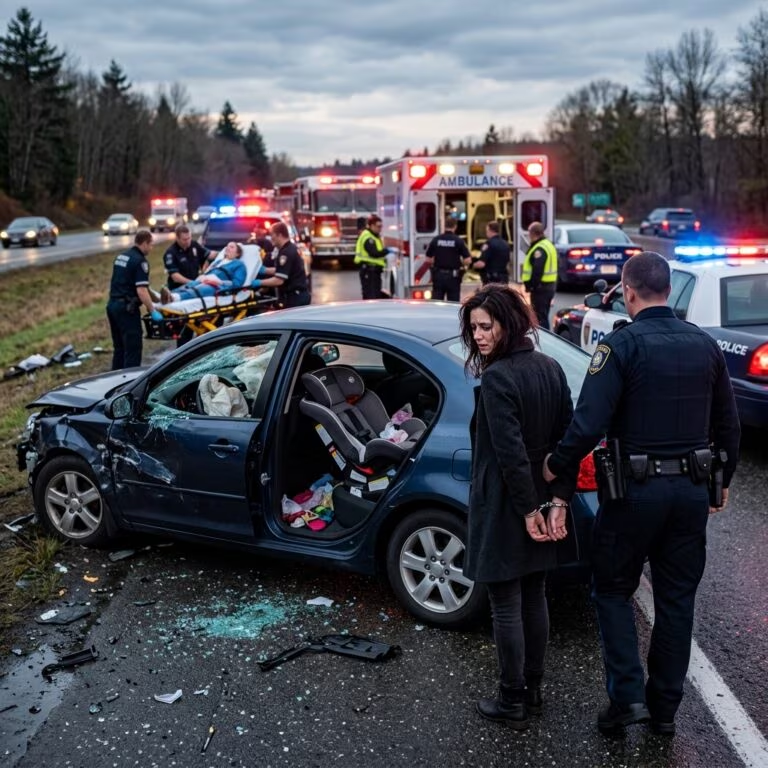
DUI manslaughter is one of the most serious criminal charges tied to impaired driving. It usually arises when a person accused of driving under the influence causes a fatal crash, turning a traffic offense into a felony case with long-lasting consequences. In many jurisdictions, the outcome can include jail or prison time, probation, license revocation, treatment conditions, and financial liability.
High-profile cases have shown how prosecutors, defense lawyers, judges, victims’ families, and insurers all influence the result. The legal process is not only about punishment; it also involves evidence, negotiation, public safety concerns, and the challenge of balancing accountability with rehabilitation.
What DUI manslaughter means in practice
DUI manslaughter generally refers to a death caused by someone who was allegedly impaired by alcohol, drugs, or both while operating a vehicle. The exact label and legal elements vary by state, but the core idea is similar: a fatal crash occurs in connection with intoxicated driving, and prosecutors believe the driver’s impairment was a major cause of the death.
Some states use terms such as vehicular homicide, vehicular manslaughter, or driving under the influence manslaughter. Others separate the offense into different levels based on negligence, recklessness, or whether the driver knew they were impaired. The distinction matters because it can affect sentencing exposure and the strategy used by both sides.
- The charge is usually felony-level conduct.
- Impairment may involve alcohol, controlled substances, or prescription drugs.
- Prosecutors often focus on blood-alcohol testing, witness statements, and crash reconstruction.
- The presence of a fatality makes the case far more serious than a standard DUI arrest.
How prosecutors build these cases
A DUI manslaughter case is rarely based on one fact alone. Investigators typically combine toxicology results, accident reconstruction, field sobriety observations, vehicle damage, phone records, surveillance video, and witness accounts. If the driver admitted drinking or taking drugs before the crash, that evidence can also be powerful.
The government must usually prove more than just intoxication. It also has to show a causal link between the impaired driving and the victim’s death. That means defense attorneys often scrutinize the timing of blood draws, the accuracy of testing equipment, road conditions, lighting, speed, and whether another factor contributed to the crash.
| Issue | Why it matters |
|---|---|
| Blood-alcohol or drug testing | Helps show whether the driver was legally impaired. |
| Crash reconstruction | Helps determine speed, impact angle, braking, and causation. |
| Witness testimony | Can support or challenge claims about driving behavior before impact. |
| Medical and forensic evidence | Establishes the cause of death and timing of injuries. |
Possible criminal penalties
Penalties for DUI manslaughter can be severe because the offense involves both impaired driving and the loss of life. Depending on the state and the facts, a person convicted may face years in prison, substantial fines, probation, mandatory treatment, community service, restitution, and permanent driving restrictions.
In some cases, a plea agreement may reduce prison exposure or replace a long sentence with shorter jail time plus strict post-release supervision. That type of result may still be significant enough to end a career, destroy a reputation, and create decades of legal obligations.
- Incarceration can range from short jail terms in negotiated cases to lengthy prison sentences after trial.
- Probation may last for many years and include alcohol monitoring, counseling, or travel restrictions.
- Drivers may lose their licenses for years or for life.
- Court-ordered community service may be extensive.
- Fines and restitution can add financial pressure beyond the criminal sentence.
Why plea deals are common
Plea agreements are common in serious impaired-driving cases because they can give both sides certainty. Prosecutors may want a guaranteed conviction and immediate punishment without the uncertainty of trial. Defense attorneys may seek to avoid the maximum sentence, especially when the defendant accepts responsibility, cooperates with investigators, or reaches a civil resolution with the victim’s family.
Negotiated outcomes can also reflect practical concerns. Courts consider crowded dockets, available evidence, the defendant’s prior record, the wishes of the victim’s family, and whether the accused has already taken steps such as entering treatment or making restitution. A plea does not erase the harm, but it can shape the legal response in a more controlled way.
How sentencing can include both custody and supervision
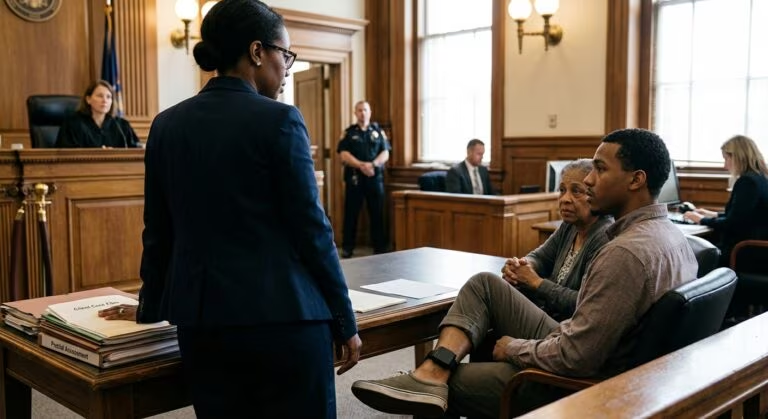
Sentencing in DUI manslaughter cases often combines multiple forms of punishment. A defendant may serve a jail term, then transition to house arrest or probation. This structure allows the court to impose punishment while still maintaining oversight after release.
House arrest can be especially important in cases involving public figures or workers whose jobs require mobility. Judges may allow limited exceptions for employment, medical treatment, court appearances, or approved counseling. Even so, house arrest is still a serious restriction because it limits movement and may require electronic monitoring.
- Jail or prison punishes the offense and protects the public.
- House arrest restricts movement and keeps the defendant under supervision.
- Probation allows release but imposes strict rules and ongoing monitoring.
- Treatment conditions address alcohol or substance-use concerns.
The role of license suspension and treatment
Driver’s license consequences are often among the most lasting parts of a DUI manslaughter case. Courts may order a lifetime suspension, and even when future reinstatement is possible, the person may have to wait years before applying for limited driving privileges. Because driving is central to daily life and employment, this penalty can have major practical effects long after the criminal case ends.
Alcohol and drug testing, counseling, and rehabilitation are also common conditions. These requirements reflect the view that a fatal impaired-driving case may reveal a deeper substance-use problem, even if the court also imposes punishment. In that sense, sentencing often tries to do two things at once: deter repeat conduct and reduce future risk.
Financial consequences beyond the courtroom
Criminal punishment is only part of the picture. DUI manslaughter can trigger civil claims, insurance disputes, and confidential settlement negotiations. The victim’s family may pursue wrongful death damages, and the defendant may rely on automobile insurance, umbrella coverage, or personal assets to address liability.
Even when a settlement is reached, it does not eliminate the emotional damage or the criminal record. But it can affect whether a civil lawsuit moves forward, how much publicity the case receives, and how the parties plan for the future. In some matters, financial settlement becomes a key factor in the broader resolution.
| Type of consequence | Examples |
|---|---|
| Criminal | Jail, prison, probation, fines, treatment, license loss |
| Civil | Wrongful death claims, settlements, restitution |
| Professional | Job loss, suspension, reputational harm, contract termination |
| Personal | Stress, family disruption, long-term monitoring, public scrutiny |
Why these cases draw intense public attention
Fatal DUI cases involving celebrities, athletes, or other well-known figures often attract major media attention. That visibility can make the criminal case more complicated, but the underlying legal issues remain the same: what happened, who was responsible, what the evidence shows, and what punishment is justified.
Public attention can also influence how victims’ families and defendants approach the process. Some families want the strictest punishment possible, while others prioritize closure, privacy, and certainty. Defendants may face pressure to speak publicly, accept responsibility, or participate in awareness efforts after sentencing.
Lessons for drivers and families
The most important lesson from DUI manslaughter cases is straightforward: impaired driving can permanently change multiple lives in an instant. What begins as a night out or a short trip can become a criminal case, a civil lawsuit, and a personal tragedy that affects victims, defendants, and entire communities.
Drivers can reduce risk by planning ahead, avoiding alcohol and drug use before driving, and using transportation alternatives when impairment is possible. Families can also talk openly about prevention, designated drivers, and ride services before a night out rather than trying to decide after drinking has already started.
- Plan transportation before any drinking begins.
- Do not assume a short drive is safe after consuming alcohol or drugs.
- Use a designated driver, taxi, rideshare, or public transit when needed.
- Seek help early if alcohol or drug use is becoming a recurring problem.
Frequently asked questions
Is DUI manslaughter the same as DUI?
No. DUI is a driving offense involving impairment, while DUI manslaughter usually involves a fatal crash and is treated as a much more serious felony.
Can someone go to jail for only a short time in a manslaughter case?
Yes, in some negotiated cases a defendant may receive a short jail sentence followed by probation or house arrest, but the result depends heavily on state law, the evidence, and the facts of the case.
Does a plea deal mean the person admitted everything?
A plea deal usually means the defendant accepts a conviction or responsibility in exchange for a negotiated outcome, but the precise admissions depend on the plea agreement and the court record.
Can a victim’s family influence the outcome?
Yes. Prosecutors and judges may consider the family’s wishes, especially in plea negotiations and sentencing discussions, although the final decision belongs to the court and the state.
Will a DUI manslaughter conviction affect driving privileges forever?
It can. Some cases involve lifetime suspension, while others may allow limited reinstatement later under strict conditions.
When legal guidance matters most
Because DUI manslaughter cases involve criminal exposure, potential civil liability, and life-changing consequences, early legal advice is critical. A defense lawyer may challenge the evidence, negotiate with prosecutors, evaluate plea offers, and help the accused understand the long-term impact of a conviction. For families, legal counsel can also help pursue accountability and manage civil claims.
These cases show how a single decision to drive while impaired can lead to consequences far beyond the initial arrest. The law treats fatal impaired driving as a serious public safety offense, and the courtroom response often reflects that seriousness through layered penalties and ongoing supervision.
References
- Stallworth pleads guilty to DUI manslaughter, gets 30 days in jail — Patriots.com. 2009-06-17. https://www.patriots.com/news/stallworth-pleads-guilty-to-dui-manslaughter-gets-30-days-in-jail-106671
- Financial agreement avoids lawsuit — ESPN. 2009-06-17. https://www.espn.com/nfl/news/story?id=4262751
- Browns’ Donte Stallworth Gets 30 Days for DUI — ABC News. 2009-06-18. https://abcnews.com/GMA/story?id=7867036&page=1
- DUI and Drugged Driving — National Highway Traffic Safety Administration. 2024-01-01. https://www.nhtsa.gov/risky-driving/drunk-driving
- Impaired Driving: Get the Facts — Centers for Disease Control and Prevention. 2024-01-01. https://www.cdc.gov/transportationsafety/impaired_driving/index.html