
DUI in a Parked Car: How “Actual Physical Control” Puts You at Risk
Why sitting or sleeping in a parked vehicle while impaired can still lead to DUI charges, and how laws on actual physical control work.
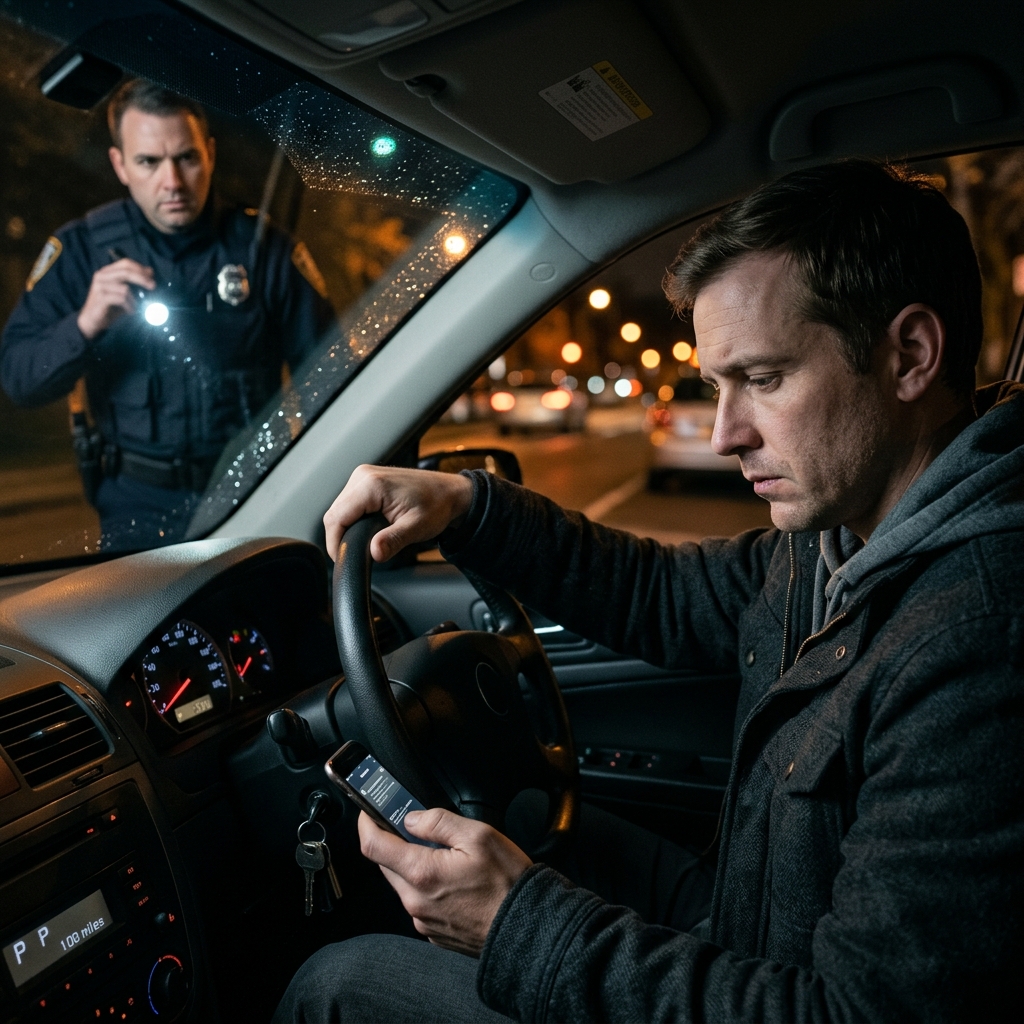
Many people assume driving under the influence laws only apply when a car is moving on the road. In reality, DUI and DWI statutes in many states are written broadly enough that you can be charged even when your vehicle is parked and not moving. The critical concept behind these cases is actual physical control of a vehicle.
This article explains how DUI laws can apply to parked cars, what “actual physical control” means, which facts matter most, common risk situations, potential penalties, and practical steps to reduce your legal exposure. It is for general information only and is not a substitute for legal advice about your specific situation.
Core Idea: DUI Without Driving
In many jurisdictions, DUI statutes are not limited to driving.
- Some laws prohibit operating a motor vehicle while impaired.
- Others prohibit being in actual physical control of a vehicle while under the influence.
Because of this broader language, prosecutors do not always have to prove that the vehicle was moving at the time police arrived. If they can show you had the ability to operate the vehicle while impaired—such as being behind the wheel with keys accessible—that may be enough in some states for a DUI conviction.
What “Actual Physical Control” Usually Means
The phrase actual physical control is central to parked-car DUI cases. Although each state defines and interprets it differently, courts commonly focus on whether the person had an immediate ability to operate the vehicle.
Judges often look at a combination of facts rather than any single detail. Typical factors include:
- Position in the vehicle – Were you in the driver’s seat, front passenger seat, or back seat?
- Location of the keys – Were the keys in the ignition, in your hand, in the console, or stored away?
- Engine status – Was the engine running, was the ignition on for heat or air conditioning, or was the car completely off?
- Where the vehicle was parked – On a public road, in a commercial lot, in a driveway, or somewhere suggesting recent driving activity?
- Evidence of recent movement – Warm engine, tire tracks, your statements about driving, or witness observations.
- Intent to drive – Did you appear to be about to drive soon, or did you clearly plan to stay put?
When these factors suggest you could easily start and move the car while impaired, police and prosecutors may argue you were in actual physical control and therefore subject to DUI charges.
Common Situations Where Parked-Car DUIs Arise
Parked-car DUI cases often begin with routine encounters rather than traffic stops. Typical scenarios include:
Sleeping It Off in the Driver’s Seat
Many people decide to sleep in their vehicle instead of driving home after drinking. Although this choice may be safer physically, it can create legal risk when you remain in the driver’s seat and keep the keys nearby.
- If the engine is running for heat or air conditioning, some courts see this as evidence of operating or physical control.
- Even with the engine off, being in the driver’s seat with keys accessible can be enough for an arrest in some states.
Sitting in a Car to Make Phone Calls or Wait
Another common scenario is sitting in a parked car after leaving a bar or party, using your phone, or waiting for a ride. If an officer approaches and finds you impaired behind the wheel, they may investigate whether you recently drove or were about to drive.
Vehicle Parked on the Side of the Road
When a vehicle is stationary on the roadside, especially in an unusual location (such as on the shoulder, at an intersection, or partially in the lane), police often suspect recent driving. In some cases, even if they did not see the car move, they may infer that you drove there while intoxicated.
Parking Lot Encounters
Officers are frequently called to check on individuals in vehicles outside bars, restaurants, and events. In some jurisdictions, being in the driver’s seat of a running or easily operable vehicle in a public or commercial lot can support DUI or similar charges.
How Different States Approach Parked-Car DUIs
Laws vary, but a few patterns emerge across states:
| State (example) | Key legal concept | What can trigger charges in a parked car? |
|---|---|---|
| Florida | “Driving or in actual physical control” of a vehicle | Sitting in a parked vehicle while impaired if you have immediate control, such as being behind the wheel with keys available. |
| Pennsylvania | Driving, operating, or actual physical control of movement | Prosecution must tie the impaired person to operation or control; parked-car cases often focus on small factual details like engine status and key location. |
| Texas | Operating a vehicle while intoxicated | Being behind the wheel with a running engine can be considered operating; sitting in the car while impaired may still support a DWI charge. |
| New Hampshire | Actual physical control of a vehicle | Courts weigh position, keys, engine, vehicle location, and apparent intent to drive to decide if a parked vehicle DUI applies. |
| New Jersey | Operating while under the influence (N.J.S.A. 39:4-50) | Sitting or sleeping in a parked car while intoxicated can lead to DWI charges, especially if the state can prove you were operating at some point. |
This table shows examples, not a complete list. The precise language in each state’s statute and case law controls the outcome. Even within one state, courts may reach different conclusions depending on the facts.
Key Facts That Often Determine the Outcome
Parked-car DUI cases tend to turn on specific, often small details. The following factors frequently matter:
- Where you were sitting
Being in the driver’s seat usually carries greater risk than being in the passenger or back seat. Courts often view the driver’s seat as a position of control. - Where the keys were
Keys in the ignition or within easy reach suggest a ready ability to drive, whereas keys stored out of reach can support the argument that you did not intend or were not able to operate the vehicle. - Whether the vehicle was running
A running engine is commonly treated as evidence of operating or control, even if you were using the car only for climate control. - Statements to police
Admissions such as “I drove here” or “I was about to drive home” are powerful evidence tying impairment to driving or operation. - Timing and location
The closer the encounter is to a bar, event, or recent drinking, and the more unusual the parking location, the easier it may be for the state to link impairment with operation.
Potential Penalties for Parked-Car DUI
If the prosecution proves the legal elements of DUI or DWI in a parked-car situation, penalties are generally similar to those for drunk driving while the car is moving.
Consequences can include:
- Criminal conviction – A DUI or DWI conviction appears on your record and can affect future employment, professional licensing, and travel.
- Jail or probation – Even first offenses may carry potential jail time, probation, or community service, depending on the jurisdiction and circumstances.
- Fines and fees – Courts can impose fines, court costs, and various administrative fees that may reach into the thousands of dollars.
- License suspension – Most states require suspension or revocation of driving privileges for DUI convictions, often with longer periods for repeat offenses.
- Ignition interlock devices – Some states require installation of a breath-testing device on your vehicle as a condition of driving after a DUI conviction.
- Insurance and collateral impacts – DUI convictions frequently result in higher insurance premiums and may trigger other consequences, such as immigration or housing issues.
Practical Steps to Reduce Legal Risk
The safest legal and physical choice is to avoid driving after drinking or using impairing substances. If you anticipate drinking, plan ahead with alternatives like a designated driver, rideshare, taxi, or public transportation.
If you nevertheless find yourself impaired and considering staying in your car, some practical steps may reduce (though not eliminate) the risk of a parked-car DUI:
- Avoid the driver’s seat
If possible, sit in the back seat or passenger seat rather than behind the wheel. This can help show you did not intend to operate the vehicle. - Keep the engine off
Leaving the engine off reduces the appearance of operating or control. Using the vehicle only as a shelter, rather than as a running vehicle, may be less risky. - Store keys out of reach
Place keys in a location that is not easily accessible (for example, in the trunk or locked glove compartment). Courts sometimes treat this as evidence that you did not plan to drive. - Consider alternative locations
If safe and feasible, staying in a hotel, friend’s home, or sober driver’s vehicle may be safer than remaining in control of your own car. - Do not volunteer incriminating statements
If questioned by police, remember that you generally have the right to remain silent and the right to consult an attorney. Statements about driving or intent to drive can be used as evidence.
These steps do not guarantee you will avoid charges. Police may still arrest someone they believe is in actual physical control of a vehicle while impaired. However, thoughtful choices may improve your position if the facts are later evaluated in court.
Defenses That May Be Raised in Parked-Car DUI Cases
Defense strategies depend heavily on the specific facts and the law of the relevant state. Some common themes include:
- Challenging actual physical control
The defense may argue you were not in control of the vehicle—for example, by emphasizing that the car was off, keys were inaccessible, or you were not in the driver’s seat. - Questioning the link between impairment and driving
In some states, the prosecution must show you were impaired while driving or operating, not simply that you were impaired when found. Evidence of timing may be critical. - Disputing test results or procedures
Defense counsel may challenge the accuracy of breath or blood tests, or whether police followed required procedures. - Arguing that you were seeking safety
While not always a legal defense, courts sometimes consider whether a person was using the car solely as a safe place to avoid driving. In close cases, this context may matter. - Constitutional issues
Defense attorneys may raise questions about the legality of the stop, detention, or search, and whether certain evidence should be excluded.
If you are charged with DUI in a parked-car situation, consulting a qualified criminal defense or DUI attorney is essential. The lawyer can analyze local law, evaluate the strength of the evidence, and advise on possible defenses or plea options.
Frequently Asked Questions
1. Can I get a DUI if my car was never moving?
In many states, yes. If prosecutors can show you were in actual physical control of a vehicle while impaired—such as sitting in the driver’s seat with keys accessible—you may face DUI or similar charges even if the car was not moving at the time.
2. Is it safer legally to sleep in the back seat?
Being in the back seat usually appears less like operating a vehicle than being behind the wheel, and some courts consider seat position when assessing control. However, this is not a guarantee, and other facts—such as key location and whether you drove there while impaired—still matter.
3. What if I only turned the car on for heat or air conditioning?
Courts in several states have treated a running engine as evidence of operating or control, even when the driver claims they turned it on only for comfort. From a legal perspective, using a running vehicle while impaired can still be risky.
4. Do I have to be on a public road to be charged?
Some states focus on whether you were on a public roadway, while others apply DUI laws more broadly to certain private or commercial areas. Whether a particular location qualifies generally depends on local statutes and case law.
5. Does choosing not to drive help my case?
Choosing not to drive can be an important safety decision and may be relevant context, but it does not automatically prevent a DUI charge. If police and prosecutors believe you were in actual physical control of the vehicle while impaired, they may still pursue charges.
References
- Florida Statutes § 316.193 – Driving Under the Influence — State of Florida. 2024-01-01. https://www.flsenate.gov/Laws/Statutes/316.193
- Title 75, Pennsylvania Consolidated Statutes – § 3802 Driving under influence of alcohol or controlled substance — Pennsylvania General Assembly. 2023-12-01. https://www.legis.state.pa.us/cfdocs/legis/li/uconsCheck.cfm?yr=0&sessInd=0&act=24
- Texas Penal Code and Transportation Code – DWI Provisions — State of Texas. 2023-09-01. https://statutes.capitol.texas.gov/Docs/PE/htm/PE.49.htm
- New Hampshire RSA 265-A:2 – Driving or Operating Under the Influence — State of New Hampshire. 2023-06-01. https://www.gencourt.state.nh.us/rsa/html/XXI/265-A/265-A-2.htm
- RCW 46.61.502 and 46.61.504 – Driving or Physical Control While Under the Influence — State of Washington. 2024-01-01. https://apps.leg.wa.gov/rcw/default.aspx?cite=46.61.502
- N.J.S.A. 39:4-50 – Driving While Intoxicated — State of New Jersey. 2023-08-01. https://nj.gov/lps/
- Utah Code § 41-6a-502 – Driving Under the Influence — State of Utah. 2025-09-05. https://le.utah.gov/xcode/Title41/Chapter6A/41-6a-S502.html
Similar Articles








Read full bio of medha deb




