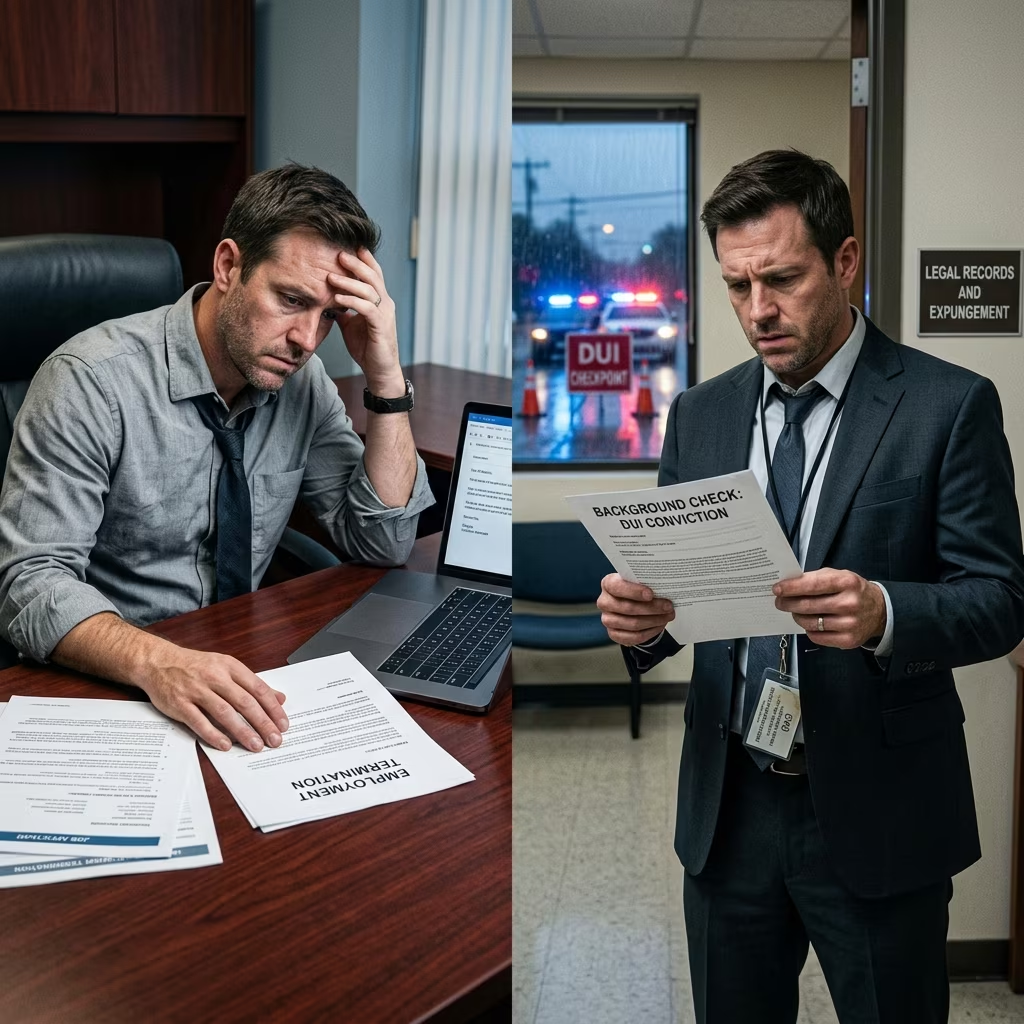
A DUI (driving under the influence) charge or conviction rarely ends at fines and court appearances. It can follow you into the workplace, influence how employers view your judgment, and affect your ability to advance in your career. Your driver’s license, your criminal record, and even your professional license can become part of the employment equation.
This article explains how a DUI can affect your current job, your
Understanding What a DUI Means for Your Record
Before looking at employment impacts, it helps to understand what a DUI typically leaves behind on your record.
- Criminal record: In many jurisdictions, a DUI is a criminal offense. A conviction creates a permanent criminal record that is likely to appear in background checks.
- Driving record: A DUI often leads to license suspension, points, and mandatory reporting to motor vehicle agencies, which can affect employability in roles involving driving.
- Public court records: Court filings and disposition records can be accessed by employers, licensing boards, and sometimes the public.
While some states limit how employers can use criminal history, many still review DUI records during hiring, promotion, or retention decisions.
Immediate Consequences for Your Current Employment
A DUI can have immediate effects on your existing job, even before a conviction is entered. The impact depends on your role, employer policies, and whether you are required to report arrests or convictions.
Company Policies and Employment Contracts
Many employers have written policies or contract clauses dealing with criminal charges, including DUIs.
- Mandatory reporting: Certain employers—especially government agencies and regulated industries—require employees to promptly report arrests or convictions. Failure to report can itself be grounds for discipline or termination.
- Morals or conduct clauses: Jobs in education, healthcare, public safety, and corporate leadership often include conduct standards that a DUI may violate.
- Driving requirements: If your position requires driving a company vehicle, holding a commercial license, or maintaining insurability, a DUI-related suspension can make you ineligible to perform essential duties.
Where policies are strict, an arrest alone can trigger suspension while the case is pending. A conviction may lead to demotion, reassignment to non-driving duties, or termination.
Job Roles Most Vulnerable to Impact
Not every job is affected in the same way. Certain roles are more exposed to consequences from a DUI:
- Commercial and professional drivers: Truck drivers, delivery drivers, bus operators, and taxi/rideshare drivers typically face immediate employment risk because driving is an essential job function.
- Public safety and military: Police officers, firefighters, correctional officers, and military personnel may face internal investigations, loss of promotion eligibility, or separation from service.
- Education and childcare: Teachers and school staff can be subject to strict conduct standards and may risk termination or licensing review for a DUI.
- Positions requiring security clearance: Government and defense roles often require that employees report arrests and may treat a DUI as a negative factor in clearance review.
For employees in office-based roles without driving or clearance requirements, the impact may be more limited, but employers can still consider the conduct when evaluating trust and reliability.
Long-Term Effects on Future Job Opportunities
A DUI does not automatically make you unemployable, but it can influence how hiring managers view your application, especially in competitive fields or positions demanding high levels of trust.
How DUIs Appear in Background Checks
Most employers use background checks to assess candidates. A DUI can surface in several ways:
- Criminal history reports: Convictions typically appear in criminal background checks ordered from consumer reporting agencies.
- Motor vehicle records: Jobs involving driving often require a review of your driving record, where DUI entries and license suspensions are visible.
- Self-disclosure forms: Many applications ask directly about criminal convictions. If you have a DUI, you must answer truthfully where required.
Guidance from federal regulators encourages employers to consider context rather than automatically rejecting candidates with criminal records, but practices still vary widely between organizations.
Employer Reactions to a DUI on Your Record
When a DUI is detected during screening, employers may respond in different ways:
- Automatic disqualification: Some positions—particularly those involving driving, public safety, or strict regulatory requirements—exclude candidates with recent DUI convictions.
- Conditional consideration: Other employers review the age of the conviction, whether it is an isolated incident, and your overall qualifications before making a decision.
- Case-by-case evaluation: Many hiring managers treat a DUI as a red flag requiring explanation, but not a definitive barrier, especially when the candidate shows evidence of rehabilitation.
As more time passes and your record remains otherwise clean, the practical impact of a single DUI often diminishes, though it rarely disappears entirely.
Impact on Professional Licenses and Regulatory Clearances
For licensed professionals, a DUI can trigger consequences beyond general employment decisions. Licensing boards and regulatory agencies may review your conduct and impose discipline.
Professions at Higher Licensing Risk
- Healthcare professionals: Doctors, nurses, and pharmacists may face board investigations, mandatory reporting requirements, or conditions on their licenses after a DUI.
- Commercial drivers: Holders of commercial driver’s licenses (CDLs) are often subject to enhanced penalties and stricter licensing rules after a DUI, directly affecting employability.
- Aviation and maritime roles: Pilots and merchant mariners may be required to report DUIs to federal agencies, which can initiate reviews of their credentials.
- Legal and financial professionals: Lawyers, accountants, and financial advisors may be obliged to disclose convictions to their licensing or regulatory bodies, especially if the conduct suggests impaired judgment.
Disciplinary actions can range from warnings and mandated treatment to suspension or revocation of a license, depending on jurisdiction, prior history, and the seriousness of the incident.
DUI, Reputation, and Workplace Relationships
Even when a DUI does not lead to formal discipline or job loss, it can affect how colleagues, supervisors, and clients perceive you.
- Perceived reliability: Employers may question decision-making, impulse control, or respect for company policies when they learn about a DUI.
- Client trust: In roles involving direct client interaction, public knowledge of a DUI can raise concerns, leading to reassignment to less visible positions.
- Promotion prospects: Leadership roles often require high levels of trust and public credibility. A DUI can slow promotion opportunities, especially in organizations with conservative cultures.
However, strong performance, consistent professionalism, and evidence of change can mitigate reputational damage over time.
Legal Protections and Limits on Employer Use of DUI Records
Employment decisions are not made in a legal vacuum. Several laws shape how employers can consider DUI records, though protections vary.
Fair Chance and “Ban-the-Box” Laws
Some jurisdictions restrict when employers can ask about criminal history or run background checks. For example, in parts of the United States, employers may be prohibited from inquiring into criminal records until after a conditional offer of employment.
- Delayed inquiries: Employers may be required to assess a candidate’s qualifications before considering convictions.
- Contextual review: Guidance from equal employment authorities recommends evaluating the nature of the offense, the time elapsed, and job relevance instead of imposing blanket bans.
These rules do not guarantee a job, but they encourage more individualized, fair consideration of candidates with DUIs.
Anti-Discrimination Principles
While a DUI is not a protected characteristic, employers must apply policies consistently. Rejecting some candidates with DUIs while hiring others in similar circumstances can raise fairness concerns and, in some cases, legal risk if decisions disproportionately affect specific groups.
Strategies to Protect Your Career After a DUI
Facing a DUI can feel overwhelming, but there are practical steps you can take to protect your employment and rebuild your professional standing.
Act Quickly on Legal and Administrative Issues
- Consult experienced counsel: Legal advice can help you understand charges, potential penalties, and options for reducing long-term impact.
- Address driver’s license issues: Take steps required by motor vehicle agencies to restore your driving privileges as soon as possible, especially if your job relies on driving.
- Comply fully with court orders: Completing all required education, treatment, probation, or community service demonstrates responsibility and can be important evidence of rehabilitation.
Communicating with Your Employer
If your employment contract or company policy requires disclosure, careful communication is essential.
- Report promptly when required: Delayed or concealed reporting can be viewed more negatively than the DUI itself.
- Be factual and accountable: Explain what happened without minimizing it, and emphasize steps you are taking to ensure it does not recur.
- Offer solutions: If driving restrictions affect your duties, propose temporary arrangements or alternative responsibilities that allow you to remain productive.
Addressing a DUI in Job Applications and Interviews
When applying for new positions, you may need to discuss your DUI. How you frame the conversation matters.
- Follow instructions carefully: Answer questions about criminal history truthfully where they are lawfully asked, but avoid volunteering additional negative information that is not requested.
- Show insight and growth: Focus on what you learned, how you changed your behavior, and how you have complied with all requirements.
- Highlight strengths: Emphasize your skills, accomplishments, and positive references so the DUI becomes one part of a larger, stronger profile.
Examples of How a DUI Can Affect Different Career Paths
| Type of Role | Primary Risk from DUI | Typical Employer Response |
|---|---|---|
| Commercial Driver (CDL) | License suspension; insurance restrictions; regulatory penalties | High chance of termination or non-hiring until license restored and lookback periods expire. |
| Office-Based Professional | Perceived judgment issues; background check flag; client trust concerns | Often considered case-by-case; may affect promotions more than initial hiring. |
| Healthcare Provider | Licensing board review; questions about fitness to practice | Possible investigation, monitoring, or conditions on license depending on severity. |
| Government / Clearance Role | Impact on security clearance; concerns about reliability | Detailed review; DUI may be a negative factor but not always disqualifying. |
| Education / Childcare | Conduct standards; trust with parents and community | Potential termination or non-renewal of contracts; licensing review in some jurisdictions. |
Frequently Asked Questions About DUIs and Employment
Does a single DUI always ruin job prospects?
No. A first-time DUI does not automatically end a career, but it can limit opportunities in roles involving driving, public safety, or high trust. Many employers still hire candidates with isolated, older DUIs when there is evidence of responsibility and strong qualifications.
Will a DUI show up on every background check?
A DUI conviction usually appears in criminal background checks and can be visible in driving record checks, especially within a certain lookback period. However, some employers only review felony convictions or limited time frames, and background screening practices differ by industry.
Can I be fired from my current job because of a DUI?
Yes, it is possible, particularly if your job involves driving, if the DUI violates company policy, or if you are required to report arrests or convictions and fail to do so. Some employers choose discipline or reassignment instead of termination, depending on the circumstances.
Will a DUI affect my ability to get a professional license?
In many licensed professions, a DUI can trigger review by a licensing board and may lead to conditions, monitoring, or in serious cases suspension or revocation. The outcome depends on the profession, jurisdiction, prior history, and whether the incident suggests a pattern of unsafe behavior.
Can the impact of a DUI on my employment improve over time?
Yes. While the record may remain, employers often focus on recent conduct. As years pass without further incidents and you demonstrate strong performance, the practical impact of a single DUI typically decreases, especially outside highly regulated or driving-intensive fields.
References
- Can a First-Time DUI Ruin Your Job Prospects? — Crowell Law Offices. 2023-06-15. https://www.crowelllawoffices.com/can-a-first-time-dui-ruin-your-job-prospects/
- Impact of a DUI on Employment in DC — Scrofano Law. 2022-09-20. https://criminallawdc.com/dc-dui-lawyer/penalties/employment/
- How a Maryland DUI Affects Employment — Marc G. Snyder, Maryland Criminal Lawyer. 2021-11-01. https://maryland-criminallawyer.com/maryland-dui-lawyer/penalties/affect-on-employment/
- Does a DUI Show Up on Background Checks? Impact on Employment — GoodHire. 2023-02-10. https://www.goodhire.com/resources/articles/dui-on-a-background-check-and-employment/
- How Will a DUI DWI Conviction Affect My Job Prospects? — Avvo Legal Q&A. 2019-08-05. https://www.avvo.com/legal-answers/how-will-a-dui-dwi-conviction-on-my-record-affect–289517.html
- How a DUI Conviction Can Impact Your Future Employment — Feldman & Lee, PS. 2022-05-12. https://www.feldmanlee.com/blog/how-a-dui-conviction-can-impact-your-future-employment/