DUI for Legal Drugs: What Drivers Need to Know
Learn how prescription and over-the-counter medications can still lead to DUI charges even when taken legally and as directed.
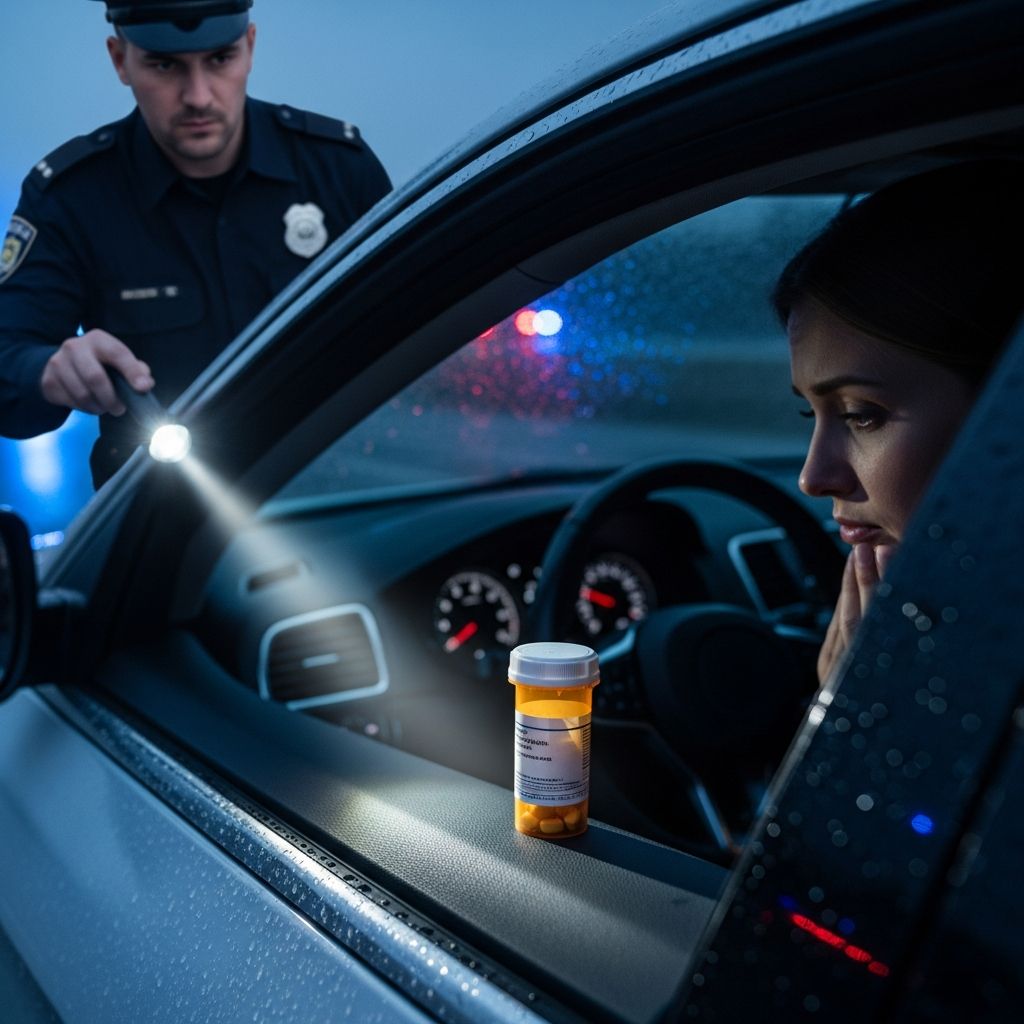
DUI and Legal Drugs: A Comprehensive Guide for Drivers
Most people associate driving under the influence with alcohol or illegal drugs, but many drivers are surprised to learn that they can face a DUI charge after taking perfectly legal medications, including prescriptions and everyday over-the-counter (OTC) products.
This guide explains how DUI laws apply to legal drugs, what counts as impairment, which medications commonly cause problems, and what to do if you are stopped or charged.
1. How DUI Laws Treat Legal Drugs
Every state prohibits operating a vehicle while impaired, and those rules apply whether the substance is legal, illegal, prescribed, or purchased at a pharmacy without a prescription.
1.1 Two basic DUI frameworks: “per se” vs. impairment
Most states use one or both of the following legal approaches:
- Per se DUI
- Applies when a driver’s blood level of a substance is at or above a set legal threshold, regardless of how they appear to be driving.
- The classic example is a blood alcohol concentration (BAC) of 0.08% or higher for most adult drivers in all 50 states and D.C.
- Some states have specific blood limits for certain drugs (for example, THC or other controlled substances).
- Impairment-based DUI
- Focuses on whether the driver’s abilities are actually impaired by any substance, not on a fixed blood level.
- Legal drugs are treated the same as illegal ones: if the drug affects your ability to drive safely, you can be charged.
In many prescription-medication DUI cases, prosecutors rely on impairment rather than a specific blood-drug level, because standardized limits for most medications do not exist.
1.2 Impairment: what legal standards usually require
States define impairment somewhat differently, but a common standard is whether the driver can operate a vehicle with the care expected of a sober, reasonably prudent person. Impairment typically includes:
- Slowed reaction time or delayed responses
- Poor coordination or balance
- Difficulty maintaining lane position or consistent speed
- Confusion, disorientation, or inability to follow directions
- Noticeable drowsiness or apparent intoxication
| Feature | Per Se DUI | Impairment DUI |
|---|---|---|
| Legal basis | Blood level at or above a legal limit (e.g., 0.08% BAC) | Evidence that driving ability was actually impaired |
| Requires visible impairment? | No | Yes, usually proven with officer observations and tests |
| Applies to legal medications? | Sometimes (for drugs with set limits) | Yes, if the drug affects driving |
| Common evidence | Blood, breath, or urine chemical test | Driving pattern, field sobriety tests, officer testimony, toxicology |
2. Legal Medications That Can Lead to DUI Charges
Many medications—both prescription and OTC—can interfere with driving. The U.S. Food and Drug Administration (FDA) warns that common medicines such as antihistamines, sleep aids, and some cold or cough products can cause drowsiness, blurred vision, dizziness, or slowed reaction time, all of which can increase crash risk.
2.1 Typical prescription drugs involved in DUI cases
Common categories of prescription medications that may contribute to DUI arrests include:
- Opioid pain medications (e.g., oxycodone, hydrocodone, morphine)
- Can cause extreme drowsiness, slowed thinking, and impaired coordination.
- Benzodiazepines (e.g., alprazolam, diazepam, lorazepam)
- Used for anxiety or insomnia; may slow reflexes, reduce attention, and impair judgment.
- Prescription sleep medications (e.g., zolpidem, eszopiclone)
- Can cause next-morning drowsiness, confusion, and difficulty concentrating, even if taken the night before.
- Muscle relaxants
- Often cause sedation, blurred vision, and slowed reactions.
- Some antidepressants and antipsychotics
- Certain drugs in these classes can have strong sedating or disorienting effects, particularly when treatment is first started or the dose is changed.
2.2 Over-the-counter medications that can impair driving
It is easy to overlook the effects of non-prescription products, but the FDA notes that several OTC medicines can adversely affect driving, including:
- First-generation antihistamines (e.g., diphenhydramine, doxylamine)
- Frequently cause drowsiness, slower reaction time, and reduced alertness.
- Cough and cold remedies with sedating ingredients
- May combine antihistamines, cough suppressants, and alcohol, all of which can depress the central nervous system.
- Some anti-diarrheal and motion-sickness drugs
- Can cause blurred vision or dizziness.
2.3 Interaction effects: mixing medicines, alcohol, and other drugs
Legal medications often become more dangerous when combined with other substances. The National Highway Traffic Safety Administration (NHTSA) warns that combining alcohol with drugs—including prescriptions, OTC products, or cannabis—can significantly magnify impairment and crash risk, even when each substance alone might not cause obvious problems.
3. How Police Build a DUI Case for Legal Drugs
When an officer suspects medication-related impairment, the investigation usually unfolds differently than in a standard alcohol stop.
3.1 The traffic stop and observations
DUI investigations often begin with observed driving behavior, such as:
- Weaving or drifting between lanes
- Unusually slow or inconsistent speed
- Failure to react to traffic signals or hazards
- Near-misses, sudden braking, or delayed starts at green lights
After pulling the driver over, the officer may note signs like:
- Slurred or slow speech
- Confusion or difficulty following instructions
- Heavy eyelids, bloodshot or glassy eyes, or unusual pupil size
- Unsteady stance or trouble exiting the vehicle
3.2 Field sobriety tests and drug recognition evaluations
Officers may use standardized field sobriety tests (FSTs), such as the walk-and-turn or one-leg stand, to look for coordination and balance problems. For suspected drug impairment, some departments also rely on specially trained Drug Recognition Experts (DREs), who perform a structured evaluation to distinguish between different categories of drugs and estimate impairment.
3.3 Chemical testing for drugs
Unlike alcohol, where breath tests are commonly used on the roadside, drug testing usually requires:
- Blood tests to identify and measure specific prescription or illicit substances
- Urine tests to detect the presence of drugs or metabolites (though these are less useful for exact timing of use)
In an impairment-based case, test results are often combined with officer observations and FST performance to argue that the driver was unsafe to operate a vehicle.
4. Penalties and Consequences of a Legal-Drug DUI
Being convicted of a DUI based on legal drugs usually carries penalties similar to an alcohol DUI, though details vary by state.
4.1 Criminal penalties
Possible criminal consequences can include:
- Fines and court costs that may rise with repeat offenses
- Jail time or probation, depending on the severity of the incident and prior record
- Mandatory participation in substance use or driver safety programs
- Installation of an ignition interlock device in alcohol-related or mixed-substance cases in some states
4.2 Driver’s license and administrative actions
Administrative penalties can be swift and separate from the criminal court process. These may include:
- Immediate or early license suspension after arrest in some jurisdictions
- Longer license suspension or revocation after conviction
- Reinstatement fees, SR-22 insurance requirements, or restricted licenses
4.3 Long-term collateral consequences
Beyond fines and license loss, a legal-drug DUI can have wider impacts:
- Increased auto insurance premiums or cancellation of coverage
- Employment difficulties, especially in jobs requiring driving or professional licenses
- Immigration or travel complications in some cases
- Criminal record visible on background checks
5. Staying Safe: Practical Tips for Drivers Using Medications
Because many people depend on daily medications, avoiding unnecessary risk while remaining mobile requires planning and communication.
5.1 Talk with your prescriber and pharmacist
The FDA encourages patients to ask about how medications might affect driving before starting treatment or changing doses. Consider discussing:
- Whether the drug can cause drowsiness, dizziness, or slowed thinking
- How long those side effects are likely to last
- How the medication interacts with alcohol, cannabis, or other prescriptions
- Whether a non-sedating alternative is available
5.2 Read and follow medication labels
Warning labels often provide clear safety guidance, such as:
- “Do not drive or operate heavy machinery until you know how this drug affects you.”
- “May cause drowsiness or dizziness.”
- “Avoid alcoholic drinks.”
If you experience side effects that make you feel unsafe on the road, refrain from driving until you have spoken with a health professional.
5.3 Time your doses and plan transportation
- Take especially sedating drugs (such as certain sleep medications) only when you can sleep for the recommended amount of time and avoid morning driving if advised.
- Use alternative transportation—rideshare, public transit, taxis, or a designated driver—if you need to take a medicine that impairs you.
- If impairment is unpredictable, consider avoiding driving until your body has adjusted to a new treatment or dose.
5.4 Keep documentation—but know it is not a shield
Carrying proof of a valid prescription can be helpful, but it does not legally protect you from a DUI if you are impaired. Laws generally focus on whether it was safe for you to drive, not on whether the drug was legally obtained.
6. If You Are Stopped or Arrested for a Medication-Related DUI
Being pulled over after taking a legal medication can be stressful. While rules differ by state, some general considerations apply.
6.1 During the traffic stop
- Remain polite and keep your hands visible.
- Provide your license, registration, and proof of insurance when asked.
- Answer basic identifying questions, but understand that you generally do not have to volunteer detailed medical information or guess which drug might be affecting you.
- Be aware that your speech, movements, and behavior may be recorded and later used as evidence.
6.2 Chemical testing and implied consent
Most states have implied consent laws: by driving, you agree in advance to submit to certain chemical tests if lawfully arrested for DUI. Refusing these tests can trigger administrative penalties, such as automatic license suspension, separate from any criminal case.
6.3 Seek legal advice promptly
DUI law is highly state-specific and fact-dependent. Because medication cases often raise complex issues of dosage, side effects, and medical necessity, many drivers choose to consult an attorney experienced in drug-related DUI defense as early as possible after arrest.
7. Frequently Asked Questions (FAQs)
Q1: Can I get a DUI if I am taking my prescription exactly as directed?
Yes. In most states, it does not matter that the drug was legally prescribed or taken as recommended. If the medication impairs your ability to drive safely, you can be charged with DUI based on impairment.
Q2: Are over-the-counter medications really a DUI risk?
They can be. The FDA notes that some OTC products—especially older antihistamines and certain cold medicines—can cause drowsiness, blurred vision, or slowed reaction time, all of which may make driving unsafe and increase crash risk.
Q3: Will a low or zero alcohol reading protect me?
Not necessarily. Many drug-based DUI cases involve drivers whose breath sample is under the alcohol legal limit, but who appear impaired by medications or other drugs. Officers and prosecutors may rely on field tests, blood or urine results, and observed behavior instead of alcohol readings.
Q4: Do all states have specific blood-level limits for prescription drugs?
No. While some states set per se limits for certain illicit drugs or THC, there are very few standardized limits for prescription medications. Most prescription-related DUIs are prosecuted under impairment-based statutes that focus on how the driver was actually functioning.
Q5: What should I discuss with my doctor if I need medicine but also must drive?
Ask about non-sedating alternatives, how long side effects might last, whether it is safe to drive at specific times after dosing, and how the drug interacts with alcohol or other substances. Be honest about your driving needs so your provider can help you choose the safest treatment plan.
References
- Some Medicines and Driving Don’t Mix — U.S. Food and Drug Administration. 2016-02-04. https://www.fda.gov/consumers/consumer-updates/some-medicines-and-driving-dont-mix
- Prescription Medication as a Legal Basis for DUI or DWI — Justia. 2023-07-01 (updated). https://www.justia.com/criminal/drunk-driving-dui-dwi/handling-a-dui-stop/prescription-medication-dui/
- Drug-Impaired Driving — National Highway Traffic Safety Administration (NHTSA). 2022-08-01. https://www.nhtsa.gov/risky-driving/drug-impaired-driving
- Facts & Statistics: Impaired Driving — Insurance Institute for Highway Safety (IIHS). 2024-02-01. https://www.iihs.org/topics/impaired-driving
- Can You Get a DUI for Driving on Legal Drugs? — High Focus Centers. 2023-05-15. https://pa.highfocuscenters.com/dui-for-driving-on-legal-drugs/
- Prescription Medications and DUI: When Legal Drugs Lead to Illegal Charges — Meltzer & Bell, P.A. 2021-09-10. https://www.meltzerandbell.com/news/prescription-medications-and-dui-when-legal-drugs-lead-to-illegal-charges/
- Can I Get a DUI on Prescription or Over-the-Counter Drugs? — DUI.org. 2022-03-20. https://www.dui.org/resources-and-articles/can-i-get-a-dui-on-prescription-drugs/
Similar Articles








Read full bio of Sneha Tete