DUI checkpoints, also called sobriety checkpoints, are a common tool used by police to deter and detect impaired driving. They can be stressful and confusing, especially if you are unsure what the law allows officers to do and what rights you still have when you are stopped. This guide explains how checkpoints work, when they are legal, what you may lawfully refuse, and how to protect yourself while staying safe and cooperative.
What Is a DUI Checkpoint?
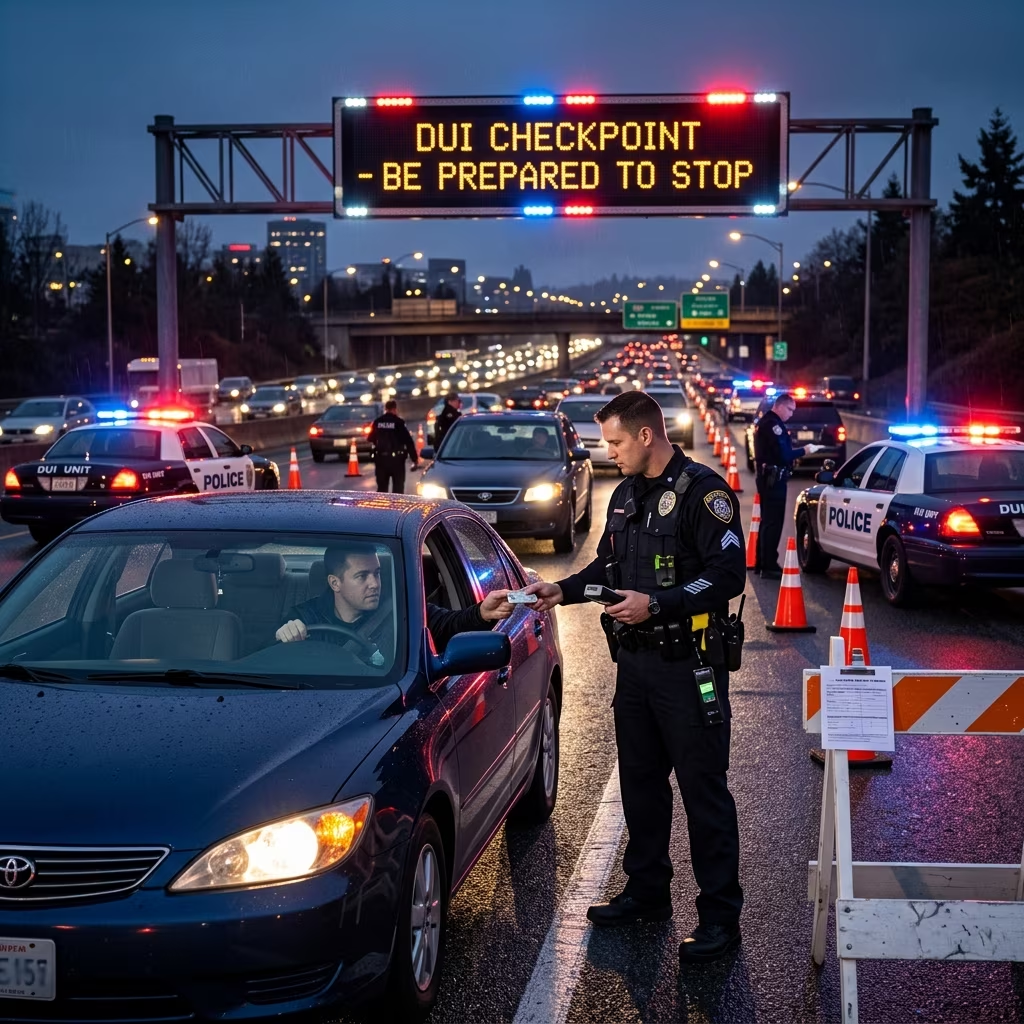
A DUI checkpoint is a temporary roadblock where law enforcement stops vehicles according to a predetermined pattern to check drivers for signs of alcohol or drug impairment. Instead of pulling over only drivers who show obvious signs of wrongdoing, officers briefly stop many drivers to look for indicators of intoxication and to confirm basic licensing and registration.
Typically, checkpoints are placed on public roads with a history of drunk driving crashes or during times of increased risk, such as late nights, holidays, or weekends.
Core Features of Sobriety Checkpoints
- Set up on public roads rather than private property.
- Vehicles are stopped using neutral criteria (for example, every third or fourth car), not based on an officer’s personal choice.
- Stops are brief if no signs of impairment are detected.
- Officers may ask for your driver’s license, registration, and proof of insurance.
- Officers visually and verbally screen for signs of intoxication (odor of alcohol, slurred speech, confusion, bloodshot eyes).
Are DUI Checkpoints Legal?
On the federal level, sobriety checkpoints are generally considered constitutional when conducted under strict guidelines. The key case is Michigan Dept. of State Police v. Sitz (1990), in which the U.S. Supreme Court held that properly run DUI checkpoints do not violate the Fourth Amendment, even though they involve stopping drivers without individualized suspicion.
| Jurisdiction Rule | Summary |
|---|---|
| Federal constitutional law | Supreme Court permits sobriety checkpoints if intrusions are minimal and procedures limit officer discretion. |
| States allowing checkpoints | Approximately 38 states plus Washington, D.C. permit DUI checkpoints. |
| States prohibiting checkpoints | Around 12 states either ban checkpoint roadblocks or do not use them, often based on their own constitutions. |
Even where checkpoints are allowed, state courts and legislatures often impose detailed requirements to limit how intrusive they can be. For example, California and Georgia courts have required neutral stopping patterns, supervisory planning, reasonable locations, safety measures, clear signage, and brief detentions.
Your Constitutional Rights at a DUI Checkpoint
Being stopped at a checkpoint does not erase your rights. You still benefit from protections under the U.S. Constitution, especially the Fourth Amendment (searches and seizures) and the Fifth Amendment (self-incrimination). Understanding the difference between what is required and what is optional can help you avoid unnecessary risk.
Fourth Amendment: Limits on Searches and Seizures
The Fourth Amendment protects you from unreasonable searches and seizures by the government. At a checkpoint, the initial stop has been pre-authorized by courts if the checkpoint follows approved procedures. However, officers still need a lawful basis to go beyond a brief stop.
- Brief stop is permitted: Officers may momentarily detain you to check for impairment and confirm basic documents.
- No broad search without cause: Officers generally cannot search your vehicle without a warrant, probable cause, or your consent.
- Probable cause examples: Open containers in plain view, strong odor of alcohol, obvious slurring, or admissions of drinking can allow deeper investigation.
- Consent searches: If an officer asks, “Do you mind if I search your car?” you may lawfully decline unless they present legal authority.
Politely refusing a voluntary search protects your privacy and limits the evidence that can be used against you later.
Fifth Amendment: Your Right to Remain Silent
Checkpoint encounters also implicate your right against self-incrimination. You must provide certain basic information, but you do not have to answer questions that could be used to build a criminal case against you.
Information you generally must provide:
- Name and address (if requested under state law).
- Driver’s license.
- Vehicle registration.
- Proof of insurance.
Questions you may decline to answer:
- “Have you been drinking tonight?”
- “Where are you coming from?”
- “Where are you headed?”
- Other questions intended to elicit admissions or incriminating details.
You can invoke your right calmly and clearly, for example: “I’m choosing to remain silent” or “I’d prefer not to answer questions beyond providing my documents.” Remaining respectful helps avoid escalation and keeps the interaction focused on what the law actually requires.
Can You Legally Avoid a DUI Checkpoint?
In most jurisdictions that allow checkpoints, you are not legally required to drive through one just because you see it ahead. You may choose an alternate route so long as you obey traffic laws and drive safely.
Lawful Avoidance vs. Suspicious Behavior
- Legal avoidance: Turning onto a side street or taking another route in a normal, legal way is generally allowed.
- Dangerous maneuvers: An illegal U-turn, crossing double lines, speeding, or erratic driving can justify a separate traffic stop.
- Checkpoints must provide warning: Many states require signs or notices ahead of the checkpoint, allowing drivers a chance to bypass it safely.
- No stop solely for avoidance: In states like California, officers cannot stop you just because you lawfully turned away from a checkpoint.
Once you enter the checkpoint lane, you are generally required to stop and comply with lawful instructions for a brief screening. Refusing to stop at that point can lead to an infraction or further investigation.
Field Sobriety Tests and Chemical Testing
Many people assume that they must comply with every test requested at a checkpoint. The reality is more nuanced. Field sobriety exercises and breath or blood tests involve different legal rules, especially under state implied consent laws.
Field Sobriety Tests
Field sobriety tests (FSTs) are physical or observational exercises—such as walking in a straight line or standing on one leg—that officers use to gauge impairment. These tests can be subjective and may be influenced by nervousness, medical conditions, or poor instructions.
- In many states, you may refuse FSTs at a checkpoint.
- Refusal limits the amount of evidence an officer has to justify an arrest.
- However, refusal can sometimes increase an officer’s suspicion, which may lead to closer observation or other tests.
Breath, Blood, and Implied Consent
Most states have implied consent laws: by driving on public roads, you agree in advance to chemical testing (breath, blood, or urine) if lawfully arrested for DUI. Refusing these tests often carries automatic administrative penalties even if you are never convicted of DUI.
- Refusal can lead to automatic suspension of your driver’s license in many states.
- Civil penalties may be separate from any criminal case.
- Some states treat refusal as evidence of consciousness of guilt, which can be used at trial.
Whether to submit to a test is a strategic decision that depends on your state’s laws and personal circumstances. Because consequences vary widely, it is wise to learn your local rules before you face a checkpoint.
What Officers Can and Cannot Do at Checkpoints
Courts have allowed checkpoints on the condition that officers follow strict rules designed to minimize intrusion and prevent arbitrary enforcement. Although exact requirements differ by state, common principles include:
Typical Legal Requirements
- Supervisory planning: Supervising officers must design the checkpoint operations and policies, not leave them to on-the-spot decisions.
- Neutral stopping pattern: Vehicles must be selected based on objective criteria (e.g., every third car), not personal preference.
- Reasonable location: Checkpoints should be placed where they can realistically promote road safety, such as high-risk areas.
- Safety precautions: Adequate lighting, signage, and lane control should protect drivers and officers.
- Clear official indicia: Marked police vehicles, uniforms, and signs identifying a DUI checkpoint help drivers understand what is happening.
- Minimal detention time: If officers find no signs of impairment, they must let you proceed promptly.
- Advance publicity in some states: Roadblocks may need to be announced publicly ahead of time.
When officers deviate from these requirements, it may be possible for a defense lawyer to challenge the legality of the checkpoint and seek suppression of evidence obtained there.
Practical Tips for Handling a DUI Checkpoint
Knowing the law is important, but how you act in the moment also matters. Calm, respectful behavior can reduce tension and help protect your rights.
Before You Reach the Checkpoint
- Slow down and follow posted signs and officer instructions.
- Have your driver’s license, registration, and proof of insurance ready.
- Roll down your window enough to communicate clearly.
During the Interaction
- Stay polite: Calm, courteous speech makes the situation smoother.
- Provide required documents: Hand over your license, registration, and insurance when asked.
- Limit conversation: If questions go beyond basics, consider politely saying you prefer not to answer.
- Don’t volunteer information: Avoid unnecessary details like where you were drinking or how much.
- Decline searches you don’t want: If your car is not being searched based on probable cause or warrant, you can politely refuse consent.
After the Checkpoint or If Things Go Wrong
- If you are allowed to leave, drive away carefully and within the law.
- If you are detained further or arrested, continue to remain silent except for basic identifying information, and ask to speak with an attorney.
- As soon as possible, write down what happened: location, time, officer names (if known), questions asked, tests requested, and anything that seemed improper.
- Consult a qualified DUI or criminal defense lawyer promptly if you believe your rights were violated or you face charges.
Frequently Asked Questions (FAQs)
1. Do I have to stop at a DUI checkpoint?
If you enter the checkpoint lane, you generally must stop and follow lawful instructions for a brief screening. Refusing to stop or attempting to drive through without permission can lead to legal consequences.
2. Can I turn around to avoid a checkpoint?
In many states, it is legal to avoid a checkpoint as long as you do so safely and without breaking traffic laws. Officers may not stop you solely for taking a lawful alternate route, but illegal or erratic maneuvers can justify a separate traffic stop.
3. Do I have to answer questions about drinking?
No. You must provide your license, registration, and insurance, but you may decline to answer questions such as “Have you been drinking?” or “Where are you coming from?” because these implicate your Fifth Amendment rights.
4. Can police search my car at a checkpoint?
Officers can look into your vehicle from the outside and may notice things in plain view. To conduct a more thorough search, they generally need probable cause, a warrant, or your consent. You may politely refuse consent if no legal basis exists.
5. Do I have to take a breath test or field sobriety test?
Field sobriety tests can often be refused, though rules differ by state. Breath or blood tests after a lawful arrest are governed by implied consent laws; refusing them may result in automatic license suspension or other administrative penalties.
6. Will I receive a Miranda warning at a checkpoint?
Routine checkpoint stops are usually not considered custodial interrogation, so officers are not required to give a Miranda warning at that stage. If you are formally arrested and interrogated, Miranda rights generally apply.
7. What if I think the checkpoint was illegal?
If you suspect that officers did not follow required procedures—such as neutral stopping criteria, proper planning, or safety measures—you can raise these concerns with a defense lawyer. Improper checkpoints can sometimes lead to suppression of evidence.
References
- DUI Checkpoints: Understand the Law and Your Legal Rights — Super Lawyers. 2024-03-01. https://www.superlawyers.com/resources/dui-dwi/dui-checkpoints-understand-the-law-and-your-legal-rights/
- DUI Checkpoints and Your Rights: What’s Legal and What’s Not — Reisinger Law Firm. 2025-10-15. https://www.reisingerlawfirm.com/blog/2025/october/dui-checkpoints-and-your-rights-what-s-legal-and/
- DUI Checkpoint Laws by State — FindLaw. 2023-07-12. https://www.findlaw.com/dui/arrests/dui-checkpoint-laws-by-state.html
- Rights of Atlanta Drivers at DUI Checkpoints — Atlanta DUI Rich. 2023-09-08. https://atlantaduirich.com/rights-of-atlanta-drivers-at-dui-checkpoints/
- DUI Checkpoints in California: What Are Your Rights? — Mayr Law Firm. 2023-11-03. https://mayrlawfirm.com/blog/dui-checkpoints-in-california-what-are-your-rights/
- Are DUI Checkpoints Legal in California? — Law Office of Amy Chapman. 2022-05-10. https://www.amychapmanlaw.com/are-dui-checkpoints-legal-in-california/
- Navigating Your Rights at DUI Checkpoints — C.H. Jarboe & Associates. 2024-02-20. http://www.chjrlaw.com/blogs/navigating-your-rights-at-dui-checkpoints