DUI Charges On Private Land: 5 Defenses To Know
Discover if driving under the influence on private property can lead to DUI arrests, penalties, and effective defenses across U.S. jurisdictions.
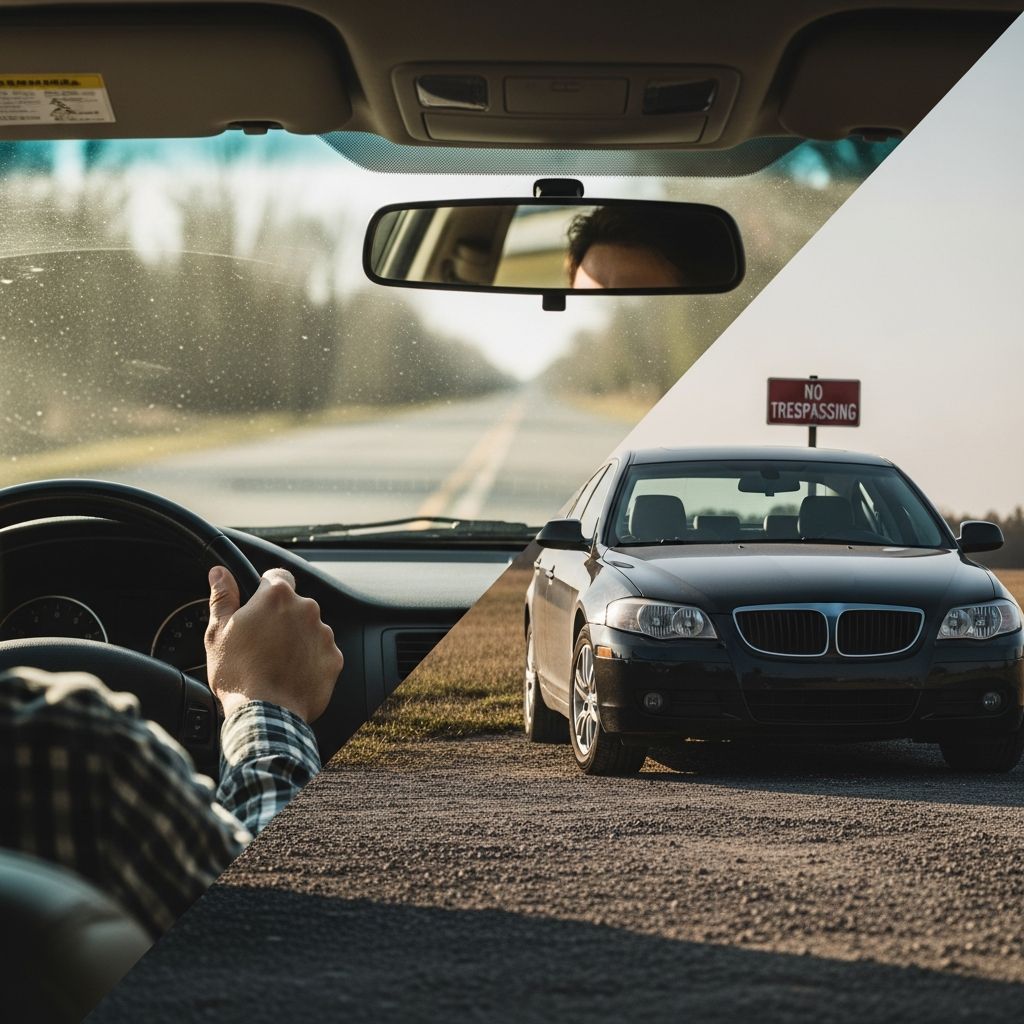
DUI Charges on Private Land Explained
Driving under the influence (DUI) charges can arise even when operating a vehicle on private property, challenging the common belief that public roads are the only concern. Courts in various states, particularly California, have upheld convictions in such scenarios when public safety is at risk or the area is accessible to others.
Understanding the Scope of DUI Laws Beyond Public Roads
DUI statutes aim to prevent impaired driving that endangers lives, extending beyond highways to locations where vehicles operate. In California, Vehicle Code Section 23152 prohibits driving while under the influence of alcohol or drugs, with Section 23215 authorizing enforcement off highways, including private lands open to public access. This broad application targets risks in everyday settings like shopping centers or residential complexes.
The legal definition of ‘driving’ encompasses any vehicle movement, from starting an engine to navigating a lot. Impairment levels include a blood alcohol concentration (BAC) of 0.08% or higher for standard vehicles, 0.04% for commercial ones, or evident influence from drugs. These thresholds apply uniformly, underscoring that location rarely exempts violators.
Key Court Decisions Shaping Private Property DUI Rulings
Judicial precedents have solidified DUI applicability on non-public areas. In People v. Malvitz (1992), a California appellate court affirmed a conviction for DUI on a locked private storage facility grounds. The defendant argued the law limited to highways, but the court ruled the statute covers ‘anywhere in California’ to curb dangers from impaired drivers.
Similarly, People v. O’Neil (1976) upheld charges on a private oil field access road, emphasizing that vehicle use for transport invokes DUI laws. These cases establish that privacy does not shield impairment if the site supports traffic flow or public entry.
Common Private Locations Where DUI Arrests Occur
- Commercial Parking Lots: Restaurant, nightclub, or mall lots invite public access, making them prime enforcement zones post-events.
- Residential Driveways and Complexes: Apartment garages or gated communities fall under scrutiny if police observe impairment or respond to calls.
- Private Roads and Neighborhoods: Developments with shared access roads mirror public thoroughfares legally.
- Rural Lands like Farms or Ranches: Enforcement hinges on public openness; strictly controlled sites may evade standard application.
- Event Venues and Campgrounds: Temporary public influx triggers patrols.
These spots highlight that ‘private’ often means commercially or communally used, not secluded owner-only domains.
State-by-State Variations in Private Property DUI Enforcement
While California exemplifies broad enforcement, laws differ nationwide. Some states mandate public roadways for DUI, others mirror California’s expansive reach. Factors like public accessibility or risk to others determine charge viability.
| State Example | Private Property Application | Key Statute/Case |
|---|---|---|
| California | Broad: Applies if accessible or risky | VC §23152, §23215; Malvitz (1992) |
| Texas | Similar; parking lots included | Focus on operation while intoxicated |
| New York | Requires highway unless public access | Stricter public road emphasis |
| Florida | Extends to private if open to public | Statutory public access clause |
Consult local codes, as nuances affect outcomes significantly.
Police Authority to Investigate and Arrest on Private Land
Officers enter private property under probable cause, hot pursuit, or community caretaking doctrines. Probable cause arises from observed swerving, slurred speech, or odor of alcohol. Hot pursuit allows warrantless entry if a suspect flees from public roads. Caretaking permits welfare checks, like aiding a slumped driver.
Owner consent or implied public invitation further enables access. However, fully enclosed, permission-only sites limit entry without warrants.
Penalties and Long-Term Consequences of Private Property DUIs
Convictions carry identical penalties to public road DUIs: fines up to $1,000+, license suspensions (6 months+), jail (up to 6 months), and ignition interlock mandates. Repeat offenses escalate to felonies with years in prison. Insurance rates surge 3-5x, and criminal records hinder employment.
Misdemeanor first-timers face probation, DUI school, and community service; aggravated cases (high BAC, minors present) intensify sanctions.
Proven Defenses Against Private Property DUI Charges
Skilled attorneys challenge charges via:
- No Public Access: Prove restricted entry, like locked ranches without public invite.
- Vehicle Inoperability: Argue no ‘driving’ if engine off, flat tire, or parked statically.
- Illegal Police Entry: Contest warrantless intrusions absent exigent circumstances.
- Impairment Disputes: Question breathalyzer accuracy or field sobriety tests via experts.
- Owner Non-Consent: If property bars enforcement, leverage that exclusion.
Early intervention often reduces charges to reckless driving or wet reckless pleas, minimizing impacts.
Practical Prevention Tips for Avoiding Private Property DUIs
Plan sober transport: rideshares, taxis, or designated drivers. Avoid starting vehicles impaired, even for short maneuvers. Use apps for BAC estimation pre-drinking. In groups, appoint a sober operator for lot navigation.
Frequently Asked Questions (FAQs)
Can I get a DUI in my own driveway?
Yes, if police witness impairment and vehicle operation, especially visible from public view or during welfare checks.
Does a golf cart or ATV count for DUI on private land?
Yes, if classified as a ‘vehicle’ under state code and operated impaired.
Are penalties different for private vs. public DUIs?
No, consequences match, including fines, jail, and suspensions.
Can I fight a DUI from a private parking lot?
Strongly yes; defenses focus on access, entry legality, and evidence flaws.
What if the property owner didn’t want police there?
It helps if documented, but public safety often overrides in accessible areas.
References
- Can I Get a DUI on Private Property in California? Vehicle Code Section 23152 — WK Law. 2023. https://www.wklawdui.com/can-i-get-a-dui-on-private-property-in-california-vehicle-code-section-23152/
- Can You Get a DUI on Private Property? — Marquis Law Group. 2024. https://marquislawgroup.com/can-you-get-a-dui-on-private-property/
- Can You Get a DUI on Private Property in California? — Jackson-Bibby Law. 2025-12-08. https://www.jacksonbibby.com/2025/12/08/can-you-get-a-dui-on-private-property-in-california/
- Can You Get a DUI on Private Property in California? — Southwest Legal. 2024. https://southwestlegal.com/dui-on-private-property-in-california/
- Can I Get a DUI on Private Property in CA? — Don Hammond Law. 2023. https://www.donhammondlaw.com/blog/can-i-get-a-dui-on-private-property-in-ca/
- Can You Be Charged with a DUI on Private Property in California? — My Rights Law Group. 2024. https://www.myrightslawgroup.com/can-you-be-charged-with-a-dui-on-private-property-in-california/
- California DUI Laws — NCDD. 2024. https://www.ncdd.com/california-dui-laws
Similar Articles







Read full bio of medha deb