
Can You Be Charged With DUI After You’ve Stopped Driving?
Understand when and how police and prosecutors can bring DUI charges hours, days, or even months after you drove.
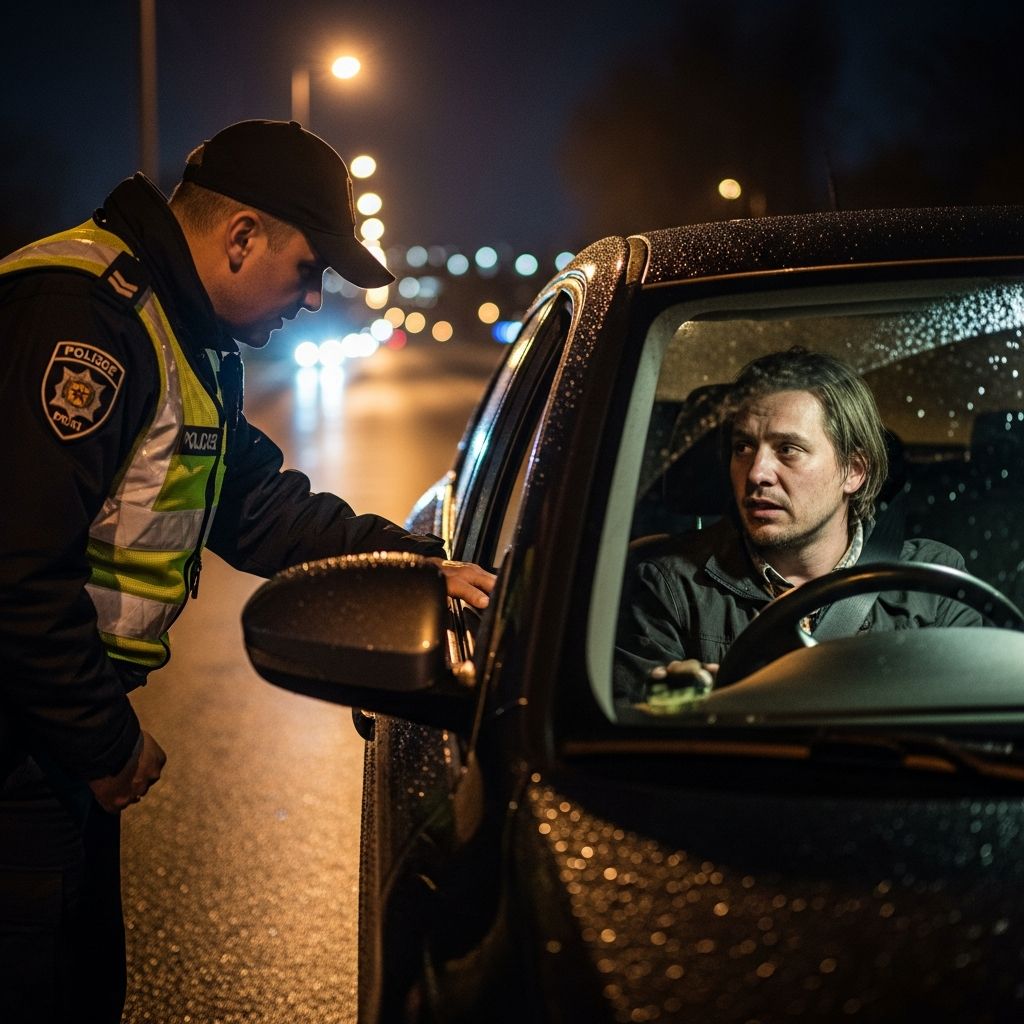
Many people assume a DUI case only happens if an officer pulls you over and arrests you on the spot. In reality, police and prosecutors often build DUI cases later, using witness statements, crash reports, and test results that come in after the driving has ended.
This article explains how a DUI can be charged after the fact, what types of evidence make that possible, how long the state usually has to file charges, and what defenses may be available. It is for general information only and is not legal advice. DUI laws vary by state, so you should consult a qualified local attorney for guidance about your specific situation.
1. How DUI Charges Normally Work
In the most familiar scenario, an officer observes signs of impairment—such as swerving, speeding, or running a red light—and makes a traffic stop. If the officer then has probable cause to believe the driver is under the influence, an arrest may follow.
- Reasonable suspicion: the legal threshold needed to stop a vehicle, based on specific, articulable facts (for example, erratic driving or a traffic violation).
- Probable cause: a higher standard required to arrest, typically based on observations like slurred speech, odor of alcohol, failed field sobriety tests, or a high breath test result.
- On-the-spot evidence: roadside breath tests, field sobriety tests, and officer observations are usually collected immediately after the stop.
Even in this classic scenario, formal criminal charges often arrive later, after a prosecutor reviews the reports and any chemical test results. In other cases, there may be no roadside arrest at all, yet a DUI charge is still filed after the fact.
2. What Does “After-the-Fact” DUI Really Mean?
After-the-fact DUI refers to situations where law enforcement alleges that you drove under the influence, but the investigation or filing of charges happens after the driving has ended—sometimes hours, days, or even months later.
Common examples include:
- The police respond to a crash after the drivers have left and later identify a suspect driver from witnesses or video.
- Someone reports that a person appeared drunk and drove away, prompting a delayed investigation.
- You are taken from an accident scene to a hospital, where blood is drawn; prosecutors file DUI charges only after lab results return.
Legally, the key question is not when you are arrested, but whether the state can prove that:
- you were operating or in control of a vehicle; and
- you were impaired or over the legal limit at the time of driving.
3. Time Limits: Statutes of Limitations for DUI
Every state sets deadlines—known as statutes of limitations—for when criminal charges must be filed. If prosecutors miss the deadline, the case generally cannot proceed. DUI statutes of limitations differ by state and by whether the charge is a misdemeanor or felony.
| Type of DUI Charge (Example) | Typical Filing Window (Illustrative) | Key Factors |
|---|---|---|
| Standard misdemeanor DUI | Often around 1–2 years from date of offense (varies by state). | First or second offense, no serious injury, lower-level penalties. |
| Felony DUI (injury, repeat offense, or death) | Often 3 years or more to file; some serious offenses may have longer limits. | Prior DUI convictions, serious bodily injury, or fatal crashes. |
Because of these time limits, prosecutors do not have to file charges the same day or week as the incident. They can—and often do—wait for additional evidence, such as lab results or expert analysis, before deciding whether to bring a case.
4. How Police Build a DUI Case Later
When officers do not witness the driving firsthand, they rely heavily on indirect or delayed evidence to try to prove that a crime occurred. A delayed or “retroactive” DUI investigation may involve several steps.
4.1 Types of Evidence Commonly Used
- Witness statements: Friends, bystanders, or other drivers may report that you were drinking, appeared intoxicated, or were seen driving erratically.
- Crash reports: Police accident reports, damage patterns, and skid marks can help reconstruct who was driving and how the collision occurred.
- Surveillance or dashcam video: Footage from traffic cameras, businesses, or in-car recording systems can show a driver getting into a vehicle, operating it, or causing a crash.
- Hospital or lab records: Blood tests taken for medical treatment or at law enforcement request may later be obtained by prosecutors under applicable privacy and search rules.
- Defendant’s own statements: Admissions such as “I shouldn’t have driven, I was drunk” can be powerful evidence if they are documented and admissible.
4.2 Retrograde Extrapolation and BAC Reconstruction
When there is a delay between the time of driving and a blood or breath test, prosecutors may use expert testimony to estimate what your blood alcohol concentration (BAC) was earlier. This process, sometimes called retrograde extrapolation, attempts to calculate past BAC based on:
- your measured BAC at a later time,
- estimated drinking pattern, and
- typical alcohol absorption and elimination rates.
Defense attorneys frequently challenge these calculations, arguing that they rest on assumptions about drinking times, body weight, food intake, and metabolic rates that may not be accurate for the person involved.
5. When You Can Be Charged Without Being Stopped Driving
You can face DUI charges even if no officer ever pulled you over while you were driving. Some recurring scenarios include:
5.1 After a Hit-and-Run or Leaving the Scene
If a driver leaves the scene of an accident, police may later identify that person through license plate information, vehicle damage, or witness descriptions. If investigators believe the driver was impaired at the time, they may pursue DUI and hit-and-run charges together.
5.2 At Home or Another Location Later
Officers sometimes go to a driver’s home or workplace to follow up on a complaint or crash report. Even if you are no longer driving, they may question you, look for signs of recent drinking, and attempt to gather evidence linking your condition back to the time you were on the road.
5.3 After Medical Treatment
Where an accident causes injuries, the priority is medical care. Drivers may be transported to a hospital before any sobriety tests are performed. Blood draws for medical reasons or at law enforcement request can later form the basis of a DUI case, once results are available and properly obtained through legal process.
6. Potential Penalties for an After-the-Fact DUI
In most jurisdictions, an after-the-fact DUI carries the same penalties as a DUI charged at the scene. The main difference is how the state proves its case, not the potential consequences.
- Fines and court costs: Ranging from hundreds to thousands of dollars, often increasing with prior offenses.
- Jail or prison time: Many states authorize jail for first-time DUIs and significant prison time for felonies involving injury or repeat offenses.
- License suspension or revocation: Administrative license actions can occur even before a criminal conviction in some states.
- Probation and conditions: Alcohol education programs, treatment, community service, and ignition interlock devices are common.
- Collateral consequences: Higher insurance premiums, employment challenges, and immigration impacts may follow a conviction.
The specific penalties depend on factors like:
- your prior DUI record,
- whether anyone was injured or killed,
- your measured or estimated BAC, and
- other traffic or criminal charges filed alongside the DUI.
7. Common Defenses to DUI Charged After the Fact
An after-the-fact DUI case often presents both risks and opportunities. On one hand, the state may rely heavily on circumstantial evidence; on the other, there may be fewer direct measurements of impairment. Defense strategies typically focus on the two central elements: driving and impairment at the relevant time.
7.1 Challenging Proof That You Were Driving
- Mistaken identity: Eyewitnesses may be wrong about who was behind the wheel, especially in chaotic crashes or nighttime incidents.
- Multiple occupants: Where several people were in or around the car, it may be unclear who was the driver when the vehicle was moving.
- Ownership vs. operation: Owning a vehicle does not automatically prove you were the one operating it at a particular time.
7.2 Disputing Impairment at the Time of Driving
- Post-driving drinking: You may argue that you consumed alcohol after driving, so later observations or test results do not reflect your condition while on the road.
- Unreliable retrograde extrapolation: Defense experts may challenge the assumptions underlying any attempt to reconstruct your earlier BAC.
- Legitimate medical explanation: Certain medical conditions, medications, or neurological issues can mimic impairment or affect test results.
7.3 Constitutional and Procedural Defenses
Even in an after-the-fact case, the police must respect your constitutional rights during the investigation.
- Unlawful stop or seizure: If the initial police contact or later detention violated the Fourth Amendment, some or all evidence may be suppressed.
- Invalid search or blood draw: Blood and medical records usually require consent, a warrant, or a recognized exception; improper procedures can lead to exclusion of critical evidence.
- Violation of the right to counsel: In some situations, you may have a right to consult an attorney before making decisions about testing.
7.4 Attacking Witness Credibility and Reliability
- Bias or motive: Personal conflicts, civil lawsuits, or other interests may color a witness’s account.
- Inconsistent accounts: Differences between statements given at different times can undercut reliability.
- Limited opportunity to observe: A brief or obstructed view of the driver or the event may make eyewitness identification doubtful.
8. What to Do If You Suspect You Are Under DUI Investigation
In an after-the-fact scenario, you might not receive an immediate citation or arrest. Instead, you may hear from an officer days or weeks later, or you might suspect an investigation because of a serious crash. Taking proactive steps can help protect your rights.
- Do not ignore police contact: Failing to respond to court notices or warrants can make matters worse, including additional charges or arrest.
- Exercise your right to remain silent: You generally do not have to answer questions about your drinking, driving route, or how a crash occurred; volunteering information can be used against you later.
- Contact a DUI defense attorney promptly: Early legal advice can help you avoid missteps and may influence whether and how charges are filed.
- Preserve potential evidence: Save receipts, messages, rideshare records, and contact information for any witnesses who may support your version of events.
- Follow up on license issues: Many states impose separate administrative deadlines for challenging license suspensions, sometimes within days of an event.
9. Frequently Asked Questions About After-the-Fact DUI
Q1: Can I still be charged with DUI if I was never pulled over?
Yes. Prosecutors can file charges based on evidence such as witness reports, crash investigations, surveillance video, and medical test results, even if an officer never stopped you while you were driving.
Q2: How long after an incident can DUI charges be filed?
It depends on your state’s statute of limitations and whether the DUI is a misdemeanor or felony. Many states allow at least a year or more for misdemeanors, and several years for felony DUI involving serious injury or death.
Q3: Is an after-the-fact DUI easier to beat?
Not necessarily. While the state may lack an immediate breath test, it may rely on other strong evidence such as detailed witness accounts, video, or blood results from a hospital. Defense opportunities often focus on disputing who was driving and whether you were impaired at the relevant time.
Q4: Can my hospital blood test be used against me?
In many jurisdictions, prosecutors can obtain hospital records and blood test results through subpoenas or warrants, subject to privacy and constitutional protections. If the evidence was collected or accessed improperly, your attorney may seek to exclude it.
Q5: Do DUI penalties change if the arrest is delayed?
In most cases, the potential penalties are the same whether you were arrested at the roadside or later. What changes is the kind of evidence the state relies on and the types of defenses that may be available.
References
- Can You Be Charged with DUI After the Fact? — Simmrin Law Group. 2023-06-15. https://www.simmrinlawgroup.com/faqs/can-you-be-charged-with-a-dui-after-the-fact/
- The Day After DUI: Can You Be Charged with DUI the Next Day? — Brodsky Renehan Pearlstein & Bouquet. 2022-08-10. https://www.bemorelegal.com/blog/the-day-after-dui-can-you-be-charged-with-dui-the-next-day
- How Long After an Accident Can I Be Charged With a DUI? — Perlman & Cohen. 2023-04-02. https://perlmancohen.com/los-angeles-dui-lawyer/how-long-after-an-accident-can-i-be-charged-with-a-dui/
- The Driver’s Rights Before, During and After a DUI/DWI Arrest — Helmer, Conley & Kasselman, P.A. 2021-11-05. https://www.helmerlegal.com/practices/new-jersey-dui-lawyer/driver-rights-after-dui-arrest/
- Can You Get a DUI Charge After the Fact? — Sutton & Janelle, PLLC. 2021-04-19. https://www.suttonandjanelle.com/blog/2021/april/can-you-get-a-dui-charge-after-the-fact-/
- Charged With A DUI After An Accident: Your Legal Options — Rathburn Law. 2022-03-28. https://rathburnlaw.com/can-i-be-charged-with-a-dui-after-the-accident/
- Facing a DUI Arrest in Indiana: What Happens Next? — Marc Lopez Law Firm. 2020-09-14. https://marclopezlaw.com/facing-a-dui-arrest-in-indiana-what-happens-next/
Similar Articles








Read full bio of Sneha Tete




