
DUI Arrests, Jail Strip Searches and Civil Rights Lawsuits
How a routine DUI arrest can lead to controversial strip searches, viral video evidence and federal civil rights litigation.
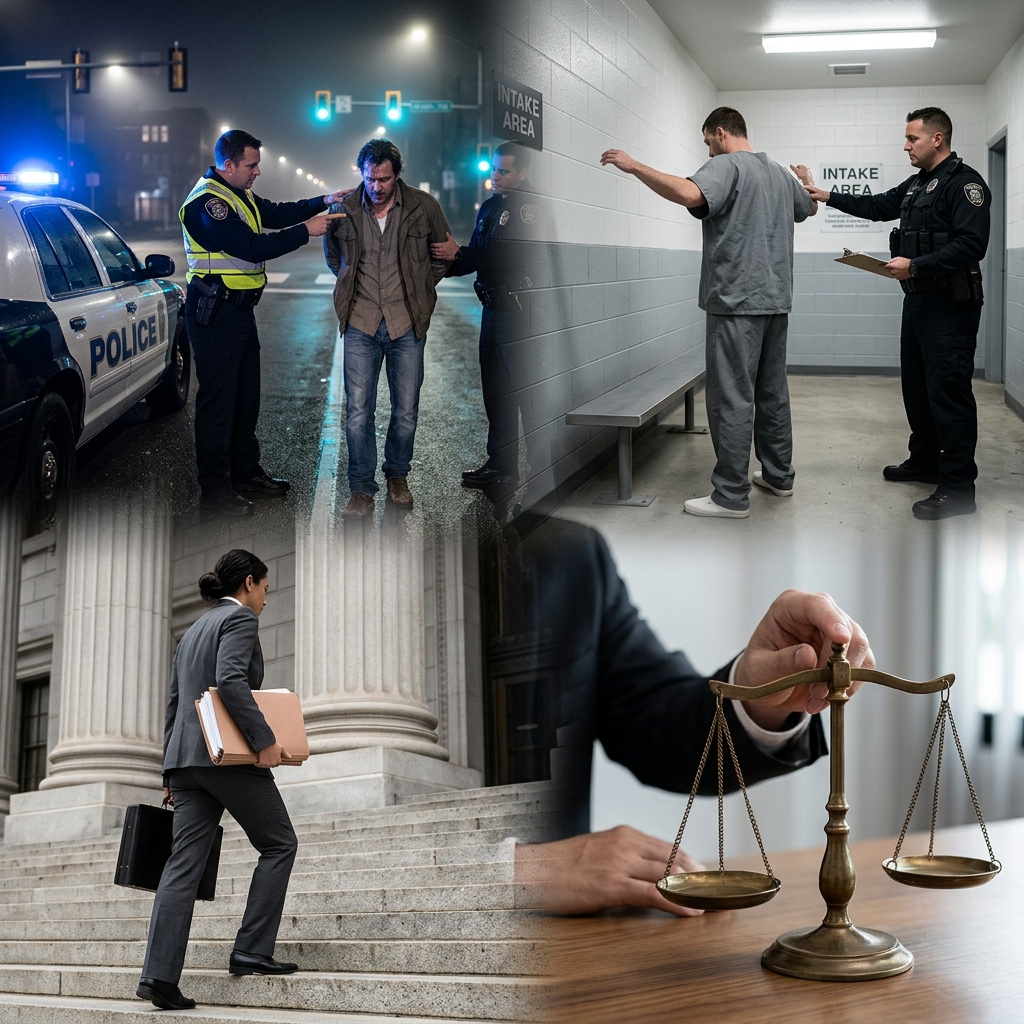
Across the United States, routine drunk driving arrests sometimes escalate into invasive strip searches inside county jails. When those searches are captured on video and then surface publicly, they often trigger public outrage, internal investigations and, increasingly, civil rights lawsuits against sheriffs, counties and individual officers. This article explains the legal landscape that governs strip searches after DUI arrests, why some practices are being challenged in court, and how video evidence has transformed accountability for jail misconduct.
From Traffic Stop to Jail Cell: How a DUI Case Escalates
A typical driving under the influence (DUI) case begins as a traffic stop based on observed behavior, such as swerving, speeding or failing to obey traffic signals. Once an officer suspects impairment, the encounter can quickly evolve into an arrest and booking at a local jail.
Key stages in this process include:
- Initial stop: An officer observes possible impairment or a traffic violation and initiates a roadside stop.
- Field sobriety testing: Standardized tests and breath analysis are used to evaluate impairment.
- Arrest decision: If probable cause exists, the driver is handcuffed and transported to a detention facility for booking.
- Jail intake: Personal property is inventoried, the person is photographed and fingerprinted, and staff assess medical and security risks.
- Search procedures: Depending on local policy and perceived risk, officers may conduct pat-downs, visual strip searches or, in some cases, more invasive procedures.
While most DUI cases end with release after sobriety and a court date, some detainees allege that what happens between arrival at the jail and release crosses constitutional boundaries, particularly when they are stripped naked, left without clothing for long periods or subjected to searches that feel punitive rather than necessary for security.
Strip Searches in Jails: What They Are and Why They Happen
Strip searches vary in intrusiveness. At the most basic level, they involve removal or rearrangement of clothing so staff can visually inspect a person’s body for weapons, drugs or other contraband. More intrusive procedures may involve directing the person to squat, cough, or expose body cavities for inspection. Many jails adopt policies that permit strip searches for individuals entering general population, especially where past incidents of smuggling have occurred.
Common justifications offered by corrections officials include:
- Contraband control: Preventing drugs, blades or other dangerous items from entering the facility.
- Protection of other inmates and staff: Ensuring detainees cannot harm themselves or others.
- Compliance with institutional policy: Applying standard procedures for all arrestees entering certain housing units.
However, individuals arrested for lower-level offenses like DUI often contend that they pose a minimal security risk and should not be subjected to the same level of intrusion as those charged with serious violence or drug trafficking. When such searches are conducted in public or semi-public areas, involve opposite-sex officers staring or recording, or are accompanied by taunting or unnecessary force, they are more likely to be challenged as unconstitutional.
Constitutional Framework: When Is a Strip Search Legal?
| Legal Standard | Key Question | Impact on Jail Strip Searches |
|---|---|---|
| Fourth Amendment | Is the search “reasonable” based on all circumstances? | Courts weigh security needs against privacy and dignity interests. |
| Equal Protection (14th Amendment) | Are some groups treated more harshly without justification? | Patterns of targeting women or specific groups can trigger claims. |
| Due Process | Does conduct “shock the conscience” or amount to punishment? | Extreme humiliation or force can be treated as unconstitutional punishment. |
The U.S. Supreme Court has upheld some blanket strip-search policies in jails, emphasizing deference to correctional officials when they claim safety concerns. At the same time, courts recognize that detainees retain significant privacy rights, especially pretrial arrestees who have not been convicted. Searches that are carried out in degrading ways or obviously exceed institutional needs are more likely to be found unreasonable.
Factors courts often examine include:
- Severity of the underlying offense (e.g., nonviolent DUI vs. violent felony).
- Presence of specific suspicion that the individual is hiding contraband.
- Location and privacy level of the search (private room vs. open cell block).
- Gender of officers compared with the person being searched.
- Length of time the person is kept naked or partially clothed.
- Whether the search appears retaliatory, punitive or sexualized.
In lawsuits filed by women arrested for DUI, plaintiffs typically argue that the combination of nonviolent charges, lack of individualized suspicion and humiliating circumstances makes the search unconstitutional under the Fourth Amendment and, in some cases, violates equal protection if women are disproportionately subjected to such treatment.
Case Study Elements: A Woman Arrested for DUI Challenges a Jail Strip Search
News coverage has highlighted instances where women arrested on suspicion of drunk driving later filed lawsuits claiming they were stripped, left naked and mistreated inside county jails. In one widely reported Illinois case, a 33-year-old woman arrested for DUI sued a county after jail video showed her on the cell floor with her clothing removed, alleging she was left naked for hours and subjected to degrading treatment.
Typical allegations in such complaints include:
- Being forcibly stripped of clothing without adequate justification.
- Remaining nude or nearly nude in a cell for extended periods, sometimes overnight.
- Exposure to male officers or cameras while unclothed, contrary to policies promising privacy.
- Unnecessary physical force or restraints during the search process.
- Denial of medical attention despite visible distress or injury.
Plaintiffs often bring claims under federal civil rights law, particularly 42 U.S.C. § 1983, alleging violations of their constitutional rights by local governments and individual officers. They may seek compensatory damages for emotional distress and physical harm, punitive damages intended to deter future misconduct, and injunctive relief requiring policy changes or improved training.
The Powerful Role of Video Evidence
In the era of security cameras and body-worn devices, many jails record intake and cell areas continuously. When a strip search occurs in view of those cameras, the resulting footage can become critical evidence in civil litigation and public debates.
Video has several impacts:
- Corroboration: Footage can support or contradict witness testimony about what happened, how long someone remained naked and who was present.
- Public perception: Released or leaked video attracts media coverage and public outrage, increasing pressure on officials to respond.
- Policy review: Supervisors can use footage to examine whether staff followed written procedures or took unnecessary steps.
- Evidence for juries: In civil trials, video may strongly influence jurors’ assessment of whether conduct was reasonable or abusive.
Reports from different jurisdictions show that video has also exposed systemic issues. In San Francisco, for instance, a class-action lawsuit alleged that deputies corralled women and forced them to strip, with parts of the incident captured on camera. In Colorado, a former jail commander faced suit for allegedly watching recordings of women’s strip searches for personal reasons, raising concerns about misuse of surveillance systems.[10] These examples illustrate how technology meant to enhance security can also magnify privacy violations when mismanaged.
Patterns and Systemic Concerns: Who Is Most Affected?
Although any detainee can be subjected to a strip search under certain policies, lawsuits and media investigations suggest several recurring themes:
- Gender disparity: Multiple civil actions focus on female detainees, alleging that women face more frequent or more humiliating strip searches than male detainees under similar circumstances.
- Low-level offenses: Many plaintiffs were arrested for nonviolent offenses such as DUI, public intoxication or minor property crimes, raising questions about necessity.
- Group searches: Claims sometimes involve groups of women being made to strip together, increasing public exposure and humiliation.
- Male officer presence: Allegations often describe male staff watching while women are stripped, contrary to policies requiring same-sex searches.[10]
Such patterns are central to civil rights theories. When a jurisdiction’s practices appear to target women or specific categories of detainees for harsher treatment, plaintiffs may argue that the policies or customs violate equal protection or amount to institutionalized discrimination. Class actions, in which multiple women join one case, seek broader reforms and recognition that the problem is systemic rather than isolated.
Legal Remedies: What Plaintiffs Seek in Strip Search Lawsuits
Women who sue over alleged strip search abuses after DUI or similar arrests typically pursue several forms of relief. Their lawyers may frame the case not only as an attempt to compensate one person, but as an effort to reshape jail practices.
Common goals include:
- Monetary damages: Compensation for emotional trauma, humiliation, lost wages, medical treatment and other harm experienced.
- Punitive damages: Additional sums intended to punish egregious misconduct and deter future abuses.
- Policy changes: Court orders requiring new or revised strip search policies, better training and stricter controls over camera access.
- Independent oversight: Appointment of monitors or auditors to review compliance, particularly in large class actions.
- Public recognition of wrongdoing: Official statements or settlements acknowledging that practices were improper, which many plaintiffs view as an important part of justice.
Counties and sheriffs often defend these suits by asserting that officers followed lawful policies, that searches were necessary for safety, and that allegations exaggerate what occurred. Some jurisdictions also argue that video footage has been misinterpreted or taken out of context. Settlement negotiations sometimes lead to agreements that include both financial payments and commitments to revise procedures.
Balancing Jail Security and Human Dignity
Correctional institutions operate in environments of heightened risk, where contraband can cause serious harm and staff must respond quickly to unpredictable situations. At the same time, the law recognizes that involuntary exposure of a person’s naked body is deeply intrusive and should only occur when truly necessary.
Thoughtful policies aim to strike a balance:
- Limiting strip searches to situations with clear security justification or entry into high-risk housing.
- Providing private areas, same-sex officers and minimal onlookers.
- Ensuring searches are not used as punishment or retaliation for verbal conflict or complaints.
- Documenting reasons for each strip search, allowing later review.
- Restricting access to video recordings and applying strong rules against voyeurism.[10]
Civil rights litigation, media exposure and internal audits have prompted many systems to revisit these issues. While practices vary widely, the trend in modern corrections emphasizes both security and respect, recognizing that most detainees will eventually return to the community and that what happens in custody has long-term consequences for trust in institutions.
Practical Takeaways for People Facing DUI Arrests
No article can fully prepare someone for the stress and complexity of a DUI arrest, but a basic understanding of rights and likely procedures may help individuals respond more effectively if they believe their treatment has crossed the line.
Key points to remember include:
- You retain constitutional rights in custody: Even after arrest, officials must respect protections against unreasonable searches and cruel or degrading treatment.
- Policies differ by jurisdiction: Some jails routinely strip-search all entrants to general population, while others use more targeted criteria.
- Document concerns as soon as possible: If you feel mistreated, write down details, including names of officers, times and locations, once you are able.
- Video may exist: Many intake and cell areas are continuously recorded, which can be requested in legal proceedings.
- Legal advice is crucial: An attorney can help evaluate whether a search was likely lawful and discuss options under state and federal civil rights law.
For families and advocates, understanding that alleged abuses around strip searches are part of broader national debates about policing, gender and dignity may also help in navigating conversations with officials and community organizations.
Frequently Asked Questions (FAQs)
Are all DUI arrestees strip-searched when they enter jail?
No. Strip search practices vary widely. Some jails use blanket policies for people entering certain housing units, while others limit searches to situations where staff have specific reasons to suspect contraband. The seriousness of the charge and local regulations both play major roles.
Can officers legally leave someone naked in a cell for hours?
Courts analyze such situations under the Fourth Amendment and due process standards. Extended nudity without clear security or medical justification, particularly for nonviolent detainees, may be viewed as unreasonable or punitive. Lawsuits by women alleging they were left naked for long periods after DUI or similar arrests have led to serious legal scrutiny.
What should someone do if they believe a strip search was abusive?
After release, individuals can consult a lawyer experienced in civil rights or jail litigation, file written complaints with the sheriff’s office, and, in some cases, request preservation of video evidence. Attorneys may pursue claims under federal civil rights statutes and rely heavily on camera footage, medical records and witness statements.[10]
Do male officers ever participate in strip searches of women?
Many policies require same-sex officers to conduct strip searches, but some lawsuits allege male deputies watched or recorded while female inmates were stripped, contrary to those rules.[10] Where such allegations are proven, courts may treat them as serious violations of privacy and dignity.
Can one person’s lawsuit change how a jail operates?
Yes, especially when combined with public attention or when multiple plaintiffs join in a class action. Settlements and court orders often require policy revisions, training enhancements and improved oversight of camera systems. Even individual lawsuits can prompt internal reviews that influence broader practices.[10]
References
- Arrested For DUI, Woman Sues Over Strip Search — CBS News. 2013-03-01. https://www.cbsnews.com/chicago/news/arrested-for-dui-woman-sues-over-strip-search/
- Woman Sues LaSalle Co. Sheriff, Claims She Was Left Naked In Jail Cell — ABC7 Chicago. 2019-02-08. https://abc7chicago.com/post/woman-sues-lasalle-co-sheriff-claims-she-was-left-naked-in-jail-cell-for-12-hours/
- Women File Federal Class-Action Lawsuit Over Strip Searches in SF Jail — KTVU / FOX Local. 2024-09-17. https://www.ktvu.com/video/fmc-x646cwgj8g7yfe5j
- Colorado Jail’s Ex-Commander Sued Over Allegedly Watching Strip Search Videos — Reddit / linked news article summary. 2024-10-14. https://www.reddit.com/r/news/comments/1n02vxz/colorado_jails-excommander-sued-over-allegedly/
- Woman Sues Over Police Strip Search Captured on Dashcam — TODAY / NBC News video. 2016-06-29. https://www.today.com/video/woman-sues-over-police-strip-search-captured-on-dashcam-2-years-ago-1026635331992
Similar Articles








Read full bio of Sneha Tete




