
Due Process at the Border: Asylum and the Right to Counsel
Exploring systemic barriers asylum seekers face in accessing legal counsel.
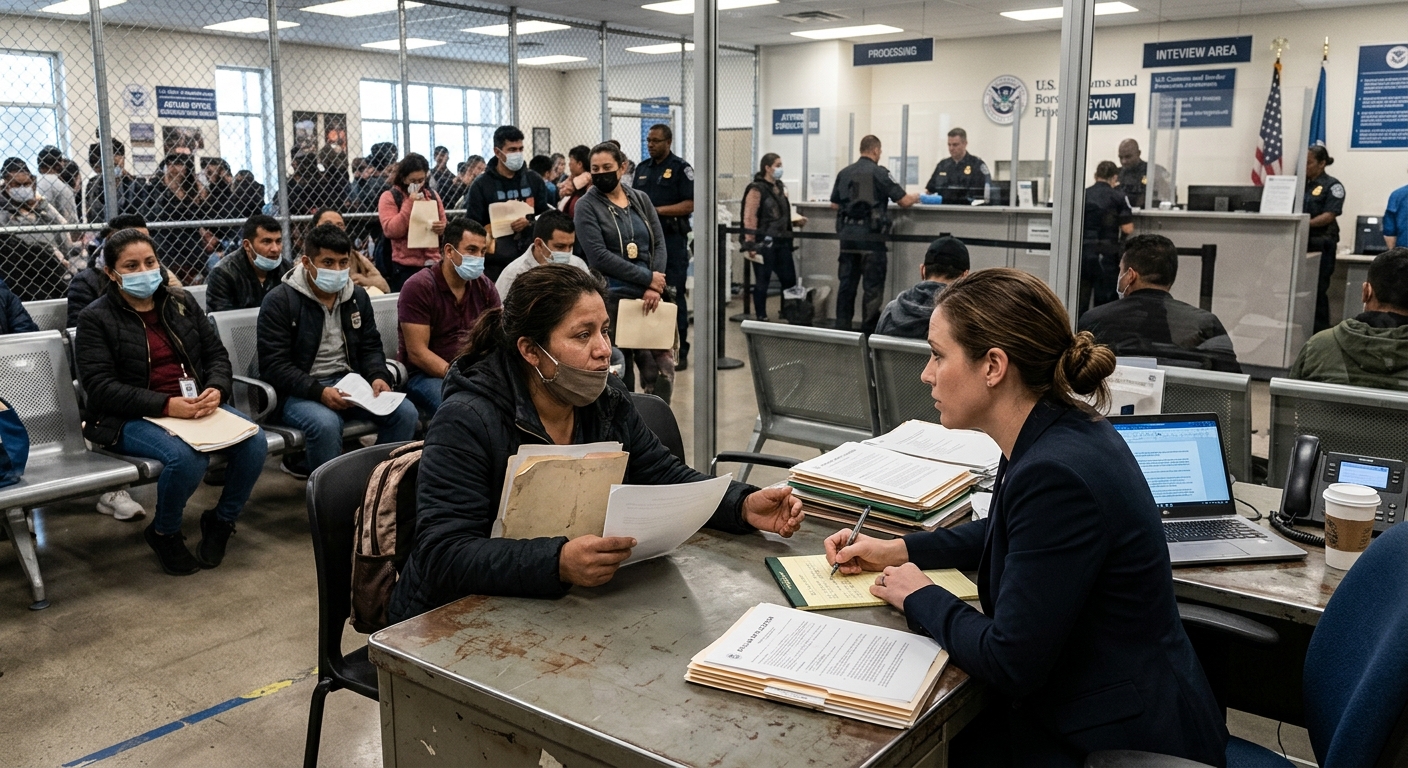
The intersection of national border security and human rights is one of the most fiercely debated arenas in modern constitutional law. At the center of this debate lies a fundamental question of due process: the extent to which vulnerable populations, specifically individuals seeking asylum, are permitted to access legal representation while navigating expedited federal screening procedures. While immigration enforcement agencies are tasked with securing borders and processing arrivals, legal advocates argue that the mechanisms utilized often systematically deprive asylum seekers of their statutory and constitutional rights to consult with an attorney. This tension routinely culminates in high-stakes civil rights litigation aimed at ensuring that the U.S. government cannot isolate detainees from legal counsel during the most critical phases of their immigration journey.
The Gateway to Protection: Understanding the Credible Fear Interview
To comprehend the sheer magnitude of what is at stake for an arriving asylum seeker, one must first understand the procedural gateway known as the “credible fear interview” (CFI). When foreign nationals arrive at a United States port of entry or cross the border without valid documentation, they are typically subjected to a process called expedited removal. This mechanism allows immigration officers to quickly deport individuals without granting them a hearing before a judge. However, if an individual expresses a fear of persecution or torture if returned to their home country, U.S. law mandates that they be referred to an asylum officer for a credible fear screening.
According to the United States Citizenship and Immigration Services (USCIS), a credible fear interview is intended to be a non-adversarial screening conducted by a trained asylum officer. The officer must determine if there is a “significant possibility” that the noncitizen could establish eligibility for asylum or protection under the Convention Against Torture . Though defined as an initial screening, the CFI is effectively a life-or-death evaluation for many migrants. If the officer determines that a credible fear exists, the individual is generally taken out of the expedited removal track and placed into standard immigration proceedings, where they can formally present their asylum case before an immigration judge. If the officer finds no credible fear, the asylum seeker faces imminent, fast-track deportation.
Navigating this interview requires an understanding of complex legal standards. Asylum is not granted simply because an individual is fleeing poverty or generalized violence; the persecution must be inextricably linked to specific protected grounds, such as race, religion, nationality, membership in a particular social group, or political opinion. For traumatized individuals who may not speak English and are entirely unfamiliar with U.S. jurisprudence, articulating their experiences in a way that aligns with these strict statutory definitions is an incredibly high hurdle. This makes the guidance of an immigration attorney not just helpful, but functionally essential.
The Constitutional and Statutory Framework of the Right to Counsel
In the United States legal system, the right to counsel is most commonly associated with the Sixth Amendment, which guarantees a lawyer to defendants in criminal prosecutions. Because immigration proceedings are classified as civil and administrative rather than criminal, the Sixth Amendment does not apply. Consequently, the government is not constitutionally obligated to provide a public defender to noncitizens facing deportation.
However, the absence of a Sixth Amendment mandate does not mean that the right to representation is non-existent. Both Congress and federal appellate courts have firmly established that the right to retain counsel in immigration proceedings is a core component of the Fifth Amendment’s guarantee of due process. The Ninth Circuit Court of Appeals has repeatedly affirmed that individuals subject to removal proceedings possess a due process right to be represented by an attorney, albeit at their own expense .
Furthermore, Congress explicitly codified this right in the Immigration and Nationality Act (INA). Under 8 U.S.C. § 1362, in any removal proceedings before an immigration judge, “the person concerned shall have the privilege of being represented (at no expense to the Government) by such counsel, authorized to practice in such proceedings, as he shall choose” . The Executive Office for Immigration Review (EOIR) acknowledges this right, noting that due to the extreme complexity of immigration and nationality laws, respondents frequently need legal practitioners to ensure fair adjudication . The core legal friction arises not from whether this right exists on paper, but whether federal agencies are implementing policies that render it practically inaccessible in reality.
The “Black Box” of Border Facilities: Systemic and Logistical Barriers
The theoretical right to hire a lawyer is entirely hollow if an asylum seeker is physically, logistically, and communicatively barred from actually reaching one. Federal lawsuits filed by civil liberties organizations frequently target the “black box” nature of temporary border holding facilities managed by Customs and Border Protection (CBP). When asylum seekers are taken into CBP custody and placed into the expedited removal process, they are often subjected to conditions that make obtaining legal counsel virtually impossible prior to their credible fear interviews.
Several systemic barriers define this environment:
- Confiscation of Personal Property: Upon apprehension, CBP agents typically confiscate all personal belongings, including cell phones. This immediately strips the asylum seeker of their primary means of communication, their contacts, and any evidence they may have stored electronically.
- Restricted Telephonic Access: Access to phones in border holding facilities is notoriously limited. Detainees are often restricted to using landline payphones that only permit expensive collect calls. Many pro bono legal organizations and law offices have phone systems that cannot accept collect calls, creating an instant technological blockade.
- Time Constraints: The expedited removal process is designed for speed. Asylum seekers are frequently scheduled for their credible fear interviews within days, or even hours, of their arrival. This hyper-accelerated timeline leaves detainees with an insufficient window to locate a willing attorney, secure their services, and consult with them meaningfully.
- Lack of Confidentiality: Attorney-client privilege is a bedrock principle of legal representation. However, when asylum seekers manage to connect with a lawyer, they are often forced to speak on a phone located in a crowded holding cell or a noisy hallway, entirely surrounded by other detainees and armed federal agents. This lack of privacy severely chills open communication, particularly for survivors of trauma, sexual assault, or state-sponsored violence who fear retribution.
By erecting these logistical walls, advocacy groups argue that the government effectively short-circuits the due process rights guaranteed by the Fifth Amendment and statutory law. The environment ensures that the vast majority of migrants face the highly technical credible fear interview completely unrepresented.
The Tangible Impact of Legal Representation
The stark difference in outcomes between represented and unrepresented asylum seekers underscores exactly why access to counsel is so fiercely contested. Immigration law is widely considered second only to the tax code in its density and complexity. Attempting to navigate it without a legal background is a monumental task.
Attorneys play several indispensable roles during the credible fear screening process. First, they serve to demystify the interview, explaining the legal thresholds to the asylum seeker and helping them focus their narrative on the specific elements required by U.S. law. Second, lawyers can identify and articulate legal exemptions and nuances that a layperson would never know exist. Finally, the mere presence of an attorney—even telephonically—often acts as a safeguard against procedural abuses, ensuring that the asylum officer conducts the interview in the non-adversarial manner mandated by USCIS regulations.
Without counsel, traumatized individuals frequently fail to relay the most legally pertinent parts of their stories, focusing instead on details that, while personally harrowing, do not satisfy the statutory requirements for refugee protection. The denial of counsel at this early stage often creates an irreparable flaw in the record that dooms the individual’s case permanently.
Litigation as a Mechanism for Systemic Reform
Because these procedural barriers are deeply entrenched in the standard operating procedures of federal enforcement agencies, policy changes rarely occur voluntarily. Consequently, civil rights organizations routinely turn to the federal judiciary to force compliance with constitutional standards. Lawsuits challenging CBP and ICE (Immigration and Customs Enforcement) policies do not merely seek relief for individual plaintiffs; they aim for systemic injunctions that reshape how border facilities operate.
When legal groups sue the government over the right to counsel, they are typically demanding actionable, logistical changes. These include court orders requiring agencies to return confiscated cell phones for the purpose of finding an attorney, mandating the installation of private, confidential phone booths in holding facilities, and enforcing mandatory waiting periods to give detainees adequate time to consult with legal representatives before a CFI takes place. Through strategic litigation, advocates seek to transform the paper guarantee of due process into a functional reality.
Comparing Proceedings: The Need for Early Counsel
The urgency of accessing legal counsel early in the process becomes evident when comparing the fast-track border screenings to traditional courtroom proceedings.
| Feature | Expedited Removal (Credible Fear Interview) | Standard Removal Proceedings |
|---|---|---|
| Adjudicator | USCIS Asylum Officer | Immigration Judge (Department of Justice) |
| Timeline | Days to Weeks | Months to Years |
| Location | Often inside restrictive border holding facilities | Formal Immigration Courtrooms |
| Access to Counsel | Highly restricted by logistical barriers | Generally accessible; continuances granted to seek attorneys |
This stark contrast highlights why advocates fight so vigorously for access at the border. If an asylum seeker fails the credible fear interview due to a lack of counsel, they are deported before they ever see the inside of a standard immigration courtroom, rendering the robust protections of standard proceedings irrelevant.
Conclusion
The ongoing legal battles over the right to counsel for asylum seekers in U.S. border custody represent a critical frontier in civil rights law. While the government maintains a legitimate interest in border security and efficient immigration processing, these administrative goals cannot legally supersede the constitutional mandates of due process. The Fifth Amendment’s guarantee of fairness, coupled with congressional statutes protecting the right to representation, demands a system where access to an attorney is not just theoretically permitted, but logistically possible. As federal courts continue to adjudicate these disputes, their rulings will fundamentally dictate whether the United States fulfills its domestic and international humanitarian commitments, ensuring that the most vulnerable among us are not deprived of their rights in the shadows of border detention facilities.
Frequently Asked Questions (FAQs)
What is the difference between expedited removal and standard immigration proceedings?
Expedited removal is a fast-track process allowing federal agents to deport certain undocumented noncitizens without a hearing before an immigration judge. Standard immigration proceedings involve a formal, lengthy court process where individuals can present evidence and arguments against deportation before a judge.
Do asylum seekers get free lawyers provided by the U.S. government?
No. Unlike the criminal justice system, where public defenders are provided under the Sixth Amendment, immigration proceedings are civil matters. Under 8 U.S.C. § 1362, asylum seekers have the right to a lawyer, but strictly at “no expense to the Government.” They must hire their own attorney or find a pro bono (free) legal service provider.
Why is the credible fear interview so important?
The credible fear interview is the initial screening for asylum seekers placed in expedited removal. If an asylum officer determines an individual has a “significant possibility” of proving persecution, they are allowed to pursue a full asylum claim. If they fail this interview, they are typically subjected to rapid deportation with very limited avenues for appeal.
Why is it hard for asylum seekers to get lawyers at the border?
Asylum seekers held in temporary border facilities face numerous logistical barriers. Agents often confiscate their cell phones, holding cell payphones may only allow collect calls (which many law firms cannot accept), the expedited timeline gives them very little time to search for an attorney, and there is often a severe lack of privacy for confidential consultations.
References
- Credible Fear Interviews — U.S. Citizenship and Immigration Services (USCIS). 2023-10-06. https://www.uscis.gov/humanitarian/refugees-and-asylum/asylum/credible-fear-screenings
- Due Process in Immigration Proceedings — Ninth Circuit Court of Appeals. https://www.ca9.uscourts.gov/guides/immigration-outline/
- 8 U.S.C. 1362: Right to counsel — Office of the Law Revision Counsel, U.S. House of Representatives. https://uscode.house.gov/view.xhtml?req=granuleid:USC-prelim-title8-section1362&num=0&edition=prelim
- Executive Office for Immigration Review | 5.1 – Representation and Appearances Generally — U.S. Department of Justice. https://www.justice.gov/eoir/reference-materials/ic/chapter-5/1
Similar Articles








Read full bio of Sneha Tete


