Achieving Dual US-Canada Citizenship
Comprehensive guide to obtaining and maintaining dual citizenship between the United States and Canada, covering eligibility, processes, and legal considerations.
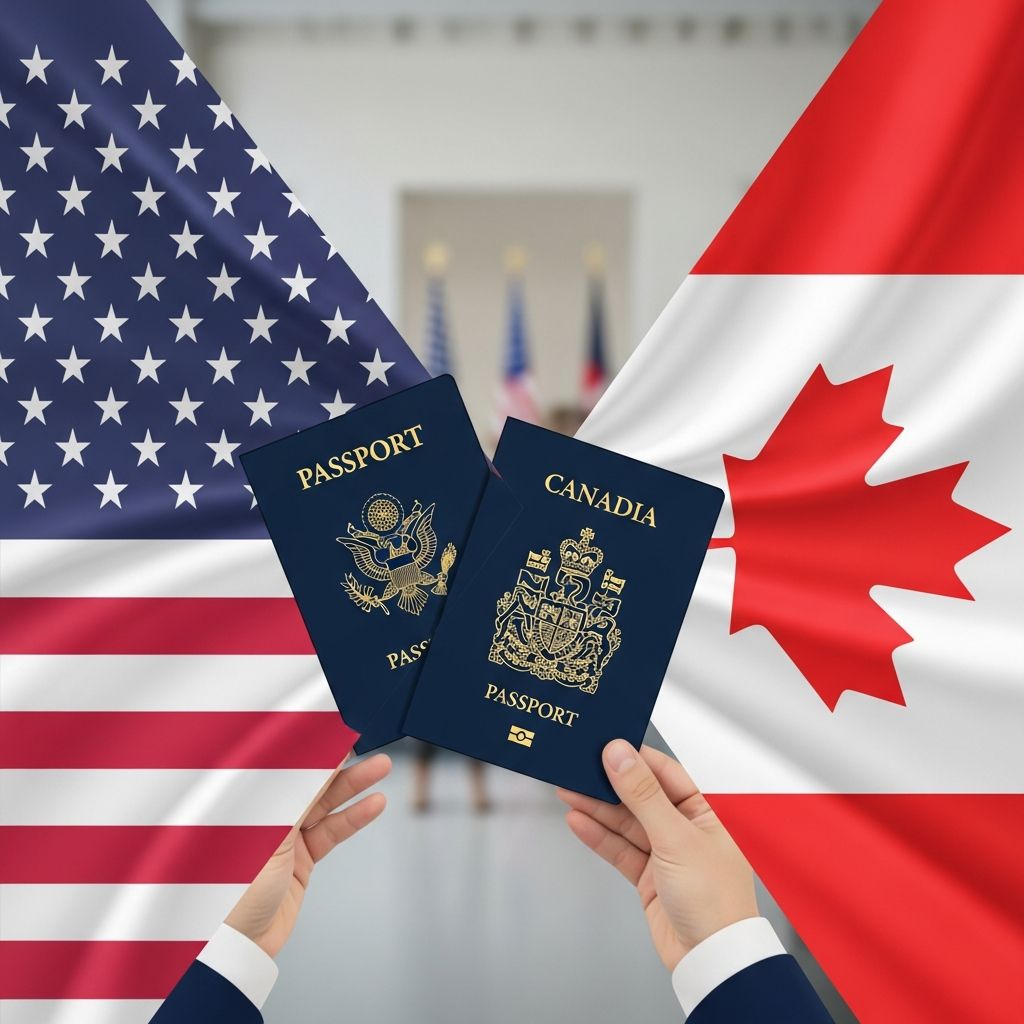
Obtaining citizenship in both the United States and Canada opens doors to enhanced mobility, economic opportunities, and family ties across North America. Both nations permit multiple nationalities, allowing individuals to hold passports from each without mandatory renunciation.
Legal Foundation for Multiple Nationalities
The US recognizes dual citizenship explicitly, stating that citizens may acquire another nationality through birth, descent, or naturalization without losing US status, provided they enter the US on a US passport. Canada similarly embraces multiple citizenships, with no requirement to relinquish other nationalities upon naturalizing as Canadian.
Recent legislative updates, such as Canada’s Bill C-3, have expanded access to citizenship by descent, removing prior generational limits for retroactive claims while introducing residency requirements for future generations. These changes reflect a balanced approach to preserving citizenship’s value while reuniting families.
Primary Pathways to Dual Status
Individuals pursue dual US-Canada citizenship via several routes, each with distinct eligibility criteria and documentation needs.
- Birthright Citizenship: Born in the US to any parents (with exceptions for diplomats) grants automatic US citizenship; Canada applies jus soli similarly for births on its soil.
- Citizenship by Descent: Inherited through a parent or ancestor who meets transmission rules.
- Marriage-Based Acquisition: Spousal sponsorship accelerates residency leading to naturalization.
- Naturalization After Residency: Long-term lawful presence fulfills permanent residency obligations.
US Citizenship Acquisition for Canadians
Canadians seeking US citizenship typically start with lawful permanent residency (green card) via family, employment, or investment.
| Pathway | Residency Requirement | Key Steps |
|---|---|---|
| Family Sponsorship | 3-5 years | Petition approval, adjustment of status, naturalization application. |
| Employment | 5 years | Visa petition, green card, continuous residence test. |
| Marriage to US Citizen | 3 years | Immediate relative petition, interview, oath. |
Applicants must demonstrate good moral character, pass English and civics tests (with exemptions for age/medical reasons), and maintain physical presence. US naturalization does not require renouncing Canadian citizenship.
Canadian Citizenship for US Citizens
US persons apply for Canadian permanent residence first, often through Express Entry (skilled workers), Provincial Nominee Programs, or family class sponsorship. After 1,095 days (3 years) of physical presence in five years, naturalization follows with language proficiency and knowledge tests.
Canada’s policy allows US citizens to retain their original nationality throughout.
Expanded Access via Ancestry Claims
Recent Reforms in Canadian Descent Rules
Bill C-3, now in effect, eliminates the first-generation limit for those born abroad before its enforcement date, granting retroactive citizenship to multigenerational descendants of a Canadian citizen ‘anchor’ (born or naturalized in Canada).
| Generation | Connection to Anchor | Eligibility Post-Bill C-3 |
|---|---|---|
| 1st (Parent/Grandparent) | Direct child of anchor | Automatic recognition. |
| 2nd (Parent) | Grandchild of anchor | Retroactively Canadian if born before Dec 15, 2025. |
| 3rd+ (Applicant) | Great-grandchild etc. | Eligible if chain unbroken; proof via documents. |
For children born or adopted on/after December 15, 2025, outside Canada to a Canadian parent also born abroad, the parent must prove 1,095 days of physical presence in Canada prior to the birth/adoption.
US Citizenship by Descent
US transmits citizenship at birth abroad to children of US citizens if at least one parent has resided in the US prior to the birth. Multigenerational claims require tracing back to a US citizen parent meeting physical presence rules.
Required Documentation Across Pathways
- Birth, marriage, death certificates linking generations.
- Proof of parent’s citizenship (passports, naturalization papers).
- Residency evidence (tax returns, employment records for 1,095-day rule).
- Police certificates for character assessment.
Even if ancestors never formally claimed citizenship, eligibility persists based on legal status at birth.
Obligations and Practical Implications
Dual nationals must comply with laws of both countries, including tax filing. US citizens worldwide report income to the IRS; Canadians report globally post-residency.
Travel requires using the correct passport: US passport for US entry/exit, Canadian for Canada. Some nations impose restrictions on duals, like registration or exit rules.
Potential Legislative Risks
While current laws support dual US-Canada status, proposed US bills like the Exclusive Citizenship Act aim to mandate single nationality, requiring renunciation within one year if passed—though it remains unpassed and dual citizenship legal.
Frequently Asked Questions
Can I hold both US and Canadian passports?
Yes, both countries allow multiple citizenships, enabling dual passports without renunciation.
Does Canada require giving up US citizenship?
No, Canada permits retention of other nationalities upon naturalization.
What changed with Canada’s Bill C-3?
It restores multigenerational descent citizenship retroactively and adds a 1,095-day residency rule for post-2025 births abroad.
How long for naturalization in each country?
US: 3-5 years residency; Canada: 3 years physical presence.
Do I need to live in both countries?
No residency required post-citizenship, but rules apply for transmission to children.
What taxes apply to dual citizens?
US taxes worldwide income; Canada taxes based on residency status.
Strategic Planning for Cross-Border Families
For families spanning the border, dual citizenship facilitates work, study, and healthcare access. Planning involves assessing descent claims first for quickest results, followed by sponsorship if needed. Consult immigration professionals for complex ancestry proofs or residency calculations.
Investment or business pathways offer alternatives, though slower. Global demand for second passports surges, with Canada’s reforms enhancing appeal.
References
- Claiming Canadian Citizenship by Descent Under Canada’s New Citizenship Act (Bill C-3) — Immigration.ca. 2025. https://immigration.ca/claiming-canadian-citizenship-by-descent-under-canadas-new-citizenship-act-bill-c-3/
- Dual citizenship guide 2026: Countries, tax rules, and how to apply — Taxes for Expats. 2026. https://www.taxesforexpats.com/articles/expatriation/countries-that-accept-dual-citizenship.html
- Dual Citizenship Bill 2025: Key Facts for Americans Abroad — Greenback Tax Services. 2025. https://www.greenbacktaxservices.com/blog/dual-citizenship-bill/
- Dual citizens — Government of Canada (travel.gc.ca). 2025. https://travel.gc.ca/travelling/documents/dual-citizenship
- Change to citizenship rules in 2025 — Government of Canada (canada.ca). 2025. https://www.canada.ca/en/immigration-refugees-citizenship/services/canadian-citizenship/act-changes/rules-2025.html
- Global demand for second passports is surging – how Canada’s new bill could open the door — CIC News. 2026-01. https://www.cicnews.com/2026/01/global-demand-for-second-passports-is-surging-how-canadas-new-bill-could-open-the-door-0166192.html
Similar Articles








Read full bio of medha deb