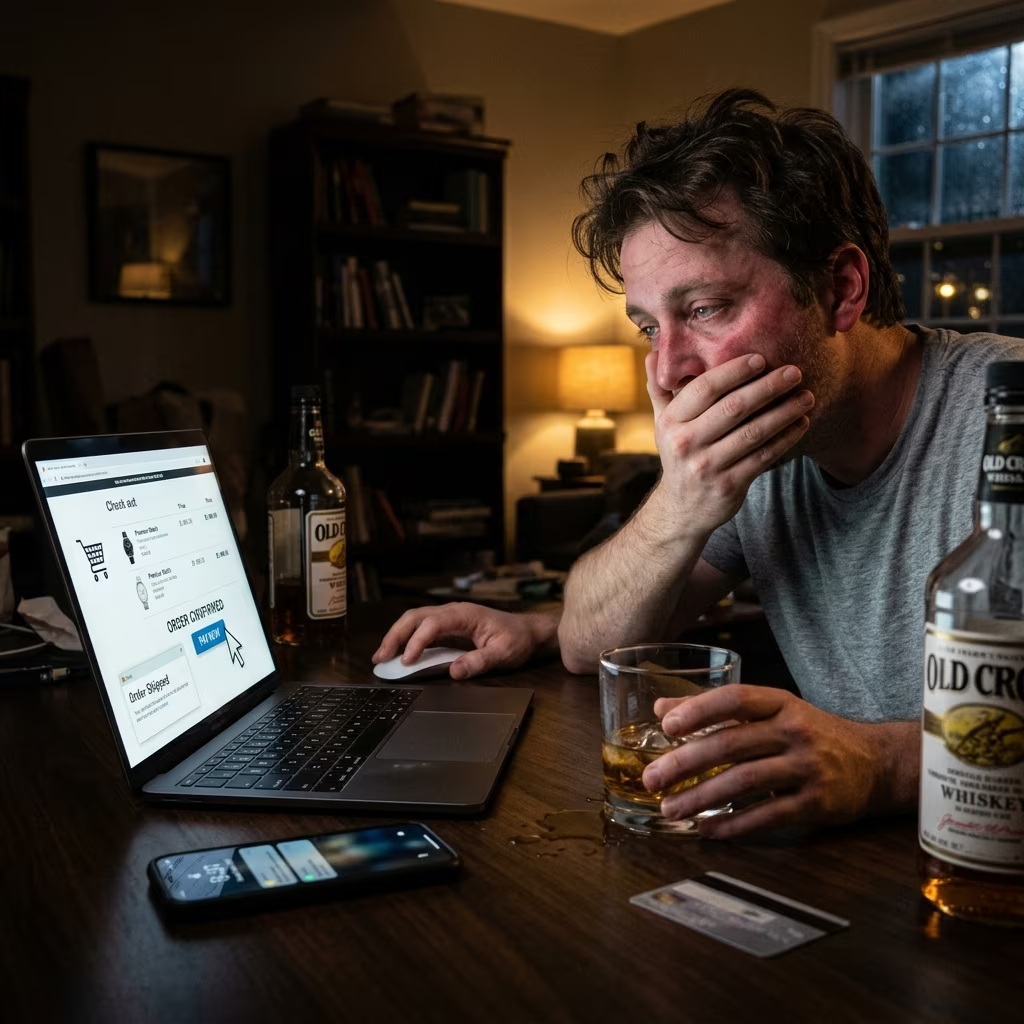
Late-night browsing after a few drinks has become so common that “drunk online shopping” is now a familiar phrase. For consumers, it might feel like a harmless joke; for online retailers, it can mean disputes, chargebacks, and legal headaches. This article explains the legal landscape around intoxicated online shopping and offers practical guidance for small businesses that sell online.
Why Intoxicated Online Shopping Matters for the Law
From a legal perspective, a purchase completed on an e-commerce site is usually treated as a binding contract between the buyer and the seller. That contract is formed when the buyer accepts the seller’s terms, typically by clicking a button such as “Place Order” or checking a box agreeing to terms and conditions.
Intoxication raises questions about whether the buyer truly understood and agreed to the contract, but courts rarely view mild or moderate drinking as enough to invalidate an online purchase. Contracts made while drunk are generally only voidable where the intoxication was severe enough that the person lacked the capacity to understand the nature and consequences of the transaction, and the other party knew or should have known.
- Most everyday intoxicated purchases remain legally valid.
- Severe impairment plus clear unfairness can create grounds for dispute.
- Retailers can reduce risk through clear terms and transparent practices.
Core Legal Concepts Behind Intoxicated Purchases
Understanding a few basic legal concepts helps clarify how intoxication fits into online shopping disputes.
Contract Formation in E-Commerce
Online purchases rely on the same principles of contract law as traditional sales:
- Offer: The website displays goods, prices, and applicable terms.
- Acceptance: The consumer clicks to buy, often confirming they agree to the terms.
- Consideration: The buyer pays money in exchange for the product or service.
- Capacity: Both parties must have legal capacity to enter into a contract (including age and mental competence).
Consumer protection laws require that key information be provided before the contract is concluded, such as price, delivery costs, identity of the trader, and cancellation rights. Retailers that fail to provide this information clearly can face regulatory scrutiny even when the buyer was sober.
Capacity and Intoxication
Legal capacity is the ability to understand the nature of a transaction and its consequences. Intoxication can temporarily impair capacity, but courts set a high bar. A buyer claiming they were drunk usually must show they were so impaired that they could not comprehend what they were doing when they clicked “buy.” In practice, small-value online purchases are rarely overturned on this basis.
For retailers, the more realistic challenge is not the legal invalidity of the contract but the practical fallout—refund demands, negative reviews, and chargebacks.
Risks to Consumers Who Shop While Intoxicated
Consumers who shop online under the influence face several risks, ranging from financial consequences to difficulty asserting their legal rights.
Financial Consequences and Chargebacks
Drunk purchases can lead to unexpected charges on credit cards or bank accounts. Consumers often respond by requesting chargebacks—reversals of card payments initiated through their bank or card issuer.
- Chargebacks may be allowed when a transaction is unauthorized or involves fraud.
- Merely regretting a purchase after drinking is usually not enough; the transaction is often treated as authorized.
- Excessive chargebacks can result in the cardholder’s account being flagged, and retailers may terminate customer accounts where they see repeated disputes.
Difficulty Proving Lack of Consent
Online transactions leave digital records—IP addresses, timestamps, device information, and clickstreams. These records often show that the buyer logged in, selected items, and confirmed payment. That trail makes it hard for a consumer to argue they did not consent, even if they were intoxicated.
In contrast, where an account was accessed by someone else (for example, a friend using a shared device while the account holder was drunk), the issue becomes one of identity theft or unauthorized use. In those cases, card issuers and platforms may offer more protection.
Reduced Ability to Read Terms and Assess Risks
Alcohol can impair judgment, making people more likely to:
- Ignore return and cancellation policies.
- Overlook recurring subscription terms.
- Underestimate shipping costs and custom duties.
- Click misleading advertisements and exaggerated claims.
This is particularly problematic where businesses use complex terms or dark patterns in their interface design. Consumer protection law increasingly scrutinizes such practices, and regulators have signaled concern over designs that exploit reduced attention or impaired decision-making.
Risks and Responsibilities for Online Retailers
For e-commerce businesses, intoxicated shoppers can magnify existing legal risks. Many of those risks arise under consumer protection, advertising, privacy, and contract law.
Terms and Conditions: Setting Clear Ground Rules
Comprehensive terms and conditions (T&Cs) are a critical tool for limiting legal exposure and managing expectations.
Well-drafted T&Cs should:
- Define order acceptance and cancellation procedures.
- Explain return, refund, and exchange policies.
- Limit liability within what the law allows.
- Clarify how disputes will be handled (e.g., governing law, jurisdiction).
- Address age limits where products are restricted (such as alcohol or adult content).
These rules apply regardless of the buyer’s sobriety. Clear, readable language reduces complaints when customers later regret their purchase decisions.
Consumer Rights and Cooling-Off Periods
In many jurisdictions, distance selling laws give consumers a cooling-off period—a window in which they can cancel a contract without giving a reason.
| Issue | Typical Legal Requirement (Illustrative) | Impact on Drunk Shoppers |
|---|---|---|
| Cancellation Rights | Consumers may cancel within a set period (e.g., 14 days) for many online purchases. | Provides an easy route to unwind drunk purchases that fall within the legal window. |
| Information Disclosure | Retailers must disclose identity, price, delivery costs, and key terms before purchase. | Clear disclosures help consumers assess purchases even when their attention is impaired. |
| Refund Policies | Refund rules must be transparent and consistently applied. | Predictable refunds reduce frustration when consumers seek to reverse drunk orders. |
Retailers that honor statutory cancellation rights and make the process straightforward are less likely to face formal complaints from intoxicated buyers who later reconsider.
Advertising and Misleading Claims
Online advertising is subject to strict consumer protection rules. Claims must be truthful, not misleading, and supported by evidence where necessary.
Marketing that targets or is likely to reach intoxicated audiences—such as late-night ads for high-risk purchases—raises additional ethical and legal concerns. Regulators may investigate campaigns that appear to exploit impaired judgment, especially for financial or health-related products.
- Exaggerated “limited time” offers can pressure impulsive drunk buyers.
- Unclear subscription terms can trap distracted consumers into ongoing charges.
- Influencer and social media advertising must disclose material connections and avoid deceptive wording.
Data Privacy and Behavioral Targeting
E-commerce platforms collect personal data and track behavior, often using cookies and analytics tools. In regions covered by comprehensive data protection laws such as the EU’s GDPR, businesses must provide transparent notices and lawful bases for processing, and must secure personal data appropriately.
Using behavioral data to target ads at times when individuals are more likely to be intoxicated—like late nights or after certain events—could raise novel questions about fairness and exploitation. While no mainstream law specifically outlaws marketing to drunk shoppers, regulators increasingly consider how data practices affect vulnerable groups.
Policy Design to Reduce Disputes and Legal Exposure
Online retailers cannot realistically screen for intoxication. Instead, they can design policies and user experiences that reduce disputes from all customers, including those who buy under the influence.
Building Resilient Refund and Exchange Policies
Thoughtful refund and exchange rules help balance business needs with consumer expectations.
- Clear time limits: Specify how long customers have to request a refund or exchange.
- Condition requirements: Explain packaging or product condition needed for return.
- Exceptions: Identify items that are non-refundable (e.g., customized goods, perishable items) in a prominent way.
- Process clarity: Provide step-by-step instructions for returning items.
When these policies are visible and simple, many drunk shoppers who regret their purchase can resolve the matter without escalating to legal threats or regulatory complaints.
UX Safeguards for High-Risk Purchases
For higher-value or especially sensitive purchases, user experience (UX) design can incorporate extra safeguards:
- Second confirmation screens for expensive items.
- Warnings about recurring subscription charges.
- Mandatory checkboxes confirming understanding of key terms.
- Age verification for restricted products, especially alcohol and adult content.
These steps are not required by intoxication-specific laws but are considered good practice for risk management. They also provide stronger evidence that the customer understood what they were buying.
Staff Training and Complaint Handling
Front-line staff handling customer support should be trained to recognize common patterns in intoxicated purchase complaints:
- Customers claiming they were drunk and asking for leniency.
- Threats to “report” the business when policies are applied.
- Attempts to bypass normal return windows.
Having consistent, documented practices reduces the risk of discrimination claims and helps demonstrate fairness if a dispute escalates. In some markets, regulators expect businesses to resolve minor complaints informally before they reach formal channels.
Practical Tips for Consumers and Retailers
Tips for Consumers: Staying Safe When Shopping Online
- Set spending limits or alerts on payment cards.
- Avoid saving card details on shared devices.
- Review account activity the morning after heavy drinking.
- Learn your rights to cancel and return under local law.
- Use strong passwords and two-factor authentication to prevent misuse while you are impaired.
Tips for Retailers: Reducing Legal Risk
- Maintain clear, up-to-date terms and conditions drafted with legal advice.
- Ensure advertising is truthful and properly substantiated.
- Comply with data protection and privacy laws, including transparent notices and appropriate security.
- Offer accessible cancellation and refund mechanisms within the framework of applicable law.
- Monitor complaints and chargeback trends to identify recurring issues that might signal confusing terms or misleading messaging.
Frequently Asked Questions (FAQs)
Can I cancel an online order if I placed it while drunk?
In many jurisdictions, you can cancel certain online orders within a legally defined cooling-off period, regardless of whether you were intoxicated. Beyond that period, cancellation depends on the retailer’s policies and the type of product. Intoxication alone rarely gives a legal right to cancel a valid contract.
Is an online contract valid if I was heavily intoxicated?
Contracts made while intoxicated can sometimes be voidable if the person lacked capacity to understand the transaction and the other party knew or should have known. However, the threshold is high, and everyday instances of drunk clicking are usually treated as valid purchases.
Can a retailer refuse a refund for a drunk purchase?
Retailers may refuse refunds if they comply with consumer protection laws and follow their stated policies. When the law grants specific cancellation rights—such as mandatory cooling-off periods—these usually cannot be waived. Beyond those rights, intoxication is not, by itself, a guarantee of a refund.
Do businesses have to design their sites to avoid drunk shoppers?
No law requires businesses to detect or prevent drunk users. However, regulators expect fair, transparent practices, and businesses that rely on confusing terms or manipulative design may face enforcement actions under consumer protection or unfair practices laws.
What should small businesses consider when drafting e-commerce terms?
Small businesses should ensure their terms cover contract formation, pricing, delivery, cancellation rights, refunds, data privacy, and liability limits, and are consistent with applicable laws. Consulting a legal professional helps adapt these terms to the business model and the jurisdictions where customers live.
References
- Legal Risks of a Web-Based Business — Paule, Camazine & Blumenthal PC. 2019-03-05. https://www.pcblawfirm.com/legal-risks-web-base-business/
- Legal Risks of Starting an Online Business — Cummings Law. 2022-08-24. https://www.cummings.law/legal-risks-of-starting-an-online-business/
- Top 3 Legal Problems E-Commerce Businesses Face — DJ Holt Law. 2020-11-10. https://djholtlaw.com/top-3-legal-problems-e-commerce-businesses-face/
- COVID-19 & E-Commerce: Top 10 Legal Issues for Online Retailers — William Fry. 2020-05-19. https://www.williamfry.com/knowledge/covid-19-e-commerce-top-10-legal-issues-for-online-retailers/
- Protecting Small Businesses — Federal Trade Commission. 2023-06-01. https://www.ftc.gov/business-guidance/small-businesses
- Legal challenges in e-commerce and the influence of data — SpringerOpen, Journal of Big Data. 2024-02-12. https://link.springer.com/article/10.1186/s40537-026-01415-7
- 14 e-commerce laws and legal requirements for online businesses — Federation of Small Businesses. 2023-03-17. https://www.fsb.org.uk/resources/article/14-e-commerce-laws-and-legal-requirements-for-online-businesses-MCKEGGLGLTFFHATKVELB4RUOQCCM